💌 JOIN SOUL SISTERS WEEKLY → GET FREE WELCOME GIFTS 🎁
Receive a thoughtful Sunday letter, free Self-Love & Shadow Work guides, and monthly Full Moon rituals ✨



Forgive and Let Go: You Don't Have to Carry It Forever
Trying to forgive and let go, but the same hurt keeps coming back? Discover what may be keeping you stuck and how to begin releasing it without forcing forgiveness.
SELF-LOVE, HEALING & INNER WORK
Soul Sisters Tarot
6/9/202540 min read


Forgive and Let Go: How to Reclaim Your Peace and Freedom
This guide is part of our Self-Love Journey, where we explore emotional healing, self-compassion, and gentle practices that help you build a deeper and more supportive relationship with yourself.
To forgive and let go is not about saying that what happened was okay. It is about releasing the emotional hold that anger, resentment, guilt, betrayal, or hurt can have on your life. Learning how to forgive and let go can help you move forward without carrying the same pain into every new day, while self-forgiveness can help you make peace with the things you wish you had done differently.
And sometimes, forgiveness is not where you need to begin. Maybe you are still angry. Maybe you never received an apology. Maybe the person who hurt you is still in your life, or maybe they are long gone. Perhaps you understand intellectually that you should move on, but emotionally, you are nowhere near ready.
That does not mean you are failing at healing. Forgiveness is not a deadline, a moral obligation, or a requirement to reconcile with someone who hurt you. You can forgive someone and still keep your distance. You can let go without rebuilding a relationship. And you can work toward peace without pretending that the wound never happened.
We have all experienced things that are difficult to release. A friend's betrayal. A parent's words that stayed with you for years. A relationship that ended badly. Something someone did that changed the way you trust people. Or something you did yourself that you still punish yourself for.
Sometimes the person you most need to forgive is not someone else at all. It is yourself. Learning how to practice self-love in a deeper and more structured way can support this process because forgiveness also asks us to stop treating ourselves as though we must remain trapped inside our worst experiences.
So what does it really mean to forgive and let go? It means acknowledging what happened without allowing it to control every part of your present. It means making room for anger, grief, disappointment, and confusion while gradually deciding that the past does not get to determine who you become next.
And there is an important difference between forgiving and letting go. You may not be ready to forgive someone. You may never want a relationship with them again. You may believe that what they did was unforgivable. Even then, you can begin releasing the resentment, the constant replaying of the event, the need for an apology, or the belief that your future has to remain tied to what happened.
💖 If it feels difficult to believe that you deserve peace after everything you have been through, exploring where that feeling comes from can help you rebuild a more stable sense of self-worth:
👉 Why do I feel unworthy of love?
🍃 Soul Sisters Notes
“There are times when you can’t forgive, and that’s normal too. Forgiveness is not mandatory, but letting go is. And some things don’t deserve forgiveness. We don’t have to forgive, but we have to let go. Because letting go frees us and gives us peace of mind. And yes, letting go without forgiveness seems even harder to do. That’s also normal. In this article, we talk about forgiveness and letting go, but the most important part is to let go. Let go of anger, guilt, resentment, and hurt. This holding a grudge thing is really just you letting your physical and mental health take a hit for something you don’t want to do - let go. Stress is the number one killer in this world, and it’s sneaky.” - Caitlin
Often, resentment becomes connected to repetitive thought patterns, which is why learning about breaking negative thinking patterns can support the process of learning how to forgive and let go.
In this guide, we’ll explore what forgiveness really means, why letting go can feel so difficult, how forgiveness unfolds over time, how to forgive someone who hurt you, how to practice self-forgiveness, and practical exercises and rituals that can help you begin releasing what you have been carrying.
🪷 Why Is It So Hard to Forgive and Let Go?
Forgiving and letting go can be difficult because the mind may continue returning to an experience that felt threatening, unfair, unresolved, or deeply painful. Anger can feel protective, while resentment can keep the story alive when we believe we never received closure. Forgiveness becomes easier to approach when we stop treating it as forgetting or excusing what happened and instead focus on processing the hurt, rebuilding our boundaries, and deciding how much power the experience will have over our future.
Maybe you are not actually struggling to forgive. Maybe you are struggling to accept what happened. That is an important difference.
When someone hurts us, our first instinct is often to understand it. Why did they do that? Why didn't they care? Why did I allow it? Why didn't I see it sooner? Why wasn't I enough? And sometimes we keep asking those questions long after the relationship, situation, or person has disappeared from our lives.
Because somewhere inside us, we believe that if we can finally understand why, the pain will make sense. But sometimes there is no satisfying answer.
The person who hurt you may never explain themselves. They may not understand the damage they caused. They may even remember the situation differently from you. Waiting for them to provide the explanation, apology, or closure you need can keep you emotionally connected to something you desperately want to leave behind.
And that is one reason learning to forgive and let go is not simply about deciding, “I forgive you.” It is about slowly bringing your attention back to your own life.
When anger feels safer than vulnerability
Anger is not always the enemy. Sometimes anger arrives because something inside you knows that a boundary was crossed. It can give you strength when you initially feel powerless. It can help you recognize that something was not okay.
The problem is not necessarily feeling angry. The problem begins when the anger becomes the place where you live.
You replay the conversation. You imagine what you should have said. You have imaginary arguments in the shower. You explain the situation to people who were never there. You revisit their social media. You wonder whether they regret it. You think about what you would say if they suddenly appeared at your door.
And meanwhile, they may be living their completely ordinary Tuesday. That can be a painful realization.
Letting go does not mean telling yourself that you should never feel angry again. It means recognizing when anger has stopped protecting you and started exhausting you.
When forgiveness feels like excusing them
This is one of the biggest reasons people resist forgiveness. If I forgive them, doesn't that mean what they did was okay? No.
You can say “What happened to me was wrong” and still decide that you do not want to spend the rest of your life emotionally trapped inside that experience.
You can forgive someone without trusting them again.
You can forgive someone without speaking to them.
You can forgive someone while maintaining strong boundaries.
And sometimes you may not even be ready to use the word forgiveness. That is okay too. You can begin with something smaller: I want this to have less power over me.
That is already movement.
When you are still waiting for an apology
An apology can be incredibly meaningful. But your healing cannot always depend on receiving one.
Sometimes the person who hurt you will never apologize.
Sometimes they believe they did nothing wrong.
Sometimes they apologize only when they want something from you.
Sometimes the apology comes years later, when you have already done much of the emotional work yourself.
If your peace depends entirely on someone else finally understanding what they did, you have handed them control over your healing.
Letting go begins when you can say: “I would have liked an apology. I deserved an apology. But I am not going to wait forever for one before I allow myself to heal.”
That does not erase accountability. It simply separates their responsibility from your healing.
When you keep putting everyone else first
Sometimes the difficulty with letting go is connected to something much bigger than the original hurt.
You may have spent years learning to keep the peace, avoid conflict, make other people happy, or take responsibility for everyone else's feelings. In that case, releasing resentment can feel complicated because you may also need to release the belief that your needs always come second.
Letting go also includes releasing the need to constantly put others first, especially when people-pleasing begins to disconnect you from your own needs.
Sometimes forgiveness begins with a surprisingly simple realization: “I am allowed to care about what happened to me.”
You do not have to minimize your pain just because someone else had problems too.
💖 Free Self-Love Guide
Do you find it easier to forgive everyone else than to be kind to yourself?
If you are learning to put your own needs back on the list, our Free Self-Love Guide offers simple, practical ways to build a more compassionate relationship with yourself. It is a gentle place to start if forgiveness has shown you that the person you most need to make peace with may sometimes be yourself.


When you are still trying to understand why
Forgiveness can become particularly complicated when the person who hurt you was someone you loved. You may understand that they had their own wounds, difficult experiences, fears, or limitations. Perhaps you can even see where their behavior came from. But understanding someone is not the same as excusing them.
People are complicated. We can recognize that someone was hurting and still acknowledge that they hurt us. We can have compassion for their humanity without giving them unlimited access to ours.
Exploring human behavior can sometimes help us understand why people behave as they do, but understanding the reason does not require us to accept harmful behavior.
You can understand the wound without reopening the door.
When the real work is inside you
Sometimes the person who hurt us is no longer the biggest part of the story. What remains is what the experience taught us about ourselves.
I can't trust anyone.
I always choose the wrong people.
I should have known better.
I'm not lovable.
I have to protect myself all the time.
I should have done something differently.
This is where forgiveness can become deeper than simply releasing anger toward another person. You may also need to examine the beliefs, fears, shame, and protective patterns you developed afterward.
For deeper emotional healing, many people turn to shadow work as a way to explore those less comfortable parts of themselves. Shadow work can help you look at the emotions and patterns underneath the hurt rather than simply forcing yourself to “move on.”
And sometimes what needs forgiveness is not the person who hurt you. It is the version of you who stayed too long. The version of you who didn't know how to say no. The version of you who trusted someone who didn't deserve that trust. The version of you who made a decision with the information you had at the time.
That brings us to one of the hardest parts of the entire forgiveness journey: self-forgiveness. Because forgiving someone else can be difficult. But forgiving yourself can feel almost impossible.
✨ What Does It Really Mean to Forgive and Let Go?
To forgive and let go means to acknowledge what happened, allow yourself to process its emotional impact, and gradually release the need for the past to keep controlling your present. Forgiveness does not require forgetting, excusing harmful behavior, trusting someone again, or rebuilding a relationship. Letting go is about reclaiming your emotional freedom and deciding that what happened to you will not have unlimited power over who you become.
This is where forgiveness gets misunderstood. We often hear that we should “forgive and forget,” as though healing means waking up one morning and suddenly feeling nothing about what happened. But real forgiveness rarely works that way.
You may remember what happened for the rest of your life. You may still believe that the other person was wrong. You may choose never to have contact with them again. And you can still reach a place where thinking about them no longer takes your entire nervous system with it.
That is a very different kind of freedom.
Forgiveness does not mean forgetting
Your memories are not something you have to erase in order to heal. In fact, the goal is not to pretend the experience never happened. The goal is to be able to remember it without feeling as though you are being pulled back into the same emotional moment every time.
Think about touching an old scar. You know it is there. You remember how you got it. But eventually, you can touch it without experiencing the original injury all over again.
Emotional healing can be similar. The story remains part of your life, but it no longer has to be the story that controls your life.
Forgiveness does not mean reconciliation
This distinction is especially important when the person who hurt you is still around. Forgiving someone does not mean inviting them back into your life.
You can forgive an ex-partner and never date them again. You can forgive a family member and maintain boundaries. You can forgive a former friend and decide that the friendship has ended. You can forgive someone while still recognizing that they are not a safe person for you.
Forgiveness changes your relationship with the pain. It does not automatically change your relationship with the person.
That is why learning how to set boundaries for yourself can be an important part of letting go. Peace does not require unlimited access.
Letting go is not the same as giving up
Letting go can sound passive, almost like surrender. But emotional letting go can actually be an active decision.
You are saying:
I am not going to keep replaying this conversation.
I am not going to spend another night imagining what I should have said.
I am not going to keep checking whether they regret what they did.
I am not going to punish myself for something I cannot change.
I am allowed to build a life that has nothing to do with this anymore.
That does not happen in one dramatic moment for everyone. Sometimes you make the decision repeatedly.
Today you let go a little. Tomorrow the anger returns. Then you notice it sooner. A month later, you realize you went an entire afternoon without thinking about it. One day you hear their name and notice that your body does not react in the same way. That is letting go, too.
Forgiveness can begin before you feel forgiving
You do not have to wait until you feel peaceful before you begin. Sometimes the first step is simply becoming willing to stop carrying the pain in exactly the same way.
You might say: “I am not ready to forgive, but I am ready to stop letting this consume me.”
That is enough for today.
And if the hurt is connected to something you did yourself, the process may look different. Self-forgiveness asks you to acknowledge your choices without turning them into a permanent identity.
You can regret something without deciding that you are a terrible person. You can take responsibility without endlessly punishing yourself. You can say, “I would make a different choice today,” without spending the rest of your life hating the person you were when you made the original choice.
That is why self-forgiveness is not about pretending you did nothing wrong. It is about allowing accountability and compassion to exist together.
And perhaps that is the heart of what it really means to forgive and let go:
You remember, but you no longer have to relive it.
You understand, but you do not have to excuse it.
You protect yourself, but you do not have to remain trapped in anger.
You learn from the past, but you do not have to keep living there.
Once we understand that, we can look at what forgiveness actually feels like in practice, because the journey from hurt to release is rarely a straight line.
✨ The 4 Stages of Forgiving and Letting Go
Forgiveness is a process, not a single decision. When you are trying to forgive and let go of something that genuinely hurt you, you may move through several emotional stages: anger, acknowledging the wound, processing what happened, and eventually releasing your attachment to the pain. These stages are not a strict timeline, and you may move backward and forward between them. The important part is not reaching the final stage quickly, but allowing yourself to honestly process what happened instead of forcing forgiveness before you are ready.
1. All Those Hateful Feelings
This is where it often begins: rage, betrayal, injustice, disbelief, resentment.
You replay what happened. You think about what you should have said. You imagine confronting the person. You feel angry that they seem to have moved on while you are still carrying the consequences.
Sometimes you even hate the fact that you still care. And while anger can become destructive when it takes over your life, it can also tell you something important: a boundary was crossed, something mattered to you, and you were hurt.
You do not have to shame yourself for feeling angry before you can forgive. Instead, try asking: “What is my anger trying to tell me?”
Maybe the answer is I was treated unfairly.
Maybe it is I trusted someone who betrayed me.
Maybe it is I wish I had protected myself.
That answer gives you somewhere to begin.
2. Even the Smallest Part Hurts
Eventually, underneath the anger, you may discover the actual wound. The sadness. The disappointment. The rejection. The loneliness. The feeling that you were not enough.
This part can be harder than anger because anger gives us energy, while acknowledging the hurt asks us to become vulnerable. But you cannot meaningfully let go of something you refuse to acknowledge.
This is the stage where you can begin saying:
“Yes, this really happened.”
“Yes, it hurt me.”
“Yes, it changed me.”
“And I am allowed to grieve what I lost.”
You do not need to minimize the experience because someone else had it worse. Your pain does not need to win a competition before it deserves attention.
And if emotional processing feels intense or unfamiliar, it is worth remembering that healing is not always comfortable. For some people, periods of emotional release can feel overwhelming, which is why our guide to healing crisis and the signs your healing is working may help you understand some of those experiences more clearly.
3. Time for Healing
This is where something begins to change. You are no longer only asking “Why did they do this to me?” You may start asking:
“What did this experience teach me about myself?”
“What do I need now?”
“What boundaries do I need going forward?”
“What do I want my life to look like when this is no longer controlling me?”
Healing does not mean approving of what happened. It means processing its impact so that the experience becomes something you have lived through rather than something you have to continuously relive.
This can involve journaling, talking to someone you trust, therapy, meditation, creative expression, setting boundaries, or simply allowing yourself time.
You may also begin noticing that your thoughts are changing. Instead of “They ruined everything,” perhaps it becomes “They hurt me, but they don't get to decide what happens next.” That is a very different place to stand.
4. The Last Part: Letting Go
Eventually, the question becomes less about what the other person deserves and more about what you want to carry forward.
Maybe you forgive them. Maybe you do not. Maybe you forgive yourself. Maybe you decide that forgiveness is not the word you want to use at all. But you begin releasing your attachment to the anger, the constant mental replay, the need for them to understand, or the hope that changing the past would somehow make everything okay.
This does not mean reconciliation.
Sometimes letting go means rebuilding a relationship with healthier boundaries. Sometimes it means walking away permanently. And sometimes it simply means reaching a point where you can remember what happened without allowing it to dominate your present.
The deeper work here is understanding the emotional layers and hidden patterns connected to your experiences.
Because eventually, letting go is not about saying: “It didn't matter.”
It is about being able to say: “It mattered. It hurt. It changed me. But it does not own me anymore.”
And that is where forgiveness starts becoming freedom.
🙏 Who Do You Need to Forgive?
Sometimes the hardest part of learning to forgive and let go is figuring out where the resentment is actually coming from. You may immediately think of the person who hurt you, but forgiveness can also involve your parents, a former partner, a friend, or even yourself. And these are not interchangeable.
Forgiving a parent can involve grieving the childhood or support you wish you had. Forgiving someone who betrayed you may involve accepting that you will never receive the apology you wanted. Self-forgiveness asks something different: that you take responsibility for your choices without turning your mistakes into a life sentence.
You do not have to forgive everyone at once. Start with the person, relationship, or version of yourself that still takes up the most emotional space.
Your Parents
Our parents are often among the most complicated people to forgive because the hurt can begin so early that we barely remember who we were before it happened.
Perhaps they were emotionally unavailable. Perhaps they were overly critical. Perhaps there was neglect, conflict, unrealistic expectations, or simply something important you needed that they were unable to give you.
As adults, we can sometimes begin to understand our parents differently when we consider their own life stories, limitations, characteristics, and experiences. But understanding where someone's behavior came from does not mean declaring that it was acceptable.
If your parents hurt you, forgiveness does not require you to rewrite your childhood. You can say: “I understand more about you now, but what happened still hurt me.” That can be an important part of healing.
Sometimes what you need to let go of is not only anger toward your parents, but also the hope that they will eventually become the parents you needed them to be. That realization can involve grief, but it can also create freedom. You can stop waiting for the past to give you something it cannot give you and begin deciding what you want to give yourself now.
Someone Who Hurt You
This could be a former partner, friend, family member, colleague, or even someone you barely knew. Maybe they betrayed your trust. Maybe they lied. Maybe they humiliated you. Maybe they disappeared when you needed them. Maybe they said something years ago that you still hear inside your head. And perhaps the most frustrating part is that they seem completely fine.
This is where forgiveness can become an act of reclaiming your own attention. You do not have to convince yourself that they were a good person. You do not have to understand every reason behind their behavior. And you certainly do not have to give them another opportunity to hurt you.
Instead, you can begin separating what they did from what you choose to do with your life now.
Ask yourself: “How much of my present is still being shaped by something this person did in my past?”
If the answer is a lot, that does not mean you are weak. It means there is probably something here that still needs your attention. And sometimes the most powerful form of letting go is deciding that you no longer need to keep checking whether they regret what they did.
Yourself
This is often the hardest one. We can be remarkably compassionate toward other people while holding ourselves to an impossible standard. We forgive a friend for making a terrible decision and then spend ten years punishing ourselves for making one. We understand that someone else was young, confused, afraid, inexperienced, or overwhelmed. But when we look at our own past, suddenly we expect ourselves to have known everything we know today.
That is not fair. Self-forgiveness does not mean pretending you made the right choice. If you hurt someone, made a mistake, ignored a warning sign, stayed somewhere too long, trusted the wrong person, or behaved in a way you regret, you can acknowledge it honestly.
Accountability says, “I did something I wish I had done differently.”
Shame says, “Because I did that, I am a bad person.”
Those are not the same thing.
Self-forgiveness allows you to take responsibility without making punishment your identity. You can learn from what happened, repair what can be repaired, apologize when appropriate, make different choices, and still allow yourself to become someone new.
Part of letting go also involves recognizing the ways you may have abandoned yourself in the past and gently choosing to show up for yourself differently.
If you are struggling with this, our complete guide on how to learn to love yourself step by step may help you reconnect with compassion.
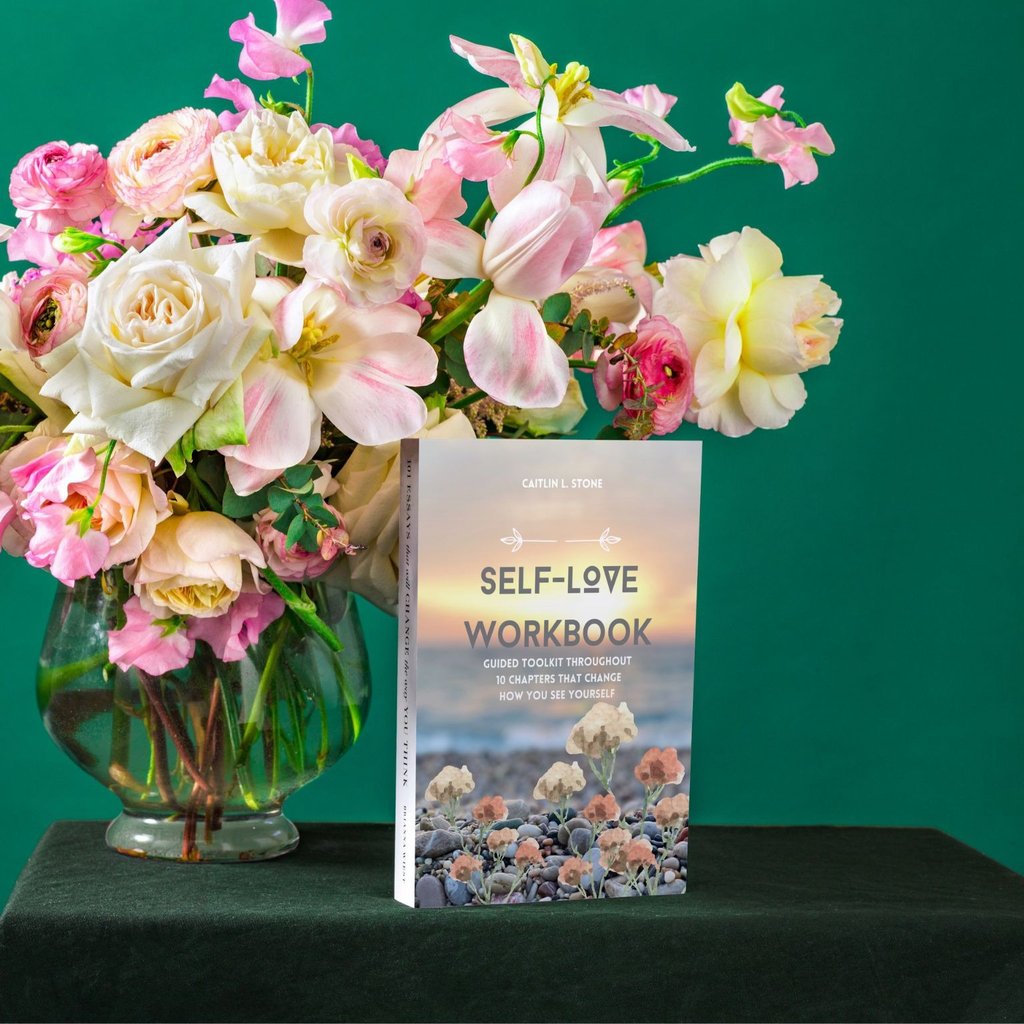
❤️ Self-Love Workbook
Sometimes forgiving yourself is easier when you finally give yourself space to understand what happened.
Our Self-Love Workbook is designed for deeper reflection, helping you explore your relationship with yourself through guided exercises and honest questions. If self-forgiveness is bringing up old patterns, regrets, or ways you have been hard on yourself, this can give you a structured space to work through them gently.

🍃 Soul Sisters Notes
“Forgiving yourself is truly the hardest one. Sometimes, we are not even aware that we should forgive ourselves. You really can’t change the past, so don’t hold your past mistakes over your head. What’s done is done; next time, just try to make a better choice. And that’s how you learn.” - Caitlin
There is something powerful in that last sentence: that is how you learn. Your past can be a teacher without becoming your prison.
What If You Don't Know Who You Need to Forgive?
You do not always have an obvious person in mind. Sometimes you simply notice that certain memories still make your chest tighten. A particular name changes your mood. You keep having the same imaginary conversation. You become defensive whenever a certain subject comes up. Or you repeatedly blame yourself for something that happened years ago. Those reactions can be clues.
Take a quiet moment and ask yourself: “Whose name or memory still has the power to change how I feel?”
Then ask: “What am I still waiting for that person, situation, or my past self to give me?”
Maybe it is an apology. Maybe it is an explanation. Maybe it is recognition that you were hurt. Maybe it is permission to stop blaming yourself.
You may discover that what you need most is not actually forgiveness yet. You may need acknowledgment, boundaries, grief, self-compassion, or simply permission to stop carrying something that no longer belongs in your future. That is a perfectly valid place to begin.
And once you know who or what you are trying to release, we can finally get to the practical question: how do you actually forgive and let go?
🫶How to Forgive and Let Go: Practical Steps & Self-Forgiveness Tips
Learning how to forgive and let go is not about finding the perfect sentence to repeat until you suddenly feel peaceful. Forgiveness is an emotional process, and it usually takes some combination of honesty, reflection, time, and a willingness to stop feeding the same painful cycle. You may understand that you want to move forward while still feeling angry, disappointed, or deeply hurt. Those things can exist at the same time.
The first step is therefore not forcing yourself to forgive. It is starting where you actually are.
Easier Said Than Done
Yes, forgiveness is hard. And sometimes the advice to “just forgive and move on” can make you feel even worse, especially when the wound is still fresh. If you are angry, you are allowed to acknowledge that anger. If you are grieving something you lost, you are allowed to grieve it. If you are confused about what happened or still wish things had turned out differently, there is no reason to pretend otherwise.
Try beginning with a much more honest statement: I am hurt by what happened, and I don't want to carry this pain forever.
You do not have to feel forgiving yet. You simply have to become willing to explore what the hurt is doing to you and whether you are ready to begin releasing some of its weight.
Commit to Letting Go
At some point, you may realize that waiting for the other person to change, apologize, explain themselves, or finally understand your pain is keeping you emotionally connected to them.
This is where a decision can become useful. You might not honestly be able to say, “I forgive you.” Instead, you can decide, “I don't want this experience to control my life anymore.” That is still a meaningful beginning.
Letting go is rarely a single dramatic moment. You may make the decision and then find yourself angry again the following week. A memory may suddenly bring everything back. You might even wonder whether you have made any progress at all. That does not mean you have failed.
Healing often involves returning to the same decision many times. Each time the memory comes back, you have another opportunity to respond differently instead of automatically falling back into the same cycle of resentment.
Separate Understanding From Excusing
It can be helpful to understand why someone behaved the way they did. Perhaps they were carrying their own wounds, acting from fear, repeating patterns they had learned, or simply making selfish or unhealthy choices.
Understanding another person's behavior can sometimes give you perspective, but it does not require you to excuse it.
You can understand why someone behaved badly and still believe that what they did was wrong. You can have compassion for their circumstances while maintaining a firm boundary. You can recognize that they are human without deciding that you need to have them in your life.
This distinction becomes particularly important when forgiveness has been confused with reconciliation. You are allowed to forgive someone and still decide that the relationship is over.
Ask What Holding On Is Costing You
One of the most useful questions you can ask yourself is not “Why should I forgive them?” but “What is holding on to this costing me?”
Perhaps you think about the situation every time you are alone. Perhaps you compare new relationships with the one that hurt you. Maybe you are constantly imagining conversations that will probably never happen. Maybe you still check what the person is doing, hoping to see some evidence that they regret their actions.
Sometimes resentment becomes so familiar that we stop noticing how much attention it takes.
Write down what this experience is still taking from you. It might be your concentration, your trust, your ability to enjoy new relationships, your sleep, your confidence, or simply the emotional space you would rather give to something else.
This exercise is not about convincing yourself that your pain is inconvenient and therefore needs to disappear. Your pain mattered. The point is to recognize that you deserve to decide what happens with your attention now.
Try Empathy Without Abandoning Yourself
Empathy can sometimes help us loosen our grip on resentment, particularly when we understand that people often act from their own fears, wounds, limitations, and learned patterns. But empathy needs boundaries.
You do not have to understand someone so completely that you lose sight of what happened to you. You do not need to become responsible for explaining their behavior. And you do not have to make their pain more important than yours. The same compassion should be turned toward yourself.
If you are working through self-forgiveness, ask yourself what you would say to someone you loved who had made the same mistake you made. Would you tell them that one bad decision proves they are a terrible person? Would you expect them to spend the rest of their life punishing themselves? Probably not.
We often give other people room to be human while demanding perfection from ourselves. Self-forgiveness does not mean avoiding responsibility. If you made a mistake, acknowledge it. If you hurt someone, make amends where possible. If you behaved in a way you now regret, learn from it. Then allow yourself to become someone who knows better.
Reflection Instead of Rumination
There is also an important difference between reflecting on what happened and endlessly replaying it.
Reflection can help you understand the experience. You might ask what happened, why it affected you so deeply, what you learned, what boundaries you need now, and what you would do differently in the future.
Rumination tends to take you around the same circle without giving you anywhere new to go. Why did they do this? What if I had said that? Why didn't I see it? What if I had left earlier? What if they had chosen differently?
There is nothing wrong with these thoughts appearing. The problem is getting trapped inside them. When you notice yourself replaying the same story, try changing the question from “Why did this happen?” to “What can I choose now?” That shift brings you back into the present.
If repetitive thought patterns are making it difficult to move forward, our guide to breaking negative thinking patterns explores ways to begin changing those cycles.
📓 365 Psychological Journal Prompts
Do you know you need to reflect, but never know what to ask yourself?
Our 365 Psychological Journal Prompts for Self-Discovery and Self-Love gives you a different question to explore each day, helping you move beyond surface-level journaling and understand your thoughts, emotions, patterns, and needs more deeply. It can be especially useful when you know something is sitting beneath your resentment but cannot quite find the words for it.


Try Some Forgiveness Exercises
Writing can be particularly helpful when there are things you never had the opportunity to say. Write a letter to the person who hurt you. Say everything you wish you could say. Be angry. Be sad. Tell them what their actions changed for you. Tell them what you needed from them and never received. Then stop.
You do not have to send the letter.
You can also write two simple sentences: “What happened to me was…” and “What I choose for myself now is…”
The first allows you to acknowledge your experience without minimizing it. The second begins to move your attention toward the future.
If the phrase “I forgive you” feels impossible, don't force it. Try something more honest: “I am willing to stop carrying this in the same way.” Or: “I am willing to begin letting this go.”
Sometimes that is where forgiveness actually starts.
Give Yourself Time
There is no universal timetable for forgiveness. Some experiences can be released relatively quickly. Others have been woven into your identity, relationships, or understanding of yourself for years and require much more time to process.
You may also discover that you thought you had let something go, only to find yourself upset about it again months later. That does not erase the progress you made.
The goal is not to reach a point where you never remember what happened. The goal is to reach a point where the memory no longer dictates how you live today. And sometimes the most honest first step is simply this: I am not ready to forgive yet, but I am ready to stop letting this hurt consume me.
That is enough to begin.
💗 How to Forgive Yourself: The Hardest Part of Letting Go
Self-forgiveness means taking responsibility for what you did without making your past mistake the definition of who you are. It does not mean pretending that your choices had no consequences. It means acknowledging what happened, understanding what you would do differently today, making amends when possible, and allowing yourself to grow beyond the person you were at that time.
Sometimes we are much harder on ourselves than we would ever be toward another person.
You made the wrong decision. You trusted someone you shouldn't have trusted. You stayed in a relationship too long. You said something cruel when you were angry. You didn't speak up when you should have. You ignored the warning signs. You hurt someone. Or perhaps you hurt yourself by accepting less than you deserved.
And now, years later, you are still putting yourself on trial. You replay the situation and imagine all the ways you could have handled it differently. You think about what you know now and wonder why you didn't know it then.
But there is something important to remember: You are judging your past self with information your past self did not have. That does not mean you should avoid responsibility. It means you need to separate responsibility from punishment.
Take responsibility without turning it into shame
If you genuinely did something wrong, acknowledge it. Ask yourself what happened, what part was yours, what consequences followed, and whether there is anything you can still do to repair the situation.
If you owe someone an apology, give one when it is appropriate. If you need to change a behavior, change it. If you learned something important, let that lesson influence the choices you make now.
But once you have taken responsibility, continuing to punish yourself does not undo what happened.
There is a difference between saying: “I made a mistake, and I want to learn from it,” and: “I made a mistake, therefore I am a terrible person, and I deserve to suffer forever.”
The first creates growth. The second keeps you trapped.
Ask what your past self needed
This can be a surprisingly powerful self-forgiveness exercise. Think about the version of you who made the choice you now regret.
What did that person know? What were they afraid of? What did they believe at the time? What did they desperately need?
Were they lonely? Inexperienced? Trying to be loved? Trying to survive? Trying to keep everyone happy? Simply making the best decision they could with the information available?
You don't have to invent excuses for yourself. You are trying to understand yourself. And understanding is often where compassion begins.
Forgive the version of yourself who didn't know better
Sometimes self-forgiveness sounds like: “I should have known.” But how?
If you had known then what you know now, you probably would have made a different decision. That is exactly what experience is supposed to give us.
You learned. You changed. You became more aware. Your mistake became part of the person you are now. That does not make the mistake good. It means you don't have to waste the lesson by spending the rest of your life punishing the person who had to learn it.
Part of this process may also involve recognizing the ways you may have abandoned yourself in the past. Sometimes forgiving yourself means acknowledging that you ignored your own needs, stayed silent, crossed your own boundaries, or repeatedly chose other people's approval over your own well-being.
That realization can hurt. But it can also become the beginning of showing up differently.
Write yourself a different ending
Try writing a letter to your past self. Tell that version of you what you know now. Tell them what you wish they had known. Tell them what you understand about the situation today.
Then write: “I cannot change what happened. But I can decide what happens next.”
You might also write: “I forgive myself for not knowing what I know today.”
If you don't believe it yet, change it to: “I am learning to forgive myself.”
There is no need to force an emotion that isn't there. Self-forgiveness often begins as a decision before it becomes a feeling.
You are allowed to become someone new
One of the cruelest things we can do to ourselves is assume that because we once behaved a certain way, we must always remain that person.
You are not. The person who made the mistake is part of your story, but they are not the whole story.
Maybe you were insecure then and more confident now. Maybe you accepted unhealthy relationships then and have stronger boundaries now. Maybe you didn't know how to communicate, protect yourself, or ask for help.
Now you are learning. That is growth. And if you want to explore this process more deeply, our guide on how to learn to love yourself step by step can help you build a more compassionate relationship with yourself.
Self-forgiveness is not saying, “It didn't matter.” It is saying, “It mattered, I learned from it, and I am no longer going to use it as a reason to keep hurting myself.” That is how forgiveness begins to become freedom.
🌿 Forgiveness Practices When You Still Feel Stuck
Sometimes you understand what you need to do, but something inside you still refuses to let go. You have thought about what happened. You may even understand why you are angry and know that continuing to carry the resentment is exhausting. Yet the same memory keeps returning, or you find yourself mentally returning to the person, the conversation, or the moment when everything changed.
When you feel stuck in forgiveness, the next step is often not to try harder to forgive. It is to understand what you are still holding onto. You may be waiting for closure, protecting yourself from being hurt again, seeking an apology you may never receive, or using anger to keep yourself connected to something that once mattered deeply.
The following practices can help you look underneath the resentment and begin releasing what no longer needs to have such a strong hold on your present.
1. Name What You Are Still Holding Onto
Sometimes we say we are angry when anger is only the surface emotion. Underneath it might be grief. Disappointment. Rejection. Shame. A feeling of being replaced. The sense that someone got away with hurting you. Or the painful realization that you never received the love, recognition, protection, or apology you needed.
Ask yourself: What am I actually waiting for?
Perhaps you are waiting for them to admit they were wrong. Perhaps you want them to understand how much they hurt you. Maybe you want an apology, an explanation, justice, or simply confirmation that what happened really was unfair.
Naming that unmet need matters because you cannot release something you have not identified. You may eventually realize that the person you are waiting on is no longer capable of giving you what you need. That can be painful to acknowledge, but it can also be the beginning of freedom. Your healing does not have to remain dependent on another person's ability to understand what they did.
2. Release the Closure You May Never Receive
We often imagine that forgiveness will become possible once we finally get an explanation.
Why did they do it?
Why wasn't I enough?
How could they treat me like that?
Why didn't they apologize?
Sometimes those questions have answers. Sometimes they do not. People can leave relationships without explaining themselves. Parents can fail to acknowledge the ways they hurt their children. Friends can betray you and never fully understand the consequences. Someone who harmed you may never become the person who takes responsibility in the way you hoped they would.
Waiting indefinitely for that moment can keep you emotionally tied to the past. Letting go of the need for closure does not mean deciding that the unanswered questions were unimportant. It means recognizing that you may have to create your own ending when someone else refuses or is unable to provide one.
Your closure might be as simple as accepting: I may never understand why they did this, but I understand enough to know what I need to do for myself now.
3. Notice When the Past Enters the Present
An old wound does not always announce itself as a memory. Sometimes it appears as a reaction.
You become suspicious when someone takes longer than usual to reply. You pull away the moment someone gets emotionally close. You become afraid of making a mistake because of something that happened years ago. You expect rejection before anyone has actually rejected you.
This is where forgiveness and self-awareness meet.
When you notice a strong reaction, pause and ask: Is this about what is happening right now, or is something from the past being activated?
That question does not mean your current feelings are wrong. Your reaction may contain useful information. But identifying where the reaction comes from gives you more choice in how you respond.
You can acknowledge the old wound without allowing it to make every decision for you.
This is one reason shadow work can be so valuable alongside forgiveness. Sometimes letting go requires understanding not only what someone else did, but what the experience taught you to believe about yourself, relationships, trust, or safety.
🌷 Free Shadow Work Starter Kit
What if the hurt you are trying to release is connected to a pattern you have never fully understood?
Our Free Shadow Work Starter Kit can help you begin exploring the emotions, beliefs, and patterns hiding underneath your reactions. If an old experience keeps showing up in your relationships, boundaries, or self-image, shadow work can give you a gentler way to understand what is still asking for your attention.


4. Decide What Boundary Belongs to Your Forgiveness
Forgiveness does not mean giving someone the same access to you that they had before. In some situations, forgiveness may happen inside an ongoing relationship. In others, the healthiest form of letting go may include distance, limited contact, or no contact at all.
Ask yourself: What do I need in order to feel safe and at peace going forward?
Maybe that means saying no more often. Maybe it means refusing to have the same argument repeatedly. Maybe it means accepting that a certain relationship cannot become what you hoped it would be.
A boundary is not revenge. It is not punishment. It is a decision about what you will and will not participate in from this point forward.
You can release resentment without reopening the door. In fact, sometimes establishing a clear boundary is what finally makes forgiveness feel possible because you no longer feel that letting go means making yourself vulnerable to the same hurt again.
5. Practice Returning to the Present
One of the hardest parts of letting go is what happens when the memory suddenly returns.
You can be having an ordinary day when something reminds you of what happened, and suddenly you are emotionally back in that moment. Your mind starts replaying the conversation, imagining what you should have said, or building another version of how things could have gone.
When that happens, try not to turn the memory into another investigation.
Instead, pause and name three things:
What happened then.
What is happening now.
What do I need now?
The first statement acknowledges the past without denying it. The second brings you back into the present. The third gives you an opportunity to respond to your current needs rather than automatically reacting from an old wound.
You might realize that what you need now is rest, reassurance, a boundary, a conversation, a walk, time alone, or simply permission to stop thinking about the situation for today.
This does not erase the memory. It teaches your mind that remembering something does not mean you have to relive it.
6. Stop Rehearsing the Same Emotional Court Case
There is a point where reflection can quietly become another form of attachment. You keep explaining why you were right. You replay everything they did wrong. You imagine finally confronting them and giving the perfect response. You build the argument again and again because some part of you is still trying to prove that your pain was justified.
And perhaps it was. You do not have to keep presenting evidence to yourself in order for your experience to count.
Try asking: “How many times do I need to revisit this before I allow myself to believe that it hurt?”
You already know it mattered. You already know it changed something. The next stage is not proving the case again. It is deciding what you want your life to look like when you are no longer spending so much emotional energy arguing with the past.
This is particularly important if you notice repetitive negative thinking. Our guide to breaking negative thinking patterns explores how to recognize those cycles and begin responding to them differently.
🤍 Master Shadow Work Journal & Guide
Sometimes the hardest thing to let go of is the story you keep telling yourself about what happened.
If you are ready to explore those deeper patterns, our Master Shadow Work Journal & Guide takes you further into the beliefs, emotional triggers, protective patterns, and hidden parts of yourself that can keep old wounds alive. It is a deeper companion for anyone who wants to understand not only what they are trying to release, but why it still has such a strong hold.


7. Choose What You Want to Carry Forward
Letting go does not mean leaving the entire experience behind as though it taught you nothing. Maybe you learned that your boundaries matter. Maybe you learned to trust your instincts. Maybe you discovered that you had been abandoning your own needs to keep someone else happy. Maybe you learned that you are capable of surviving something you once thought would destroy you.
Ask yourself: What do I want to take from this experience, and what am I ready to leave behind?
You might want to carry forward your wisdom, but leave behind the belief that you cannot trust anyone. You might keep the lesson about boundaries, but release the belief that everyone will eventually hurt you. You might remember the mistake you made, but release the belief that you have to punish yourself forever because of it.
That is a deeper form of letting go. You are not throwing away the entire experience. You are separating the lesson from the pain. And sometimes that is what finally allows forgiveness to become less about the person who hurt you and more about the life you want to live now.
🕯️ A Simple Forgiveness Ritual for Letting Go
A forgiveness ritual can give you a quiet, intentional moment to acknowledge what happened, honor what you felt, and begin releasing what you no longer want to carry. It is not about forcing yourself to forgive someone before you are ready, and it cannot erase what happened. Instead, think of it as a symbolic way to tell yourself, I am ready to begin letting this go.
You can repeat this ritual whenever those old feelings return. Forgiveness is rarely a one-time decision, especially when the hurt has been part of your life for a long time.
Create a Quiet Space
Find somewhere you can sit undisturbed for a few minutes. Light a candle if that feels meaningful to you, and take a few slow breaths before you begin.
You do not need anything elaborate. The purpose is simply to create a small space where you can turn your attention inward and acknowledge what you are ready to release.
Write Down What You Want to Let Go
Take a piece of paper and write down the person, situation, mistake, or feeling you are ready to begin releasing. Be honest rather than trying to make your words sound forgiving.
You might write: “I am ready to release the anger I have been carrying toward this person.” Or: “I am ready to release the guilt I have been carrying over my past decision.”
You might even discover that what you really want to release is not the person themselves, but your need for an apology, your desire to understand why they did what they did, or the belief that you need to keep punishing yourself.
Acknowledge What Happened
Before you try to release anything, acknowledge the experience.
You can say quietly: “What happened mattered. It hurt me. I cannot change what happened, but I can choose what I carry forward.”
You do not have to say that everything is okay. You do not have to excuse anyone's behavior. And you do not have to say “I forgive you” if those words are not true for you yet. The ritual is about honesty first. Forgiveness can come later.
Write Your Intention to Let Go
Now write a simple intention underneath what you have written.
You might choose:
“I am willing to begin letting this go.”
“I am ready to stop carrying this pain in the same way.”
Or: “I choose to make more room for peace in my life.”
Read your words slowly and allow yourself to notice whatever comes up. You may feel relief, sadness, anger, resistance, or nothing much at all. There is no right emotional response.
🍃 Soul Sisters Notes
“It’s such a simple ritual, but I have tried it many times, and I can say from my own experience that it works. Yes, you may have to do it many times, but even the first time, it will make you feel lighter. And then, every time you feel that those hurtful feelings are not gone and keep coming up, just do the ritual. It is suggested to journal, write forgiveness letters, and meditate as well. It’s a journey, so it will take time. Give yourself that time.” - Caitlin
That last part is especially important. You may complete a forgiveness ritual and feel lighter, only to discover that the anger or sadness returns later. That does not mean the ritual failed or that you have gone backward. It may simply mean there is another layer of the experience that you are ready to process.
Close the Ritual
When you are finished, take one final slow breath and read your intention once more. You can then safely tear the paper into pieces and discard it as a symbolic act of release. Or you can fold it and put it somewhere private if you are not ready for that kind of finality.
Then close with a simple statement such as: “I cannot change the past. I can choose what happens next. I am giving myself permission to heal and move forward.”
Blow out the candle and give yourself a quiet moment before returning to your day. You may not suddenly feel completely free, and that is not the purpose. Forgiveness is a journey, and sometimes letting go means returning to the same practice more than once. What matters is that each time you choose to release a little more of the anger, guilt, resentment, or hurt you have been carrying, you are making more room for the life you want to live now.
🚫 Common Mistakes When Trying to Forgive and Let Go
Even when you genuinely want to forgive and let go, it is easy to misunderstand what forgiveness actually asks of you. You do not need to become more forgiving by ignoring your feelings, abandoning your boundaries, or pretending that something did not hurt.
Thinking Forgiveness Means Forgetting
Forgiveness does not require you to erase the memory. You can remember what happened and still choose not to let it control your present. In fact, remembering what you learned can help you make different choices and protect yourself in the future.
Believing You Have to Reconcile
Forgiving someone does not mean you have to welcome them back into your life. You can forgive someone from a distance, maintain your boundaries, or decide that a relationship has ended. Forgiveness and reconciliation are two different choices.
Forcing Yourself to Forgive Before You Are Ready
Telling yourself that you should be over something can add another layer of guilt to the original pain. If you are still angry or grieving, acknowledge that honestly. You can begin with the intention to heal without forcing yourself to say, “I forgive you.”
Using Forgiveness to Avoid Your Feelings
Sometimes we rush toward forgiveness because sitting with anger, sadness, or disappointment feels uncomfortable. But emotions need to be acknowledged before they can be released. Let yourself understand what hurt before asking yourself to let it go.
Believing Letting Go Means It No Longer Matters
Something can matter deeply and still become something you no longer carry every day. Letting go does not rewrite your story or make the hurt insignificant. It means you are choosing not to give the past unlimited control over your future.
Healthy forgiveness leaves room for both compassion and boundaries. You can understand what happened, learn from it, protect yourself, and still choose to move forward.
💖Forgive and Let Go: You Don't Have to Carry It Forever
Forgiving and letting go does not mean that what happened was acceptable, that the pain was not real, or that you have to forget the past. Sometimes forgiveness is about another person. Sometimes it is about forgiving yourself for choices you wish you could change. And sometimes, the most important thing is simply deciding that you no longer want to carry the anger, guilt, or resentment with you.
You may not be ready to forgive today. You may need more time, more distance, or more healing before you can even imagine letting go. That is okay. You do not have to rush yourself toward a feeling you do not genuinely have.
What you can do is begin choosing your own peace, one small decision at a time. You can acknowledge what happened without allowing it to define you. You can learn from your mistakes without punishing yourself forever. You can set boundaries and still release resentment. And you can move forward without pretending that the past never mattered.
Forgiveness is not about changing the past. It is about changing your relationship with it.
The goal is not to reach a place where you never think about what happened again. It is to reach a place where the memory can exist without pulling you back into the same pain. And as you move through this process, noticing the signs of emotional healing can help you recognize that progress does not always look like forgetting. Sometimes it looks like reacting differently, setting healthier boundaries, thinking about the past less often, or finally having more emotional space for your life again.
You have already carried it. You are allowed to put some of it down now.
If you feel called to explore your healing journey more deeply, you can discover our journals, self-love tools, and spiritual guidance inside Sisters Creation, where we share the resources we have created to support inner growth.
With love,
Caitlin & Gerly,
Soul Sisters Tarot
❓ FAQ: Forgive and Let Go
What does it mean to forgive and let go?
To forgive and let go means to acknowledge that you were hurt while gradually releasing the resentment, anger, guilt, or emotional attachment that keeps the experience affecting your present. Forgiveness does not mean forgetting what happened, excusing harmful behavior, or pretending that the relationship should return to the way it was. The American Psychological Association specifically distinguishes forgiveness from reconciliation and excusing someone, describing it instead as a process of moving away from being dominated by resentment.
How do you forgive someone who hurt you deeply?
To forgive someone who hurt you deeply, start by acknowledging what happened rather than minimizing it. Give yourself permission to feel anger, grief, or disappointment, identify what you are still holding onto, and decide what you can control now. You do not need the other person's apology or participation to begin healing. Forgiveness can be a gradual process in which you stop allowing the person's actions to have the same emotional power over your present while still maintaining whatever boundaries you need.
Can you forgive someone who never apologized?
Yes, you can forgive someone who never apologized. An apology can help, but your ability to move forward does not have to depend entirely on another person's willingness to take responsibility. You may never receive the explanation or recognition you wanted, and accepting that can be painful. Letting go can sometimes mean creating your own sense of closure rather than continuing to wait for someone else to provide it. Research on forgiveness also shows that situational factors such as apologies and empathy can influence forgiveness, but they are not the only factors involved.
Does forgiving someone mean you have to trust them again?
No. Forgiveness and trust are not the same thing. You can forgive someone while deciding that they have not earned your trust again. Trust is rebuilt through consistent behavior, accountability, and time. Reconciliation is also a separate decision. The APA explicitly notes that forgiveness should not be equated with reconciliation, which means you can work toward releasing resentment while maintaining distance or choosing not to continue a relationship.
How do you forgive yourself for something you regret?
Self-forgiveness begins with taking responsibility without turning your mistake into an identity. Acknowledge what you did, consider who was affected, make amends when appropriate, and identify what you would do differently today. Then allow yourself to grow beyond the version of you who made that choice. Research has found a positive association between self-forgiveness and psychological well-being, although this research does not mean that self-forgiveness excuses harmful behavior or removes the need for accountability.
Why is it so hard to forgive and let go?
Forgiveness can be difficult because hurt often involves more than the original event. You may still be grieving what you lost, waiting for an apology, trying to understand why someone behaved as they did, protecting yourself from being hurt again, or repeatedly replaying the experience in your mind. Psychological research treats forgiveness as a complex process involving thoughts, emotions, and behavior rather than a single decision.
Can forgiveness improve your emotional well-being?
Research suggests that forgiveness can be associated with better psychological well-being, although it should not be treated as a guaranteed cure for emotional or physical problems. A large meta-analysis covering 103 independent samples and more than 26,000 participants found a reliable association between forgiveness and health outcomes, with the relationship stronger for psychological health than physical health. Research on forgiveness interventions has also found improvements in areas such as depression, anger, stress, and distress.
How do you know when you have truly let go?
You may know you are beginning to let go when the experience no longer controls your reactions in the same way. You might think about the person without feeling the same intensity of anger, stop replaying old conversations as often, feel less need for an apology, or become more focused on your own life than on what happened. Letting go does not necessarily mean you never remember the experience again. It means the memory can exist without continuing to run your present.
Soul Sisters Tarot
A Soft Place to Grow.
💌 SOUL SISTERS WEEKLY
A thoughtful Sunday letter with tarot reflections, moon wisdom, self-love, and gentle encouragement.
© 2026. All rights reserved.
Inspirational Coaching OÜ
sisters@soulsisterstarot.com