🍂 READY TO UNDERSTAND YOURSELF ON A DEEPER LEVEL? → EXPLORE THE FOOL'S JOURNEY 💫
A 22-week self-awareness journey with your own personal spiritual guide. Get 20% off with code HUNTER20 ✨



Shadow Work
A gentle path to healing, self-trust, and emotional wholeness.
Learn what shadow work really is, how to do shadow work safely, why certain patterns keep repeating, and how journaling can support deep inner healing.


Shadow work is the practice of turning toward the parts of yourself you learned to hide. These parts are not broken or wrong. They often formed as ways to stay safe, avoid rejection, cope with pain, or protect oneself during difficult experiences.
If you are wondering how to do shadow work in a way that feels grounded, compassionate, and emotionally safe, this page will guide you through what shadow work really is, how to begin, and what support can help you along the way.
Many people discover shadow work after noticing the same patterns repeating again and again. Emotional triggers, self-sabotage, people-pleasing, relationship struggles, fear of abandonment, or feeling stuck despite personal growth efforts are often signs that something deeper is asking to be understood.
What does shadow work help with?
Shadow work can help you understand emotional triggers, repeating relationship patterns, self-sabotage, people-pleasing, fear of abandonment, and other unconscious behaviors. By bringing these patterns into awareness, many people develop greater self-understanding, emotional resilience, and self-trust.
At Soul Sisters Tarot, we approach shadow work slowly and intentionally. We believe healing happens through awareness, presence, and kindness toward yourself, not through force or pressure.
What is shadow work?
Shadow work is the practice of exploring unconscious emotions, beliefs, and patterns that influence your thoughts, reactions, and relationships. It helps bring hidden parts of yourself into awareness so they can be understood, accepted, and integrated rather than avoided or suppressed.
What Is Shadow Work?
Shadow work is a self-reflective inner practice rooted in Jungian psychology. It focuses on bringing unconscious emotions, patterns, and inner parts into conscious awareness so they can be acknowledged and integrated.
Your shadow can include emotions such as anger, fear, shame, jealousy, grief, or unmet needs. It can also include qualities you learned to hide, such as sensitivity, confidence, creativity, assertiveness, intuition, or the ability to ask for what you need.
For example, if you are working with suppressed anger or deeper emotional wounds, Shadow Work for Anger: How to Release Suppressed Anger Safely offers guidance for approaching these feelings gently.
Shadow Work for Abandonment Wounds explores how early experiences can shape emotional patterns and relationships.
These parts did not disappear. They moved into the unconscious because expressing them once felt unsafe. Over time, these hidden parts can show up in unexpected ways. They may appear as emotional triggers, recurring relationship patterns, self-sabotage, people-pleasing, perfectionism, or a feeling that the same struggles keep repeating, no matter how much you work on yourself.
What is an example of shadow work?
A common example of shadow work is noticing a strong emotional reaction and exploring what is underneath it. For example, feeling unusually upset by criticism may reveal deeper fears of rejection, inadequacy, or not feeling good enough. Shadow work helps uncover and understand the deeper pattern rather than only reacting to the emotion itself.
Shadow work is not about fixing yourself because you were never broken to begin with. It is about understanding yourself more deeply so all parts of you can belong.
Many people begin this process through journaling because writing creates a safe space to notice emotions, patterns, and reactions that might otherwise stay beneath the surface. Working with a guided shadow work journal can make these insights easier to explore with structure and support.
Why is shadow work important?
Shadow work is important because unconscious emotions and beliefs can influence thoughts, behaviors, relationships, and self-worth without you realizing it. Bringing these patterns into awareness creates more choice, self-understanding, and emotional freedom.
This process is often closely connected to self-worth, because many shadow patterns are rooted in beliefs about who you are and what you deserve.
If you struggle with feeling “not enough,” Shadow Work Prompts for Self-Worth: 35 Deep Healing Questions offers a gentle way to begin exploring and rebuilding that relationship with yourself.
This guide is part of our Self-Love and Healing journey, where we explore gentle, supportive paths to emotional healing and self-trust.
What Shadow Work Is Not
Shadow work is not self-punishment.
It is not reliving trauma without support.
It is not forcing emotional breakthroughs. Healing cannot be rushed, and meaningful insight rarely arrives through force.
It is not about becoming perfect, spiritually advanced, or "healed enough."
True shadow work healing is gentle, paced, and rooted in choice.
You do not need to uncover every wound, remember every detail, or force yourself into difficult emotions before you are ready. Real healing happens through safety, awareness, and self-compassion, not through emotional pressure.
It respects your emotional boundaries and your nervous system.
Is shadow work about reliving trauma?
No. Healthy shadow work is not about forcing yourself to relive painful experiences or overwhelm yourself emotionally. It focuses on building awareness, understanding patterns, and approaching difficult emotions with compassion, choice, and emotional safety.
Why does shadow work sometimes feel uncomfortable?
Shadow work can feel uncomfortable because it brings awareness to emotions, beliefs, and patterns that have been hidden or avoided for a long time. Discomfort does not mean something is wrong. It often means you are noticing something that was previously outside of conscious awareness.


Signs You May Benefit From Shadow Work
You do not need to have a major crisis or a dramatic past to benefit from shadow work.
Many people find shadow work after asking the same questions again and again:
"Why do I keep reacting this way?"
"Why does this keep happening?"
"Why do I feel stuck when I know better?"
What are the signs you may benefit from shadow work?
Shadow work may be helpful if you often:
• feel triggered by situations that seem small but create strong emotional reactions
• keep attracting the same types of relationships or experiencing the same relationship challenges
• struggle to say no and worry about disappointing other people
• overthink conversations, interactions, or mistakes long after they happen
• pull away from opportunities, relationships, or goals when things start going well
• feel responsible for other people's feelings while ignoring your own needs
• fear rejection, abandonment, or being misunderstood
• constantly criticize yourself or feel like nothing you do is ever enough
• feel stuck in the same emotional cycles despite working on yourself
• wonder why certain struggles keep repeating in different areas of your life
These experiences do not mean something is wrong with you. They often point toward deeper beliefs, emotional wounds, and protective patterns that developed for a reason, even if that reason is no longer obvious today.
Shadow work helps bring those patterns into awareness so they can be understood with more compassion, clarity, and self-trust.
You do not need to recognize yourself in every example.
Often, one repeating pattern is enough to show you where healing wants your attention.
If you recognize one or more of these experiences, exploring the specific pattern behind them can be a powerful next step.
Explore Common Shadow Work Patterns
As you begin exploring your inner world, you may notice that the same struggles keep appearing in different forms. Different situations, different people, different circumstances, yet the emotional pattern feels surprisingly familiar.
These patterns are rarely random. They are often connected to deeper beliefs, emotional wounds, survival strategies, and experiences that continue influencing your reactions long after the original situation has passed.
Understanding them is a powerful step toward healing and self-awareness.
Many people discover shadow work because they feel stuck in cycles they cannot fully explain. The same relationship challenges, emotional reactions, fears, or self-defeating behaviors seem to repeat, no matter how much they try to move forward.
What patterns can shadow work help uncover?
Shadow work can help uncover patterns such as people-pleasing, fear of abandonment, emotional triggers, self-sabotage, relationship difficulties, perfectionism, and self-worth struggles. These patterns often develop as ways of coping, protecting yourself, or seeking safety and connection.
If any of these experiences feel familiar, these guides can help you explore the deeper pattern beneath them:
👉 Why Am I a People Pleaser?
Understand why you tend to put others first, struggle to say no, and seek approval in relationships.
👉 Why Am I So Easily Triggered?
Explore why certain situations create strong emotional reactions and how those triggers are formed.
👉 Why Do I Self-Sabotage?
Learn why you may block your own progress or pull back when things start going well.
👉 Why Do I Keep Attracting the Same Relationships?
Discover how repeating emotional patterns can shape your relationships over time.
👉 How to Heal Fear of Abandonment?
Gently explore the roots of abandonment fears and how they influence your sense of safety and connection.
What Is a Shadow Character?
A shadow character is a recognizable pattern or inner role that tends to appear in certain emotional situations, especially when you feel threatened, rejected, uncertain, unseen, or emotionally unsafe. Giving this pattern a name can make it easier to recognize what is happening before an automatic reaction takes over.
For example, you might notice The Chaser appearing when you fear losing someone's attention, The Controller when uncertainty feels unbearable, The People-Pleaser when you worry about disappointing someone, or The Perfectionist when making a mistake feels threatening to your sense of worth.
These are not fixed personality types, diagnoses, or labels that define who you are. They are simply a way of describing recurring protective patterns so you can become more aware of them.
A useful way to explore a shadow character is to look at the sequence:
Trigger → Shadow Character → Automatic Pattern → Hidden Need
You might receive a message from someone and immediately worry that they are losing interest. The trigger is the silence. Your Doubter appears; you start overthinking and checking for signs, and underneath the reaction may be a need for reassurance or emotional security.
Once you can recognize the character, you have a little more space to ask a different question:
“What is this part of me trying to protect?”
If you want to explore this idea more deeply, our Hunter’s Moon Shadow Work: Find Your Shadow Character takes this framework further and explores eight common shadow characters, including The Chaser, The Avoider, The Controller, The Prover, The People-Pleaser, The Doubter, The Protector, and The Perfectionist.
Why do the same emotional patterns keep repeating?
Repeating emotional patterns often develop because the underlying belief, wound, or unmet need has not yet been fully understood. Shadow work helps bring these unconscious patterns into awareness so they can be explored and healed with greater compassion.
Take your time exploring what resonates most with you.
You don’t need to understand everything at once.
Shadow work is not about finding every answer immediately. Even small moments of awareness can begin to shift how you relate to yourself, your emotions, and the patterns that shape your life.
Why Everyone Has a Shadow?
Every person has a shadow because every person has learned, at some point, that certain emotions, needs, traits, or behaviors were safer to hide than express.
As children, we naturally adapt to the people and environments around us. If expressing anger led to conflict, asking for help felt unsafe, or showing sensitivity resulted in criticism, we often learned to hide those parts in order to maintain safety, acceptance, or connection.
Those parts did not vanish. They continue to influence thoughts, emotions, relationships, and choices from beneath the surface until they are acknowledged.
This is one reason you may find yourself reacting in ways that seem confusing. You might know something logically, yet still feel anxious, defensive, guilty, ashamed, or triggered. Often, these reactions are connected to parts of yourself that learned long ago how to stay protected.
Why does everyone have a shadow?
Everyone has a shadow because everyone learns, consciously or unconsciously, that certain emotions, needs, traits, or behaviors are more acceptable than others. Over time, the parts that feel unsafe, unwanted, or unsupported can become hidden, even though they continue to influence thoughts, emotions, and relationships.
This is often why certain people, situations, or relationship dynamics create emotional reactions that feel stronger than the moment itself.
Why Do Certain People Trigger You? Shadow Work Explanation explores this dynamic and what it can reveal about your inner world.
The shadow is not your enemy. It is often a collection of protective strategies, emotional wounds, and hidden parts that once helped you survive, belong, or feel safe.
Is the shadow bad?
No. In shadow work, the shadow is not considered bad or negative. It is made up of parts of yourself that were hidden, rejected, or pushed out of awareness. Many of these parts were originally developed to help you cope, stay safe, or maintain a connection with others.
How Shadow Work Affects Your Life?
When shadow material remains unconscious, it rarely announces itself directly. Instead, it often appears as recurring emotions, reactions, relationship dynamics, and patterns that seem to repeat throughout life.
How does shadow work affect your life?
Shadow work affects your life by bringing unconscious patterns into awareness. These patterns can influence relationships, emotional reactions, self-worth, decision-making, boundaries, and confidence without you realizing it. The more aware you become of them, the more choice you have in how you respond.
You may notice:
• Emotional reactions that feel stronger than the situation itself
• Repeating relationship patterns that never seem to fully change
• Pulling away, procrastinating, or self-sabotaging when things start going well
• Difficulty setting boundaries or asking for what you need
• Feeling disconnected from who you truly are or what you want
Many people first notice these patterns through frustration. They may understand what they want logically, yet find themselves repeating the same reactions, fears, or behaviors again and again. This is often where shadow work becomes valuable, because it helps reveal what is happening beneath the surface.
Why do the same emotional patterns keep repeating?
Emotional patterns often repeat because the underlying belief, wound, fear, or protective response has not yet been fully understood. Shadow work helps bring these deeper influences into awareness so they can be explored with compassion instead of continuing unconsciously.
If you recognize patterns such as self-sabotage or cycles that repeat in relationships, Shadow Work for Self-Sabotage explores why this happens.
Shadow Work for Relationship Patterns looks more deeply at how these dynamics show up in connection with others.
If emotional reactions feel confusing or intense, Shadow Work Triggers: Why You Feel Emotionally Triggered explains why they arise.
It also offers a more gentle way to begin understanding and working with them.
Shadow work brings awareness to these patterns so they can gradually soften and change through understanding, integration, and self-compassion rather than force or control.
How to Do Shadow Work Safely?
Many people ask how to do shadow work without becoming overwhelmed. Safety is the foundation of real healing.
How do you do shadow work safely?
Shadow work is safest when approached slowly, with curiosity and emotional awareness. Rather than forcing painful memories or intense emotions, the goal is to notice patterns, explore feelings gently, and work at a pace that feels supportive and manageable.
If you are unsure where to begin, How to Do Shadow Work to Heal Your Inner Self offers a gentle, step-by-step approach.
If you would prefer something more structured, Shadow Work for Beginners: A Gentle 30-Day Plan provides a supportive place to start.
Shadow work does not begin by searching for your deepest wounds. It begins by noticing what is happening in your life right now.
Many people find this process easier to navigate when they can reflect in a guided shadow work journal, because writing creates space to slow down, process emotions, and notice patterns that might otherwise go unseen.
Many people begin this process through journaling because writing creates a safe space to notice emotions, patterns, and reactions that might otherwise stay beneath the surface. Working with a guided shadow work journal can make these insights easier to explore with structure and support.
A gentle shadow work practice often looks like:
• Noticing emotional triggers or repeating patterns
• Slowing down and staying present with the feeling
• Observing where the emotion lives in the body
• Allowing memories or inner images to arise naturally
• Listening with curiosity rather than judgment
• Grounding and regulating after reflection
What is the first step in shadow work?
For many people, the first step in shadow work is simply noticing recurring emotions, triggers, or patterns without immediately judging them. Awareness creates the foundation for deeper understanding and healing.
Healing happens through awareness, feeling, and witnessing, not through forcing insight or pushing yourself beyond your emotional capacity.
Can shadow work be overwhelming?
Shadow work can sometimes bring up strong emotions because it explores experiences, beliefs, and feelings that may have been avoided for a long time. This is why pacing, grounding, and emotional safety are such important parts of the process.
If you have a history of trauma or emotional overwhelm, shadow work is best approached slowly and with support.
If you are wondering whether shadow work can feel overwhelming or intense, Is Shadow Work Dangerous? What You Should Know explains how to approach it safely.
Shadow Work and the Nervous System: Why Emotional Safety Matters explores why pacing and regulation are such an important part of the process.


Why Journaling Is One of the Safest Ways to Begin Shadow Work?
Journaling creates a safe container for shadow work. It gives you space to slow down, reflect, and explore difficult emotions without feeling pressured to solve everything at once.
Writing helps externalize emotions so they can be explored without being overpowering. It slows the nervous system and makes patterns easier to notice.
Why is journaling helpful for shadow work?
Journaling helps make unconscious thoughts, emotions, and patterns easier to notice. Writing creates distance from overwhelming feelings, supports self-reflection, and allows difficult experiences to be explored more slowly and safely.
For beginners, especially, journaling is one of the most accessible and supportive ways to start shadow work.
Many people find it easier to write about a difficult emotion than to immediately talk about it. Seeing thoughts and feelings on paper often makes patterns clearer and creates a sense of distance that can make reflection feel less overwhelming.
Can you do shadow work through journaling?
Yes. Journaling is one of the most common and beginner-friendly forms of shadow work. By writing about emotional triggers, recurring patterns, beliefs, and experiences, you can begin bringing unconscious material into awareness in a gentle and structured way.
This is why guided prompts and gentle structure can make shadow work feel more supportive, especially in the beginning.
Many people find that working with a guided shadow work journal helps them stay grounded while exploring emotional triggers, inner patterns, and deeper reflection.
Instead of trying to make sense of everything in your head, a structured journaling practice gives you a place to slow down, notice patterns, and return to your reflections over time.
🖤 If you want more guidance than a blank notebook can provide, a structured shadow work journal can offer prompts, exercises, and reflection tools that help you explore your inner world with greater clarity and confidence:
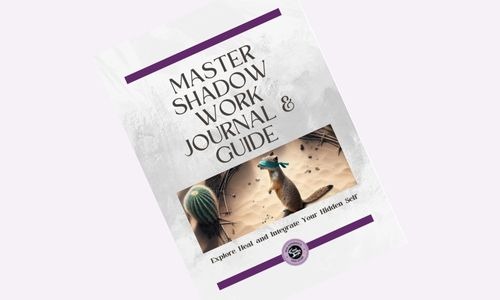
👉 Explore the Master Shadow Work Journal & Guide
Is journaling enough for shadow work?
For many people, journaling is an excellent place to start. While some situations may benefit from additional support, regular reflection through writing can help build self-awareness, emotional insight, and a deeper understanding of recurring patterns.
If you want to understand why journaling is so effective for inner work, Why Shadow Work Journal Prompts Are Helpful for Healing explores how writing supports emotional awareness.
It can also help you feel more grounded and present as you reflect.
There is no need to rush this process. Shadow work is not about how quickly you uncover answers. It is about creating a relationship with yourself that feels safe, honest, and sustainable.
Two Ways to Begin Your Shadow Work Journey
There is no right place to start. Choose what feels supportive for you right now.
As you begin exploring shadow work, one question often comes up:
"Where do I start, and how do I keep going when life gets busy, or emotions feel uncomfortable?"
There is no single right way. You can begin gently, or choose a more structured path depending on what feels right for you.
What is the best way to start shadow work?
The best way to start shadow work is the approach you can practice consistently and safely. Some people prefer a simple introduction with a few guided prompts, while others benefit from a more structured journal that helps them explore patterns and emotions in greater depth.
Free Shadow Work Starter Kit
A structured path for deeper self-discovery and healing.
If you feel ready for a more consistent and supported practice, the Master Shadow Work Journal and Guide offers a clear framework for long-term healing.
This option is designed for people who want more than occasional reflection and are ready to explore recurring patterns, emotional triggers, and deeper self-understanding over time.
This journal is designed to help you understand emotional triggers, identify repeating patterns, and integrate shadow parts with compassion.
Inside the guide, you will find:
• 100+ shadow work journal prompts
• Guided worksheets and reflection pages
• Shadow character and inner child exercises
• Dream journaling and pattern tracking
• 7-day mini challenges for focused healing
• Printable affirmation cards and calming coloring pages
This guide is for those who want a clear, supportive structure to understand their patterns more deeply and stay consistent with their inner work without feeling lost or overwhelmed.
Many people find that having a guided structure makes it easier to stay engaged with shadow work instead of starting and stopping whenever life becomes challenging.



A gentle place to begin.
If you are new to shadow work or unsure how to begin, our free Shadow Work Starter Kit is designed to help you start slowly and safely.
This option is ideal if you want to explore shadow work slowly, see how it feels, and build confidence before committing to a deeper practice.
Inside the free printable PDF, you will find:
• 10 beginner-friendly shadow work journal prompts
• A sample worksheet to meet your shadow parts
• Intention-setting and reflection pages
• Gentle guidance to help you feel grounded
This starter kit is ideal if you want to explore shadow work gently, without pressure, and begin building trust with your inner world at your own pace.
Master Shadow Work Journal and Guide
Both options support shadow work, but they serve different purposes. The Starter Kit helps you begin gently and explore the process. The Master Shadow Work Journal offers a more complete framework for deeper reflection, pattern recognition, and long-term growth.
Whether you begin with a few prompts or a deeper journaling practice, what matters most is creating space to understand yourself with honesty and compassion.
There is no rush, no perfect timeline, and no "right way" to heal.
How We Approach Shadow Work at Soul Sisters Tarot
Our approach is:
• Trauma-aware and nervous-system friendly
• Rooted in compassion rather than self-criticism
• Focused on integration rather than perfection
• Designed to respect your emotional pace
• Encouraging curiosity instead of judgment
We do not believe healing is a race. There is no prize for uncovering the most wounds or moving through the process as quickly as possible. What matters is building enough trust and safety within yourself to stay present with what arises.
Shadow work is not about how deep you go. It is about how gently you listen.
Sometimes the most meaningful healing begins with noticing a single pattern, emotion, or belief and meeting it with understanding instead of judgment.


We believe shadow work should feel supportive, not destabilizing.
Many people assume shadow work has to be intense, painful, or emotionally overwhelming. Our experience has been the opposite. Meaningful healing often happens through small moments of awareness, honest reflection, and learning to relate to yourself with greater compassion.
What is a gentle approach to shadow work?
A gentle approach to shadow work focuses on awareness, self-compassion, and emotional safety rather than pressure or emotional overwhelm. Instead of forcing breakthroughs, it encourages steady reflection, nervous-system regulation, and working at a pace that feels supportive.
🌿 Continue Your Shadow Work Journey
If you feel ready to explore deeper, these guides can support you in understanding your inner world with more clarity, compassion, and awareness.
What should I explore after learning about shadow work?
After learning the basics of shadow work, many people choose to explore emotional triggers, self-worth, relationship patterns, people-pleasing, perfectionism, projection, inner child healing, or shadow work journaling. The best place to continue is usually the area that feels most relevant to your current experiences.
You do not need to read everything or follow a specific order. Shadow work is often most effective when you begin with the pattern, question, or experience that feels most familiar to you right now.
Some people are looking for answers about emotional triggers. Others want to understand relationship patterns, people-pleasing, self-worth struggles, or deeper aspects of personal growth. Follow the path that feels most relevant to your journey.
What should I focus on first in shadow work?
There is no single right place to start. Many people begin with the emotional pattern that affects their life the most, such as people-pleasing, self-sabotage, perfectionism, fear of abandonment, relationship challenges, or recurring emotional triggers.
Deeper Reflection & Self-Exploration
For expanding your awareness and gently exploring your inner patterns.
• 75 Shadow Work Questions to Ask Yourself for Deep Self-Reflection
Projection & Awareness
For understanding how your inner world is reflected through others.
• Shadow Work & Projection: Understanding the Parts of Yourself You See in Others
Identity, Patterns & Inner Roles
For exploring the different parts of yourself and how they shape your experience.
• Shadow Work and Inner Child Healing: What’s the Difference?
Self-Worth, Boundaries & Inner Patterns
For softening the inner critic and exploring identity-based patterns.
• Shadow Work Prompts for People-Pleasing Patterns (30 Deep Questions)
• Shadow Work Prompts for Perfectionism: Overcome the Inner Critic
Spiritual & Archetypal Exploration
For connecting with deeper, intuitive, or symbolic aspects of shadow work.
• Shadow Work and the Dark Feminine: Reclaim Your Hidden Power
Shadow Work & Self-Love
For deepening self-acceptance through emotional integration.
• Shadow Work and Self-Love: Why Healing Your Shadow Helps You Love Yourself
These guides explore different aspects of shadow work, from emotional triggers and relationship patterns to self-worth, healing, and deeper self-understanding.
You do not need to explore everything at once.
Often, the article that resonates most strongly is the one that has something important to teach you.
Follow your curiosity, trust your pace, and allow the process to unfold one step at a time.
A Final Note
Shadow work is not about becoming someone new. It is about understanding the parts of yourself that learned to hide, stay quiet, stay small, or stay protected in order to survive.
Along the way, you may discover that some of the patterns you judged most harshly were actually trying to help you. What once looked like weakness, avoidance, self-sabotage, or fear may have begun as a way to stay safe, connected, or protected.
You do not need to rush. You do not need to have all the answers. You do not need to be fearless.
You only need a willingness to stay curious about yourself and what your experiences may be trying to show you.
Whatever step you choose, trust that the beginning is enough.
Healing rarely happens all at once. More often, it unfolds through small moments of awareness that slowly change how you relate to yourself.
You do not need to heal everything today. You only need to take the next honest step.
With love,
Caitlin and Gerly
Soul Sisters Tarot
FAQ: Shadow Work
What is shadow work in simple terms?
Shadow work is the practice of exploring emotions, beliefs, and parts of yourself that have been pushed out of conscious awareness. These hidden aspects can influence your thoughts, reactions, relationships, and behaviors without you realizing it. Shadow work helps bring them into awareness so they can be understood, accepted, and integrated with compassion.
Is shadow work safe for beginners?
Yes, shadow work can be safe for beginners when approached gently and at a manageable pace. Many people start with journaling, self-reflection, and guided prompts rather than trying to uncover everything at once. Focusing on emotional safety, grounding, and self-compassion helps create a more supportive experience.
How do you start shadow work?
Most people begin shadow work by noticing recurring emotional triggers, repeating patterns, strong reactions, or situations that leave them asking, "Why do I keep responding this way?" Journaling, reflection, and gentle curiosity are often the first steps toward understanding what may be happening beneath the surface.
Is shadow work part of psychology?
Yes. Shadow work originates from the work of Carl Jung, the founder of analytical psychology. Jung used the term "shadow" to describe parts of the personality that remain outside conscious awareness. Modern shadow work combines these psychological concepts with practices such as self-reflection, journaling, and emotional awareness.
Is shadow work dangerous?
Shadow work is not inherently dangerous, but it can bring up strong emotions because it explores experiences, beliefs, and feelings that may have been avoided or suppressed. Approaching shadow work slowly, with emotional awareness and self-compassion, helps make the process safer and more supportive. If past trauma feels overwhelming, working with a qualified therapist may be beneficial.
What are the signs you need shadow work?
Signs you may benefit from shadow work include recurring emotional triggers, self-sabotage, people-pleasing, perfectionism, fear of abandonment, repeating relationship patterns, difficulty setting boundaries, or feeling stuck despite personal growth efforts. These patterns often point to deeper beliefs or emotional wounds that are ready to be explored and understood.
Why does shadow work feel uncomfortable?
Shadow work can feel uncomfortable because it brings awareness to emotions, beliefs, and experiences that may have been hidden or avoided for a long time. Discomfort does not mean something is wrong. It often means you are becoming aware of patterns that were previously operating beneath the surface.
🃏 🌑 If Shadow Work Were a Tarot Card, Which Card Would It Be?
If shadow work were a tarot card, it would most closely resemble The Moon. The Moon is traditionally associated with the unconscious mind, hidden emotions, intuition, uncertainty, and the parts of ourselves that remain unseen. These themes closely mirror the purpose of shadow work, which asks us to explore the beliefs, fears, emotions, and patterns we often keep hidden from ourselves.
Just as The Moon illuminates only part of the path ahead, shadow work rarely provides immediate answers. Both invite us to move slowly, trust our intuition, and become curious about what exists beneath the surface.
The Moon does not show us everything at once. Shadow work doesn't either. Both remind us that healing often begins by becoming willing to see what has been hidden.
👉 Read: If Shadow Work Were a Tarot Card, It Would Be The Moon
How do you know if shadow work is working?
Signs that shadow work is working often include increased self-awareness, recognizing emotional triggers more quickly, understanding your reactions more clearly, and noticing shifts in recurring patterns. Many people also experience greater self-compassion, healthier relationships, and a stronger sense of emotional balance over time.
What are examples of shadow work?
Examples of shadow work include journaling about emotional triggers, reflecting on recurring relationship patterns, exploring childhood experiences, examining self-sabotaging behaviors, identifying limiting beliefs, and answering self-reflection questions designed to uncover unconscious patterns.
Can shadow work help with anxiety or emotional patterns?
Shadow work can help you understand the emotional patterns, fears, beliefs, and protective responses that may contribute to anxiety. By bringing these influences into awareness, many people find it easier to respond with greater clarity, self-understanding, and emotional regulation.
How often should you do shadow work?
Shadow work does not need to be done every day. Many people find that a few intentional sessions per week provide enough space for reflection and integration. The goal is not consistency for its own sake, but creating a pace that feels sustainable and emotionally supportive.
What are the benefits of shadow work?
Shadow work can support greater self-awareness, emotional regulation, self-acceptance, and personal growth. Many people also notice improvements in relationships, boundaries, confidence, self-worth, and their ability to understand recurring emotional patterns.
What happens during shadow work?
During shadow work, you explore thoughts, emotions, reactions, beliefs, and recurring patterns with curiosity rather than judgment. The process often involves journaling, reflection, emotional awareness, and observing how unconscious influences may be affecting your life. Over time, this awareness creates opportunities for deeper understanding and healing.
Can shadow work heal childhood wounds?
Shadow work can help you better understand how childhood experiences continue to influence your emotions, relationships, and beliefs about yourself. While it is not a replacement for therapy, many people find that shadow work supports healing by bringing these patterns into conscious awareness with compassion and curiosity.
Why do I keep repeating the same patterns?
Repeating patterns often happen because the underlying belief, emotional wound, or protective response has not yet been fully understood. Shadow work helps bring these unconscious influences into awareness so they can be explored and gradually changed.
🃏 🌑 Could Shadow Work Represent More Than One Tarot Card?
While The Moon is the tarot card most strongly associated with shadow work, several other cards reflect different aspects of the healing journey:
The Devil for unhealthy patterns, attachments, fears, and self-sabotage
Death for transformation, release, and personal rebirth
The Hermit for introspection, solitude, and inner wisdom
Judgement for self-awareness, acceptance, and awakening
Each of these cards reflects an important stage of shadow work, but The Moon remains the strongest symbolic match because both ask us to walk through uncertainty while learning to trust ourselves.
Shadow work is rarely about finding immediate answers. It is about becoming willing to enter the darkness long enough to discover what has been waiting there. And no tarot card reflects that journey more deeply than The Moon.
Soul Sisters Tarot
A Soft Place to Grow.
💌 SOUL SISTERS WEEKLY
A thoughtful Sunday letter with tarot reflections, moon wisdom, self-love, and gentle encouragement.
© 2026. All rights reserved.
Inspirational Coaching OÜ
sisters@soulsisterstarot.com