💌 JOIN SOUL SISTERS WEEKLY → GET FREE WELCOME GIFTS 🎁
Receive a thoughtful Sunday letter, free Self-Love & Shadow Work guides, and monthly Full Moon rituals ✨



Shadow Work Journal Prompts: The Questions You've Been Avoiding
You already know something feels off. Shadow work journal prompts help you uncover why, with guided questions that reveal hidden beliefs and emotions.
SELF-LOVE, HEALING & INNER WORK
Soul Sisters Tarot
9/14/202517 min read
Why Are Shadow Work Journal Prompts Helpful for Healing?
This guide is part of our Shadow Work collection, where we explore emotional healing, shadow integration, and deeper self-awareness practices.
What are shadow work journal prompts?
Shadow work journal prompts are guided questions designed to help you explore emotional triggers, limiting beliefs, unconscious patterns, fears, and hidden parts of yourself through writing. They provide structure for self-reflection and help you understand why certain thoughts, reactions, and behaviors keep repeating.
Have you ever reacted to something and later wondered: "Why did that affect me so much?" Or noticed yourself repeating the same relationship patterns, fears, or emotional reactions even when you genuinely want things to change? This is often where shadow work begins.
Many of the patterns that shape our lives operate beneath conscious awareness. We may notice the reaction, the conflict, or the frustration, but struggle to understand what is causing it. Shadow work journal prompts help bring those hidden patterns into awareness by giving you specific questions and reflections to explore through writing.
Many people find that a few prompts can create powerful insights. But when you're trying to understand deeper emotional patterns, triggers, relationship cycles, or self-sabotaging behaviors, structure often makes the process easier.
Working with a guided shadow work journal can help you connect those individual insights into a bigger picture, making it easier to recognize recurring patterns and understand what may be driving them beneath the surface.
Welcome to the world of shadow work. Despite the name, it isn't about darkness or negativity. It's about understanding the hidden parts of yourself that influence how you think, feel, and respond to life.
Do shadow work journal prompts actually help?
Yes. Shadow work journal prompts help many people recognize emotional triggers, recurring patterns, limiting beliefs, and unconscious behaviors that may otherwise remain unnoticed. Writing your responses creates space for deeper self-awareness and reflection.
Shadow work is just one part of a deeper healing journey. If you’d like to explore the bigger picture of emotional growth and self-discovery, you can start with our complete guide to self-love and healing as a gentle path into inner work.
If you're completely new to shadow work journaling, our Shadow Work for Beginners: A Gentle 30-Day Plan can help you approach this practice gently and safely.
One of the biggest challenges in shadow work is knowing where to start. Many people sit down to journal and quickly realize they don't know what questions to ask themselves. That's exactly where shadow work journal prompts become helpful. Instead of staring at a blank page, you have a clear starting point that helps guide your reflection toward deeper patterns and insights.
In this guide, you'll learn what shadow work journal prompts are, why they work, how to use them effectively, and how journaling can help you uncover patterns that are often difficult to see on your own. We'll also explore printable shadow work journal PDFs, structured journaling approaches, and ways to create a reflection practice that feels supportive rather than overwhelming.
How do you use shadow work journal prompts?
Shadow work journal prompts are most effective when used slowly and honestly. Rather than rushing through dozens of questions, focus on one prompt at a time, write without judgment, and pay attention to recurring emotions, memories, or patterns that emerge.
So grab a notebook, your favorite pen, maybe a calming cup of tea… and let’s dive into the shadows.
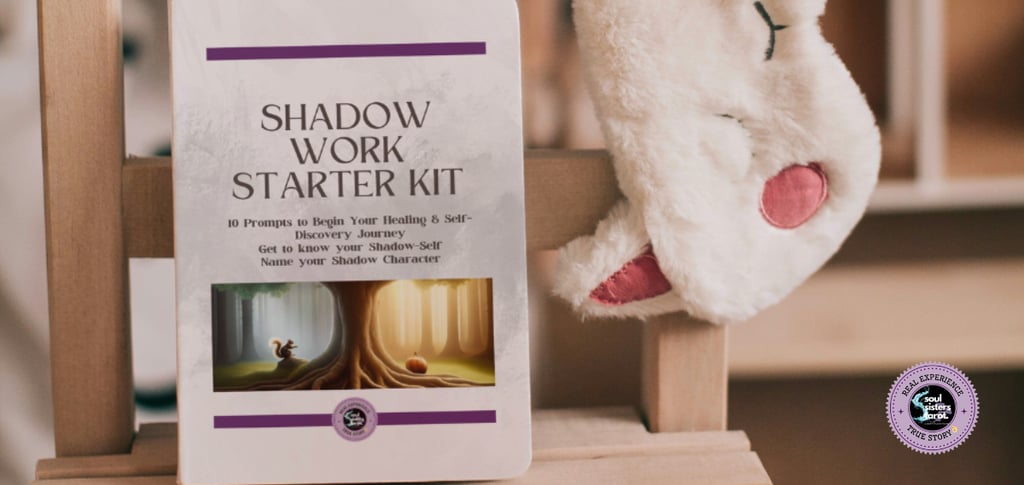
🌷 Free Shadow Work Starter Kit
You keep noticing the same patterns, but you don't know where to start.
Sometimes the hardest part isn't answering the questions. It's knowing which questions to ask in the first place. Our Free Shadow Work Starter Kit gives you a gentle place to begin with guided prompts and reflection exercises designed for beginners.


🧭 What You’ll Learn About Shadow Work Journal Prompts
In this guide, you’ll discover:
What shadow work journal prompts are, and why they help uncover hidden emotional patterns
Why certain reactions, fears, and relationship cycles keep repeating
How journaling helps you move from self-awareness to deeper understanding
How to use shadow work prompts safely without feeling overwhelmed
Beginner-friendly and advanced prompts for self-reflection and healing
How to create a shadow work journaling practice that actually lasts
Where to find printable shadow work journal PDFs and guided resources
You may benefit from shadow work journal prompts if...
• You keep reacting more strongly than a situation seems to deserve
• The same relationship patterns keep repeating
• You struggle with self-sabotage or self-doubt
• You often feel triggered but don't fully understand why
• You want deeper self-awareness but don't know where to start
Shadow work journal prompts help bring these hidden patterns into awareness so they can be explored with curiosity instead of judgment.
📚What Are Shadow Work Journal Prompts?
What are shadow work journal prompts?
Shadow work journal prompts are guided questions designed to help you explore emotional triggers, unconscious beliefs, fears, relationship patterns, and hidden parts of yourself through writing. They provide structure for self-reflection and help uncover patterns that may otherwise remain unnoticed.
Why Shadow Work Journal Prompts Exist
Many people begin shadow work because they notice the same emotional patterns repeating in their lives.
They may find themselves:
• reacting strongly to certain situations
• struggling with the same fears or insecurities
• repeating similar relationship patterns
• feeling stuck without understanding why
The challenge is that these patterns often operate beneath conscious awareness. Shadow work journal prompts are designed to help bring those patterns into the light by giving you specific questions to explore through writing.
If you're completely new to shadow work itself, our guide on how to begin shadow work and heal your inner self offers a deeper introduction.
How Journal Prompts Make Reflection Easier
One of the hardest parts of shadow work is knowing where to begin. Many people sit down with a notebook and immediately wonder: "What am I supposed to write about?"
Shadow work journal prompts remove that uncertainty. Instead of staring at a blank page, you have a specific starting point that helps guide your attention toward emotional patterns, beliefs, fears, triggers, and experiences that may be influencing your life.
A good prompt doesn't tell you what to think. It helps you discover what is already there.
Why Writing Is More Powerful Than Thinking
Most of us think about our problems constantly. But thinking and reflecting are not the same thing. Thoughts tend to move in circles. Writing slows the process down.
When you respond to shadow work journal prompts on paper, you begin to notice connections that are easy to miss in your head.
You may start recognizing:
• recurring fears
• repeated relationship dynamics
• self-critical beliefs
• emotional triggers that show up again and again
This is one reason shadow work journaling can feel so powerful. The patterns were often there all along. Writing simply makes them easier to see.
Do shadow work journal prompts actually work?
Shadow work journal prompts can help uncover recurring emotional patterns, limiting beliefs, and unconscious reactions by encouraging deeper self-reflection. While prompts do not create change on their own, they often help people recognize patterns they were previously unaware of, which is the first step toward meaningful personal growth.
🍃Benefits of Using Shadow Work Journal Prompts
What are the benefits of shadow work journal prompts?
Shadow work journal prompts help uncover emotional triggers, recurring patterns, limiting beliefs, and unconscious behaviors through guided self-reflection. They provide structure, make journaling easier, and help many people gain deeper self-awareness without feeling overwhelmed by a blank page.
🌿 They Help You Recognize Hidden Patterns
One of the biggest benefits of shadow work journal prompts is that they help you notice patterns that are easy to miss in everyday life.
You may begin to recognize:
• recurring fears and insecurities
• self-sabotaging behaviors
• emotional triggers
• limiting beliefs
• relationship cycles that keep repeating
For example, many people discover deeper insights around:
👉 Shadow Work for Self-Sabotage
👉 Shadow Work and Projection
Journal prompts help bring these patterns into awareness so you can understand what may be driving them beneath the surface.
They Help You Challenge Limiting Beliefs
Many of us carry beliefs about ourselves that we rarely question.
Beliefs like:
• I'm not good enough
• I'll never succeed
• People will eventually leave me
• I need to earn love or approval
Shadow work journal prompts create space to explore where these beliefs came from, and whether they still serve you. Instead of accepting them as facts, you begin to see them as stories that can be examined, challenged, and changed.
If limiting beliefs are something you're currently working through, you may also find support in:
👉 Breaking Negative Thinking Patterns for a Healthier Mindset
They Help You Process Difficult Emotions More Safely
Many people try to push difficult emotions away. Shadow work journaling encourages the opposite. It creates a safe space to slow down, reflect, and understand what you are feeling instead of immediately reacting to it.
Writing often makes emotions feel less overwhelming because you're giving them space to exist outside your mind.
If shadow work ever feels particularly intense, you may resonate with:
👉 Signs of a Healing Crisis
They Help You Track Your Growth Over Time
One of the most overlooked benefits of shadow work journaling is that it creates a record of your journey.
When you revisit older entries, you may notice:
• triggers that no longer affect you the same way
• beliefs you've started to outgrow
• healthier responses to situations that once felt overwhelming
• patterns you've become much more aware of
Growth can be difficult to see when it happens gradually. Journaling helps make that progress visible.
Why Prompts Often Work Better Than a Blank Page
Many people want to journal more, but struggle with a simple question: "What am I supposed to write about?"
Shadow work journal prompts solve this problem by giving you a clear starting point. Instead of staring at a blank page, you can focus your attention on a specific emotion, belief, trigger, memory, or relationship pattern.
This makes reflection feel more approachable, especially if you're new to shadow work. Shadow work journal prompts do not create change by themselves. What they do is help you see what has been operating beneath the surface. And once you can see a pattern clearly, it becomes much easier to understand it, work with it, and eventually change it.
Shadow work is like cleaning out your emotional closet. Some beliefs and patterns once kept you safe, like an old coat you wore every winter. But if it no longer fits, it’s time to thank it for its service and gently hang it back up—for good. That way, you make space for something new, comfortable, and truly you. - Cailtin
🧠How to Use Journal Prompts for Shadow Work
How do you use shadow work journal prompts?
The most effective way to use shadow work journal prompts is to focus on one question at a time, write honestly without judgment, and pay attention to recurring emotions, memories, beliefs, or patterns that emerge. The goal is not to find perfect answers, but to develop greater awareness and understanding of yourself.
Creating a Safe Space Before Writing
Shadow work journal prompts can sometimes bring up emotions, memories, or insights you weren't expecting. Before you begin, create an environment that feels calm, supportive, and free from distractions.
Simple things can help:
• Light a candle
• Play calming music
• Make yourself a warm drink
• Silence notifications
• Remind yourself: "It's safe to explore my inner world."
The goal isn't to create a perfect ritual. It's simply to help your mind slow down enough to listen.
If you feel emotionally overwhelmed during shadow work, learning how to ground yourself spiritually and emotionally can help you return to balance.
Daily vs. Weekly Shadow Work Journaling
You don't need to spend hours journaling every day for shadow work to be effective.
Some people prefer:
• short daily reflections
• one prompt each morning
• a weekly deep-dive session
• journaling whenever a strong trigger or emotion appears
The best approach is the one you can maintain consistently. What matters most is not how often you journal, but whether you're giving yourself enough space to reflect honestly. When you're trying to understand repeating patterns, it can be surprisingly easy to go in circles or miss what is happening underneath.
Working with a guided shadow work journal can make this process easier by helping you connect triggers, emotions, beliefs, and recurring experiences in a more structured way.
🖤 If you want a more supportive and structured way to explore your patterns:
👉 Explore the Master Shadow Work Journal & Guide
Pairing Prompts with Meditation or Mindfulness
After journaling, spend a few minutes sitting quietly with whatever surfaced during your reflection. You don't need to analyze it immediately.
Simply notice:
• What emotions are present
• What thoughts keep returning
• What your body is feeling
This helps create space for integration and can prevent you from getting stuck in overthinking. Sometimes the most valuable insights arrive after the writing is finished.
Tips for Writing Without Judgment
Many people get stuck because they try to write the "right" answer. Shadow work isn't about being impressive, insightful, or perfectly self-aware. It's about being honest.
As you work through shadow work journal prompts:
• Don't censor yourself
• Don't worry about grammar or spelling
• Be honest, even when the answer feels uncomfortable
• Allow incomplete or messy thoughts
• If emotions become overwhelming, pause and ground yourself
The more honest you are, the more useful the process becomes.
⚠️ Common Mistakes in Shadow Work Journaling
What mistakes do people make when using shadow work journal prompts?
One of the most common mistakes is approaching shadow work journal prompts as something you need to "complete" or "get right." Shadow work is not about finding perfect answers. It's about developing awareness, understanding patterns, and building a more honest relationship with yourself over time.
Trying to Fix Yourself Instead of Understanding Yourself
Many people begin shadow work because they want something in their life to change. That is completely natural. The problem happens when every journal entry becomes a search for what is "wrong" with you.
Shadow work journal prompts are not designed to prove that you're broken. They are designed to help you understand yourself more clearly. The goal is awareness first. Change comes later.
Judging Your Answers
Sometimes a prompt reveals something uncomfortable. A fear. A resentment. A belief you don't like. The moment many people discover these things, they start judging themselves for having them. But shadow work becomes much more effective when you approach your answers with curiosity instead of criticism.
The question is not: "Why am I like this?"
The question is: "What is this trying to show me?"
Forcing Emotional Breakthroughs
Many people assume shadow work should feel intense every time. In reality, some of the most important insights are surprisingly small. You do not need to force emotions, relive painful experiences, or push yourself deeper than feels safe. Real progress often comes through consistent reflection rather than dramatic breakthroughs.
Skipping Grounding After Difficult Sessions
Some prompts may bring up strong emotions. When this happens, it helps to give yourself time to reconnect with the present moment.
Simple grounding practices such as:
• taking a walk
• focusing on your breathing
• drinking water
• spending time in nature
can help your nervous system settle after deeper reflection.
Expecting Immediate Results
This is one of the biggest frustrations people experience. You answer a few shadow work journal prompts and expect everything to suddenly make sense. But most patterns reveal themselves gradually. The purpose of shadow work journaling is not to create instant transformation. It is to build understanding over time.
Using Shadow Work as a Substitute for Professional Support
Shadow work journaling can be a powerful tool for self-reflection. However, it is not a replacement for therapy or professional support when dealing with significant trauma, severe anxiety, or overwhelming emotional distress. Sometimes the strongest thing you can do is ask for help.
A Gentle Reminder
Shadow work is not about becoming perfect. It is not about fixing every flaw or uncovering every answer. It is about meeting yourself with honesty, curiosity, and compassion. The goal is integration, not self-criticism.
🤍 Master Shadow Work Journal & Guide
You keep writing about the same problem, but nothing seems to change.
A guided shadow work journal helps you move beyond surface-level reflection and uncover the deeper beliefs, triggers, and patterns beneath your reactions. The Master Shadow Work Journal & Guide gives you a structured path to explore them safely and consistently.


🌱 Shadow Work Journal Prompts for Beginners: Where to Start
How many shadow work journal prompts should beginners do at once?
One of the biggest mistakes beginners make is trying to answer dozens of shadow work journal prompts in a single session. More prompts do not automatically create deeper healing. In fact, shadow work is often more effective when you spend time exploring one meaningful question rather than rushing through twenty.
If you're new to shadow work journaling:
• Choose one prompt
• Set aside 10–15 minutes
• Write without censoring yourself
• Notice what emotions arise
• Pause if you feel overwhelmed
• Ground yourself afterward
The goal is not to finish a list. The goal is to understand yourself more deeply. Shadow work journal prompts should feel reflective and thought-provoking, but not emotionally destabilizing. Healing is not a race.
🌷 Free Shadow Work Starter Kit
One question leads to another, and suddenly you want to go deeper.
If these prompts sparked something inside you, our Free Shadow Work Journal Prompts Kit gives you even more guided questions to help you explore patterns, triggers, fears, and self-worth with greater clarity.
🔍12 Shadow Work Journal Prompts for Beginners
What are good shadow work journal prompts for beginners?
Good shadow work journal prompts help you explore emotional patterns, beliefs, fears, and reactions without feeling overwhelmed. Beginner prompts should encourage curiosity and self-awareness rather than forcing deep emotional processing before you're ready.
Shadow Work Journaling Prompts for Self-Reflection
What parts of myself do I try to hide from others, and why?
When do I feel most insecure?
What qualities in other people trigger a strong reaction in me?
Shadow Work Journal Prompts for Relationships
What patterns keep repeating in my relationships?
When do I find it difficult to set boundaries?
How do I usually respond to rejection or abandonment?
If relationship patterns are something you're exploring, understanding your triggers often leads to recognizing where stronger boundaries are needed. You may also find support in our guide to setting healthy boundaries.
Shadow Work Journal Prompts for Inner Healing
What childhood experience still affects me today?
When did I first start feeling that I wasn't enough?
What am I afraid people would discover if they truly knew me?
Shadow Work Journal Prompts for Self-Worth
What dream have I put on hold because of fear?
When have I sabotaged my own success?
What external validation do I rely on most?
Many people begin with a few prompts like these and quickly realize that the real challenge is not finding questions. It's knowing how to go deeper when an answer reveals something important.
If you'd like a much larger collection of reflective questions, explore our guide:
👉 75 Shadow Work Questions to Ask Yourself for Deep Self-Reflection
If you want a more structured path with guided exercises, worksheets, and 100+ prompts organized by topic:
🖤 Explore the Master Shadow Work Journal & Guide
🎯Shadow Work Journal Prompts PDF (Free & Printable Options)
Where can you find shadow work journal prompts PDFs?
Many people prefer working with shadow work journal prompts in a printable PDF format because it makes journaling feel more structured and easier to return to over time.
A printable format allows you to:
• keep all of your prompts in one place
• revisit previous reflections
• track recurring patterns more easily
• journal at your own pace
If you're looking for a gentle place to begin, you can download our Free Shadow Work Starter Kit, which includes beginner-friendly prompts and guided reflection exercises.
🖤 Download the Free Shadow Work Starter Kit
If you'd like a more comprehensive collection of prompts, worksheets, and structured shadow work exercises:
👉 Explore the Master Shadow Work Journal & Guide
✨Start Your Shadow Work Journey Today
Shadow work journal prompts are not about finding perfect answers. They are about asking honest questions. Sometimes a single prompt can reveal a pattern you've been carrying for years. Sometimes it simply helps you understand yourself a little more clearly than you did yesterday. Both matter.
You do not need to answer dozens of questions in one sitting. You do not need to uncover everything at once. You only need a willingness to pause, reflect, and listen to what is already asking for your attention.
As you continue working with shadow work journal prompts, you may begin to notice:
• recurring emotional triggers
• hidden beliefs about yourself
• relationship patterns that repeat
• fears that have quietly shaped your choices
Awareness is often the first step toward change. And once you can see a pattern clearly, you have the opportunity to respond differently.
🖤 Ready to Go Deeper?
If you're looking for a more structured way to explore your emotional patterns, triggers, beliefs, and shadow parts, the Master Shadow Work Journal & Guide was designed to support that journey.
Inside you'll find:
• 100+ guided shadow work journal prompts
• worksheets for triggers, beliefs, and emotional patterns
• inner child and shadow exploration exercises
• printable reflection tools
• a step-by-step structure to help you stay consistent
👉 Explore the Master Shadow Work Journal & Guide
Healing doesn't happen because you find the perfect prompt. It happens because you keep showing up with curiosity, honesty, and compassion for yourself. Start with one question. See where it leads. And trust that understanding yourself more deeply is never wasted work.
If you'd like to continue exploring shadow work, self-love, healing, and spiritual growth, you can also discover our journals, courses, rituals, and self-discovery resources inside Sisters Creation.
With love,
Caitlin & Gerly,
Soul Sisters Tarot
Still wondering where to begin?
Start with one question. Not ten. Not fifty.
One honest answer is often more powerful than an entire page of rushed journaling.
❓ FAQ: Shadow Work Journal Prompts
What are shadow work journal prompts?
Shadow work journal prompts are guided questions designed to help you explore hidden emotions, unconscious beliefs, recurring patterns, and emotional triggers through writing. Unlike general journaling, shadow work prompts encourage deeper self-reflection by helping you examine why you react, think, and feel the way you do. Their purpose is not to judge or fix you, but to increase self-awareness and understanding.
How do I start shadow work journal prompts as a beginner?
The best way to start shadow work journal prompts is by choosing one simple question and giving yourself 10 to 15 minutes to write honestly without overthinking. Focus on curiosity rather than finding the "right" answer. Many beginners find it helpful to start with questions about emotional triggers, self-worth, relationships, or recurring patterns before moving into deeper topics.
Do shadow work journal prompts actually work?
Shadow work journal prompts can be highly effective because they help bring unconscious thoughts, emotional patterns, and limiting beliefs into conscious awareness. While prompts do not create change on their own, they often help people recognize patterns they were previously unaware of. Awareness is usually the first step toward emotional healing, personal growth, and lasting change.
How often should I use shadow work journal prompts?
There is no perfect schedule. Some people use shadow work journal prompts daily, while others prefer a few times each week. Consistency is more important than frequency. Even one thoughtful journaling session per week can help you develop greater self-awareness and recognize patterns over time.
Are shadow work journal prompts safe to do alone?
For most people, yes. Shadow work journal prompts are generally safe when approached slowly and with self-compassion. However, some prompts may bring up difficult emotions or memories. If you have experienced significant trauma or feel overwhelmed by what arises, working alongside a therapist or qualified mental health professional can provide additional support and emotional safety.
Why do shadow work journal prompts feel uncomfortable?
Shadow work journal prompts often feel uncomfortable because they encourage you to explore emotions, beliefs, fears, and experiences that may have been ignored or avoided for a long time. This discomfort does not necessarily mean something is wrong. In many cases, it is a sign that you are becoming aware of patterns that were previously operating beneath the surface.
What is a shadow work journal prompts PDF?
A shadow work journal prompts PDF is a printable or digital collection of guided reflection questions designed to support shadow work journaling. Many people prefer PDF formats because they keep prompts organized in one place, make it easier to track insights over time, and provide a structured approach to self-reflection.
What is the difference between a shadow work journal and regular journaling?
Regular journaling is often used to record thoughts, experiences, or daily events. A shadow work journal is more intentional and focuses on exploring emotional triggers, unconscious beliefs, recurring patterns, and hidden aspects of the self. The goal is not simply to express your thoughts but to better understand the deeper reasons behind them.
Can shadow work improve relationships?
Yes. Shadow work journaling can help improve relationships by increasing self-awareness around emotional triggers, communication patterns, fears, and attachment styles. As you better understand your own reactions and needs, it often becomes easier to set healthy boundaries, communicate clearly, and build more balanced relationships with others.
What's the difference between shadow work journal prompts and shadow work questions?
Shadow work journal prompts and shadow work questions are very similar, but they are often used differently. Shadow work questions are usually individual reflection questions, while shadow work journal prompts are designed to be explored through writing. Many prompts encourage deeper journaling, pattern recognition, and ongoing self-reflection rather than providing a quick answer.
What should I do after answering a shadow work journal prompt?
Many people assume the goal is to answer as many prompts as possible. In reality, the most valuable insights often come after the writing is finished. Take a few moments to reflect on what surfaced, notice any emotions or patterns that appeared, and return to the prompt later if new insights arise. Shadow work is less about finding immediate answers and more about developing ongoing self-awareness.
Is Shadow Work Dangerous?
Shadow work is not inherently dangerous, but it can sometimes bring strong emotions to the surface. When approached gently and at a pace that feels safe, shadow work is generally a supportive form of self-reflection. If past trauma or intense emotional experiences feel overwhelming, seeking support from a therapist can help make the process feel safer and more manageable. You may read more about it in our article: Is Shadow Work Dangerous?
Soul Sisters Tarot
A Soft Place to Grow.
💌 SOUL SISTERS WEEKLY
A thoughtful Sunday letter with tarot reflections, moon wisdom, self-love, and gentle encouragement.
© 2026. All rights reserved.
Inspirational Coaching OÜ
sisters@soulsisterstarot.com