💌 JOIN SOUL SISTERS WEEKLY → GET FREE WELCOME GIFTS 🎁
Receive a thoughtful Sunday letter, free Self-Love & Shadow Work guides, and monthly Full Moon rituals ✨


How to Celebrate Samhain: The Night to Let Go
How to celebrate Samhain through ancient traditions, Halloween folklore, ancestor remembrance, Tarot, spirit rituals, and a powerful seasonal invitation to let go.
SEASONAL & SPIRITUAL TRADITIONS
Soul Sisters Tarot
10/25/202527 min read


How to Celebrate Samhain: The Sacred Roots of All Hallows’ Eve and Halloween
This article is part of our Sacred Celebrations & Spiritual Traditions Full Guide, a sacred space for honoring seasonal cycles, spiritual rituals, and meaningful life celebrations.
How do you celebrate Samhain? A meaningful Samhain celebration can include honoring ancestors, marking the end of the harvest, sharing seasonal food, lighting a candle or fire, practicing divination, reflecting on what you are ready to release, and welcoming the darker half of the year. Samhain is an ancient Gaelic seasonal festival associated with the end of the harvest and the beginning of winter, traditionally connected with the period around October 31 and November 1.
Samhain is also deeply connected to the story of Halloween. The Gaelic festival, the Christian observance of All Hallows’ Eve, and the modern Halloween celebration are related, but they are not the same tradition. Understanding that distinction makes it easier to explore Samhain rituals without reducing an important cultural tradition to simply "the pagan version of Halloween."
Historically, Samhain marked a significant seasonal boundary in Gaelic culture. Harvest work was coming to an end, winter was approaching, and communities gathered around fire, food, storytelling, and practices associated with the unseen world. Medieval Irish literature preserves references to Samhain, while later and modern Pagan traditions have developed their own rituals around ancestors, protection, divination, remembrance, and spiritual transformation.
For a modern practitioner, this creates a beautiful opportunity to celebrate Samhain in a way that is both rooted and personal. You might create an ancestor altar, prepare an autumn feast, take a quiet walk through the changing landscape, pull a Tarot card for reflection, or perform a simple release ritual for something that has reached the end of its season in your own life.
The connection between Samhain and Halloween becomes especially fascinating when you look at how old seasonal customs evolved across centuries. From sacred fire and remembrance to costumes, lanterns, and autumn gatherings, many familiar October traditions carry layers of history. You can explore the broader history of Halloween alongside the seasonal traditions that shaped it.
And Samhain does not exist in isolation. It is one turning point within the larger Wheel of the Year, leading from the final harvest toward the stillness of winter and eventually the return of light at Yuletide.
In this guide, we will explore what Samhain means, where its traditions come from, how Samhain differs from Halloween, and how you can create your own meaningful Samhain celebration today, whether you are completely new to the tradition or have been honoring this seasonal threshold for years.
🌿 What Is Samhain?
Samhain is an ancient Gaelic seasonal festival associated with the end of the harvest and the beginning of winter, traditionally observed around November 1, with many festivities taking place on the preceding night. Medieval Irish sources place Samhain among the major seasonal turning points of the year, and the festival appears repeatedly in early Irish literature as a significant time for gatherings, feasting, supernatural encounters, and divination.
The name is associated with the beginning of winter, and Samhain marked a practical change in the agricultural year. Harvest work was ending, winter conditions were approaching, and communities entered a different rhythm of life. This seasonal transition is important because Samhain was not originally simply a celebration of death or a spiritual Halloween. It was a threshold in the yearly cycle, connecting the completion of one season with the uncertain months ahead.
🍂 When Is Samhain Celebrated?
Samhain is traditionally associated with November 1, while the main celebration began on the evening of October 31. In the Gaelic calendar, the day was understood to begin at sunset, which helps explain why the night of October 31 became so strongly associated with the festival. The National Museum of Ireland describes October 31 as the main festive night preceding November 1, when Samhain marked the onset of winter.
For modern practitioners, this means you may celebrate Samhain on October 31, November 1, or across both evenings, depending on your tradition, location, and personal practice. There is no need to force your celebration into a single modern calendar date when the deeper meaning is the seasonal transition itself.
🔥 Why Was Samhain Important?
Samhain was significant because it marked a change in the practical and symbolic structure of life. Ronald Hutton's research describes Samhain as the festival that marked the opening of winter in early medieval Ireland, a time when the cereal harvest was already completed, and major community gatherings could take place. Early Irish stories frequently use Samhain as the setting for important assemblies and extraordinary encounters.
Fire, food, community gatherings, games, storytelling, and protection customs all became associated with the Samhain season. Some of the traditions documented in Irish folklore survived into later Halloween customs, including bonfires, disguises, seasonal foods, fortune-telling games, and practices connected with the dead and the Otherworld.
🌑 Samhain and the Otherworld
One of the most fascinating aspects of Samhain is its connection with the Otherworld in Irish tradition.
Medieval Irish literature repeatedly portrays Samhain as a liminal time when the boundaries between the ordinary human world and the Otherworld became unusually permeable. Stories describe supernatural beings appearing, humans encountering inhabitants of the Otherworld, and knowledge being revealed through extraordinary encounters. The University College Cork's Department of Early and Medieval Irish notes that Samhain appears in early Irish literature as a time when mortals could visit the Otherworld and its inhabitants could enter the human world.
This is also where Samhain's association with divination and foresight becomes particularly interesting. A medieval account even describes a man visiting Newgrange at Samhain to seek knowledge of the future, showing that the connection between this seasonal threshold and supernatural knowledge is not simply a modern invention.
For a modern spiritual practitioner, this history can inspire practices such as Tarot, journaling, meditation, or other forms of reflection. You do not have to interpret an ancient Otherworld belief literally to work with the symbolism. Samhain can simply become a powerful moment to ask what you are noticing, what you are remembering, and what you are ready to understand differently.
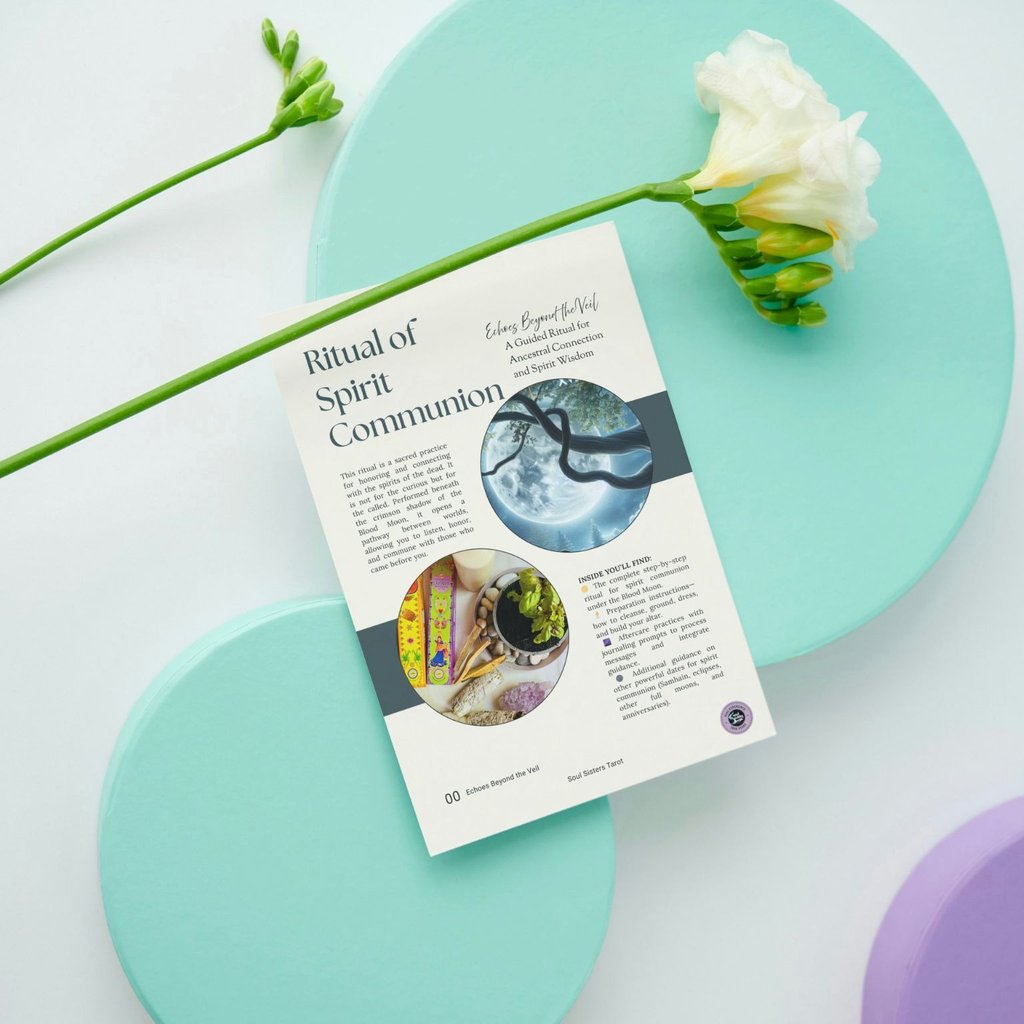
🕊️ Ritual of Spirit Communion
Sometimes remembering someone isn't enough. You want a way to feel closer.
Our Ritual of Spirit Communion is an illustrated guide for creating a grounded, intentional space for remembrance and spiritual connection. It walks you through preparing your space, setting your intention, connecting with the unseen, and closing the ritual with care, so you can explore spirit communion without feeling like you have to figure everything out on your own.
🍁 Was Samhain Really the Celtic New Year?
You will often see Samhain described online as the Celtic New Year, and the idea has become deeply established in modern Pagan traditions. Historically, however, that description deserves some nuance.
Samhain clearly marked a major seasonal turning point and the beginning of winter in early medieval Ireland. It also appears at the head of some medieval Irish seasonal lists, which helps explain why it has been understood as the beginning of the annual cycle. But historian Ronald Hutton has examined the evidence behind the "Celtic New Year" interpretation and traced much of its popularity to later scholars rather than treating it as an unquestionable fact about all ancient Celtic societies.
So, rather than saying that all Celts celebrated Samhain as New Year's Day, it is more accurate to describe Samhain as a major Gaelic seasonal threshold associated with the opening of winter. Modern Pagan and Wiccan traditions may meaningfully interpret it as a spiritual new year, but that is best presented as a contemporary religious interpretation rather than a simple historical fact.
🍃 Soul Sisters Notes
"Samhain becomes more meaningful when we stop asking whether it was "really" Halloween, a New Year, or a festival of the dead, and start looking at the threshold it represents." - Caitlin
The historical evidence gives us a festival deeply connected with seasonal change, community, the harvest, winter, the Otherworld, and the stories people told about this unusual time of year. Modern spirituality adds another layer: the opportunity to consciously acknowledge our own transitions.
A season ends whether we perform a ritual or not. Samhain simply gives us a beautiful reason to notice the ending. That distinction will matter throughout this guide. Some practices described here come from historical Irish and Gaelic traditions, some come from later folklore, and some are modern spiritual practices inspired by Samhain's themes. We will distinguish between them rather than blending everything into one imagined ancient ritual.
🍁 What Does It Mean to Celebrate Samhain?
To celebrate Samhain today means consciously marking a transition. It is an opportunity to pause at the changing season, acknowledge what has come to an end, remember what has shaped you, and consider what you want to carry into the months ahead.
For many people, that means looking back before looking forward. You might recognize something you completed, honor someone who influenced your life, or acknowledge that a particular chapter has naturally reached its conclusion.
Samhain can also provide a symbolic moment for release. Instead of asking only what you want to achieve next, consider what you no longer want to carry with you. This could be an outdated expectation, an unhealthy habit, a lingering resentment, or simply something that has served its purpose.
The celebration can be quiet and personal or shared with others. A candle, seasonal meal, walk through autumn nature, moment of remembrance, or simple reflection can all become meaningful when you understand why you are doing them.
There is no single modern way to celebrate Samhain. The important part is creating a deliberate pause between what has been and what comes next. Other seasonal thresholds offer their own invitations to reflection too, from the balance and renewal of the Autumn Equinox to the fresh beginnings explored in our guide to Spring Equinox rituals for emotional rebirth.
🌑 What Is the Spiritual Meaning of Samhain?
The spiritual meaning of Samhain is closely connected with transformation, release, remembrance, and accepting the natural cycles of life. Its place at the turning of the season makes it a powerful symbolic time to slow down, look honestly at what is changing, and make peace with endings that cannot be avoided.
🍂 Embracing Endings
Samhain can remind us that an ending is not necessarily something that has gone wrong. A relationship may have changed, a goal may no longer feel meaningful, or a version of yourself may simply have outgrown its old life. Spiritually, this season invites you to recognize those changes instead of endlessly trying to return to what was.
🕯️ Remembering What Shaped You
Remembrance is another important spiritual theme. Honoring ancestors, loved ones, family stories, or significant experiences can help us understand where we came from and what we carry forward. You might write about a person who influenced you, revisit a family tradition, or choose one quality from someone you admire that you want to embody in your own life.
🌑 Making Peace With the Unknown
Samhain also belongs to the darker part of the seasonal cycle, making it a natural symbol for the things we cannot yet see clearly. Instead of demanding immediate answers, you can use this time to become more comfortable with uncertainty. What if you do not need to know exactly what comes next before you let go of what is finished?
🌱 Trusting Transformation
The deeper lesson is that release creates space. Nature does not hold onto every leaf simply because it once belonged to the tree. In the same way, letting go can be an act of trust rather than defeat.
Samhain therefore offers a spiritual invitation that is simple but profound: honor what has been, release what is complete, and allow the next chapter to emerge in its own time.
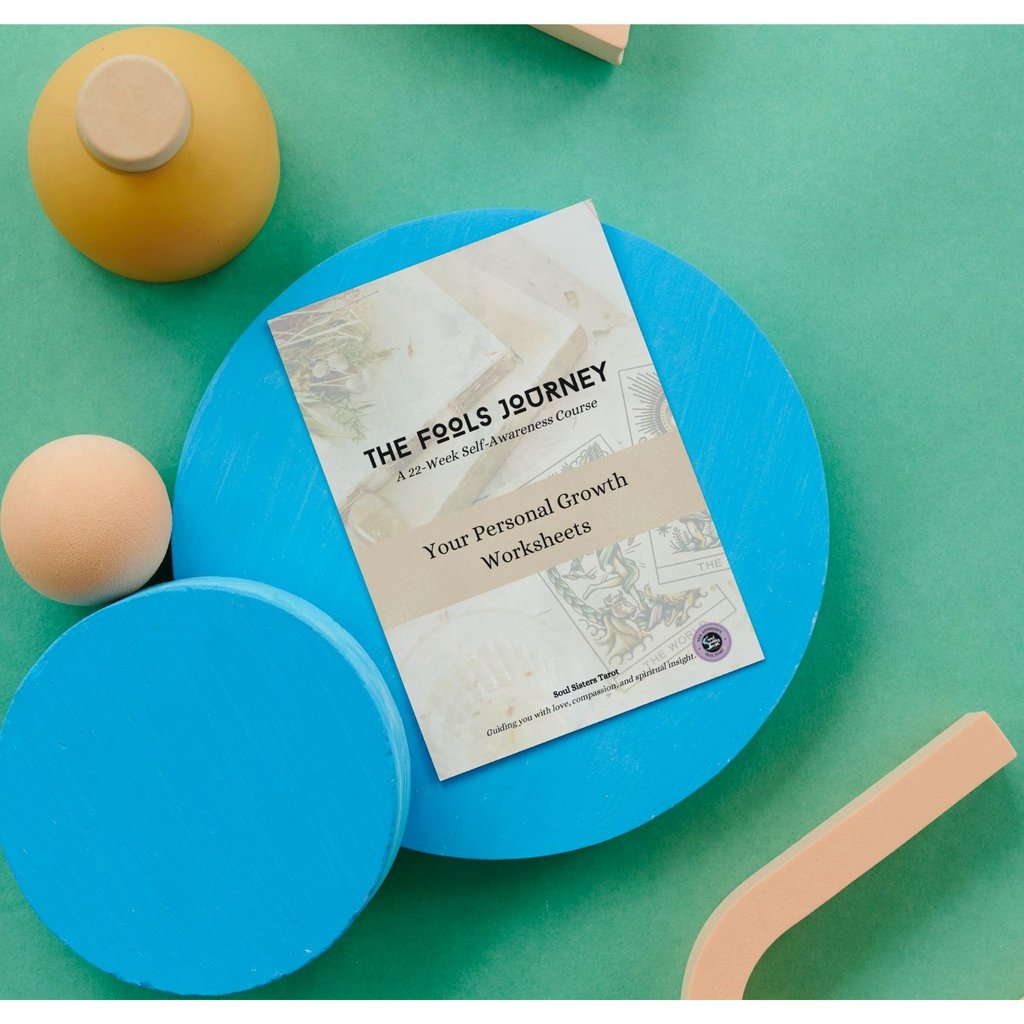
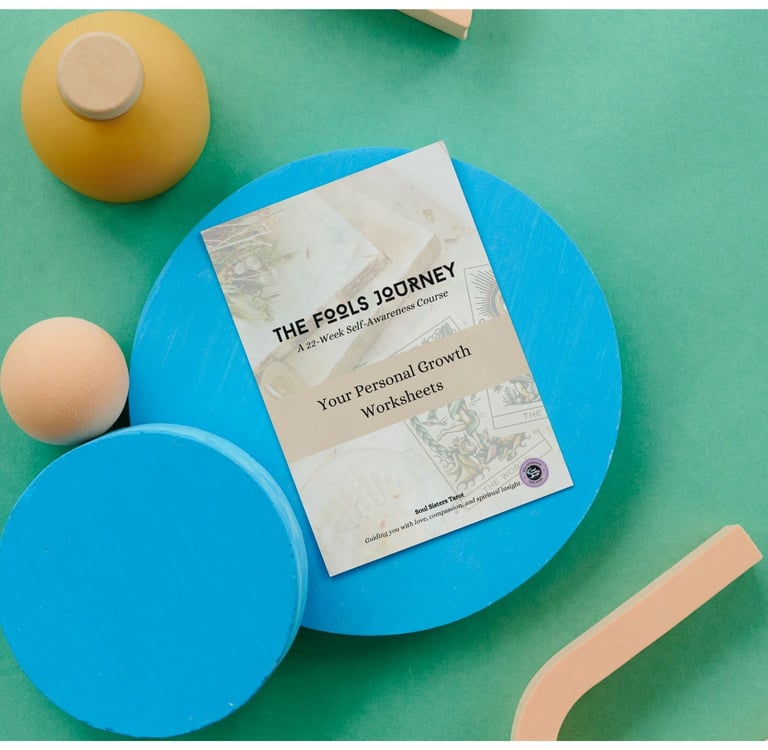
🪞 The Fool's Journey Self-Awareness Course
What if the ending you're facing is actually showing you something about who you're becoming?
Our Fool's Journey Self-Awareness Course is a 22-week journey through the Tarot archetypes and the different stages of personal growth. Instead of using Tarot simply to predict what comes next, it helps you explore patterns, choices, fears, relationships, strengths, and the parts of yourself that are asking to be understood. If Samhain has you reflecting on where you have been and what needs to change, this is an invitation to take that self-exploration deeper.
🏠 How to Celebrate Samhain at Home
You can celebrate Samhain at home by creating a simple evening of remembrance, release, seasonal connection, and reflection. You might light a candle, prepare an autumn meal, honor someone who has shaped your life, spend time outdoors, practice divination, or create a personal ritual for something you are ready to leave behind.
You do not need to follow a complicated ceremony or own special ritual tools. Whether you celebrate alone or in community, choose the practices that feel meaningful to you and let the celebration reflect the season and your own life.
🕯️ A Samhain Release & Renewal Ritual
Samhain can be a natural time to acknowledge an ending and consciously release something you no longer want to carry forward.
Try this simple ritual:
Create a quiet space. Light a candle and put away distractions such as your phone.
Name what is ending. Write down one habit, fear, expectation, relationship pattern, or chapter of your life that feels complete.
Acknowledge what it taught you. Before releasing it, write one thing you learned or gained from the experience.
Choose a symbolic act of release. Tear up the paper, safely burn it, or fold it away somewhere you will not revisit it.
Choose what remains. Write down one quality, lesson, relationship, or intention you want to carry into the next season.
Close the ritual. Sit quietly for a few minutes, extinguish the candle, and return to your evening slowly.
The purpose is not to pretend that an ending has magically disappeared. It is to give yourself a deliberate moment to recognize what has changed and choose how you want to move forward.
If you enjoy working with symbolic life transitions, you may also find our exploration of the spiritual meaning of Saturn return meaningful.
🔮 Samhain Ancestor and Spirit Communion
Ancestor remembrance can be one of the most personal ways to celebrate Samhain. Create a small space with photographs, letters, heirlooms, or other objects connected to people you want to remember. Light a candle and spend a few minutes recalling their stories, qualities, or lessons.
You could also prepare a favorite family dish, play a song that reminds you of someone, or write a letter expressing something you never had the chance to say.
If your spiritual practice includes communicating with ancestors or the spirit world, you might incorporate meditation, prayer, Tarot, or another form of divination. Our guide to how to communicate with spirits explores different approaches to spirit communication, including how to create a grounded and respectful practice.
Approach these practices with care and personal boundaries rather than assuming every unusual sensation or coincidence is a supernatural message. You do not need to force a sign or experience. For many people, simply creating space to remember someone can be meaningful in itself.
If you would like a more structured experience, our Ritual of Spirit Communion offers a guided way to prepare your space, ground yourself, explore spirit communion, and close the practice thoughtfully.
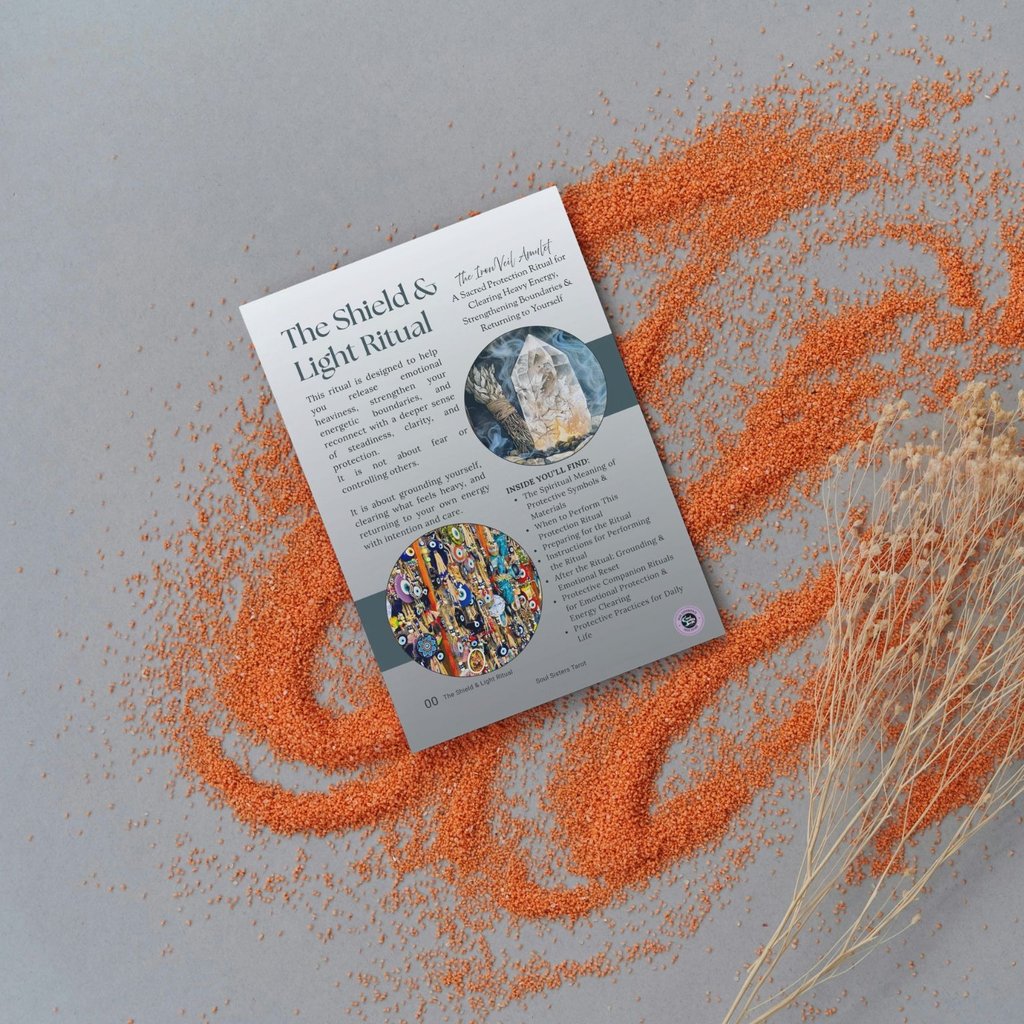
🛡️ The Shield and Light Ritual
Opening yourself spiritually should never mean forgetting your boundaries.
Our Shield & Light Protection Ritual is designed to help you create a sense of energetic protection before and after spiritual or intuitive practices. It gives you a simple ritual for grounding yourself, setting boundaries, and consciously closing your space, especially when you are working with emotions, memories, Tarot, or spirit-focused practices.
🎃 Samhain and Halloween Traditions Today
Modern Samhain celebrations can be reflective and spiritual, but they can also be playful, creative, and social. You might host an autumn feast, carve a jack-o’-lantern, dress in a meaningful costume, gather around a fire, decorate your home, or spend the evening with friends and family.
Try giving familiar Halloween activities a Samhain-inspired meaning:
Host a seasonal feast: Prepare root vegetables, apples, grains, pumpkin, or other autumn foods. If ancestor remembrance is part of your practice, you might set aside a small portion in their honor.
Carve a lantern: In Ireland, turnips and other root vegetables were traditionally used for lanterns before pumpkins became dominant in Halloween traditions. Today, carving a lantern can simply become a symbolic way to bring light into the darker season.
Choose a meaningful costume: Dress as a mythological figure, creature, character, natural element, or anything that represents a quality you want to explore.
Gather in community: Share food, tell stories, play games, light a fire, or create a small seasonal gathering.
Reflect and plan: End the evening with journaling, meditation, Tarot, or a few intentions for the months ahead.
You do not have to choose between Halloween and a more reflective Samhain celebration. Modern practice can borrow familiar seasonal traditions while giving them your own meaning. Later in the winter season, some traditions deepen this reflective rhythm through the mystical 13-night wishing ritual.
🍏 Samhain Foods and Feast Ideas
Food gives Samhain a wonderfully tangible way to celebrate the end of the harvest. Choose ingredients associated with autumn, such as apples, squash, pumpkin, potatoes, carrots, onions, nuts, grains, and warming herbs and spices.
You could prepare a simple pumpkin or root-vegetable soup, bake apples with cinnamon and nuts, make a hearty grain dish, or serve a meal built around whatever seasonal produce is available where you live.
If ancestor remembrance is part of your practice, prepare a dish connected with someone you miss. You might recreate a family recipe or place a small portion on your altar before eating. Before you eat, pause for a moment and consider what made this year's abundance possible, from the people who supported you to the natural world that provided the ingredients.
🌿 Samhain, Nature and the Dark Half of the Year
One of the simplest ways to celebrate Samhain is to spend time outside and notice the season changing around you.
Take an evening walk and pay attention to fallen leaves, bare branches, cooler air, earlier darkness, and the sounds of the landscape. Collect a few fallen natural objects such as leaves, acorns, or pinecones for a seasonal altar, provided this is permitted where you are.
You might also prepare your garden for winter, plant spring bulbs, or simply sit outside with a warm drink and watch the light disappear.
The point is not to force a spiritual experience from nature. Simply noticing the transition can be the practice.
🔮 Divination and Tarot at Samhain
Samhain has associations with divination in medieval Irish literature and folklore, making this a natural time for modern practitioners to use Tarot, oracle cards, journaling, palm line reading, or other reflective practices. Rather than asking only “What will happen to me?”, use the cards to explore questions that give you something useful to work with. You could simply pull a Tarot card for reflection and ask what it might help you notice about this particular season of your life. If you are new to this practice, our guide to how to do a daily Tarot reading offers a simple way to build a reflective Tarot practice into your everyday life.
Try a simple three-card Samhain spread:
Card 1: What am I leaving behind?
Card 2: What wisdom should I carry forward?
Card 3: What deserves my attention during the coming season?
Write down your first impressions before looking up detailed card meanings. This turns the reading into a conversation with your own intuition rather than simply searching for a prediction.
If you want to strengthen your Tarot practice, our Tarot guidebook can help you work with the cards more confidently and thoughtfully.
🌑 Samhain Reflection Questions
You can finish your Samhain celebration with a few questions that bring the evening back to your own life:
What am I grateful for from the season that is ending?
What have I learned about myself this year?
What has naturally reached its conclusion?
What am I holding onto simply because it is familiar?
What relationship, memory, or experience deserves to be honored?
What do I no longer want to carry into the next season?
What lesson do I want to remember?
Where in my life would more rest serve me better than more effort?
What do I want to protect or nurture through the darker months?
What am I willing to leave unknown for now?
You can answer just one question or journal through all ten. There is no need to turn reflection into another task to complete perfectly.
For deeper self-exploration throughout the year, our 365 Psychological Journal Prompts for Self-Discovery and Self-Love offers a larger collection of questions to return to whenever you need a fresh starting point.
📓 365 Psychological Journal Prompts
You know something needs to change, but you don't quite know how to put it into words.
Our 365 Psychological Journal Prompts for Self-Discovery and Self-Love gives you a question for every day of the year to help you explore your thoughts, patterns, relationships, emotions, and the parts of yourself that are easy to overlook. If Samhain has opened up questions about what you are ready to release or understand differently, these prompts give you a place to keep that inner work going long after the season has passed.


🎃 Samhain, All Hallows’ Eve and Halloween: What’s the Difference?
Samhain, All Hallows’ Eve, and Halloween are closely connected in the history of October 31, but they are not simply three names for the same celebration.
Understanding the distinction makes the story of Halloween much more interesting.
🌑 What Is Samhain?
Samhain was an ancient Gaelic seasonal festival marking the transition from the harvest season into winter. In the traditional calendar, Samhain was associated with November 1, while many of the celebrations and customs took place on the preceding night.
Medieval Irish literature connects Samhain with feasting, gatherings, seasonal change, divination, and stories of encounters between the human world and the Otherworld. These traditions form an important part of the cultural background from which later Halloween customs developed.
🕯️ What Is All Hallows’ Eve?
All Hallows’ Eve means the evening before All Hallows’ Day, or All Saints’ Day, which is observed on November 1 in the Western Christian calendar. The word Halloween itself comes from “All Hallows’ Eve.” Over time, the name was shortened, and the celebration developed its own collection of customs.
This is where the history becomes more layered. Halloween did not simply replace Samhain overnight. Christian observances, local customs, folklore, and older seasonal traditions interacted and changed over many centuries.
🎃 How Did Samhain Become Connected With Halloween?
The connection between Samhain and Halloween is real, but it is often presented far too simply. It is tempting to say that Halloween is just Samhain in disguise, but historians have challenged that straightforward version. Some modern Halloween customs have clear connections to Irish and Scottish traditions associated with Samhain, while others developed through Christian observances, European folklore, and much later cultural changes.
For example, customs involving disguises, divination, seasonal foods, bonfires, lanterns, and supernatural folklore appear in different forms across the history of Halloween and its predecessors.
The National Museum of Ireland's research on Halloween traditions offers a fascinating look at how customs such as lantern carving, fortune-telling, disguises, and seasonal celebrations developed in Ireland. For a broader overview of Halloween's history and traditions, you can also explore Britannica's history of Halloween.
🍂 Why Do They Feel So Similar Today?
The similarities make sense because all three traditions became associated with the same point in the seasonal and cultural calendar: the transition around the end of October and beginning of November.
Samhain provides an ancient Gaelic seasonal context.
All Hallows’ Eve provides the Christian context.
Halloween became the modern cultural celebration that many people recognize today.
Modern Samhain celebrations can therefore look very different from Halloween parties, but they can also share familiar elements such as candles, costumes, autumn food, lanterns, storytelling, and remembrance.
You do not have to treat these traditions as competing versions of the same holiday. They have different histories, meanings, and modern interpretations, and understanding those differences gives you more freedom to decide what your own Samhain celebration means.
🌿 Samhain and the Wheel of the Year
In modern Pagan and spiritual practice, Samhain is often understood as one of the eight seasonal celebrations known as the Wheel of the Year.
The Wheel of the Year divides the seasons into eight points, including the solstices, equinoxes, and four cross-quarter celebrations. Samhain is traditionally placed at the point between the Autumn Equinox and Winter Solstice, making it a symbolic threshold between autumn and winter.
This makes Samhain especially associated with endings, transition, remembrance, and preparation for the darker part of the year.
🍂 Samhain and the Autumn Equinox
The Autumn Equinox marks a point of balance between daylight and darkness. It can be seen as the beginning of the deeper autumn transition, when attention gradually turns from outward activity toward rest, reflection, and preparation.
Samhain comes later in that seasonal movement. What begins as a gradual shift at the Autumn Equinox becomes a more pronounced symbolic threshold as winter approaches.
❄️ Samhain and the Winter Solstice
The Winter Solstice follows Samhain as another major turning point in the Wheel of the Year. While Samhain focuses on endings and letting go, the Winter Solstice brings the symbolism of returning light and the gradual movement toward renewal.
You do not have to celebrate every point of the Wheel of the Year to appreciate this rhythm. Looking at the seasons as a whole can simply help you notice that life naturally moves through periods of growth, abundance, decline, rest, and renewal.
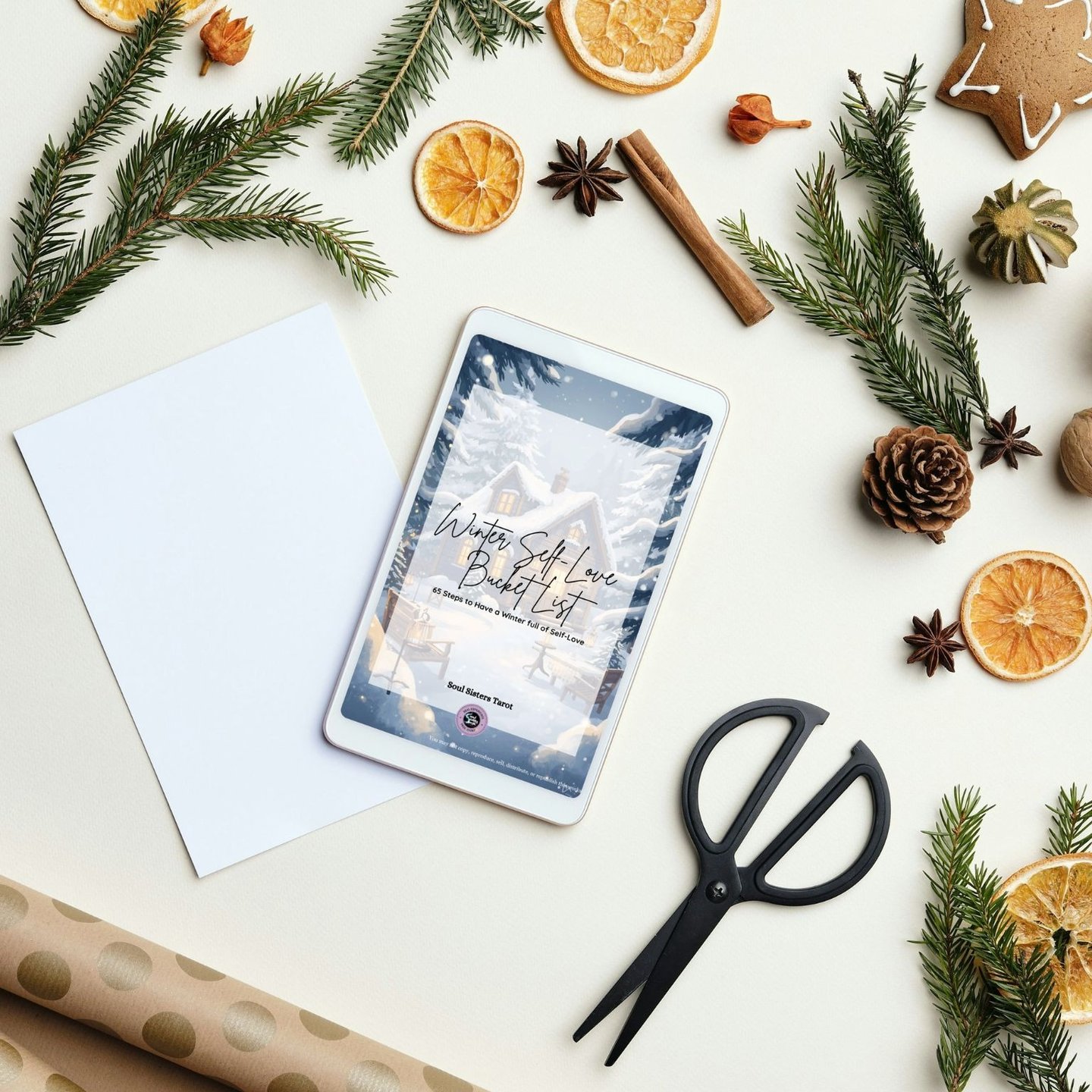
☃️ Winter Self-Love Bucket List
What if the darker season is an invitation to take better care of yourself, not push yourself harder?
Our Winter Self-Love Bucket List turns the quieter months into an invitation to slow down, reconnect with yourself, and make space for simple moments of comfort and care. Filled with cozy seasonal ideas and meaningful ways to nurture yourself, it helps you carry the reflective energy of Samhain into winter instead of immediately rushing back into doing more.

🌑 What Samhain Represents in the Wheel of the Year
Within modern Wheel of the Year practice, Samhain can therefore be viewed as a time to pause between chapters.
It asks different questions from the spring and summer celebrations. Instead of asking only what you want to create or achieve, Samhain invites you to consider:
What has finished?
What am I ready to release?
What do I want to remember?
What needs my attention before I enter a quieter season?
That is what makes Samhain such a powerful part of the seasonal cycle. It reminds us that rest and endings are not interruptions to growth. They are part of it.
👨👩👧👦 Family-Friendly Ways to Celebrate Samhain
Samhain can be a meaningful family celebration without making it complicated or overly serious. Children can take part in seasonal traditions while learning about autumn, remembrance, gratitude, storytelling, and the changing seasons.
The key is to adapt the symbolism to your family's age, beliefs, and comfort level.
🍎 Create a Seasonal Feast Together
Let children help choose or prepare autumn foods such as apples, pumpkin, root vegetables, breads, or a favorite family recipe.
Before eating, you could each share one thing you are grateful for from the past season. Older children might also choose something they would like to leave behind, such as a habit or worry, and something they would like to carry into the next season.
🕯️ Make a Family Memory Altar
Create a small seasonal display together using photographs, leaves, candles, drawings, or meaningful family objects. If you have loved ones who have passed away, share stories about them. Children can draw a picture, write a memory, or ask questions about a relative they never had the chance to meet.
This turns remembrance into something tangible and helps family stories continue from one generation to the next.
🎃 Carve Lanterns and Decorate Your Home
Pumpkin carving is an easy way to bring some of the familiar Halloween atmosphere into your Samhain celebration. You can also decorate with fallen leaves, pinecones, apples, autumn branches, candles, or handmade crafts. Let children choose objects that represent what they love about autumn.
For younger children, battery-powered candles are a simple alternative to open flames.
🌙 Take an Evening Nature Walk
Go outside together and notice how the landscape has changed. Look for fallen leaves, migrating birds, bare branches, mushrooms, acorns, or the first signs of winter. You could turn it into a small seasonal scavenger hunt, then bring a few naturally fallen objects home for your seasonal display where local rules allow.
📖 Tell Stories and Share Family Traditions
Samhain is a wonderful opportunity for storytelling. Tell children stories about their grandparents, great-grandparents, family traditions, places your family has lived, or memorable moments from the past.
You can also read age-appropriate folklore and seasonal stories together. The goal is not to frighten children with stories about spirits or death. Instead, let the evening become an opportunity to talk about where we come from, what we remember, and how families carry stories forward.
🍂 Let Children Create Their Own Ritual
Give children a little freedom to decide what Samhain means to them. They might draw something they want to let go of, write a wish for the coming season, make a gratitude list, create a nature altar, or choose a family activity they would like to repeat every year.
There does not have to be one perfect way to celebrate. A family tradition becomes meaningful because you return to it together.
🌙 Embracing the Sacred Darkness
There is something about Samhain that asks us to stop pretending we have everything figured out. The season is getting darker, the year is winding down, and some parts of our lives may be doing the same. Some things have worked out beautifully, some have not, and some chapters have ended without giving us the neat conclusion we hoped for.
We are often encouraged to move quickly through these moments. Find the lesson, set the next goal, turn the page, become the next version of yourself. But Samhain offers another possibility: perhaps you can pause before you begin again.
This is what embracing the sacred darkness can mean. It is not about glorifying suffering or believing everything happens for a reason. It is about making room for uncertainty, grief, rest, reflection, and the space between one chapter and the next.
Nature reminds us that letting go is part of the cycle. The trees do not hold onto every leaf because they are afraid of winter. They simply release what is no longer needed. Our lives have seasons too. Sometimes our deepest work happens when nothing looks particularly productive from the outside, when we are resting, reconsidering, healing, or realizing that we have outgrown something we once wanted.
At Soul Sisters, we believe spiritual practice should bring you closer to yourself and your own inner knowing. That is also at the heart of our Sisters Creation, where Tarot readings and spiritual guidance can help you explore what is happening in your life and where you want to go from here.
You do not need to know what comes next to honor what has ended. Sometimes the most meaningful thing you can do is simply acknowledge that a chapter is complete, give yourself permission to pause, and trust that the next one will reveal itself in time.
Perhaps that is the quiet wisdom of Samhain: an ending does not always ask you to begin again immediately. Sometimes it simply asks you to honor where you have been before deciding where you are going.
Blessed be,
Caitlin & Gerly,
Soul Sisters Tarot
❓ FAQ: How to Celebrate Samhain and Halloween
What is Samhain?
Samhain is an ancient Gaelic seasonal festival associated with the end of the harvest and the beginning of winter, traditionally marked around November 1, with many celebrations taking place on the preceding night. Medieval Irish sources connect Samhain with seasonal gatherings, feasting, divination, and stories involving the Otherworld. Today, Samhain is celebrated in different ways, including modern Pagan and spiritual practices focused on remembrance, reflection, release, and the seasonal transition into winter.
When is Samhain celebrated?
Samhain is traditionally associated with November 1, while the main period of celebration was often connected with the night of October 31 and the transition into November 1. In modern practice, people may celebrate on October 31, November 1, or across several days depending on their tradition and personal circumstances. The important point is the seasonal threshold itself rather than following a single modern date as though there were one universal Samhain calendar.
How do you celebrate Samhain?
You can celebrate Samhain by marking the transition into winter through remembrance, seasonal food, reflection, release, nature, divination, or community. Simple practices include lighting a candle, creating a small ancestor altar, preparing an autumn feast, taking a seasonal walk, carving a lantern, journaling about what you are ready to release, or doing a Tarot reading. There is no single required Samhain ritual, and a meaningful celebration can be as simple or elaborate as you want.
What are the main Samhain rituals?
Common modern Samhain rituals include ancestor remembrance, release rituals, seasonal feasting, candle or fire rituals, divination, nature-based practices, and reflection on endings and transitions. Some of these practices draw from historical Irish and Scottish folklore, while others are modern Pagan or personal spiritual adaptations. It is useful to distinguish between documented historical customs and rituals created by modern practitioners rather than assuming that every ritual described online is an ancient Samhain practice.
Is Samhain the same as Halloween?
Samhain and Halloween are connected historically, but they are not simply different names for the same celebration. Samhain was an ancient Gaelic seasonal festival associated with the end of harvest and beginning of winter, while Halloween developed through a much longer interaction between Christian observances such as All Hallows' Eve and regional European folklore and seasonal customs. Some Halloween traditions have clear connections with Irish and Scottish practices, but the modern holiday cannot accurately be described as simply “Samhain renamed.”
Is Samhain the Celtic New Year?
Samhain is often described as the Celtic New Year, but this label needs some historical caution. The idea became widespread through later scholarship and modern Pagan tradition, while the surviving medieval evidence more securely supports understanding Samhain as a major Gaelic seasonal threshold marking the opening of winter. Modern Pagans and other spiritual practitioners may meaningfully celebrate it as a spiritual or personal new year, but presenting this as an unquestioned historical fact oversimplifies the evidence.
Was Samhain really a festival of the dead?
Samhain has strong associations with the dead and the Otherworld in later folklore and medieval Irish literature, but describing it simply as an ancient “festival of the dead” can be misleading. Medieval sources portray Samhain as a major seasonal occasion involving gatherings, feasting, supernatural encounters, and divination, while later folklore developed additional traditions concerning spirits, ancestors, and the dead. Modern Samhain celebrations often emphasize ancestor remembrance, but this is best understood as one part of a much broader seasonal tradition.
Why is Samhain associated with spirits and the Otherworld?
Samhain is associated with spirits and the Otherworld because medieval Irish literature describes this seasonal threshold as a time when encounters between the human world and the Otherworld could occur. Stories include supernatural beings appearing among humans, people entering the Otherworld, and opportunities to gain supernatural knowledge or glimpse the future. Modern spiritual interpretations often build on this literary and folkloric tradition, although beliefs about spirits remain matters of individual faith and practice rather than historical facts that can be scientifically established.
Is the veil between worlds really thinner at Samhain?
The idea that the veil between the living and the dead becomes thinner at Samhain is a spiritual and folkloric belief rather than an objectively established phenomenon. It has roots in stories and traditions surrounding the Otherworld and has become especially prominent in modern Pagan practice. You can approach the symbolism literally if it belongs to your spiritual beliefs, or more metaphorically as an invitation to think about ancestors, memory, mortality, intuition, and the parts of life that remain beyond our understanding.
Can you celebrate Samhain if you are not Pagan?
Yes, you can engage with Samhain without identifying as Pagan, provided you approach its cultural and historical background respectfully. You might simply use the seasonal transition as an opportunity for reflection, gratitude, remembrance, autumn food, nature connection, or letting go of something that no longer serves you. You do not need to adopt a particular religious belief system to appreciate the themes of seasonal change and transition, but it is important not to present modern personal practices as though they were universally practiced ancient traditions.
Does celebrating Samhain have to be spiritual?
No, celebrating Samhain does not have to be spiritual. You can mark the season through an autumn meal, family gathering, nature walk, storytelling, Halloween traditions, creative activities, or personal reflection without performing a religious ritual. For someone with a spiritual practice, the same activities can become more intentional through prayer, meditation, ancestor remembrance, Tarot, or ritual, which means Samhain can accommodate very different approaches.
What foods are traditionally associated with Samhain?
Samhain foods vary by region and period, but seasonal ingredients associated with the autumn harvest include apples, nuts, grains, potatoes, root vegetables, and other locally available produce. Later Irish and Scottish Halloween traditions also include foods connected with fortune-telling and seasonal celebrations. For a modern Samhain feast, the most meaningful approach is often to choose food that reflects the season where you live or prepare a family recipe connected with memory and tradition.
Why do people carve pumpkins at Samhain?
Pumpkin carving is a modern Halloween tradition, while older Irish and Scottish lantern customs involved carving turnips and other root vegetables. These lanterns became associated with Halloween folklore and supernatural themes before the pumpkin became the dominant material in North America. Today, carving a pumpkin or another lantern can be incorporated into a Samhain celebration as a creative seasonal activity, although the pumpkin itself should not be presented as an ancient Samhain custom.
What is the spiritual meaning of Samhain?
The spiritual meaning of Samhain is often associated with endings, transformation, remembrance, release, and acceptance of life's natural cycles. Because it occurs at the transition into winter, the season provides a powerful symbolic framework for looking honestly at what has changed, honoring what has shaped you, and letting go of what has reached its natural conclusion. Modern spiritual practice can use Samhain as a time to pause before beginning another chapter rather than rushing immediately toward something new.
What can you release during Samhain?
During Samhain, you can symbolically release anything you genuinely feel ready to leave behind, such as an outdated expectation, unhealthy habit, recurring pattern, resentment, fear, or chapter of your life that has reached its conclusion. A useful release ritual does not require you to erase the past or pretend that something no longer affects you; instead, it gives you a deliberate opportunity to acknowledge what happened, recognize what you learned, and decide what you no longer want to carry forward.
Can you celebrate Samhain alone?
Yes, Samhain can be celebrated alone and can actually lend itself well to a quiet personal practice. A solitary celebration might include preparing a seasonal meal, lighting a candle, creating a small remembrance space, taking an evening walk, journaling, practicing Tarot, or completing a release ritual. The value of the celebration does not depend on how many people participate, but on whether the time gives you a meaningful opportunity to pause and connect with the season and your own life.
How can you celebrate Samhain with your family?
Families can celebrate Samhain through age-appropriate seasonal activities such as preparing autumn food, carving pumpkins or lanterns, taking a nature walk, sharing family stories, creating a memory altar, or making seasonal crafts. If remembrance is part of your family tradition, children can learn about relatives through photographs and stories rather than being introduced to frightening ideas about death or spirits. The goal is to create a family tradition around the changing season, memory, gratitude, and storytelling.
Can you communicate with spirits during Samhain?
Some spiritual and folkloric traditions associate Samhain with communication with ancestors or beings of the Otherworld, and modern practitioners may use meditation, prayer, divination, or ritual for this purpose. There is no scientifically established method for proving that a particular experience represents communication with a spirit, so it is wise to approach the practice with grounded expectations and clear personal boundaries.
🃏 🎃 If Samhain Were a Tarot Card, Which Card Would It Be?
If Samhain were a tarot card, it would most closely resemble Death. Traditionally, the Death card represents transformation, endings, renewal, and the natural cycles of life. Despite its name, it is not a card of physical death, but of releasing what has completed its purpose so that something new can begin.
Like the Death card, Samhain marks the end of one season before the beginning of another. As the final harvest festival and the gateway into winter, Samhain reminds us that nature never fears change. Trees release their leaves, fields are cleared, and the earth begins its quiet rest before new life eventually returns in spring.
Both Samhain and the Death card teach that endings are not failures. They are sacred transitions that create space for growth, healing, and new beginnings. They invite us to honor what has passed, express gratitude for everything the year has given us, and step into the next chapter with trust rather than fear.
👉 Read: If Samhain Were a Tarot Card, It Would Be Death
🃏 🎃 Could Samhain Represent More Than One Tarot Card?
While Death is the tarot card most strongly associated with Samhain, other cards beautifully reflect different aspects of this ancient festival:
King of Pentacles for the final harvest, abundance, gratitude, and honoring everything we've cultivated throughout the year.
Ten of Pentacles for ancestors, family traditions, legacy, and remembering those who came before us.
Four of Swords for rest, reflection, retreat, and embracing the quieter season ahead.
Six of Cups for cherished memories, honoring the past, and celebrating the lasting bonds that continue across generations.
Each card reflects an important aspect of Samhain, but Death remains the strongest symbolic match because both celebrate life's natural cycles of release and renewal. Samhain is not about fearing endings. It is about recognizing that every ending prepares the way for a meaningful new beginning. Just as nature releases what it no longer needs before winter, the Death card reminds us that transformation begins the moment we lovingly let go.
✨ A moment from our own conversations
"Samhain isn't a celebration of death. It's a celebration of life's willingness to begin again. The Death card teaches the very same truth." — Caitlin & Gerly
Soul Sisters Tarot
A Soft Place to Grow.
💌 SOUL SISTERS WEEKLY
A thoughtful Sunday letter with tarot reflections, moon wisdom, self-love, and gentle encouragement.
© 2026. All rights reserved.
Inspirational Coaching OÜ
sisters@soulsisterstarot.com