🎉 TWO BIRTHDAYS, ONE LITTLE GIFT FOR YOU → ENJOY 25% OFF
We're celebrating our birthdays all month long. Enjoy 25% off products with code BIRTHDAY ✨


Cold Moon Crystals: 7 Unusual Stones for Winter Wisdom
Searching for a little clarity this winter? Meet 7 cold moon crystals, including Astrophyllite, Blue Aragonite, and Snowflake Obsidian, and discover which one calls to you.
MOON PHASES & RITUALS
Soul Sisters Tarot
11/5/202621 min read


Cold Moon Crystals: 7 Stones for Winter Reflection and Inner Wisdom
This article belongs to our Cold Moon collection, where you’ll discover the spiritual meaning of December’s full moon, seasonal rituals, and meaningful ways to connect with winter. It is also part of our Full Moons collection, where we explore the symbolism, traditions, and spiritual lessons of every named full moon throughout the year.
Cold Moon crystals are stones chosen for their symbolic connection to December’s full moon and its themes of reflection, grounding, and inner wisdom. In this guide, we explore seven lesser-known crystals for the Cold Moon: Snowflake Obsidian, Larvikite, Astrophyllite, Blue Aragonite, Black Morion Quartz, Blue Barite, and Shungite.
The Cold Moon, December’s final full moon of the year, invites us to slow down and listen to the wisdom that can be difficult to hear amid everyday noise. Choosing a crystal for this season can give that quiet moment a tangible focus, helping you explore what you want to understand, release, or nurture through winter.
We chose these seven stones because they offer something a little different from the familiar crystal selections often found in winter guides. Larvikite, Astrophyllite, and Blue Barite, for example, each have distinctive features and symbolic associations that can inspire a more personal connection with the season.
Throughout this guide, you’ll discover what each crystal is associated with and how you can actually use it in your everyday life. You might work with Snowflake Obsidian when exploring a recurring pattern, keep Larvikite nearby as a reminder to take one steady step at a time, or use Blue Aragonite to remind yourself to respond with patience. The goal isn’t simply to admire a beautiful stone, but to find a meaningful way to bring its symbolism into your winter practice.
🍃 Soul Sisters Notes
“Winter reminds us that not every kind of growth needs to be visible. Sometimes, the most meaningful transformation begins when we give ourselves permission to pause, listen, and meet our own hearts with care.” - Caitlin & Gerly
If you’re exploring crystal meanings beyond the Cold Moon, our guide to Crystals for Money explores how different gemstones are symbolically connected with abundance, prosperity, and inviting more opportunity into your life.
🌕 Free Cold Moon Ritual Download
Feeling ready to slow down, reflect, and make the most of December’s full moon?
Our free Cold Moon rituals offer meaningful ways to connect with the season through reflection, intention-setting, and simple spiritual practices. Whether you want to look back on the year, make space for your inner wisdom, or welcome winter with a little more intention, these rituals help you create a moment that feels personal and meaningful.


🌕 What Are Cold Moon Crystals?
Cold Moon crystals are stones chosen for their symbolic connection to December’s full moon and its themes of reflection, grounding, patience, and inner wisdom. There is no historically established set of crystals that must be used for the Cold Moon. The seven stones in this guide are selected for their distinctive mineral features and the contemporary meanings people associate with them.
What makes this collection different is that these are not simply the familiar crystals often featured in winter spiritual guides. Snowflake Obsidian, Larvikite, Astrophyllite, Blue Aragonite, Black Morion Quartz, Blue Barite, and Shungite each have their own mineral identity, appearance, and symbolic associations. Learning a little about the stone itself can make your practice more personal and meaningful.
A crystal can also give an intention something tangible to return to. Instead of keeping a thought in your mind, you can connect it with a specific object and use it as a reminder to take action. For example, Snowflake Obsidian can become a prompt to notice a recurring pattern without judging yourself, while Larvikite can remind you to slow down and identify the next practical step.
In this guide, we distinguish mineral facts from contemporary spiritual meanings. The mineral descriptions explain what makes each stone distinctive. The spiritual correspondences are symbolic associations, not scientifically established effects or universal rules.
Cold Moon Crystal Correspondences
Each crystal offers a different focus for winter reflection. Along with its symbolic meaning, you’ll find a practical way to work with the stone, so its role in your Cold Moon practice goes beyond appearance alone.
❄️ Snowflake Obsidian: Recognizing Patterns Without Self-Judgment
Snowflake Obsidian is a natural volcanic glass marked by pale, snowflake-like patterns formed by mineral inclusions, commonly cristobalite. Its contrast between dark glass and lighter markings makes it a distinctive stone for exploring the way different experiences, feelings, and habits can exist together.
In contemporary crystal practices, Snowflake Obsidian is often associated with self-reflection and emotional balance. For the Cold Moon, use it when you want to examine a recurring pattern without turning that recognition into self-criticism.
Try this: Write down one reaction or habit that has appeared repeatedly in your life. Beside it, note what tends to trigger it, what it may have helped you cope with in the past, and what you would like to try differently now. Keep the stone nearby as a reminder to approach the pattern with curiosity rather than blame.
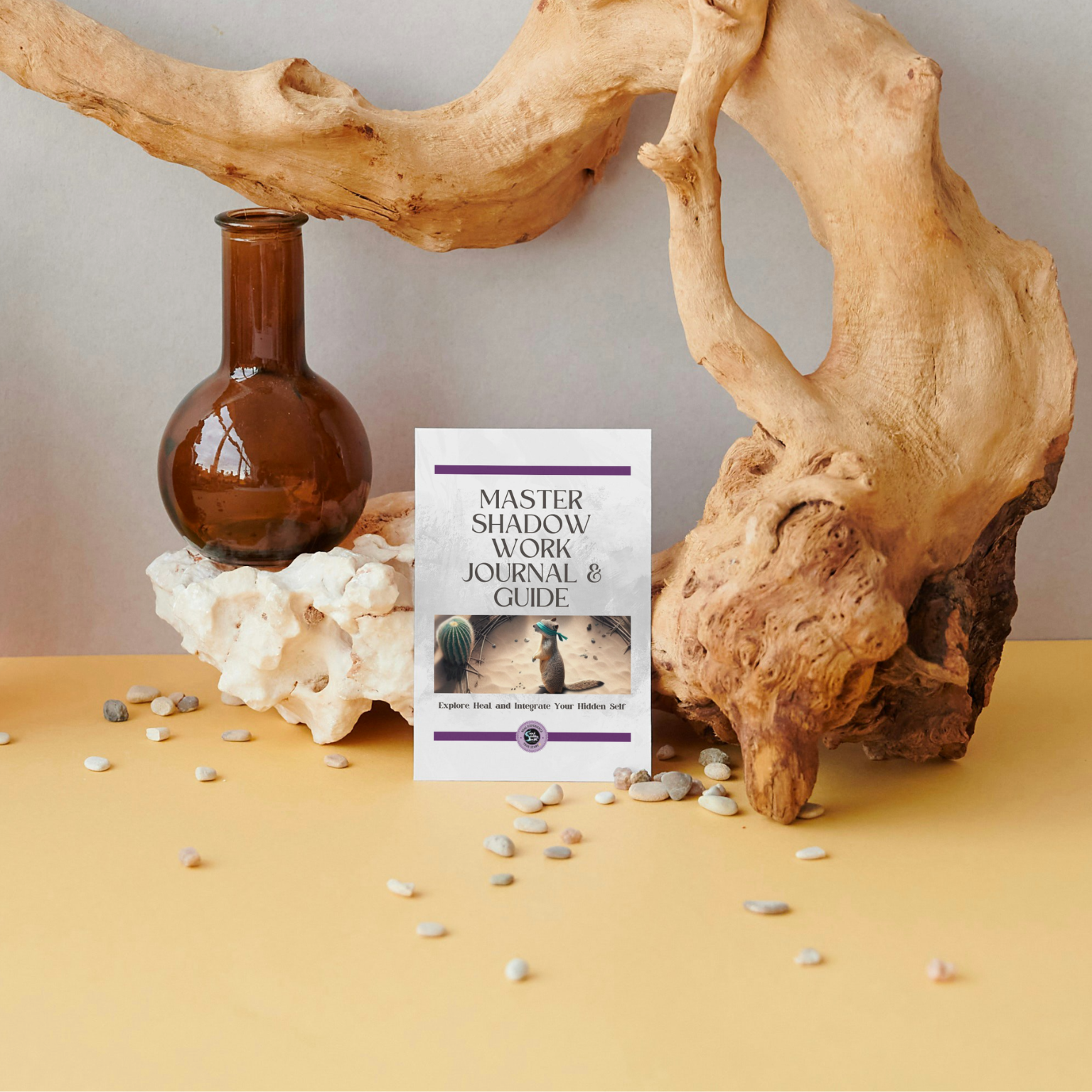
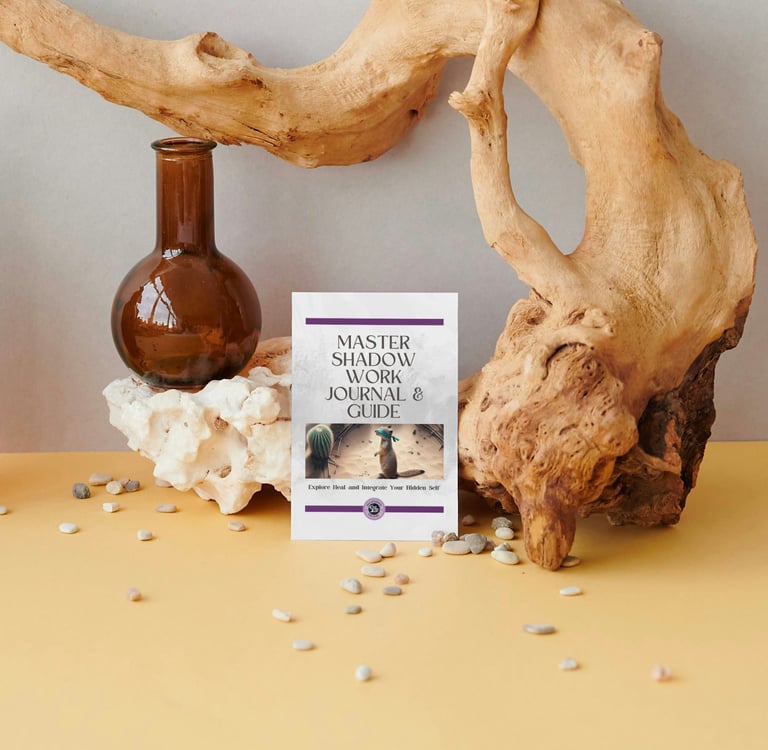
🤍 Master Shadow Work Journal & Guide
Do you keep finding yourself caught in the same emotional patterns, even when you’re trying to move forward?
Our Master Shadow Work Journal and Guide offers thoughtful prompts and guided exercises to help you explore the beliefs, fears, and patterns that may be shaping your reactions. It gives you a supportive structure for approaching self-reflection with greater honesty, curiosity, and compassion.
🌲 Larvikite: Finding Steadiness in Uncertain Moments
Larvikite is a feldspar-rich igneous rock named after Larvik, Norway, where it is especially well known. Its dark gray appearance can reveal subtle blue or silver flashes when light catches the feldspar crystals within it. These flashes are part of what makes Larvikite visually distinctive.
In modern crystal symbolism, Larvikite is associated with grounding, discernment, and inner strength. It can be a useful symbolic companion when you feel overwhelmed by a situation and need to separate what you can influence from what you cannot.
Try this: Write down the situation that feels difficult or uncertain. Divide a page into two columns: “Within my control” and “Outside my control.” Choose one small action from the first column and decide when you will take it. Keep Larvikite beside the page as a reminder to return to that step instead of trying to solve everything at once.
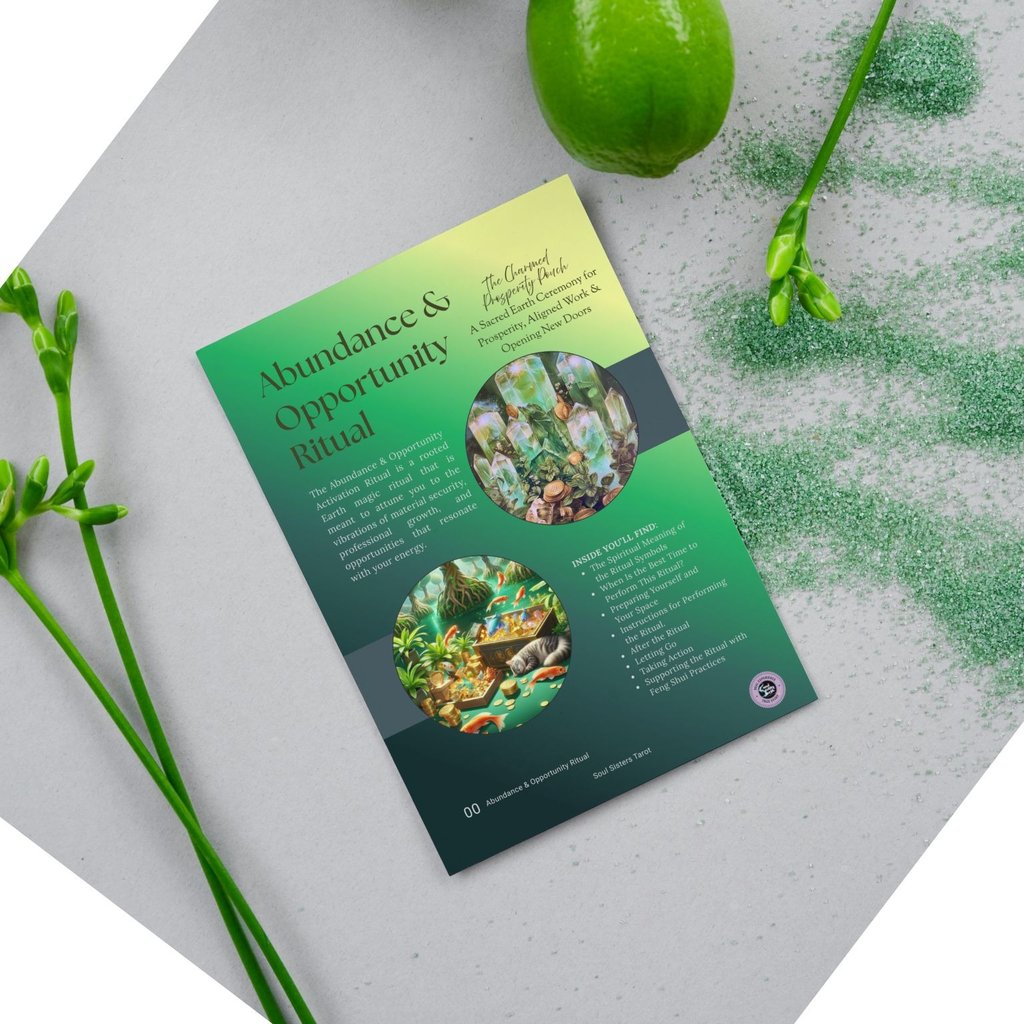
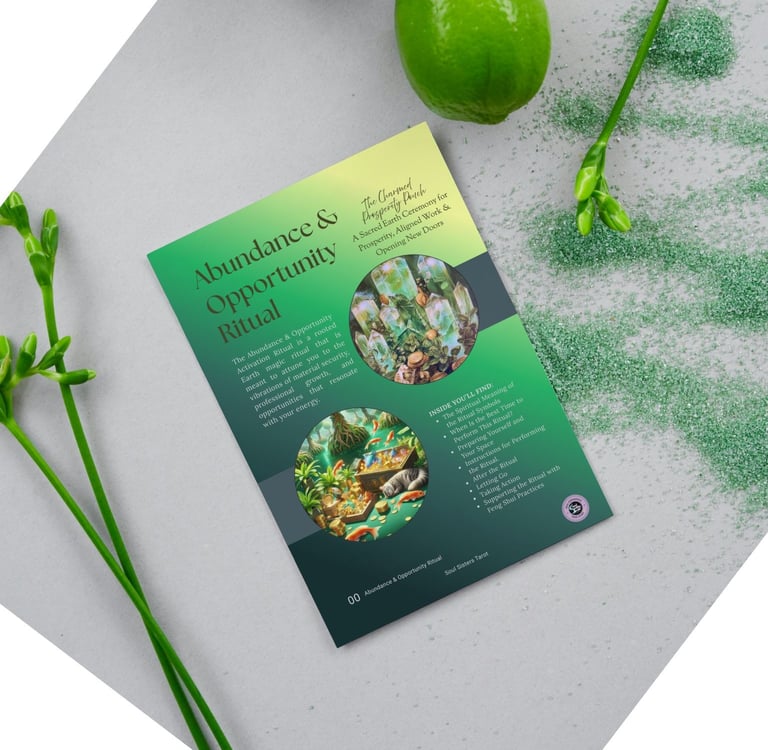
🍀 Abundance & Opportunity Ritual
Feeling ready for new opportunities, but unsure where to begin?
Our Abundance and Opportunity Ritual helps you create space to reflect on your relationship with possibility, recognize what you want to invite into your life, and set a meaningful intention for the opportunities ahead. It’s a gentle way to reconnect with your hopes while staying open to the practical steps that can help you move toward them.
🌌 Astrophyllite: Exploring the Different Parts of Yourself
Astrophyllite is a relatively uncommon mineral known for its striking radiating or starburst-like formations. Its name comes from Greek roots meaning “star” and “leaf,” a reference to the way its crystals can spread outward in distinctive patterns.
In contemporary crystal practices, Astrophyllite is associated with self-understanding, personal growth, and finding direction. Its radiating structure offers a meaningful symbol for exploring the different parts of yourself, especially when you are entering an unfamiliar chapter or reconsidering who you want to become.
Try this: Draw a circle in the center of a page and write your name or a current life question inside it. Around the circle, note different parts of your life or identity that may be influencing your choices, such as work, relationships, creativity, responsibilities, or personal needs. Look at the page and consider which part deserves more attention right now. Use Astrophyllite as a reminder that understanding yourself can involve listening to more than one part of your experience.
🌊 Blue Aragonite: Practicing Patience and Gentle Communication
Aragonite is a calcium carbonate mineral, and Blue Aragonite is valued for its soft blue coloring and often delicate, clustered formations. Aragonite can occur in different colors and crystal habits, so individual specimens may look quite different from one another.
In contemporary crystal symbolism, Blue Aragonite is associated with patience, calm, and thoughtful communication. For the Cold Moon, it can represent the space between feeling something and deciding how to respond.
Try this: Think of a conversation or situation where you would like to respond more thoughtfully. Before deciding what to say, write down what you want the other person to understand, what you need to understand about their perspective, and what you want to avoid assuming. Keep Blue Aragonite nearby as a reminder to give yourself time before responding.
💖 Aligned Love Spell Ritual – The Enchanted Ribbon
Longing for a love that feels genuine, mutual, and aligned with who you are becoming?
Our Aligned Love Spell Ritual offers a thoughtful way to focus your intentions around meaningful connection, self-worth, and the kind of love you want to welcome into your life. Use it as a moment to reflect on what your heart truly desires and the qualities you want to bring into your relationships.


🌑 Black Morion Quartz: Reconsidering Responsibilities and Boundaries
Black Morion Quartz is an exceptionally dark variety of smoky quartz. Its color comes from natural processes within the crystal, and its appearance can range from deep smoky brown to nearly black. The term morion is commonly used for very dark smoky quartz.
In contemporary crystal practices, Morion Quartz is associated with grounding, deep reflection, and boundaries. Its dark appearance makes it a fitting symbolic companion for examining responsibilities or expectations that have become difficult to distinguish from your own needs.
Try this: Write down one responsibility or expectation that has been weighing on you. Ask yourself whether it is genuinely yours, whether it still needs to be handled in the same way, and whether you can ask for support or renegotiate it. Choose one realistic action, such as having a conversation, setting a limit, or making a clearer plan. Use Black Morion Quartz as a reminder that reconsidering a responsibility is not the same as ignoring it.
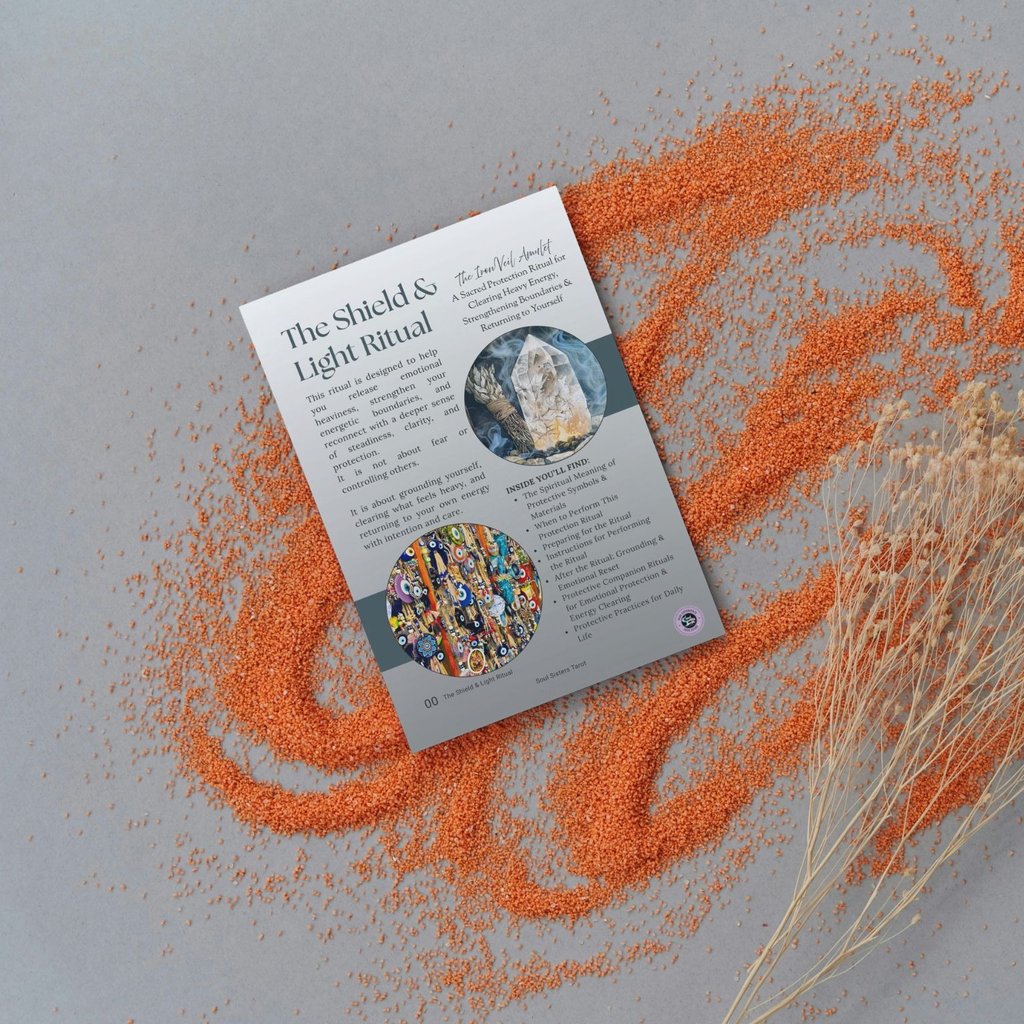
🛡️ The Shield and Light Ritual
Feeling emotionally overwhelmed or wishing you could protect your peace a little more?
Our Shield and Light Protection Ritual offers a meaningful spiritual practice for setting boundaries, reconnecting with your sense of inner strength, and creating a moment of calm when the world feels like too much. Use it as a reminder that protecting your energy can also mean choosing what deserves your attention and where you need more space.
✨ Blue Barite: Making Space for Unanswered Questions
Barite is a barium sulfate mineral that can form distinctive tabular, bladed, or clustered crystals. Blue specimens are especially striking, although barite occurs in several colors and forms. Its delicate-looking structures make it an interesting choice for a guide focused on less familiar crystals.
In contemporary crystal symbolism, Blue Barite can represent contemplation, spiritual exploration, and the willingness to sit with a question. It is particularly suited to moments when you want to reflect without forcing yourself to reach an immediate conclusion.
Try this: Write down a question you have been trying to answer. Beneath it, separate what you know, what you are still wondering about, and what you may need more time or information to understand. Instead of forcing a conclusion, choose one way to explore the question further. Keep Blue Barite nearby as a reminder that uncertainty can be part of thoughtful reflection.
🪨 Shungite: Returning Your Attention to What Matters
Shungite is a carbon-rich black rock best known from deposits in Karelia, Russia. It has a distinctive composition and appearance, and it is often discussed in contemporary crystal and wellness practices. Shungite is not a conventional crystal in the same way as quartz or barite, but it is commonly included in spiritual stone collections.
In contemporary symbolic practices, Shungite is associated with grounding, mindful attention, and boundaries around distractions. For the Cold Moon, it can serve as a reminder to notice where your attention is going and decide what deserves more of it.
Try this: For one day, notice what repeatedly interrupts your attention. Write down the three distractions that take up the most time or mental space. Choose one small adjustment you can make, such as silencing a notification, creating a short focused period, or setting aside a task for later. Keep Shungite somewhere visible as a reminder of the choice you made.
These correspondences are contemporary symbolic associations, not universal rules or scientifically established effects. Different crystal guides and spiritual traditions may assign different meanings to the same stone. You can use these meanings as a starting point, adapt them to your own practice, or simply appreciate the mineral itself.
🍃 Soul Sisters Notes
“A crystal cannot make a choice for you. But learning what makes a stone distinctive, and giving it a purpose in your everyday life, can turn it into a meaningful reminder of the choice you want to make.” - Caitlin & Gerly
🕯️ How to Choose a Crystal for the Cold Moon
The best crystal for the Cold Moon is one that feels meaningful to you and connects with something you want to explore during winter. You don’t need a particular stone to honor December’s full moon, and there is no single crystal that everyone must use.
Instead of searching for the “perfect” crystal, let your choice be personal. A stone can catch your attention because of its color, texture, shape, or the feeling it brings to mind. That connection can be a simple and meaningful starting point for your Cold Moon practice.
1. Notice Which Stone Draws Your Attention
Before looking at crystal meanings, take a moment to notice which stone you feel drawn to.
Perhaps you’re intrigued by the delicate patterns of Snowflake Obsidian, the blue flashes in Larvikite, or the unusual formations of Astrophyllite. You might simply like the color or shape of a particular stone.
There doesn’t have to be a deeper explanation right away. Sometimes curiosity is enough.
2. Let the Crystal’s Meaning Guide You, Not Decide for You
Once a stone catches your attention, explore its symbolic associations in this guide. Notice whether they connect with something you’re experiencing or something you would like to bring more attention to this winter.
Treat these meanings as inspiration rather than instructions. You can choose a crystal because its symbolism resonates with you, adapt that meaning to your own experience, or simply enjoy the stone without assigning it a specific purpose.
3. Consider the Stones You Already Own
You don’t need to buy a new crystal for the Cold Moon. Look through the stones you already have and see whether one feels appropriate for this season.
A familiar crystal may hold personal meaning because of when you found it, who gave it to you, or the memories you associate with it. That connection can be just as meaningful as the symbolism found in a crystal guide.
4. Choose What Feels Meaningful, Not What Feels Required
It’s easy to feel that a spiritual practice needs the right tools, the right timing, or a particular set of objects. But your Cold Moon practice doesn’t need to be complicated.
You might choose one crystal, use a stone you already own, or decide that no crystal feels right for you this year. The meaning of your practice comes from the attention and intention you bring to it, not from having a specific collection.
🍃 Soul Sisters Notes
“You don’t need to find the perfect stone. Choose one that helps you remember the part of yourself you want to listen to more closely.” - Caitlin & Gerly
🔮 How to Use Cold Moon Crystals in Rituals and Everyday Life
Cold Moon crystals can become meaningful companions for both your full moon practice and the quieter moments of everyday life. You might include one in a seasonal ritual, place it somewhere you’ll notice throughout the day, or use it as a reminder to return to an intention when winter feels busy or overwhelming.
You don’t need to follow a complicated routine or use your crystal in a particular way. The ideas below are simple ways to connect the symbolism of your chosen stone with moments that already exist in your life.
1. Include Your Crystal in a Cold Moon Ritual
The Cold Moon is a lovely time to pause, reflect on the year, and consider what you want to carry into the winter season.
Create a quiet space with your chosen crystal, a candle, and your journal. You might begin by taking a few slow breaths and reflecting on the season you’re leaving behind.
Consider these questions:
What experience from this year has taught me something important?
What would I like to give myself more time and space for this winter?
What intention feels meaningful for the season ahead?
Let your crystal serve as a focal point for the ritual. It doesn’t need to produce a particular outcome. Its role is simply to give your intention a tangible place in your practice.
For more inspiration, explore our Cold Moon Spells & Magic guide.
2. Turn Your Crystal into an Everyday Reminder
A crystal can be useful beyond the full moon itself. Place it somewhere you naturally pause during the day, such as beside your journal, on your desk, or near your favorite reading spot.
When you notice it, take a brief moment to reconnect with the quality or intention you chose for winter.
You might ask yourself:
Am I giving myself enough time to think before responding?
What would help me feel more grounded in this moment?
Is there a small choice I can make that reflects what matters to me?
There’s no need to stop everything or turn this into a formal meditation. Even a few seconds of mindful attention can make the crystal a personal reminder rather than simply a decorative object.
3. Keep Your Crystal Nearby During a Moment of Uncertainty
When a decision feels complicated, give yourself a little space before trying to resolve it.
Place your crystal nearby as you consider the situation. Instead of asking it to tell you what to do, use the moment to separate the different parts of your decision:
What do I know for certain?
What information am I still missing?
What matters most to me here?
What is one realistic next step?
This can help you approach a decision with more care and clarity. The crystal is a symbolic anchor for the pause, while the decision itself remains yours.
4. Create a Small Cold Moon or Winter Altar
If you enjoy creating meaningful spaces in your home, you could make a simple seasonal arrangement with your chosen crystal.
Add a few objects that represent winter to you, such as a candle, a handwritten intention, a natural object, or something that reminds you of a meaningful moment from the year.
You might keep the arrangement in one place throughout the season, or create it just for the Cold Moon and take it down afterward.
There’s no need to use a particular number of crystals or follow a prescribed arrangement. Let the space reflect your own relationship with winter.
5. Revisit Your Intention as Winter Unfolds
Your relationship with an intention may change as the season progresses. What feels important during the Cold Moon may look different a few weeks later.
Choose a moment later in winter to return to the crystal and the intention you connected with it. You could write a few lines in your journal:
Does this intention still feel relevant?
Have my needs or priorities changed?
What have I learned since I first chose this crystal?
Is there a different quality I want to focus on now?
You can keep the same intention, adjust it, or let it go. Your practice is allowed to change with you.
A Note on Cleansing and Caring for Your Crystals
Crystal-care customs vary across spiritual traditions, and cleansing or charging your stones is optional. If you enjoy these practices, choose a method that is appropriate for the specific mineral.
When you’re unsure how a stone may react to water, salt, sunlight, or other materials, the safest option is to keep its care simple. A soft, dry cloth and a clean place to store it are often enough for everyday handling.
The most important part of your practice is not following a perfect routine. It is the meaning you choose to connect with the stone and how that meaning supports the choices you make.
🍃 Soul Sisters Notes
“Let your crystal be more than something you hold. Let it remind you of a choice you can make, a truth you can honor, or a little more kindness you can offer yourself.” - Caitlin & Gerly
🌙 A Simple Cold Moon Crystal Reflection
A Cold Moon crystal reflection is a short journaling practice that uses a chosen stone as a symbolic starting point for exploring an inner question, recognizing what matters to you, and identifying one meaningful action. It is not a prediction or a way to receive answers from a crystal. Instead, it helps you connect the symbolism of the stone with your own experience.
This reflection is especially suited to the Cold Moon, December’s final full moon, because it invites you to look back on what the year has taught you while making space for the questions you’re carrying into winter.
What You’ll Need
One Cold Moon crystal that feels meaningful to you
Your journal and a pen
A few quiet minutes
Try This Reflection
1. Begin with what the crystal brings to mind.
Place your crystal in front of you and notice its color, shape, texture, or natural patterns. Rather than starting with what the stone is traditionally said to represent, ask yourself: “What does this crystal make me think about in my own life?”
Let your first associations be personal. You might think of a quality you want to develop, a situation you’re still processing, or something you have been avoiding giving attention to.
2. Name the question beneath the intention.
Complete this sentence: “This winter, I want to understand more about…”
Try to make your answer more specific than a broad goal such as “be happier” or “feel more confident.” You might write about why you find it difficult to rest, what makes a particular transition feel uncertain, or how you want to respond when an old pattern appears.
A clear question gives your reflection somewhere meaningful to begin.
3. Separate what you know from the story you’re telling yourself.
This is the heart of the practice. Write two short lists:
What I know: experiences, choices, conversations, or facts you can point to.
What I’m interpreting: assumptions, fears, expectations, or explanations you have attached to those experiences.
This distinction can help you approach your own thoughts with curiosity rather than treating every worry or interpretation as a fact. You don’t need to dismiss your feelings. Simply give yourself room to see the situation from more than one angle.
4. Ask what the question is inviting you to notice.
Now consider: “What might I need to acknowledge, accept, or look at more closely?”
You may discover that the question is not asking you to make an immediate decision. Perhaps you need more information, a little time, a clearer boundary, or a more compassionate way of understanding yourself.
Allow the answer to remain unfinished if that feels more honest.
5. Turn your reflection into one small, self-directed action.
Choose an action that is within your control and connected to what you have noticed.
It might be asking for clarification, setting aside time to rest, writing down a boundary you want to communicate, or giving yourself a few days before making a decision.
Complete this sentence: “One thing I can do to honor what I’ve learned is…”
Keep the action realistic. It does not need to resolve the entire situation. It simply gives your reflection a place in everyday life.
6. Close by choosing what you want to remember.
Look at your crystal again and write one sentence you want to carry through winter.
It could be a reminder, a question, or a truth you want to treat with care. Place the crystal somewhere you’ll notice it, or keep your sentence in your journal and return to it when you need to.
You can repeat this reflection later in the season, but you don’t need to reach a dramatic realization for it to be worthwhile. Sometimes the most useful outcome is a clearer distinction between what you know, what you’re still wondering about, and what you can choose next.
🍃 Soul Sisters Notes
“Inner wisdom doesn’t always arrive as a sudden answer. Sometimes it grows quietly, each time we make space to hear ourselves with honesty and care.” - Caitlin & Gerly
🌕 Let the Cold Moon Guide You Back to Your Inner Wisdom
The Cold Moon arrives at a threshold: the year is drawing to a close, winter is settling in, and some of the questions we carry may not have easy answers yet. This is a meaningful time to slow down, look back with honesty, and listen to what has been asking for our attention.
A Cold Moon crystal can give that reflection a tangible focus. Snowflake Obsidian may remind you to meet an old pattern with compassion. Larvikite can represent the steadiness of taking one step at a time. Blue Aragonite may bring to mind the patience to listen before responding. Each stone offers a different symbolic starting point, but the meaning you create with it is your own.
You don’t need a perfect crystal collection, a complicated ritual, or a sudden moment of revelation. You can begin with one stone, one honest question, and one small choice that reflects what you’ve learned. Sometimes, that is how inner wisdom becomes part of everyday life.
At Sisters Creation, we create thoughtful resources to support your journey through self-love, reflection, and personal growth. Explore our collection and find something that meets you where you are in this season of your life.
As the Cold Moon shines over the quiet winter landscape, may your chosen crystal remind you that you don’t have to have every answer today. You can give yourself time to listen, space to understand, and permission to take your next step when you’re ready.
With love and moonlight,
Caitlin & Gerly
Soul Sisters Tarot
❓ FAQ: Cold Moon Crystals
What are the best crystals for the Cold Moon?
Seven crystals you can choose for the Cold Moon are Snowflake Obsidian, Larvikite, Astrophyllite, Blue Aragonite, Black Morion Quartz, Blue Barite, and Shungite. In contemporary crystal practices, these stones are associated with themes such as self-reflection, grounding, patience, contemplation, and inner wisdom. There is no universally required Cold Moon crystal, so the best choice is the one whose symbolism feels meaningful to you.
Is there a traditional crystal for the Cold Moon?
There is no single universally established traditional crystal for the Cold Moon. Crystal associations vary across contemporary spiritual practices, and many December crystal guides select stones based on themes such as winter, reflection, and the closing of the year. You can choose a crystal from this guide or use one you already own.
What is Snowflake Obsidian used for during the Cold Moon?
Snowflake Obsidian is often associated in contemporary crystal practices with self-reflection, emotional balance, and recognizing recurring patterns. Its dark volcanic glass is marked by pale, snowflake-like inclusions, making it a distinctive stone for winter reflection. You might choose it as a reminder to look at an old habit or reaction with curiosity rather than judgment.
What is Larvikite used for during the Cold Moon?
Larvikite can serve as a symbolic reminder of grounding, steadiness, and discernment during the Cold Moon. This feldspar-rich igneous rock is known for its dark gray appearance and subtle blue or silver flashes. You might keep it nearby when considering a difficult situation and use it as a reminder to focus on what is within your control.
What is Astrophyllite’s meaning for the Cold Moon?
Astrophyllite is associated in contemporary crystal practices with self-understanding, personal growth, and exploring direction. Its radiating, star-like formations can inspire reflection on the different parts of your life and identity. During the Cold Moon, you might use it as a symbolic reminder that you can explore a new chapter without having every answer immediately.
What is Blue Aragonite used for during the Cold Moon?
Blue Aragonite can symbolize patience, gentleness, and thoughtful communication during the Cold Moon. Its soft blue color makes it a meaningful reminder to pause before reacting, give yourself breathing room, and approach difficult conversations with care. These are symbolic associations, not scientifically established effects.
What is Black Morion Quartz?
Black Morion Quartz is an exceptionally dark variety of smoky quartz. In contemporary crystal practices, it is often associated with grounding, boundaries, and deep reflection. For a Cold Moon practice, you might use it as a reminder to reconsider the responsibilities or expectations you are carrying and ask whether they are truly yours.
What is Blue Barite’s meaning for the Cold Moon?
Blue Barite is often associated with contemplation, spiritual exploration, and making space for unanswered questions. Barite is a barium sulfate mineral, and blue specimens can form distinctive tabular or bladed crystals. Its symbolism may appeal to you when you want to explore a question slowly rather than rush toward a conclusion.
Is Shungite a good crystal for the Cold Moon?
Shungite can be a meaningful Cold Moon stone if you associate it with grounding, mindful attention, or returning to what matters. It is a carbon-rich black rock commonly included in contemporary spiritual stone collections. You can use it as a personal reminder to set boundaries around distractions or focus on one meaningful action. These symbolic uses are not scientifically established effects.
What is the difference between Larvikite and Labradorite?
Larvikite and Labradorite are different feldspar-rich rocks or minerals that can both display attractive flashes of light, but they are not the same stone. Larvikite is an igneous rock named after Larvik, Norway, while Labradorite is a feldspar mineral known for its characteristic labradorescence. If you are choosing a stone for the Cold Moon, check the mineral identification rather than relying on appearance alone.
Can I use crystals I already own for the Cold Moon?
Yes, you can use crystals you already own for the Cold Moon. You do not need to buy a new stone or follow a fixed list. Choose one that reminds you of a quality you want to explore, such as patience, self-trust, steadiness, or self-compassion. A crystal with personal memories or meaning may be especially relevant to your practice.
How do I choose a crystal for the Cold Moon?
Choose a Cold Moon crystal by considering which stone feels meaningful and what you want to explore during winter. You might begin with a stone’s appearance, your personal connection to it, or its symbolic associations. Treat crystal meanings as inspiration rather than rules, and remember that you do not need a particular stone to honor the full moon.
How do I use crystals during the Cold Moon?
You can use Cold Moon crystals as symbolic reminders for reflection, intention-setting, or mindful choices. Place a stone beside your journal, include it in a full moon ritual, or keep it somewhere visible as a reminder of an intention you want to carry through winter. You can also combine your practice with our Cold Moon Tarot Spread or explore more focused intention-setting in Cold Moon Spells & Magic.
Can I use more than one crystal for the Cold Moon?
Yes, you can use more than one crystal for the Cold Moon, but there is no required number or combination. You might choose two or three stones that represent different qualities you want to remember throughout winter. Keep the arrangement personal and simple, rather than feeling that you need a complete crystal set.
Do I need to cleanse or charge my Cold Moon crystals?
No, cleansing or charging your Cold Moon crystals is not required. These customs vary across spiritual practices, and you can decide whether they have personal meaning for you. If you choose to cleanse a stone, consider its mineral properties first. Some crystals can be damaged by water, salt, heat, or prolonged sunlight.
Can Cold Moon crystals go in water?
Not every Cold Moon crystal is suitable for water, so check the specific mineral before soaking or placing it in water. Some stones may be damaged by moisture, while others may contain materials that make water-based practices unsuitable. When you are unsure, use a dry method of care, such as gently dusting the stone with a soft cloth.
Are Cold Moon crystals scientifically proven to have spiritual or healing effects?
There is no strong scientific evidence that crystals produce spiritual, emotional, or healing effects through their energy. The meanings in this guide are symbolic associations used in contemporary spiritual practices, and they can vary between sources and traditions. You can still use a crystal as a personal reminder for reflection, intention-setting, or mindful choices without treating it as a substitute for practical action or professional care.
What is a simple Cold Moon crystal practice for beginners?
A simple Cold Moon crystal practice is to choose one stone, reflect on a question, and identify one small action you can take. Place the crystal beside your journal, write about what you want to understand or nurture this winter, and finish with the sentence: “One thing I can do to honor what I’ve learned is…” Keep the practice personal and manageable. You do not need special tools or a complicated ritual.
Soul Sisters Tarot
A Soft Place to Grow.
💌 SOUL SISTERS WEEKLY
A thoughtful Sunday letter with tarot reflections, moon wisdom, self-love, and gentle encouragement.
© 2026. All rights reserved.
Inspirational Coaching OÜ