💌 JOIN SOUL SISTERS WEEKLY → GET FREE WELCOME GIFTS 🎁
Receive a thoughtful Sunday letter, free Self-Love & Shadow Work guides, and monthly Full Moon rituals ✨



Workday Stress Relief Rituals for When You’re Over It
Still carrying work stress long after you close your laptop? These workday stress relief rituals take minutes and help you reset before the day takes over.
SELF-LOVE, HEALING & INNER WORK
Soul Sisters Tarot
8/22/202520 min read


Quick Workday Stress Relief Rituals You Can Do at Your Desk
This guide is part of our Self-Love Journey, where we explore emotional healing, self-compassion, and gentle practices that help you build a deeper and more supportive relationship with yourself.
Workday stress relief rituals are short, intentional practices you can do during the workday to reduce stress, settle mental overload, and create a sense of reset without leaving your desk for an hour. They can include breathing exercises, brief movement, journaling, sensory grounding, mindful pauses, or simple rituals that help you transition out of stress mode.
And they matter because stress often builds in small increments.
One difficult email becomes five. A meeting runs into another meeting. You keep switching between tasks, notifications, deadlines, and conversations without giving your mind a genuine transition point. Eventually, what began as ordinary work pressure can become irritability, mental fatigue, tension, difficulty concentrating, or the feeling that you simply cannot switch off.
The answer is not necessarily another productivity system. A useful workday stress relief ritual creates a deliberate interruption in that cycle. Instead of waiting until you are completely overwhelmed, you give your body and mind small opportunities to pause, regulate, and recover while the workday is still happening.
💖 If work pressure quickly turns into self-criticism or the feeling that you should always be doing more, understanding where this pattern comes from can help you respond to yourself with more compassion through How to Stop Being So Hard on Yourself.
What makes a stress relief ritual different from simply taking a break?
A break gives you time away from a task. A ritual gives that pause intention. You might take two minutes to breathe before opening another email, stretch after a difficult meeting, write down the thought that keeps distracting you, step outside and consciously reset, or use a small spiritual practice to mark the transition between one part of your day and the next.
The goal is not to make stress disappear completely. It is to prevent every stressful moment from accumulating into one enormous load by giving yourself regular opportunities to reset.
And you do not need a perfect morning routine, a quiet office, or a completely stress-free job to begin. You can do these practices at your desk, between meetings, before sending a difficult email, during your lunch break, or in the five minutes before you finish work.
This guide brings together quick workday stress relief rituals, practical stress-management techniques, emotional self-care, and Soul Sisters-style spiritual practices you can adapt to your own working life.
If you want to understand the deeper side of this work, our guide to self-love and healing through inner growth explores how reflection, self-compassion, and self-awareness can support longer-term emotional healing.
💖 Free Self-Love Guide
When did taking care of yourself become something you only do after everything else is finished?
Work stress can make self-care feel like another responsibility you never quite get around to. Our Free Self-Love Guide offers simple practices for bringing more intentional care into ordinary days, including the small moments when you are tired, overwhelmed, or tempted to keep pushing. You don't need to completely change your life to start treating yourself differently. Sometimes self-love begins with something as simple as giving yourself five quiet minutes before the next task.


🧠 Why Work Stress Builds Up During the Day
Work stress is not simply a matter of having too much to do. It can build when the demands placed on you repeatedly exceed the time, energy, control, or recovery available to you. Deadlines, interruptions, uncertainty, interpersonal tension, constant notifications, and the pressure to stay productive can keep your attention locked onto problems long after the immediate stressor has passed.
This is one reason workday stress relief rituals can be useful. A short, intentional pause does not remove the source of workplace stress, but it can interrupt the cycle of continuous activation and give you a chance to regulate, refocus, and decide what needs your attention next.
What makes work stress accumulate?
Several common workplace conditions can keep stress running in the background:
Constant interruptions: Emails, messages, meetings, and notifications repeatedly pull your attention away from the task in front of you.
High demands with little recovery: Moving from one demanding task to another leaves little opportunity for your mind and body to recover.
Low sense of control: Stress can feel greater when you have little influence over deadlines, workload, decisions, or other people's expectations.
Unfinished mental tasks: Even when you stop working, unresolved tasks can continue occupying your attention.
Self-imposed pressure: Perfectionism, people-pleasing, and the belief that you should always be doing more can turn ordinary work demands into chronic emotional pressure.
That last one matters more than we often realize. Sometimes the most exhausting part of work is not the workload itself, but the pressure we put on ourselves to keep everyone happy. If you constantly say yes when you want to say no, take on more than you can handle, or worry about disappointing coworkers, understanding why you people-please can become an important part of work stress relief.
Why short stress-relief rituals can help
A stress relief ritual is a deliberate interruption in the stress cycle. Instead of pushing through until you are completely depleted, you create a predictable moment to shift your attention, slow your breathing, move your body, process an emotion, or reconnect with the present moment.
The goal is not to make yourself feel perfectly calm. The goal is to stop stress from accumulating unchecked.
That distinction is important. A two-minute breathing break will not solve an impossible workload, a difficult manager, or a toxic workplace. But it can help you create enough psychological space to respond rather than automatically react.
This is also why the most effective work stress relief practices are usually simple enough to repeat. You do not need a 45-minute wellness routine in the middle of a workday. You need something you can actually do when your calendar is full, and your brain is already tired.
Workday stress relief rituals are short, repeatable practices that interrupt accumulating stress during the workday. Effective rituals may involve controlled breathing, movement, brief mental breaks, journaling, sensory grounding, or social connection. Their purpose is not to eliminate workplace stress, but to create regular opportunities for recovery and better emotional regulation.
🍃 9 Workday Stress Relief Rituals You Can Do in 5 Minutes
You do not need an hour-long wellness routine to interrupt work stress. The most useful workday stress relief rituals are short enough to use before stress becomes overwhelming and simple enough to repeat during an ordinary workday.
The practices below target different parts of the stress response: breathing, physical tension, attention, rumination, self-criticism, sensory overload, and difficulty creating boundaries between tasks.
You do not need to do all nine. Choose one or two that match the kind of stress you are experiencing and use them consistently. A five-minute reset that you actually repeat is more useful than a perfect routine you never have time to do.
1. The 60-Second Breathing Reset
When stress spikes, your first response does not have to be solving the problem. Give your body a chance to settle before deciding what to do next.
Sit back and let your shoulders drop. Breathe in gently, then make your exhale slightly longer than your inhale. Continue for about one minute, keeping the breathing comfortable rather than forcing deep breaths.
The purpose is not to make yourself instantly calm. It is to create a brief physiological pause between the stress trigger and your reaction to it.
Try this before replying to a difficult email, entering a stressful meeting, or moving from one demanding task to another.
A short breathing break can be used as a workday stress relief ritual to interrupt the immediate stress response and create a pause before reacting. Longer, comfortable exhales are commonly used in relaxation practices, but breathing should never be forced or made uncomfortable.
2. The Desk Body Reset
Sometimes you know you're stressed because your thoughts are racing. Other times, your body tells you first: clenched jaw, raised shoulders, tight hands, shallow breathing, or a stiff neck.
Take two minutes to deliberately release the tension you can feel. Unclench your jaw. Lower your shoulders. Relax your hands. Roll your shoulders slowly. Stretch your neck gently from side to side. Stand up if you can and take a few slow steps.
You are not trying to complete a workout at your desk. You are giving your body a signal that it does not need to remain physically braced for the next hour.
If you spend most of your day sitting, small movement breaks can also be a practical way to interrupt prolonged stillness.
3. The Two-Minute Screen Break
Not every stressful moment requires another productivity technique. Sometimes your brain simply needs less information coming at it.
Put your phone face down. Stop looking at your monitor. Look through a window or at something farther away. Let your eyes and attention rest for a couple of minutes without filling the silence with another notification, video, or social media feed.
This is particularly useful when your stress feels like mental saturation rather than one specific problem. The goal is not another form of stimulation disguised as a break. It is a genuine interruption.
4. The Stress-Dump Journal
When several unfinished thoughts are competing for your attention, trying to “think positively” rarely helps. Get the thoughts out of your head first.
Take a piece of paper and write down everything currently pulling at your attention:
I need to answer that email.
I'm worried about tomorrow's meeting.
I haven't finished that report.
I don't know how I'm going to get everything done.
Don't organize it. Don't make it beautiful. Don't solve it. Once everything is visible, ask: What actually needs action today, and what can wait?
This simple distinction can turn an amorphous sense of overwhelm into a smaller number of concrete decisions.
If you like using writing as a regular emotional reset, our 365 Journal Prompts for Mental Health can give you a different starting point when you don't know what to write.
📓 365 Psychological Journal Prompts
Want to journal about your work stress but find yourself staring at a blank page?
You don't always need more time to reflect. Sometimes you simply need the right question. Our 365 Journal Prompts for Mental Health gives you a full year of prompts designed to help you explore thoughts, emotions, self-doubt, stress, relationships, and patterns without having to figure out what to write about every time. You can use one prompt during a difficult workday or return to them when you need a deeper reset.


5. The “What Actually Needs Me?” Reset
Work stress often grows because everything begins to feel equally urgent. When your task list starts shouting at you, stop and divide what is in front of you into three categories:
Needs me now.
Can wait.
Doesn't actually need me.
That last category can be surprisingly powerful. You may discover that you're carrying tasks because you could do them, not because you genuinely need to. You may also notice that you've volunteered for something, taken responsibility for someone else's problem, or created an unnecessary standard for yourself.
This is where stress relief and boundaries meet. Reducing stress is not always about becoming better at coping with an overloaded schedule. Sometimes it means questioning why the schedule is overloaded in the first place.
6. The Self-Compassion Pause
Work stress becomes significantly heavier when every mistake immediately turns into a judgment about who you are.
Instead of: “I'm so stupid. How did I mess this up?” try: “I made a mistake. What do I need to do next?”
That small change matters because it separates the event from your identity. You can acknowledge that something went wrong without attacking yourself for it. You can be accountable without being cruel.
If your inner voice becomes especially harsh when you're under pressure, practicing self-compassion exercises can help you develop a more supportive response to difficult moments.
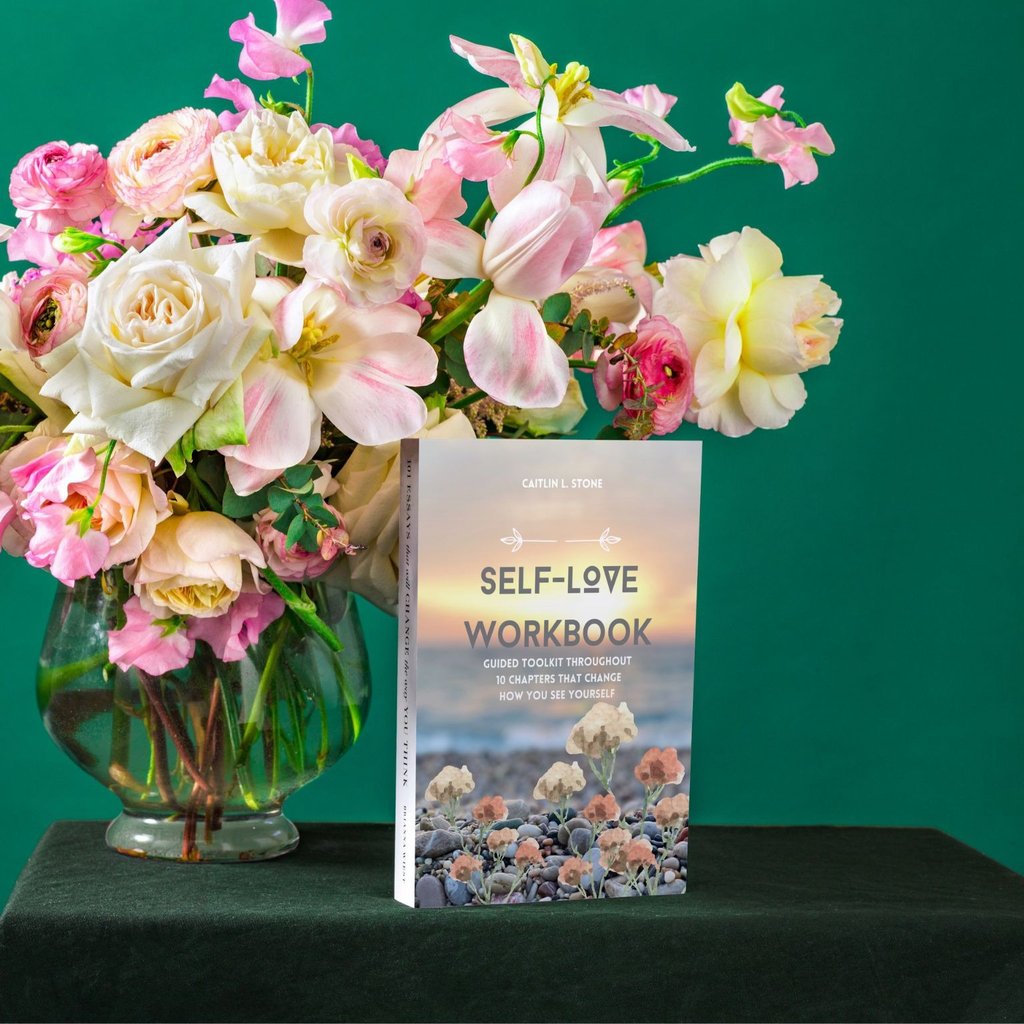
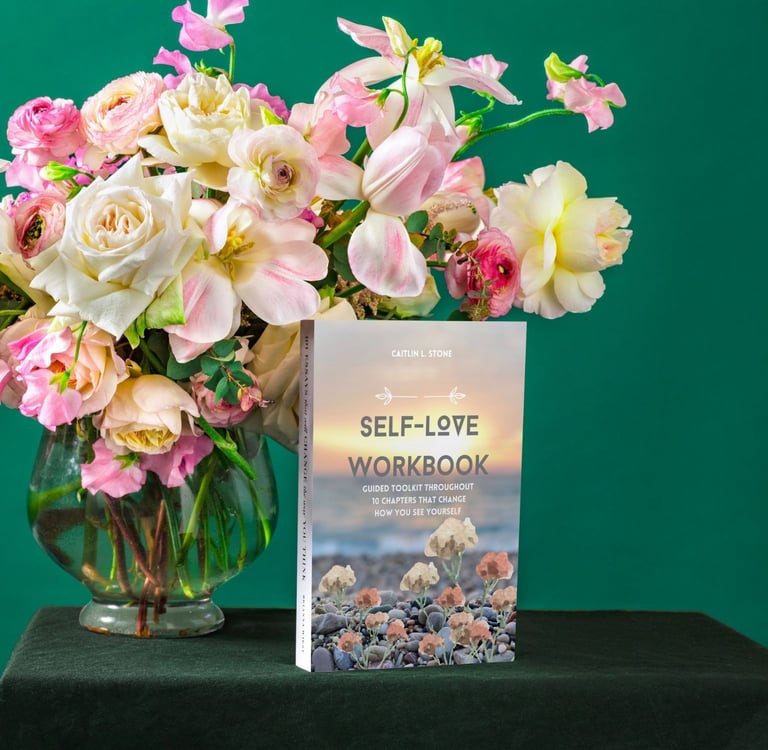
❤️ Self-Love Workbook
Sometimes the most exhausting part of work isn't the workload. It's the way you talk to yourself while you're carrying it.
If every mistake becomes proof that you're failing, or every difficult day leaves you feeling that you should have done more, stress relief needs to include the relationship you have with yourself. Our Self-Love Workbook offers guided exercises for working with self-criticism, self-worth, boundaries, and self-compassion, giving you a more structured way to build the kind of inner support that doesn't disappear when the day gets difficult.
7. The Boundary Reset
Sometimes your stress ritual needs to be a sentence rather than a breathing exercise.
Before automatically saying yes to another request, pause and ask: “Do I actually have the capacity for this?”
You can also use simple responses such as:
“I can't take this on today, but I can look at it tomorrow.”
“I need to finish my current priority first.”
“Let me check my workload before I commit.”
Boundaries can feel uncomfortable when you are used to being helpful, available, or agreeable. But a boundary is not a failure to cooperate. It is a way of communicating your actual capacity before stress turns into resentment or exhaustion. The American Psychological Association specifically recommends establishing work-life boundaries as part of managing work stress, while research and clinical guidance also connect healthier workplace boundaries with lower burnout risk.
If you tend to overcommit, struggle to say no, or keep giving your time and energy away until you have nothing left for yourself, learning how to set boundaries for yourself can become one of the most practical forms of work stress relief.
8. The Five-Senses Grounding Reset
When your mind is racing too far into the future, bring your attention back to what is physically happening around you.
Notice:
5 things you can see.
4 things you can physically feel.
3 things you can hear.
2 things you can smell.
1 thing you can taste.
You can adapt this quietly so nobody at work even knows you're doing it. This kind of sensory grounding shifts attention away from mental prediction and back toward the present environment. If you enjoy a more spiritual approach to grounding, you can also explore our guide to how to ground yourself spiritually.
9. The End-of-Task Reset
One of the easiest ways to accumulate stress is to move from one demanding task directly into another without ever mentally closing the first one.
Before switching tasks, take 30 seconds and write down:
What I finished:
What is still open:
What happens next:
Then close the document, stand up, take one breath, and move to the next task. This gives your brain somewhere to “put” the unfinished work instead of requiring you to keep rehearsing it mentally. It is especially useful at the end of the workday. A written next step can make it easier to stop carrying work around in your head after you have physically left your desk.
The most effective desk-based stress relief rituals are brief, repeatable practices that interrupt stress before it escalates. Breathing, movement, sensory grounding, journaling, self-compassion, and clear boundaries can each address a different part of the work-stress cycle.
🌿 You don't need all nine
There is a temptation to turn stress relief into another thing to be good at. Don't.
If breathing helps you, use breathing. If your shoulders are permanently somewhere near your ears, start with movement. If your brain won't stop rehearsing tomorrow's problems, try the stress dump. If you're overwhelmed because you keep saying yes, your most effective stress relief ritual may be learning to say no.
The point is not to perform a perfect five-minute routine. The point is to notice what kind of stress you're experiencing and choose an intervention that actually matches it.
🍯 Unexpected Workday Stress Relief Rituals That Actually Give Your Brain a Break
The key idea here is not “random quirky stress hacks.” It is that a useful microbreak should actually change what your brain and body are doing. Research on workplace microbreaks supports the value of short breaks for recovery, energy, and attention.
🍫 Make your break genuinely enjoyable
If you have two minutes, don't automatically turn them into another productive task. Have your tea. Eat a small snack. Watch something genuinely funny or uplifting. Listen to one song you love.
The point is psychological detachment from work, not squeezing another self-improvement activity into your day. Even very short enjoyable breaks can help replenish attention and reduce fatigue.
🧸 Give your hands something repetitive to do
A small squeeze toy, stress ball, doodling, knitting, or another simple repetitive movement can give you something physical to focus on while your mind steps away from work.
Think of it as a sensory interruption, not a magical cure for stress.
🍵 Turn your drink into an actual pause
Don't answer emails while drinking your tea. Make the drink, put your phone down, and take a few minutes to actually taste it. This sounds almost ridiculously simple, but that's precisely why it works as a ritual: you are practicing stopping rather than constantly consuming information.
🌿 Look at something that isn't a screen
Step outside if you can. Look at a tree. Stand near a window. Walk to get some water. Short breaks that involve movement or natural surroundings can be particularly useful for mentally demanding work.
And if you work somewhere with no access to nature, even keeping a plant, photograph, or another personally meaningful object nearby can create a small visual interruption from the work environment.
🎧 Change the emotional atmosphere
Sometimes you don't need silence. You need a different emotional input. Put on one calming song, an uplifting audio clip, or something that reliably makes you smile.
Recent research summarized by the American Psychological Association found that five minutes of inspirational video content produced stress-reduction effects comparable to guided meditation in one study, suggesting that a short, hopeful media break can sometimes be useful when chosen intentionally.
The important word is intentionally. Scrolling through stressful news for five minutes is not the same thing as taking a restorative break.
🧹 Reset one tiny piece of your space
Don't clean your entire desk. Throw away the receipt. Put the mug in the kitchen. Close the twenty browser tabs you don't need. Clear one small patch of workspace.
Tiny environmental resets can create a feeling of completion without turning your break into another chore.
✨ The rule behind all these rituals
A good workday stress relief ritual should interrupt the pattern, not simply disguise it. If you've spent the last hour staring at a screen, another screen may not be the best break. If your brain has been solving problems nonstop, another productivity exercise may not feel restorative. If you're socially overloaded, chatting with a coworker may not be what you need.
Choose a break that gives your mind something different from what has been exhausting it.
That is one reason microbreaks are worth taking seriously. Research suggests that short breaks can support energy, attention, and engagement during the workday, rather than being “wasted time.”
🌸 Create an After-Work Ritual That Actually Helps You Recover
Stress relief shouldn't end when you close your laptop. If your body leaves work but your mind stays there, you haven't really had a break.
Psychologists often describe this as psychological detachment from work: the ability to mentally disconnect from job-related thoughts during your non-work time. Creating a deliberate transition between work and personal life can make that separation easier.
🌙 Give your workday a real ending
The end of the workday should be a hard stop, not just a vague hope. Before you leave your desk, write down anything unfinished and the next action for tomorrow. Then close your laptop, silence work notifications, and physically change your environment if possible.
A short walk can work beautifully here because it creates a symbolic and physical transition between work mode and home mode.
And pay attention to what your body is telling you. If you are constantly exhausted, tense, or pushing through your own limits, learning to listen to your body can help you recognize when you need recovery rather than another productivity strategy.
🌈 Do something completely unnecessary
Adults need play too. You don't have to turn every free moment into something useful, educational, healthy, or productive. Paint something. Dance around the kitchen. Do a puzzle. Play with your dog. Watch something that makes you laugh.
Play gives your attention somewhere to go that has nothing to do with performance. That matters when your entire workday has been organized around deadlines, decisions, and getting things right.
You are allowed to do something simply because it feels good.
✨ Use gratitude as a perspective reset
Gratitude doesn't have to be about manifesting a bigger life. It can simply help you notice the life that is already happening around you.
At the end of the day, name two or three things that were genuinely good. They can be tiny:
The coffee was perfect.
Someone made me laugh.
I finally finished something that had been stressing me out.
The goal isn't to convince yourself that everything is wonderful. It is to prevent one difficult workday from becoming the story of your entire day.
And if gratitude feels impossible after a particularly exhausting or frustrating day, don't force yourself to find something profound. Start smaller. Our guide to Things to Be Grateful For When Gratitude Feels Hard can help you find ordinary, honest things worth noticing without pretending that a difficult day wasn't difficult.
This is the kind of gratitude that actually belongs in a stress-relief ritual: not forced positivity, but a deliberate shift in perspective.
🪶 Add a little Soul Sisters magic
This is where you can make your workday reset personal. Keep a small crystal on your desk as a physical reminder to pause. Choose a mantra such as “Work is something I do, not who I am.” Or pull a Daily Tarot Card and use its imagery as a reflection prompt: What do I need to see differently right now? What am I ready to leave behind? What energy do I want to carry into the rest of my day?
If you enjoy using tarot this way, our guide on How to Do a Daily Tarot Reading can help you turn a single card into a simple daily reflection practice rather than another complicated ritual.
You can also try a simple releasing ritual. Write down the work-related thought you don't want to carry into your evening, fold the paper, take a breath, and tear it up.
The symbolism doesn't have to be scientifically proven to be meaningful. Ritual can give an ordinary transition a clear beginning and ending, helping you consciously mark the moment when the workday is over.
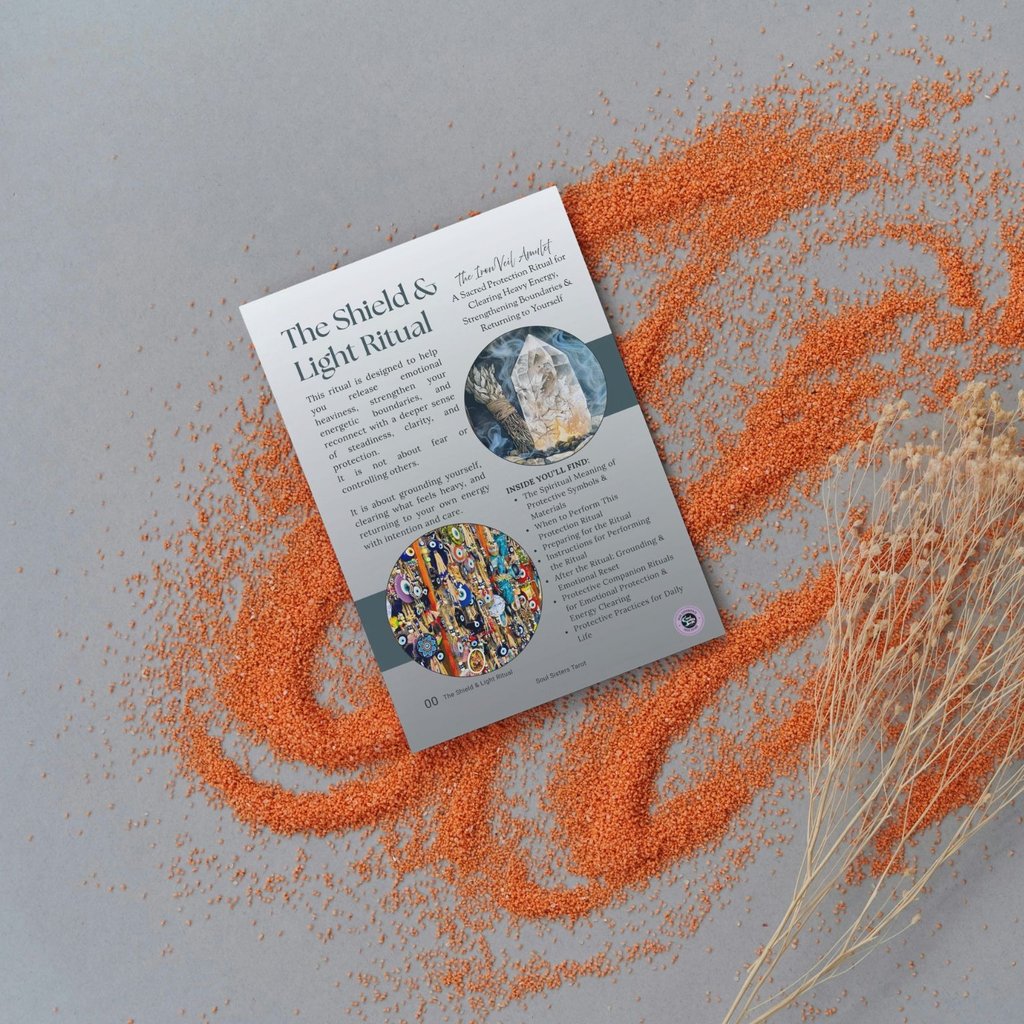
🛡️ The Shield and Light Ritual
Do you ever leave work but somehow feel like you brought the whole office home with you?
Sometimes the hardest part of work stress is not the task itself. It's the emotional residue you carry afterward: someone else's anger, a difficult conversation, a demanding atmosphere, or the feeling that everyone needed something from you. Our Shield & Light Protection Ritual offers a gentle spiritual practice for creating a symbolic energetic boundary around yourself, helping you mark the transition between what belongs to your workday and what belongs to you. Think of it as a ritualized way of saying: “The workday is over. I don't have to carry everything with me.”

😢 But sometimes the ritual isn't the solution
This distinction is important. A five-minute breathing exercise cannot fix an unhealthy workplace.
If your job is consistently causing severe anxiety, exhaustion, sleep problems, physical symptoms, or damage to your relationships, the answer may not be another stress-management technique. You may need stronger boundaries, support from a professional, changes within your workplace, or eventually a different work environment.
Stress relief rituals are tools for supporting you, not tools for teaching you to tolerate conditions that are harming you. Your worth is not measured by how much work you can survive.
💪 Workday Stress Relief Starts With Small Interruptions
You do not need an elaborate wellness routine to manage workday stress. A few minutes of intentional interruption can be enough to change what happens next. The important part is not whether you choose breathing, movement, journaling, gratitude, a walk, or a small spiritual ritual. It is learning to notice when stress is building and giving yourself permission to respond before you reach the point of exhaustion.
That is what makes workday stress relief rituals different from simply pushing through. You are creating small boundaries between stress and the rest of your life.
Start with one ritual you can realistically repeat. Take one slow breath before opening your inbox. Step outside after a difficult meeting. Write down the thought that keeps circling your mind. Pull a tarot card when you need a different perspective. Close your laptop at the end of the day and let that action mean something.
You are not trying to create a stress-free life. You are learning how to stop stress from taking over your entire life.
For more simple ways to build self-care into ordinary days, our Free Self-Love Guide offers gentle practices you can return to whenever you need to reconnect with yourself.
And if these small pauses are showing you something deeper, such as how often you ignore your own needs, criticize yourself, or keep pushing long after your body says enough, you may want to explore how to practice self-love in a way that actually works.
If you enjoy combining practical inner work with spiritual reflection, you can also explore our rituals, self-reflection tools, and soul-guided resources inside Sisters Creation.
With love,
Caitlin & Gerly,
Soul Sisters Tarot
❓ FAQ: Quick Workday Stress Relief Rituals
What are the best workday stress relief rituals you can do at your desk?
The most practical workday stress relief rituals are short enough to use before stress becomes overwhelming. Try slow breathing, a brief stretch, stepping away from your screen, writing down what is occupying your mind, drinking a beverage mindfully, or taking a short walk. The best ritual is not necessarily the most sophisticated one. It is the one you can realistically repeat during a demanding workday.
How can I relieve work stress in 5 minutes?
A five-minute work stress relief ritual can combine breathing, movement, and a deliberate break from whatever is demanding your attention. Close your email, take several slow breaths, relax your shoulders and jaw, stand up and move for a few minutes, then return to work with one clearly defined next task. The purpose is to interrupt the stress cycle, not to solve your entire workload in five minutes.
Do stress relief rituals actually work?
Short stress relief rituals can help regulate your response to everyday stress when they are used consistently and matched to the situation. Breathing, mindfulness, physical activity, social connection, and brief recovery periods are all established approaches to stress management. They are most useful as small interventions throughout the day, rather than as a replacement for addressing chronic sources of stress.
What is the fastest way to calm down at work?
When you need to calm down quickly at work, start by reducing stimulation and slowing your breathing rather than immediately trying to solve the problem. Put your phone aside, stop typing for a moment, relax your shoulders, and take several slow breaths with a longer exhale. Then identify what actually needs your attention right now. Creating a short pause can make it easier to respond deliberately instead of reacting from stress.
What are good stress relief rituals for people who cannot leave their desk?
If you cannot leave your desk, use discreet rituals that require little space or equipment. You can slow your breathing, unclench your jaw, lower your shoulders, stretch your hands and neck, close your eyes briefly, write down the thought that is distracting you, or place your feet firmly on the floor and notice your surroundings. These small practices turn your desk into a place where you can interrupt stress instead of simply enduring it.
How often should I take stress relief breaks during the workday?
There is no single schedule that works for everyone, but regular brief recovery periods are generally more useful than waiting until you are completely overwhelmed. Instead of treating breaks as something you earn after finishing everything, consider attaching a short reset to natural transitions such as finishing a meeting, sending an important project, eating lunch, or closing your inbox. The goal is to prevent stress from accumulating unchecked throughout the day.
Can workday stress relief rituals prevent burnout?
Stress relief rituals can support burnout prevention, but they cannot prevent burnout on their own if the underlying conditions remain harmful. Burnout is associated with chronic workplace stress and can involve exhaustion, mental distance or cynicism toward work, and reduced professional effectiveness. Small recovery practices can help you manage daily stress, while persistent overload may require stronger boundaries, workload changes, workplace support, or professional help.
What is the difference between stress relief and burnout recovery?
Stress relief usually refers to short-term strategies that help you manage an immediate stress response, while burnout recovery requires addressing the longer-term conditions that have produced sustained exhaustion and disengagement. A five-minute breathing exercise may help you get through a difficult afternoon, but it cannot compensate for chronic overwork, inadequate recovery, or a persistently unhealthy workplace. Knowing the difference prevents self-care from becoming another way of blaming yourself for a problem that requires structural change.
Can spiritual rituals help with work stress?
Spiritual rituals can be useful as personal reflection and grounding practices, particularly when they give you a meaningful way to pause and transition between different parts of your day. A tarot card, mantra, crystal, gratitude practice, or releasing ritual does not need to be treated as a medical treatment to have personal meaning. Used alongside evidence-based stress-management strategies, ritual can provide symbolism, intention, and a clear psychological transition from work mode to personal time
Can tarot help with work stress?
Tarot can be used as a reflective tool when work stress leaves you feeling mentally stuck or emotionally reactive. Rather than asking the cards to predict what will happen at work, use one card to explore a question such as, What am I not seeing clearly? What do I need to release today? What perspective would help me respond differently? This turns a Daily Tarot Card into a brief mindfulness and self-reflection practice rather than another task on your to-do list.
What should I do if work stress is affecting my mental health?
If work stress is consistently affecting your sleep, mood, relationships, physical health, or ability to function, short stress relief rituals should not be your only response. Consider talking with a qualified mental health professional or healthcare provider and, where possible, addressing the source of the workplace stress through boundaries, workload changes, time off, workplace support, or a change in environment. A breathing exercise can help you through a difficult moment, but you do not have to meditate your way out of an unhealthy situation.
What if my workplace itself is causing the stress?
If the main source of your stress is excessive workload, bullying, harassment, unrealistic expectations, lack of control, or an unhealthy workplace culture, individual stress rituals can only provide partial relief. They may help you cope with the immediate physiological and emotional response, but the underlying problem still needs attention. Sometimes the most important stress-relief practice is not another technique. It is recognizing that something in your environment needs to change.
Can small stress relief rituals really make a difference?
Yes, small rituals can matter because stress management is not only about what you do when you reach your breaking point. Brief moments of recovery, movement, connection, reflection, and deliberate disengagement can help create a healthier rhythm throughout the day. One five-minute pause will not transform your relationship with work, but hundreds of small interruptions can change how often you carry work stress into the rest of your life.
Soul Sisters Tarot
A Soft Place to Grow.
💌 SOUL SISTERS WEEKLY
A thoughtful Sunday letter with tarot reflections, moon wisdom, self-love, and gentle encouragement.
© 2026. All rights reserved.
Inspirational Coaching OÜ
sisters@soulsisterstarot.com