💌 JOIN SOUL SISTERS WEEKLY → GET FREE WELCOME GIFTS 🎁
Receive a thoughtful Sunday letter, free Self-Love & Shadow Work guides, and monthly Full Moon rituals ✨



Tarot Journaling Prompts: The Missing Part of Your Tarot Reading
Think your tarot readings should feel deeper? These tarot journaling prompts help you move beyond card meanings and discover the insights hiding beneath the surface.
TAROT & SPIRITUAL INSIGHT
Soul Sisters Tarot
4/8/202618 min read


Tarot Journaling Prompts: 50 Questions to Deepen Your Readings
This guide is part of our Daily Tarot Guidance collection, where we explore how to build a consistent, intuitive tarot practice that supports your everyday life.
Have you ever pulled a tarot card, opened your journal, and suddenly had no idea what to write? You're not alone. Many tarot readers receive meaningful messages from the cards but struggle to turn those insights into words. That's exactly where tarot journaling prompts can help. The right question can transform a simple reading into a deeper conversation with yourself.
What Are Tarot Journaling Prompts?
Tarot journaling prompts are reflective questions that help you explore the meaning of your tarot readings more deeply. Instead of focusing only on traditional card interpretations, these prompts encourage you to connect each reading to your thoughts, emotions, experiences, and personal growth, making your tarot practice more meaningful over time.
In this guide, you'll discover how to use tarot journaling prompts to deepen your readings, explore your thoughts and emotions, find greater clarity during uncertain moments, and choose meaningful questions that strengthen your intuition over time. You'll also find 50 practical tarot journaling prompts for daily readings, self-reflection, decision-making, new beginnings, and spiritual growth.
If you're completely new to tarot, we recommend starting with our Tarot for Beginners guide first. It explains how to interpret the cards with confidence, making these journaling prompts even more meaningful.
It's easy to stop at a guidebook meaning and move on with your day. But the most valuable insights often appear when you pause long enough to ask yourself a thoughtful question. Tarot journaling prompts help bridge the gap between "What does this card mean?" and "What does this card mean for me?"
🍃 Soul Sisters Insight
A single tarot prompt won't magically reveal every answer. But the right question can open a door you didn't know was there. Often, it's not the card that changes your perspective. It's the question you choose to ask about it.
Over time, you'll likely notice that some questions lead to much deeper reflections than others. That's why choosing thoughtful tarot journaling prompts can completely change the way you experience your readings.
🦉 Tarot eBook: Complete & Secret Guide to Tarot
Still looking up every card?
Reading tarot becomes much more meaningful when you understand why a card appears, not just what it traditionally means. If you want to interpret your cards with greater confidence and answer tarot journaling prompts more naturally, our Complete & Secret Guide to Tarot will help you build a deeper connection with every reading.


🌙 Why Tarot Journaling Prompts Deepen Your Readings
Why Should You Use Tarot Journaling Prompts?
Tarot journaling prompts help you move beyond memorizing card meanings by encouraging personal reflection. Instead of asking only what a card traditionally represents, thoughtful prompts help you explore how its message connects to your emotions, experiences, challenges, and personal growth, making every reading more meaningful.
A tarot card rarely gives its most meaningful message the moment you turn it over. More often, the insight appears when you pause to reflect on how that card connects to your own life. That's exactly why tarot journaling prompts are so powerful. Instead of searching for the "right" interpretation, they encourage you to ask better questions.
🍃 Soul Sisters Insight
Many people believe deeper tarot readings come from learning more card meanings. In our experience, they often come from asking better questions. A thoughtful prompt can reveal insights that even the longest guidebook cannot.
Tarot journaling prompts create space to:
Explore your emotional reactions instead of rushing to conclusions.
Connect the card's symbolism to your real-life experiences.
Strengthen your intuition by trusting your own observations first.
Recognize recurring thoughts, emotions, and patterns over time.
Discover insights that may not appear until you begin writing.
Without thoughtful reflection, it's easy to forget a tarot reading within a day or two. A single journaling prompt encourages you to pause, explore the message more deeply, and remember the insight long after you've put the cards away.
If you're new to keeping a tarot journal, our Tarot Journaling guide shows you how to build a simple, consistent practice that makes these prompts even more meaningful.
Over time, you may notice something surprising: the card itself hasn't changed, but your understanding of it has. That's the real power of tarot journaling prompts. They help you discover new layers of meaning every time you return to the same card from a different stage of your life.
This is something we've experienced many times ourselves.
🍃 Soul Sisters Notes
“I remember writing down a card that didn’t make sense to me at all. It felt disconnected, almost irrelevant. But a few days later, I reread my entry and suddenly everything clicked. The card hadn’t been wrong; I just wasn’t ready to see it yet.” – Caitlin
📝 How to Use Tarot Journal Questions Effectively
How Do You Use Tarot Journaling Prompts?
The best way to use tarot journaling prompts is to choose one question that feels relevant to your reading instead of trying to answer them all. Focus on your honest thoughts and emotions first, then allow your reflections to develop naturally over time.
You don't need to answer every tarot journaling prompt in a single reading. In fact, choosing just one meaningful question often leads to deeper insights than trying to write everything at once. The goal isn't to fill pages. It's to explore your reading with curiosity and honesty.
🍃 Soul Sisters Insight
If one question keeps pulling your attention, stay with it. The prompts that make you pause are often the ones with the most to teach you.
Keep it simple
You do not need a long ritual. Even one question per reading is enough. One thoughtful answer is often more valuable than ten rushed ones. Give yourself permission to stop when you've reached a meaningful insight.
Stay honest
Write what you actually feel, not what you think the card “should” mean. There are no right or wrong answers in your journal. Your most honest reflections are often more valuable than the "perfect" interpretation.
Let the cards speak first
Look at the imagery before reading the guidebook. Notice the colors, symbols, expressions, or emotions that immediately stand out to you before reaching for traditional meanings. Your first impression is an important part of the reading.
If you find yourself second-guessing every reading, explore How to Interpret Your Daily Tarot Card Without Overthinking. It will help you trust your own observations before relying on guidebook meanings.
Return to your entries
Revisit your journal every few weeks. Looking back often reveals recurring themes, repeated cards, and personal growth that can be difficult to notice in the moment.
Now that you know how to use tarot journaling prompts, let's explore questions you can return to whenever you pull a card. Start with the ones that feel most relevant today and allow your journal to grow one reflection at a time.
You don't need to answer every question below. Choose the one that feels most meaningful today.
🦉 Tarot eBook: Complete & Secret Guide to Tarot
Want to trust your own interpretations?
The best tarot journal entries don't come from memorizing meanings. They come from understanding the symbolism behind each card. Our Complete & Secret Guide to Tarot teaches you how to read beyond keywords, making every journaling prompt easier to explore with confidence.
🔮 Tarot Journaling Prompts for Daily Readings
What Are the Best Tarot Journaling Prompts for Daily Readings?
The best tarot journaling prompts for daily readings encourage you to connect a single card to your thoughts, emotions, and everyday experiences. Rather than searching for one "correct" meaning, these questions help you explore how the card's message applies to your life today, building both confidence and intuition over time.
Daily tarot readings don't need to be complicated to be meaningful. Even if you pull just one card each morning, asking a thoughtful question can turn a quick reading into a moment of genuine self-reflection. These tarot journaling prompts are designed to help you move beyond memorizing meanings and discover what today's card is trying to show you.
🍃 Soul Sisters Insight
We rarely answer every question after a daily card, and we don't recommend trying to. Choose the one prompt that sparks your curiosity the most. One honest reflection will almost always teach you more than ten rushed answers.
Start with whichever question feels most natural today. If one prompt leads to another, let your reflections unfold without forcing them.
What is the first feeling this card brings up?
What stands out visually to me?
How does this card relate to my current mood?
What message might this card hold for today?
Where in my life does this energy already exist?
What is this card asking me to notice?
What might I be overlooking?
How can I work with this energy today?
What would it look like to embody this card?
What small action can I take based on this insight?
What part of this card feels most relevant to my life right now?
If this card could give me one piece of advice today, what would it be?
The goal isn't to write the "perfect" journal entry. It's to notice how today's card reflects your current experiences, emotions, and choices. Over time, these small daily reflections become one of the most powerful ways to strengthen your intuition.
While daily prompts help you understand what's happening in the present moment, some readings invite you to explore your inner world more deeply. That's where self-reflection prompts become especially valuable.
🌿 Tarot Prompts for Self-Reflection and Emotional Awareness
How Do Tarot Journaling Prompts Support Self-Reflection?
Tarot journaling prompts for self-reflection encourage you to explore your emotions, beliefs, and personal patterns rather than searching for external answers. By asking thoughtful questions, you create space for greater self-awareness, emotional healing, and a deeper understanding of your own experiences.
Some tarot readings aren't asking you to solve a problem. They're inviting you to understand yourself more deeply. Self-reflection prompts help you move beyond "What will happen?" and explore "What am I feeling, learning, or avoiding?" These questions often lead to the most meaningful breakthroughs because they encourage honest conversations with yourself.
🍃 Soul Sisters Insight
The questions that feel slightly uncomfortable are often the ones worth exploring. You don't have to answer them immediately, but giving yourself permission to sit with them can reveal insights that don't appear in quick readings.
Choose the question that feels most relevant to your reading today. If one answer naturally leads to another, follow your curiosity instead of trying to complete the entire list.
What emotion does this card bring to the surface?
What part of myself does this card reflect?
What am I avoiding right now?
Where am I being too hard on myself?
What truth am I ready to face?
How does this card describe my current mindset?
What belief is influencing my situation?
Where do I need more compassion?
What am I learning in this phase of my life?
How can I support myself emotionally right now?
What story have I been telling myself about this situation?
What part of myself is asking to be seen with more kindness?
If you often struggle to know what to ask during a reading, our guide to Tarot Questions for Beginners will help you ask clearer, more meaningful questions that lead to deeper insights.
The goal isn't to uncover every answer in a single journal entry. Sometimes the greatest insight comes from noticing how your responses change over weeks or months. Returning to the same self-reflection prompt at different stages of your life often reveals just how much you've grown.
📓 365 Psychological Journal Prompts
Not sure what to ask yourself next?
Tarot journaling prompts are a wonderful way to reflect on your readings, but sometimes you want to explore your thoughts beyond the cards. Our 365 Psychological Journal Prompts offers a full year of thoughtful questions to help you build self-awareness, process emotions, and continue your personal growth every day.


✨ Tarot Journaling Prompts for Clarity and Decision-Making
Can Tarot Journaling Prompts Help You Make Decisions?
Tarot journaling prompts can't make decisions for you, but they can help you understand your thoughts, emotions, and priorities more clearly. By reflecting on your reading through thoughtful questions, you can uncover hidden fears, recognize new possibilities, and make choices that feel more aligned with your values and intuition.
Uncertainty has a way of making every option feel equally confusing. When your mind is filled with "what ifs," it can be difficult to hear your own intuition. Tarot journaling prompts create space to slow down, look beneath the surface, and understand what's really influencing your decision before you choose your next step.
If you're searching for greater clarity about where your life is heading, you may also find our Tarot Spread for Life Direction helpful. It offers a guided spread to explore your current path, while the journaling prompts below help you reflect more deeply on the messages your cards reveal.
🍃 Soul Sisters Insight
We don't use tarot to let the cards make our decisions. We use tarot journaling prompts to understand ourselves more clearly. Often, the answers we're searching for become easier to recognize once we've written down what we're truly feeling.
Whether you're deciding between two paths or simply trying to understand a situation more clearly, these prompts can help you move beyond uncertainty and explore what your reading is inviting you to notice.
What is the core issue in this situation?
What energy surrounds this decision?
What am I not seeing clearly?
What fear might be influencing my choice?
What would happen if I trusted myself here?
What is the most aligned path for me right now?
What lesson is hidden in this situation?
What outcome does this card suggest?
How can I move forward with confidence?
What does my intuition already know?
What assumption am I making that deserves a closer look?
If fear weren't guiding this decision, what would feel most true to me?
You don't have to solve everything in one journal entry. Sometimes answering a single thoughtful question is enough to help you see your situation from a completely different perspective. Clarity often arrives gradually, one reflection at a time.
🍃 Soul Sisters Notes
“There was a time I kept asking the same question, hoping for a different answer. My journal showed me the pattern before I was ready to admit it. The clarity didn’t come from a new card; it came from seeing myself more honestly.” – Caitlin
While some tarot journaling prompts help you navigate difficult choices, others are designed to help you look ahead with intention. That's where prompts for new beginnings become especially meaningful.
🌑 Tarot Journal Questions for New Beginnings and Intentions
What Are the Best Tarot Journaling Prompts for New Beginnings?
Tarot journaling prompts for new beginnings help you clarify your intentions, recognize new opportunities, and reflect on the mindset you want to carry into your next chapter. They're especially meaningful during life transitions, fresh starts, and New Moon intention-setting practices.
Every new beginning starts with a question. Whether you're beginning a new chapter, setting intentions, or stepping into unfamiliar territory, tarot journaling prompts can help you understand where you are now and where you hope to go next. Writing your reflections gives your intentions greater clarity and helps you recognize the opportunities already unfolding around you.
🍃 Soul Sisters Insight
Setting an intention isn't about controlling the future. It's about becoming more intentional with your choices today. Sometimes the smallest shift in perspective becomes the first step toward meaningful change.
If you're working with the lunar cycle, our New Moon Tarot Spread can help you set clear intentions for the month ahead, while our Full Moon Tarot Spread offers a thoughtful way to reflect on what you're ready to release. The journaling prompts below deepen both practices by helping you explore what your cards mean for your personal journey.
Use these prompts whenever you're beginning something new, setting goals, or feeling called to move forward with greater purpose.
Here are some tarot journaling prompts for new beginnings and intention setting:
What intention feels most aligned for me right now?
What energy am I stepping into?
What am I ready to release?
What new opportunity is emerging?
What support is available to me?
What mindset will help me grow?
What habits need to shift?
What does my future self want me to know?
What would courage look like in this phase?
What small step can I take today?
What version of myself am I growing into?
What am I ready to say yes to in this new chapter?
New beginnings often lead to deeper questions about who we're becoming. As your confidence grows, tarot journaling prompts can also help you strengthen your intuition and explore your spiritual path with greater awareness.
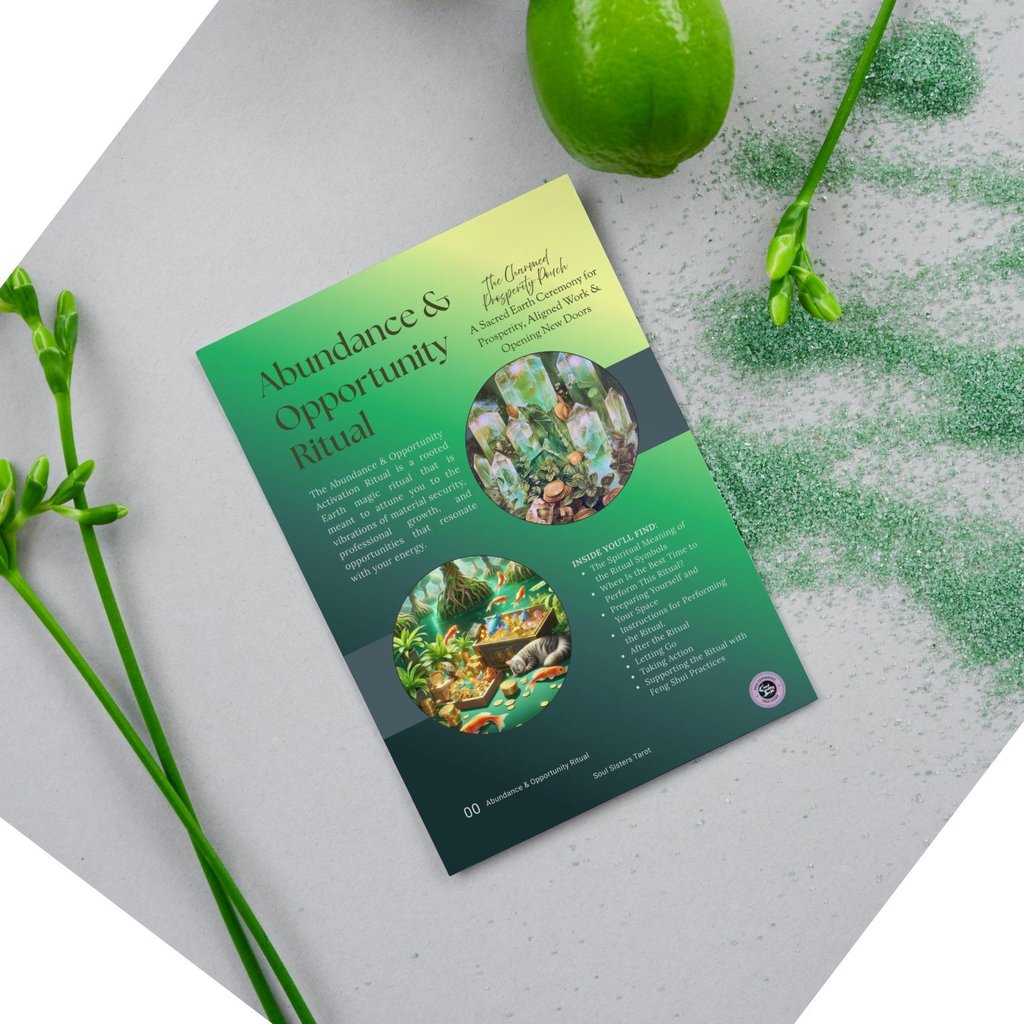
🍀 Abundance & Opportunity Ritual
Ready to welcome new opportunities?
New beginnings aren't only about setting intentions. They're also about creating space for new possibilities to enter your life. Our Abundance & Opportunity Ritual is designed to help you release energetic blocks, welcome fresh opportunities, and align your actions with the future you're working toward.
💫 Tarot Prompts for Spiritual Growth and Intuition
Can Tarot Journaling Prompts Strengthen Your Intuition?
Yes. Tarot journaling prompts encourage you to notice your first impressions, emotional responses, and personal insights before relying on traditional interpretations. Over time, this reflective practice helps you build confidence in your intuition and develop a more personal connection with your tarot readings.
Intuition rarely arrives as a loud voice with all the answers. More often, it appears as a quiet feeling, a recurring thought, or a symbol that keeps catching your attention. Tarot journaling prompts help you slow down enough to notice those subtle moments, making it easier to recognize your own inner guidance instead of searching for certainty outside yourself.
🍃 Soul Sisters Insight
We don't believe intuition is something you're born with or without. Like any meaningful relationship, it grows stronger the more time and attention you give it. Every honest journal entry is another opportunity to learn how your intuition speaks to you.
These tarot journaling prompts invite you to look beyond the traditional meaning of the card and explore the quieter messages that arise through your own experiences and intuition.
How is my intuition speaking to me through this card?
What symbol feels most important and why?
What deeper message is beneath the surface meaning?
How does this card connect to my life path?
What is the lesson my soul is learning right now?
What does this card reveal about my personal growth?
Where am I being guided to trust more?
What synchronicities am I noticing lately?
How is this reading part of a bigger pattern?
What is the deeper truth I am ready to receive?
What feels true, even if I can't fully explain why?
How has my intuition been trying to guide me recently?
Over time, you may notice that your journal becomes less about finding the "right" answer and more about recognizing your own inner wisdom. That's when tarot shifts from something you simply practice to something you genuinely experience.
If you're learning to trust your own interpretations, our guide on How to Read Tarot Cards Intuitively explores practical ways to strengthen your intuition and read with greater confidence, even if you're still a beginner.
Even with thoughtful prompts, there will be days when your journal feels quiet, or your answers don't come easily. That's a normal part of any reflective practice, and it doesn't mean you're doing anything wrong.
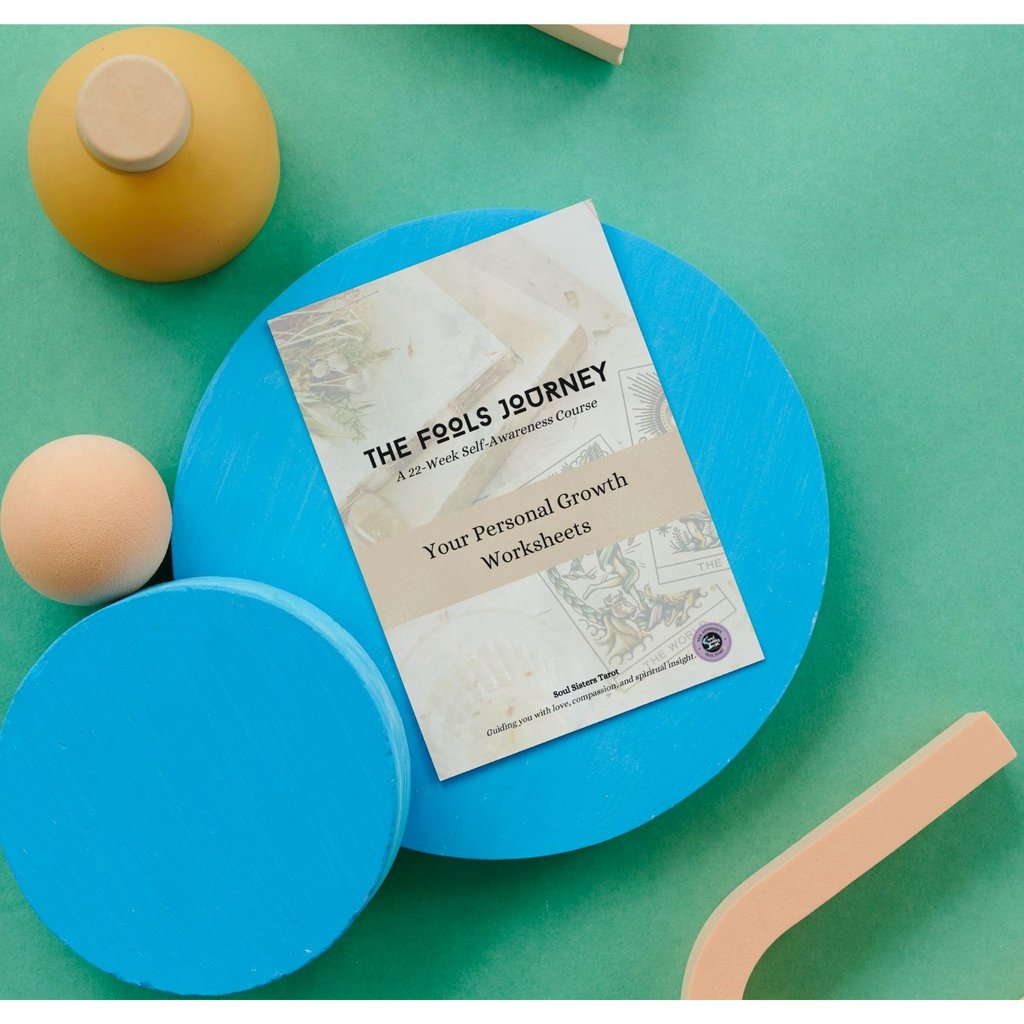
🪞 The Fool's Journey Self-Awareness Course
Ready to go beyond individual readings?
Every tarot journaling prompt helps you understand yourself a little better, but lasting transformation comes from seeing the bigger picture. The Fool's Journey Self-Awareness Course guides you through all 22 Major Arcana, helping you deepen your intuition, explore personal growth, and discover how tarot can become a lifelong tool for self-awareness.
🌼 When Your Tarot Journaling Feels Stuck
What Should You Do When Tarot Journaling Feels Stuck?
If tarot journaling feels stuck, don't force yourself to find the perfect interpretation. Instead, acknowledge your uncertainty, choose one simple reflection question, and allow your understanding to develop naturally over time. Feeling stuck is a normal part of building a deeper tarot practice.
Every tarot reader experiences days when the cards feel quiet, confusing, or surprisingly difficult to understand. This doesn't mean your intuition has disappeared or that you're doing something wrong. More often, it's an invitation to slow down, stay curious, and let the reading unfold in its own time.
🍃 Soul Sisters Insight
Some of our most meaningful journal entries began with the words, "I have no idea what this card is trying to tell me." Giving yourself permission not to have all the answers can be the first step toward discovering them.
You may begin to notice:
The same card appearing again and again.
A reading that feels confusing or contradictory.
Emotional resistance to writing about what the card brings up.
A sense that every answer feels incomplete.
Rather than searching for the "right" interpretation, choose one gentle question and see where it leads:
What feels unclear and why?
What am I expecting to see?
What if the message is simpler than I think?
What would I notice if I stopped trying to solve this reading and simply observed it?
Not every reading is meant to provide immediate answers. Sometimes the greatest value of tarot journaling prompts is helping you become comfortable with questions that need a little more time. When you return to your journal days or weeks later, the meaning often feels much clearer than it did in the moment.
While it's normal to encounter uncertainty, it's also important to approach your journal with kindness, especially when a reading brings up difficult emotions.
🌸 Let Your Tarot Journal Become a Conversation with Yourself
Tarot journaling prompts aren't about finding the perfect answer. They're about creating space to slow down, reflect honestly, and discover what your tarot reading means for you. Every thoughtful question brings you one step closer to understanding your emotions, recognizing your patterns, and trusting your own intuition.
Some prompts may bring up feelings you weren't expecting, and that's completely okay. If a question feels overwhelming, give yourself permission to pause. You don't need to answer every prompt or uncover every insight in one sitting. Tarot is an invitation to explore your inner world with curiosity and compassion, never a test you have to pass.
There's no right way to use tarot journaling prompts. You might:
Choose one prompt after your daily tarot reading.
Focus on a different theme each week, such as self-reflection, decision-making, or spiritual growth.
Return to the same prompt with different cards and notice how your answers evolve over time.
Over time, your journal becomes much more than a collection of notes. It becomes a record of your personal journey, helping you recognize:
recurring patterns in your thoughts and tarot readings
emotional shifts you may not have noticed before
growing confidence in your intuition
personal growth that happened one reflection at a time
🍃 Soul Sisters Insight
We don't believe a tarot journal is meant to hold all the answers. We believe it's a place where better questions begin. Sometimes the greatest breakthrough isn't discovering something new about the cards. It's discovering something new about yourself.
🍃 Soul Sisters Notes
"I used to think I needed the ‘right’ interpretation for every card. But journaling showed me something softer. The meaning wasn’t something to get right; it was something to feel into. That’s when I stopped doubting and started listening." – Caitlin
Every tarot journaling prompt in this guide is an invitation to become more curious, more compassionate, and more connected with yourself. There will be days when your answers come easily and days when they don't. Both are valuable because every reflection helps strengthen your relationship with your intuition.
If you're ready to continue your journey, explore our Tarot Guidance: Find Clarity, Self-Discovery & Your Tarot Path hub, where you'll discover beginner-friendly guides, tarot spreads, tarot journaling resources, and practical tools to help you build a more meaningful tarot practice.
If you feel called to explore your path more deeply, you're also warmly invited to visit Sisters Creation, where you'll find tarot readings, spiritual guidance, rituals, and thoughtfully created resources designed to support your personal growth, self-discovery, and intuitive journey.
Take your time, trust the process, and remember that every question you ask is another step toward understanding yourself more deeply. Your tarot cards may begin the conversation, but your reflections are where the real transformation happens.
With love,
Caitlin & Gerly,
Soul Sisters Tarot
🌳 Frequently Asked Questions About Tarot Journaling Prompts
What are tarot journaling prompts, and how do they work?
Tarot journaling prompts are thoughtful questions that help you explore the personal meaning of a tarot reading. Instead of focusing only on traditional card interpretations, they encourage you to reflect on your emotions, experiences, beliefs, and current situation. Over time, answering these questions helps you develop a deeper relationship with your cards and recognize patterns in your own life.
How many tarot journaling prompts should I answer after a reading?
You don't need to answer every prompt. In fact, choosing one or two questions that feel most relevant often leads to deeper insights than trying to complete a long list. Focus on quality rather than quantity, and let your reflections unfold naturally.
Can I use tarot journaling prompts with any tarot spread?
Yes. Tarot journaling prompts work with one-card pulls, three-card spreads, Celtic Cross readings, moon rituals, and any other tarot spread. Simply choose the questions that best match your intention and the message of your reading.
Can tarot journaling improve my intuition?
Yes. Tarot journaling encourages you to trust your own observations before searching for outside answers. As you reflect on your readings consistently, you'll begin to recognize how your intuition speaks to you, making it easier to interpret the cards with greater confidence and less self-doubt.
What should I write in a tarot journal if I don’t understand the card?
You don't need to understand every card immediately. Write down your first impressions, the emotions the card brings up, any symbols that stand out, or simply what feels confusing. Returning to your journal later often reveals meanings that weren't obvious when you first pulled the card.
Are tarot prompts for self-reflection different from regular tarot questions?
Yes. While many tarot questions focus on external situations or possible outcomes, self-reflection prompts encourage you to explore your thoughts, emotions, beliefs, and personal growth. They help you understand yourself more deeply rather than simply looking for answers about the future.
Is it okay to use the same tarot journaling prompts every day?
Absolutely. Revisiting the same prompt with different cards can reveal how your thoughts, emotions, and perspective change over time. Many people discover that the question stays the same, but their answers evolve as they grow.
Can tarot journaling help with anxiety or overthinking?
Many people find that tarot journaling creates a calming space to slow down and organize their thoughts. Rather than trying to predict every possible outcome, writing about your reading encourages reflection, helping you separate your fears from what you're genuinely feeling. While it isn't a substitute for professional mental health support, it can be a helpful mindfulness practice.
Should I answer the prompts before or after looking up the card meaning?
Whenever possible, spend a few minutes exploring your own thoughts before reaching for a guidebook. Writing your first impressions helps strengthen your intuition. Afterward, you can compare your reflections with traditional card meanings and notice where they overlap or differ.
Can I use the same tarot journaling prompt for different cards?
Yes. Using the same tarot journaling prompt with different cards is one of the best ways to notice recurring themes and personal growth. As your circumstances change, you'll often discover that the same question leads to completely different insights, helping you see how both your understanding and your intuition evolve over time.
Soul Sisters Tarot
A Soft Place to Grow.
💌 SOUL SISTERS WEEKLY
A thoughtful Sunday letter with tarot reflections, moon wisdom, self-love, and gentle encouragement.
© 2026. All rights reserved.
Inspirational Coaching OÜ
sisters@soulsisterstarot.com