💌 JOIN SOUL SISTERS WEEKLY → GET FREE WELCOME GIFTS 🎁
Receive a thoughtful Sunday letter, free Self-Love & Shadow Work guides, and monthly Full Moon rituals ✨



Are Tarot Readings Real? What If It’s Not “Just Intuition”?
Are tarot readings real, or is intuition doing all the work? Discover what happens when symbolism, intuition, and spiritual insight come together in a tarot reading.
TAROT & SPIRITUAL INSIGHT
Soul Sisters Tarot
3/27/202614 min read
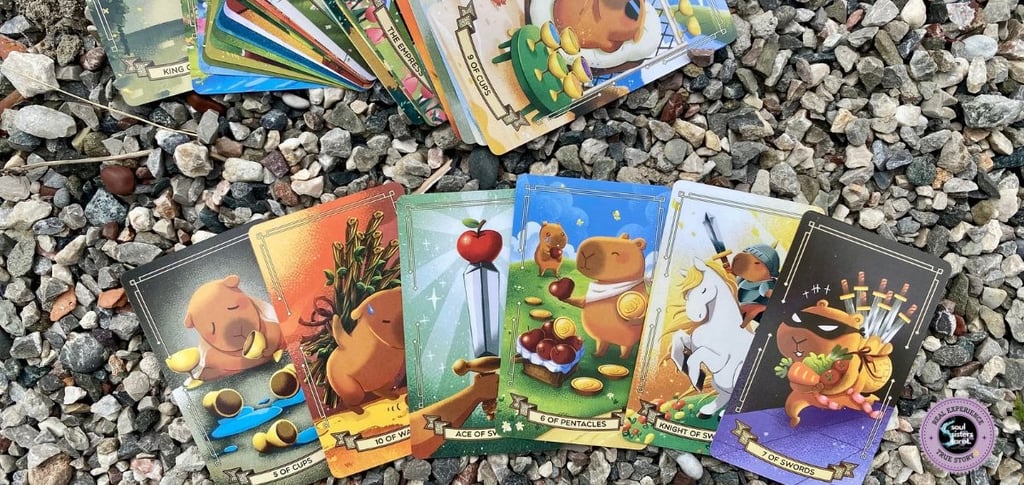
Are Tarot Readings Real or Just Intuition? An Honest Spiritual Explanation
This guide is part of our Tarot Readings Guide, where we explore how tarot can support clarity, insight, and emotional understanding.
Are tarot readings real, or are they simply intuition, psychology, and interpretation? The answer depends on what we mean by “real.” Tarot cards themselves have no scientifically established ability to predict fixed future events or access supernatural information. At the same time, a tarot reading can create a genuine experience of insight by combining symbolic imagery, traditional card meanings, intuition, and the personal context of the person receiving the reading.
That distinction matters. A tarot reading can feel remarkably accurate without requiring the cards to have supernatural predictive powers. A reader may recognize patterns, interpret symbolism, notice emotional themes, and use intuition to connect the cards with a person's situation. For people who hold a spiritual view of tarot, the experience may also be understood through concepts such as energy, synchronicity, or spiritual guidance.
So when someone asks, “Are tarot readings real or just intuition?”, there are actually several questions underneath it:
Are tarot cards predicting something that exists outside the reader and client?
Is intuition responsible for the insight that comes through a reading?
Why can a random-looking card spread sometimes feel so specific?
Can tarot be meaningful without proving that it has supernatural powers?
This article explores those questions from both a spiritual and grounded perspective, without pretending that tarot can offer scientific certainty where none exists.
If you are completely new to tarot, you may also find it helpful to explore Tarot for Beginners, which explains the foundations of tarot and how the cards are traditionally interpreted.
🌙 Are Tarot Readings Real, or Is There More Than One Explanation?
When people ask “Are tarot readings real?”, they may actually be asking several different questions. Are the cards revealing information from outside ourselves? Is the reader using intuition? Is the experience psychological? Or can all of these perspectives coexist?
There is no scientifically established evidence that tarot cards can independently predict future events or access supernatural information. At the same time, that does not mean a tarot reading is meaningless or that every insight is simply random.
A tarot reading can be understood through several overlapping layers:
Symbolism: Tarot cards contain established imagery and archetypal themes that give the reading a rich symbolic language.
Intuition: The reader uses experience and intuitive perception to connect those symbols with the question and context.
Psychological reflection: Seeing a situation represented through images and archetypes can bring thoughts, emotions, and patterns into conscious awareness.
Spiritual interpretation: Some people understand the experience through energy, synchronicity, spiritual guidance, or a deeper connection between the cards and the moment.
This is why the same tarot card can mean something very different in two different readings. The card does not exist in isolation. Its meaning emerges from the symbolism, its position in the spread, the surrounding cards, the question being explored, and the reader's interpretation.
So, are tarot readings real?
They can be real as an experience of insight, reflection, and meaning, even if you do not believe that the cards possess supernatural predictive powers.
For someone with a spiritual worldview, the experience may feel like receiving guidance from something beyond the conscious mind. For someone with a psychological perspective, the same experience may be understood as intuition, pattern recognition, symbolism, and self-reflection.
You do not necessarily have to choose between “mystical” and “meaningless.” Tarot can be approached as a spiritual practice while still acknowledging what we can and cannot objectively prove about how it works.
🍃 Soul Sisters Notes
“At first, I kept looking for proof. I wanted the cards to tell me something undeniable. But the more I sat with them, the more I realized they weren’t trying to prove anything. They were quietly pointing me back to what I already felt but hadn’t fully trusted.” – Caitlin
🔮 Is Tarot Real or Fake? Understanding the Common Doubt
When people ask “Is tarot real or fake?”, they are usually asking whether tarot can provide genuine insight or whether a reading is simply random interpretation. The answer depends on what we mean by “real.”
Tarot is not scientifically proven to predict future events or reveal objective facts about another person. There is also no reliable evidence that tarot cards themselves possess supernatural powers. What tarot can provide is a structured way to explore symbols, emotions, patterns, intuition, and perspective. That distinction matters.
Tarot is not a test of supernatural proof
A tarot card does not contain a factual answer about what will happen tomorrow. Its meaning comes from the combination of traditional symbolism, the question being explored, the reader’s interpretation, and the context of the person receiving the reading.
For example, The Tower does not automatically mean that something terrible will happen. Depending on the situation, it might represent a sudden realization, the breakdown of an unhealthy pattern, unexpected change, or the need to confront something that can no longer be ignored.
The card provides a symbolic framework. The interpretation gives that symbol meaning within the situation.
So, is tarot just random?
Not necessarily. The cards are physically shuffled and drawn by chance, but the interpretation is not random. A professional reader considers the card's traditional meaning, its position in the spread, the surrounding cards, the question being explored, and the broader context of the reading.
This is one reason the same tarot card can produce very different insights for different people. The card stays the same. The context changes.
There is also a psychological explanation for why tarot can feel surprisingly relevant. Symbolic images can prompt associations, memories, emotions, and perspectives that may be difficult to access through straightforward analytical thinking. In that sense, tarot can function as a reflective tool even without requiring you to believe that the cards have supernatural powers.
Why can tarot feel so real?
A tarot reading may feel powerful when the symbolism gives you language for something you were already sensing but had not clearly articulated.
You might suddenly recognize:
a pattern you have been repeating
an emotion you have been avoiding
a decision you have been struggling to make
a possibility you had not considered
a truth you already suspected but were reluctant to acknowledge
That experience can be meaningful without requiring the reader to claim that the cards have absolute knowledge of your future. This is where tarot sits between symbolism and intuition: the cards provide the imagery, while the reader and the person receiving the reading bring the context, associations, and interpretation.
If you want to explore the question of accuracy separately, our guide on how accurate tarot readings can be looks more closely at what tarot can and cannot realistically tell you.
✨ How Tarot Works Spiritually
If tarot is not a scientifically proven method of predicting events, then what does it mean to say that tarot “works” spiritually?
For many tarot practitioners, the answer lies in the relationship between symbolism, intuition, personal meaning, and spiritual awareness. The cards provide a visual language for experiences that can be difficult to describe directly, while the reader interprets that language in the context of the question and the person’s life.
There is no single universally accepted explanation for why tarot feels meaningful. Some people understand it spiritually, while others see it primarily as a psychological or reflective practice. You do not have to choose one explanation for tarot to be useful.
Tarot works through symbolism
The tarot deck is built around recurring human experiences: love, loss, ambition, fear, change, conflict, uncertainty, growth, endings, and new beginnings.
But tarot symbolism becomes even more powerful when we stop looking at the cards only as abstract meanings and start seeing them through real human experiences.
That is the idea behind our Tarot Through the Wheel of Life series. Instead of asking only, “What does this tarot card mean?”, we explore what happens when life itself becomes the card.
Shadow work, for example, can be understood through The Moon, with its themes of the unconscious, uncertainty, hidden fears, and what lies beneath the surface. The Corn Moon can be explored through the Seven of Pentacles, reflecting patience, assessment, growth, and the question of whether the seeds you planted are becoming what you hoped they would be.
This way of looking at tarot makes the symbolism more tangible. You are no longer memorizing isolated card meanings. You are learning to recognize tarot archetypes in the experiences, seasons, challenges, and turning points of real life.
A card such as The Hermit can evoke themes of solitude, introspection, withdrawal, and searching for inner guidance. The Empress may bring attention to nurturing, creativity, abundance, or the relationship between giving and receiving.
The card itself does not dictate one literal meaning. Instead, its symbolism creates a starting point for interpretation.
🦉 Tarot eBook: Complete & Secret Guide to Tarot
Ever look at a tarot card and wonder how anyone is supposed to know what all those symbols mean?
Our Complete & Secret Guide to Tarot takes you deeper into the symbolism, archetypes, and hidden layers behind the cards, so you can start understanding what you’re actually looking at rather than simply memorizing keywords. It’s a beautiful next step if you want to explore how tarot creates meaning through its imagery and stories.


Tarot and intuition
Intuition is another important part of many tarot readings. A reader may know the traditional meaning of a card, but interpretation also involves noticing the question being asked, the position of the card, the surrounding cards, the emotional tone of the reading, and which themes appear to stand out.
The person receiving the reading can experience intuition too. You may look at a card and immediately think, “That is exactly what I have been avoiding.” Or a particular image, symbol, or phrase may remind you of something that suddenly puts your situation into perspective.
That does not necessarily mean the card has revealed an objective fact. It may mean the symbolism has helped something you already knew become easier to recognize.
Tarot and spiritual awareness
For people who approach tarot spiritually, the experience can go beyond psychological reflection. Some practitioners view a reading as a way of connecting with energy, synchronicity, spiritual guidance, or a deeper intuitive awareness. Others see the cards as a sacred tool for meditation, contemplation, and connection with the self.
These are spiritual interpretations rather than scientifically established mechanisms, and different readers may understand them differently. What remains consistent is the role of attention and reflection. When you pause, ask a meaningful question, and engage deeply with symbolic imagery, you create space to notice thoughts, feelings, and patterns that may otherwise get lost in everyday noise.
That is one of the reasons tarot can feel surprisingly profound without requiring you to accept every supernatural explanation surrounding it.
If you are curious about how intuition actually enters a professional session, you can also explore what happens during a tarot reading, where we walk through the reading process step by step.
🧭 Why Tarot Can Feel So Accurate When Intuition Is Part of the Reading
One of the most common doubts about tarot is also one of the most interesting: “If tarot readings involve intuition, does that mean they aren’t real?”
Not necessarily. Intuition is a real human experience, and so are the awareness, emotional recognition, and insight that can come from reflecting on a situation. What tarot adds is a structured symbolic language for exploring those experiences.
The cards do not need to provide a supernatural fact for a reading to be meaningful. Sometimes a card gives you a way to see something you already sensed but had not been able to put into words.
Tarot gives intuition something to respond to
When you sit with a tarot card, you are not simply looking at a random picture. Each card carries established symbols, archetypal themes, and traditional meanings. Your intuition then interacts with those symbols.
You might notice a particular image first. A traditional meaning might suddenly connect with something happening in your life. Or the combination of several cards may give you a perspective you had not considered before.
This is why tarot can sometimes feel like “I already knew this, but I needed to see it.”
If you want to understand what this process looks like inside an actual session, you can explore what happens step by step during a tarot reading.
🍃 Soul Sisters Notes
“There was a time I dismissed everything as ‘just intuition.’ But then I noticed how often the cards would bring up something I was actively avoiding. It wasn’t random. It felt like a gentle nudge, like something within me was finally being heard.” – Caitlin
Why can a tarot reading feel so precise?
A tarot reading can feel remarkably accurate when the symbolism connects with patterns, emotions, choices, or circumstances that are already present in your life.
Tarot can help you:
Recognize patterns you keep repeating
Put words to emotions you have struggled to understand
See a situation from another perspective
Notice choices or possibilities you may have overlooked
Reflect on something you already intuitively sense
This is different from saying that the cards have objectively revealed a hidden fact. The feeling of accuracy often comes from the connection between the symbolism of the cards and the reality of your own experience.
A simple example
Imagine you are uncertain about a relationship and draw:
Two of Cups
Five of Pentacles
The Hermit
Rather than treating these cards as a fixed prediction, a reader might explore them as a symbolic progression:
Two of Cups could highlight emotional connection or mutual attachment.
Five of Pentacles could draw attention to feelings of exclusion, insecurity, emotional distance, or lack.
The Hermit could point toward stepping back, reflecting, and understanding what you genuinely need.
The cards have not created these circumstances. They have given you a framework for looking at them. And sometimes that framework is exactly what allows something that has been difficult to see clearly to finally come into focus.
Tarot can reveal perspective without claiming certainty
This is one of the most useful ways to understand tarot. A reading does not have to prove that the cards possess supernatural knowledge to offer genuine value. It can help you slow down, examine your assumptions, recognize patterns, and hear your own intuition more clearly.
That is also why tarot can be useful when you are facing a difficult choice. If you want to explore this side of tarot further, see how tarot helps you gain clarity when making decisions or feeling stuck.
🔮 Personalized Tarot Reading (1 Topic)
Sometimes you already know something is there, but you just can’t see the whole picture yet.
A Personalized Tarot Reading gives you space to explore your specific question, situation, or crossroads through the cards, with intuitive guidance that helps you uncover patterns, possibilities, and the perspective you may be missing.
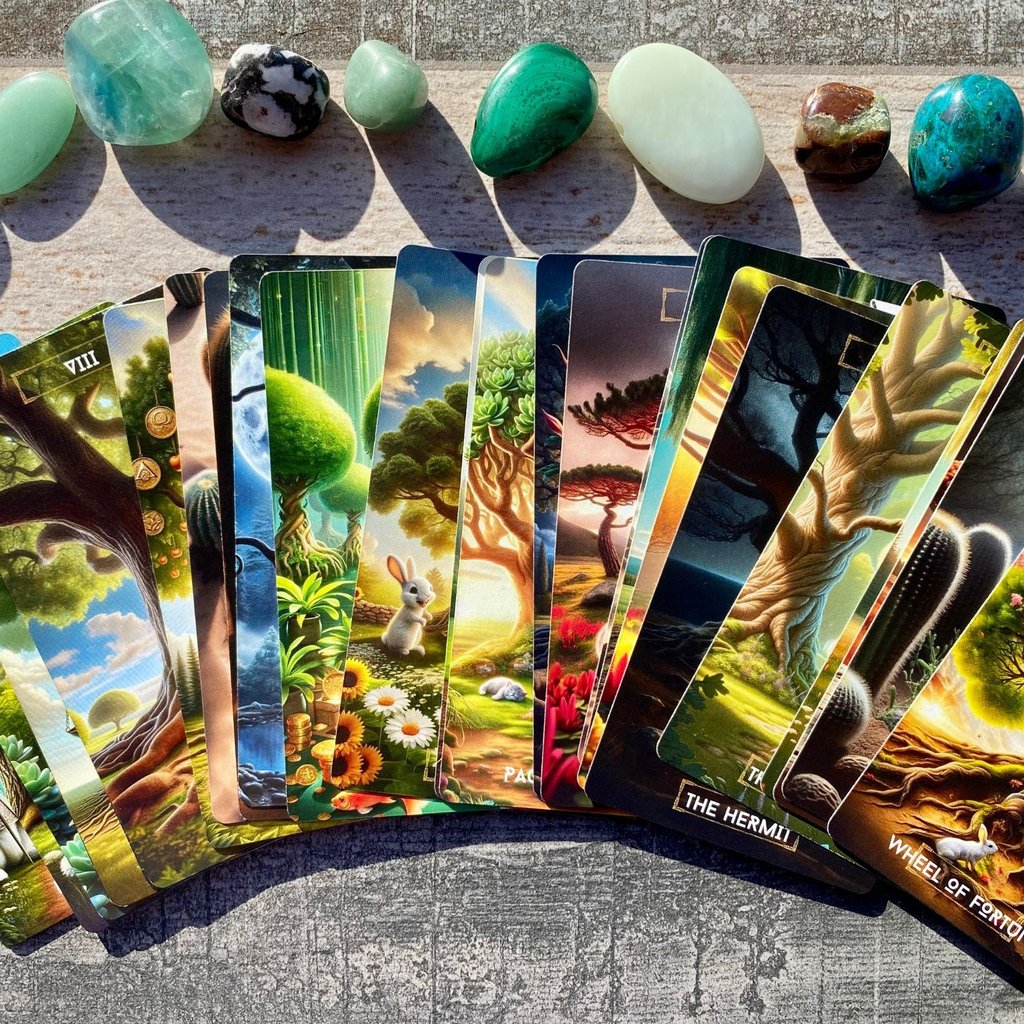
⚖️ What Tarot Can and Cannot Tell You
Understanding tarot also means understanding its boundaries. Tarot can offer perspective on your current situation, but it should not be treated as an absolute authority over your future, your decisions, or your life.
If you are specifically wondering whether tarot can predict future events, we explore that question in depth in Can Tarot Predict the Future?. Here, the important distinction is simple: tarot can help you explore possibilities and patterns, but it does not remove your ability to choose.
Your circumstances can change. Your choices can change. And your understanding of a situation can change. That is why tarot is most useful as guidance rather than control.
The reader matters, too
The quality and ethics of a tarot reading also depend greatly on the person interpreting the cards.
A responsible reader should:
respect your free will
explain possibilities rather than present them as certainties
avoid fear-based predictions
leave room for your own interpretation and choices
use the reading to support awareness rather than dependence
A reading should ultimately leave you feeling more informed and connected to yourself, not frightened or powerless.
If you are considering a professional reading, our guide to Tarot Reading Ethics: What a Reader Should and Should Not Tell You explains the boundaries that help distinguish supportive tarot guidance from fear-based or irresponsible practices.
How to approach tarot with an open mind
You also do not have to decide immediately whether you believe tarot is spiritual, psychological, intuitive, or some combination of these perspectives. You can approach it as an experience and pay attention to what happens.
Before a reading, ask yourself:
Am I looking for reflection or absolute certainty?
Am I willing to consider a perspective I had not noticed before?
Can I listen to the reading without handing over my decision-making power?
If you are preparing for your first professional reading, our guide 7 Things to Know Before Getting a Tarot Reading can help you understand what to expect and how to approach the experience with confidence.
You do not have to believe everything about tarot to explore what it can show you. And perhaps that is the most useful place to begin: not with “Can tarot prove itself to me?”, but with “What can I learn by looking at my situation from a different perspective?”
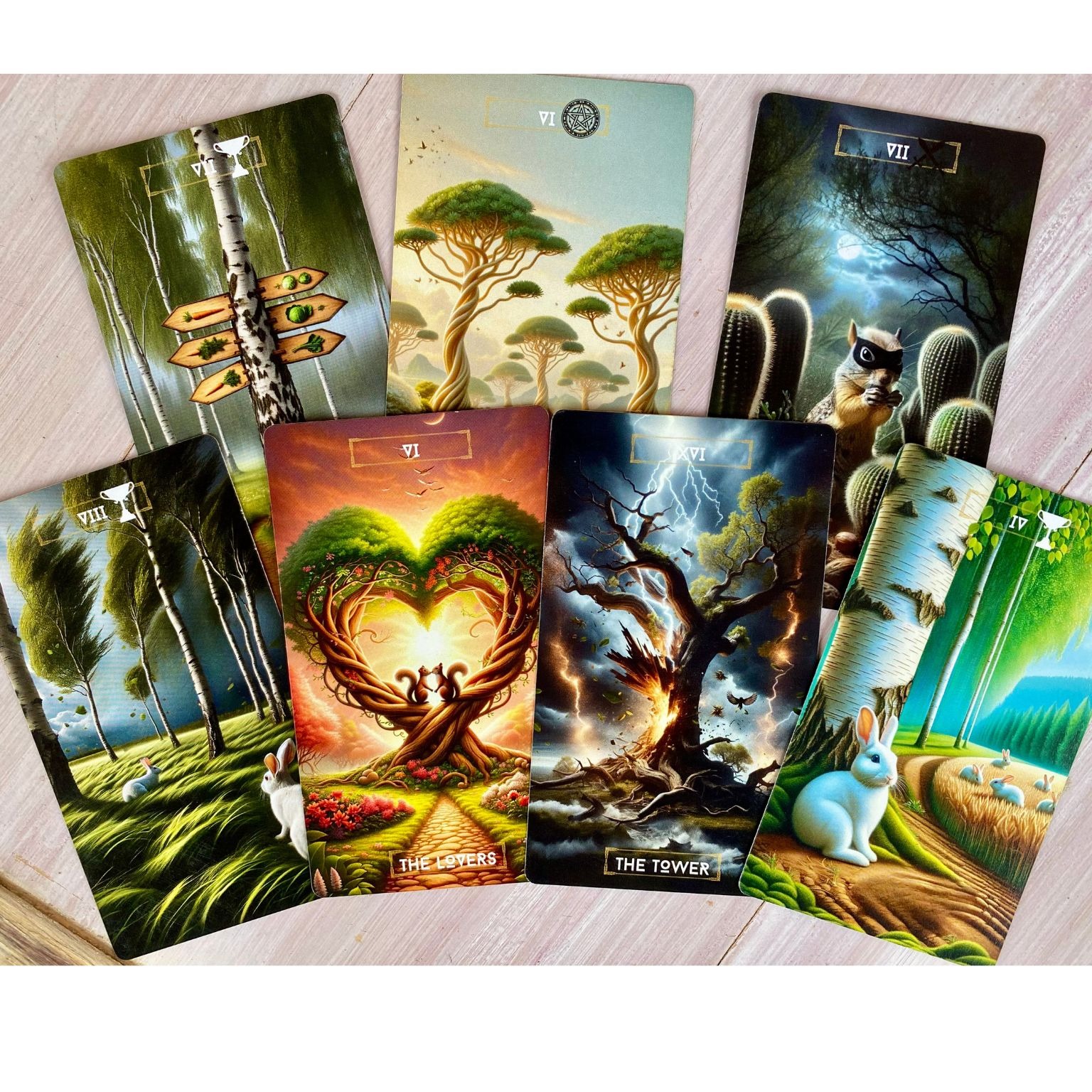
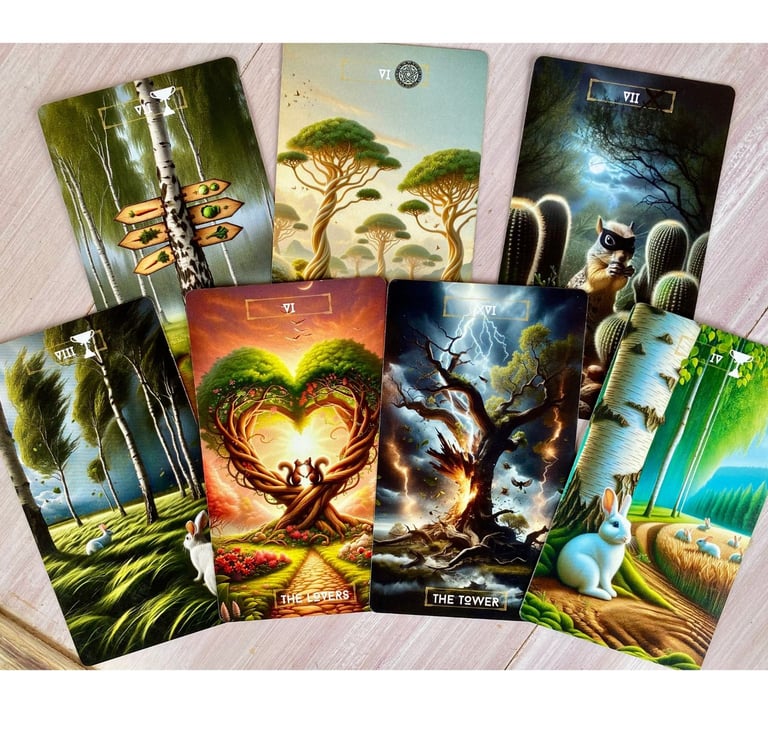
🔮 7 Day Tarot Guidance – Daily Clarity & Emotional Support
Not sure you’re ready for a full tarot reading? You can start much smaller.
Our 7 Day Tarot Guidance is a gentle way to dip your toes into tarot and experience how daily reflection can work. We pull a card for you each day and send you its message and guidance, giving you a little space to pause, reflect, and notice what resonates with you throughout the week.
🌙 What If the Real Question Isn’t Whether Tarot Is Real?
So, are tarot readings real? The most honest answer is that tarot does not need to be treated as a supernatural source of absolute truth to have a real impact on the way you understand yourself.
A tarot reading can give you a different way to look at your thoughts, emotions, patterns, choices, and possibilities. The cards provide the symbols. The reader provides interpretation. Your own experience gives those symbols meaning.
And sometimes, that combination can bring something into focus that was difficult to see on your own.
You may arrive asking: “Is tarot actually real?”
And leave with a much more useful question: “What is this showing me about myself right now?”
That shift is where tarot becomes interesting.
You are no longer waiting for the cards to prove your future. You are using them to become more aware of the present.
🍃 Soul Sisters Notes
“I used to think tarot would give me answers about the future. Instead, it kept bringing me back to the present. It showed me how I was feeling, what I was avoiding, and where I had more choice than I realized. That’s when it stopped feeling mysterious and started feeling meaningful.” – Caitlin
There is no need to force yourself to believe. You can stay curious. You can question what you hear. You can take what genuinely resonates and leave behind what does not.
And if you would like to experience that kind of reflection for yourself, you are always welcome to share your story or question in our Predictions Cave, where we select a few letters each month and offer a free tarot reflection that may bring another perspective to your situation.
If you feel ready to explore tarot, intuitive guidance, and deeper self-discovery in a more personal space, you can also visit Sisters Creation, where intuitive insight and soulful exploration come together.
And whenever you feel ready to keep learning, you can continue through Tarot Guidance: Find Clarity, Self-Discovery & Your Tarot Path, where you’ll find deeper insights, readings, and supportive resources to explore tarot at your own pace.
With love,
Caitlin & Gerly,
Soul Sisters Tarot
❓FAQ: Are Tarot Readings Real?
Are tarot readings real or just intuition?
Tarot readings combine symbolic interpretation, intuition, and the personal context of the person receiving the reading. There is no scientific evidence that tarot cards themselves possess supernatural powers, but a reading can still provide meaningful insight by helping you recognize emotions, patterns, and possibilities that may be difficult to see on your own.
Is tarot real or fake for beginners?
Tarot is not simply a matter of being “real” or “fake.” For beginners, it can be understood as a symbolic and reflective practice, while people with a spiritual perspective may also experience it as a form of intuitive or spiritual guidance. You do not have to accept one explanation immediately to explore what tarot can offer you.
How does tarot work spiritually?
Spiritually, tarot is often understood as a practice that connects symbolism, intuition, synchronicity, and personal awareness. Different readers may understand this connection differently. Some see the cards as a spiritual tool, while others primarily use them for reflection and self-discovery.
Why do tarot readings feel so personal?
Tarot readings feel personal because the interpretation is connected to your specific question, circumstances, emotions, and life context. The same card can carry a very different message depending on where it appears in a spread and what the person is experiencing. This combination of universal symbolism and personal context is what gives tarot its depth.
Should I trust a tarot reading?
You can approach a tarot reading as a source of reflection and perspective rather than unquestionable truth. A responsible reader should respect your free will, avoid fear-based claims, and leave you with the ability to make your own decisions. Trust should come from your own experience and discernment, not from being told that you must believe the reading.
Why do some people think tarot is fake?
Some people consider tarot fake because there is no scientific evidence that tarot cards can predict events or possess supernatural powers. Others simply interpret the experience differently, seeing tarot as psychology, symbolism, intuition, or reflective storytelling. Skepticism is a reasonable perspective, and exploring tarot does not require you to abandon critical thinking.
Can tarot reveal something I already know but cannot see clearly?
Yes, this is one of the ways people often experience tarot. A card or combination of cards can give symbolic form to a feeling, concern, or pattern that you have sensed without fully articulating. The insight may feel new even when the underlying awareness was already within you.
Soul Sisters Tarot
A Soft Place to Grow.
💌 SOUL SISTERS WEEKLY
A thoughtful Sunday letter with tarot reflections, moon wisdom, self-love, and gentle encouragement.
© 2026. All rights reserved.
Inspirational Coaching OÜ
sisters@soulsisterstarot.com