💌 JOIN SOUL SISTERS WEEKLY → GET FREE WELCOME GIFTS 🎁
Receive a thoughtful Sunday letter, free Self-Love & Shadow Work guides, and monthly Full Moon rituals ✨



What Happens During a Tarot Reading? It’s Not What You Think
What happens during a tarot reading? If you’re nervous about your first session, discover what really happens when the cards are drawn, interpreted, and discussed.
TAROT & SPIRITUAL INSIGHT
Soul Sisters Tarot
3/27/202620 min read
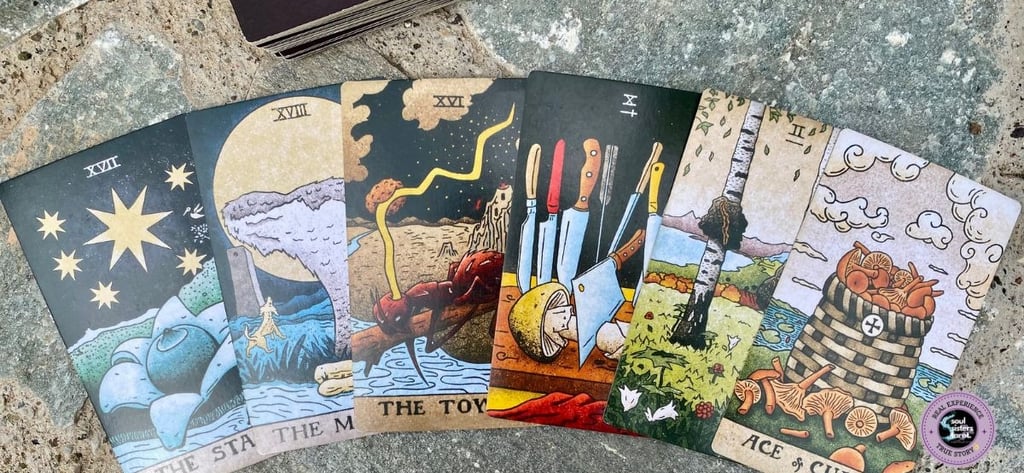
What Happens During a Tarot Reading? A Step-by-Step Guide for First-Timers
This guide is part of our Tarot Readings Guide, where we explore how tarot supports decision-making, insight, and emotional awareness.
What happens during a tarot reading? A typical tarot reading begins with your question or intention, followed by the reader shuffling and laying out the cards, interpreting the spread, discussing what the cards may reveal about your situation, and giving you space to ask questions and reflect. The exact experience varies by reader and reading type, but a professional session should feel like a guided conversation rather than a performance or a fixed prediction of your future.
If you have never had a tarot reading before, it is completely normal to wonder what you are supposed to say, whether you need to prepare, or what will happen once the cards are on the table.
You may also be wondering:
Do I need to have a specific question?
Will the reader tell me what is going to happen?
What if I do not understand the cards?
Can I ask questions during the reading?
What does a tarot reading actually feel like?
The good news is that you do not need to know how to read tarot, choose the perfect question, or perform any kind of ritual before your session. A good reading gives you room to be curious, honest, and engaged with the process.
At Soul Sisters Tarot, we see a tarot reading as a structured space for reflection and insight. The cards provide the symbolic language, while the reader helps connect those symbols with your question, circumstances, emotions, and possible paths forward. You remain the person making the choices.
If you are completely new to tarot, you may also find our Tarot for Beginners guide helpful for understanding the foundations of tarot and how the cards are interpreted.
In this guide, we’ll walk through what happens during a tarot reading step by step, from setting your intention and drawing the cards to interpretation, conversation, and what happens after the reading.
🔮 What Happens During a Tarot Reading
A tarot reading usually follows a simple process: you bring a question or situation, the reader creates a spread, the cards are interpreted in context, and you have a conversation about what the reading may reveal. The exact structure can vary depending on the reader, the type of reading, and whether the session is online or in person.
The basic tarot reading process
Most professional readings include these stages:
You share your question or intention.
You may arrive with one specific question, a broader concern, or simply a feeling that you need clarity about something in your life.The cards are shuffled and drawn.
The reader shuffles the deck and selects cards according to the method or spread being used.The cards are placed in a spread.
Each position in the spread has a purpose, such as exploring the situation, underlying influences, challenges, advice, or possible directions.The reader interprets the cards together.
Rather than reading each card in isolation, the reader considers the card meanings, their positions, the relationship between the cards, and the context of your question.You discuss what comes through.
You can ask questions, share what resonates, and clarify anything that feels confusing or important.You leave with something to reflect on.
The reading may give you a new perspective, highlight a pattern, help you understand your emotions, or simply give you more clarity about what you want to do next.
This is why a professional tarot reading is more than simply “pulling cards and reading their meanings.” The interpretation comes from bringing together the symbolism of the cards, the structure of the spread, the reader’s experience, and the situation being explored.
If you are choosing a reader for the first time, it is also worth considering How to Choose the Right Tarot Reader for You so you can find someone whose approach feels comfortable and trustworthy.
And if you are still wondering whether paying for a professional reading is worthwhile, Is Tarot Reading Worth It? explores what you can actually gain from the experience.
🍃 Soul Sisters Notes
“I remember expecting something mysterious and almost theatrical. Instead, it felt like someone quietly helping me put words to things I hadn’t fully admitted to myself yet. That calm clarity stayed with me long after the reading ended.” – Caitlin
⚠️ What Most People Expect vs What Actually Happens
If you have never had a tarot reading before, it is easy to imagine something mysterious or intimidating: you sit down, the cards are laid out, and the reader tells you exactly what is going to happen next.
That is usually not what a tarot reading feels like.
A professional tarot reading is generally a guided conversation built around the cards, your question, and the reader’s interpretation of the symbols and patterns that appear in the spread. The purpose is to explore your situation, not to take control of your decisions or announce a fixed future.
What you may expect
You might imagine:
the reader immediately knowing everything about you
being told exactly what will happen
receiving one definite answer to a complicated question
having the cards make a decision for you
a dramatic or highly mystical experience
What actually happens
In a grounded tarot reading, you are more likely to experience:
a conversation about what you want clarity on
cards being drawn and interpreted in relation to your situation
questions or explanations that help put the reading into context
different perspectives on your emotions, patterns, choices, or circumstances
space to reflect on what the message means for you
The reader interprets the cards, but you remain the person making your choices. This distinction matters. Tarot can offer a different perspective on a situation, but a responsible reader should not present the cards as an unquestionable verdict or claim that your future is fixed.
The simplest way to think about it is this: A tarot reading is less about someone telling you your future and more about helping you see your present situation from a perspective you may not have considered before.
That is often what makes the experience surprisingly personal.
🪶 Step 1: Setting the Intention for Your Reading
The first step in a tarot reading is usually deciding what you want the reading to help you understand. This may be a specific question, a situation you are struggling with, or simply an area of life where you feel uncertain.
You do not need to know exactly what to ask before the reading begins. A good reader can help you turn a vague concern into a clearer question without forcing you into a particular answer.
What happens at the beginning of the reading?
Your reader may ask questions such as:
“What would you like clarity on?”
“Is there a particular situation you want to explore?”
“What has been weighing on your mind lately?”
“Is there a specific area of your life you would like to understand better?”
You might arrive with a very specific question, such as “What do I need to understand about this relationship?” Or you might simply say, “I feel stuck, and I don’t know what to do next.” Both can give a reading a meaningful starting point.
Why does the question matter?
Your intention gives the reading context. Tarot cards can have many layers of meaning, so the question and circumstances help the reader understand which aspects of a card are most relevant to your situation.
A well-framed tarot question also leaves room for insight instead of demanding a predetermined answer. “What do I need to understand about my career options?” invites exploration, while “Will I definitely get this job?” asks for certainty the cards cannot guarantee.
You can also ask questions about your choices, patterns, emotions, and possible paths forward rather than trying to control another person's thoughts or actions.
If you're unsure what to ask, explore our Tarot Questions for Beginners guide for practical ideas that can help you turn a vague concern into a meaningful tarot question. You can also read 7 Things to Know Before Getting a Tarot Reading to feel more prepared for your session.
Do you need to do anything special?
No. You do not need to memorize tarot meanings, know how to read the cards, or arrive with a perfectly worded question. Your role is simply to be as honest and present as you feel comfortable being. The reader's role is to interpret the cards and help you explore what they may mean in the context of your question.
That makes the beginning of a tarot reading much simpler than many first-timers expect: you bring the question or situation, the reader guides the process, and the cards provide the symbolic framework for exploration.
This is also why choosing a reader you feel comfortable with matters. The right reader should make you feel able to ask questions, express uncertainty, and participate in the conversation without feeling pressured.
🃏 Step 2: Shuffling and Connecting With the Cards
Once your question or intention is clear, the cards are shuffled, and the reader begins preparing the deck for the reading. Depending on the reader and the type of session, you may be invited to participate in the shuffling, choose when the deck feels ready, or simply hold your question in mind while the reader works with the cards.
There is no single correct way to shuffle or choose tarot cards. Different readers have different practices, and what matters most is creating a focused beginning to the reading.
What happens while the cards are shuffled?
You may be invited to:
Focus quietly on your question
Take a few slow breaths
Hold a particular situation in mind
Shuffle or cut the deck yourself
Simply relax while the reader prepares the cards
If you're having an online tarot reading, you do not need to physically touch the deck for the reading to begin. Your question and the context you provide give the reader a starting point, while the cards provide the symbolic framework for interpretation.
What does “connecting with the cards” mean?
Readers may describe this part of the process in different ways. Some view it as an intuitive or energetic connection, while others approach tarot primarily as a symbolic system that helps focus attention on a particular question. You do not need to have a particular belief about this before your reading.
You also don't need to “send the right energy” or perform a special ritual to make the cards work. Your job is simply to be present with the question you brought to the reading.
This is one reason a first tarot reading can feel much less complicated than people expect. There is no test to pass and no special skill you need to have as the client.
If you are wondering whether the experience changes depending on how the reading is delivered, you can explore Online Tarot Reading vs. In-Person: Which One Is Better for You? to understand the differences.
What happens next?
Once the cards have been shuffled and selected, the reader places them into a tarot spread, with each card position representing a particular part of your question or situation. That is where the reading moves from preparation into interpretation.
🔍 Step 3: Laying Out the Cards (The Spread)
Once the cards have been shuffled and selected, the reader lays them out in a specific arrangement called a tarot spread. Each position in the spread has a purpose, helping the reader understand the different aspects of your question or situation.
A tarot spread can contain just one card or several cards. The right spread depends on the question, the depth of the reading, and the reader's approach.
What is a tarot spread?
A tarot spread is a structured layout in which each card position represents a particular part of the reading.
For example, a three-card spread might explore:
Situation: What is happening right now?
Challenge: What may be influencing or complicating the situation?
Guidance: What perspective or approach may help you move forward?
Other spreads may explore relationships, career decisions, personal growth, a specific question, or a broader life theme.
How many cards are used in a tarot reading?
There is no required number of cards. A reader may use:
One card for a simple daily reflection or focused question
Three cards for a concise exploration of a situation
Several cards for a more detailed reading
Larger spreads when a question involves multiple factors or areas of life
More cards do not automatically mean a better or more accurate reading. A well-chosen spread can be more useful than a large number of cards pulled without a clear purpose.
What does it feel like when the cards are laid out?
For a first-time client, this can be one of the most intriguing parts of the experience. You may recognize familiar symbols, notice a particular card immediately, or simply feel curious about what the spread will reveal.
You do not need to know what any of the cards mean. The reader will explain the cards and their positions in the context of your question. The spread creates the structure for what comes next: interpreting the cards together rather than looking at each card as an isolated meaning.
🔮 Personalized Tarot Reading (1 Topic)
Sometimes you don’t need another general tarot message. You need someone to look at your question.
When something is weighing on your heart, or you’re standing at a crossroads, a Personalized Tarot Reading gives you space to explore your specific situation through the cards. Instead of a one-size-fits-all message, the reading is centered around your question, your circumstances, and the clarity you’re seeking, helping you see what may be influencing your situation and what you may want to consider next.


🧠 Step 4: Interpreting the Cards
Once the cards are laid out, the reader begins interpreting them in relation to your question. This is where the individual cards, their positions in the spread, and the overall context of the reading come together.
A tarot card does not have one meaning that applies identically to every situation. Its meaning depends on the card itself, where it appears in the spread, the question being explored, and how the cards relate to one another.
How does a tarot reader interpret the cards?
A professional reader may consider several layers at once:
Traditional card meanings and established tarot symbolism
The position of each card within the spread
Relationships between the cards and recurring themes
The context of your question and circumstances
Intuitive impressions that arise during the interpretation
This is why two readers can look at the same spread and offer slightly different interpretations. Tarot reading is not simply memorizing keywords from a guidebook. It involves understanding how the symbolism fits together within the specific question being explored.
What happens while the reader interprets the cards?
The reader will usually explain what they see in the spread and connect the cards back to your situation. You may hear observations about emotional patterns, potential challenges, underlying influences, or different ways of approaching what you are experiencing.
You may find yourself thinking:
“That describes exactly what I've been feeling.”
“I hadn't looked at the situation that way before.”
“That gives me something to think about.”
“I knew something was bothering me, but I couldn't put it into words.”
Sometimes the message feels immediately relevant. Other times, its meaning becomes clearer after you have had time to reflect.
Does the reader simply tell you what the cards mean?
Not necessarily. A strong tarot reading is more than reciting card definitions. The reader interprets the cards in context, explains the reasoning behind the interpretation, and gives you space to consider how the message relates to your own experience. You can ask questions, clarify something that feels unclear, or explain when a particular interpretation does or does not resonate.
This is also where responsible tarot reading differs from making absolute predictions. A reader can explore patterns, possibilities, influences, and choices without claiming that one specific future outcome is guaranteed.
If you're wondering how much of this process comes from intuition, you can explore Are Tarot Readings Real or Just Intuition? An Honest Spiritual Explanation.
And if you're specifically wondering whether tarot can provide reliable insight, our guide Are Tarot Readings Accurate? explores that question in depth.
🍃 Soul Sisters Notes
“I used to think the reader was telling me something new. But over time, I realized they were helping me hear what I already knew underneath the noise. The cards didn’t change my path; they helped me see it more clearly.” – Caitlin
What you should remember
You do not need to understand every card yourself for a reading to be meaningful. The reader's job is to interpret the symbolism and connect it to your question; your job is to decide what feels relevant and what you want to do with that insight.
That distinction keeps the reading collaborative rather than making the reader the authority over your life.
💬 Step 5: Conversation and Clarification
A tarot reading is usually a conversation, not a one-sided explanation. Once the reader begins interpreting the spread, you can ask questions, clarify what you are hearing, and explain how something relates to your situation.
This interaction can be an important part of the reading because context helps the reader understand which parts of the interpretation are most relevant to your question.
What can you do during the reading?
You can:
Ask what a particular card means in the context of your question
Ask the reader to explain something that feels unclear
Share relevant context about your situation
Say when an interpretation strongly resonates with you
Ask a follow-up question when something raises a new point
You do not have to sit silently while the reader talks. You are an active participant in your own tarot reading.
What if something doesn't resonate?
You do not have to force yourself to accept every interpretation. A responsible reader should be able to explain their perspective without insisting that you must agree with it. Sometimes a message may not make sense immediately. Sometimes it may simply not apply to your situation.
The purpose of a tarot reading is not to convince you that every card interpretation is true. It is to give you another perspective to consider.
Why does this conversation matter?
The cards provide the symbolic material, but your real-life circumstances give that symbolism context. A conversation between you and the reader can help move the reading beyond isolated card meanings and toward a more meaningful exploration of your actual question.
This is also why you should feel comfortable asking questions during a session. You are not being tested on tarot, and you do not need to know whether an interpretation is “correct.” You are there to explore what the cards may help you see differently.
Once the main questions have been explored, the reader can begin bringing the session toward its conclusion, including any final guidance or practical reflections that emerge.
⚖️ Step 6: Ethical Boundaries and Honest Guidance
A professional tarot reading should leave you with more agency, not less. Ethical tarot reading means the reader can offer insight and interpretation without presenting themselves as the person who controls your future or knows everything about your life.
This matters particularly when you are asking about relationships, health, finances, or other emotionally important decisions.
What should a responsible tarot reader do?
A trustworthy reader should:
Respect your ability to make your own decisions
Explain interpretations without presenting them as unquestionable facts
Be honest about the limits of tarot
Give you space to ask questions or disagree
Avoid deliberately creating fear or dependency
Encourage you to consider your own judgment alongside the reading
A tarot reading should support your decision-making, not replace it.
What should a tarot reader avoid?
Be cautious if a reader:
Makes absolute promises about your future
Uses fear to persuade you to book more readings
Claims only they can remove a curse or fix your situation
Pressures you to make an immediate decision
Tells you that something terrible will happen unless you pay for additional services
Presents tarot as a substitute for appropriate professional advice
A reading can be meaningful without making dramatic claims. In fact, knowing the boundaries of tarot is part of what makes a reading feel grounded and trustworthy.
If you want to understand what responsible readers should and should not do in more detail, explore Tarot Reading Ethics: What a Reader Should (and Should Not) Tell You.
And if you're preparing for your first session, 7 Things to Know Before Getting a Tarot Reading can help you know what to expect and what questions to consider beforehand.
One more thing to remember
You never have to accept a tarot reading simply because a reader says it is true. Take the insight that helps you reflect, question, or understand something differently, and keep your own judgment at the center.
🔮 One Year Ahead Tarot Reading
Sometimes you don’t just want to know what’s happening right now. You want to understand where this chapter of your life may be leading.
Our 12 Month Tarot Reading offers a broader look at the themes, opportunities, challenges, and shifts that may unfold throughout the year. Instead of focusing on one immediate question, it gives you space to step back, see the bigger picture, and move through the months with greater awareness and intention.
🌱 Step 7: Reflection and Integration
After the cards have been interpreted and your questions have been explored, the reading begins to wind down. But the process does not necessarily end when the cards are put away. One of the most valuable parts of a tarot reading can be what you notice afterward.
You may leave the session with:
A clearer understanding of your situation
A new perspective on a decision or relationship
A better sense of what has been influencing you
Questions you want to reflect on further
A feeling that something you already sensed has finally been put into words
Not every insight needs an immediate response. Some messages become more meaningful when you give yourself time to think about them and notice how they relate to your life.
What should you do after a tarot reading?
There is no required ritual or action. You might simply:
Write down the cards and key insights
Journal about anything that surprised you
Notice what continues to stand out over the following days
Consider which choices are actually within your control
Give yourself time before making an important decision
You do not have to act on every message from a tarot reading. The purpose is to give you another perspective, not a list of instructions you must follow.
This is especially important when a reading touches on an emotional or complicated situation. Allowing yourself some distance can help you separate the insight you received from your immediate emotional reaction.
How long does the insight from a tarot reading last?
There is no fixed timeline. Some messages may feel immediately relevant, while others may only make sense after your circumstances change or you have had more time to reflect.
That is one reason a meaningful tarot reading does not always end with a dramatic revelation. Sometimes its value becomes clearer later, when you recognize a pattern, reconsider a choice, or understand your situation from a perspective you could not see before.
Your first tarot reading does not need to give you every answer. Sometimes it simply gives you something important to sit with.
🔮 7 Day Tarot Guidance – Daily Clarity & Emotional Support
Curious about tarot, but not ready to dive straight into a full reading? Start with one card at a time.
With our 7-Day Tarot Guidance, we pull a tarot card for you each day and send you its message and guidance, giving you a simple way to step into tarot, reflect on what is unfolding in your life, and notice what resonates with you throughout the week.


🌿 Preparing for Your First Tarot Reading
You do not need to know everything about tarot before your first reading. The most helpful preparation is simply knowing what you want to explore and being open to a perspective you may not have considered before.
Before your session, it can help to:
Think about what you would like clarity on
Write down your main question or concern
Be honest about the situation, even if you feel uncertain
Stay open to an unexpected interpretation
Focus on understanding rather than demanding a specific prediction
You also do not need to test the reader, prove that tarot works, or know what every card means. The reading is a conversation, not an exam.
If you are preparing for your first session, our guide 7 Things to Know Before Getting a Tarot Reading can help you feel more confident about what to expect and what questions to bring.
When should you have another tarot reading?
There is no universal schedule. Some people return to tarot when they are facing a major decision or life transition, while others prefer occasional readings as a way to reflect on broader themes.
The important thing is to give yourself enough space to process a reading before immediately seeking another answer. If you want a deeper look at finding a healthy rhythm, explore How Often Should You Get a Tarot Reading?, where we explore timing, frequency, and the difference between reflection and repeatedly seeking reassurance.
And if you are unsure whether you are ready for a full reading at all, starting with a simple daily practice can be a gentle way to discover how tarot feels for you.
The goal is not to become dependent on the cards. It is to develop a more thoughtful relationship with the questions they help you ask.
🌙 Your First Tarot Reading Is Only the Beginning
Your first tarot reading does not need to give you every answer. Its real value may be the question, feeling, or realization that stays with you afterward.
🍃 Soul Sisters Notes
“I once walked away from a reading feeling like nothing extraordinary had happened. But days later, I noticed I was thinking differently, softer, clearer. That’s when I understood… tarot doesn’t always arrive loudly, but it stays quietly.” – Caitlin
You may find that the most meaningful part of a reading happens after the cards are put away. A message may give you a new perspective, help you recognize a pattern, or simply give you permission to trust something you already sensed. And you don’t have to rush into another reading. Give yourself time to notice what unfolds.
If you’re ready to keep exploring, Tarot Guidance: Find Clarity, Self-Discovery & Your Tarot Path offers resources and deeper guidance to help you understand tarot and use it as a tool for self-discovery.
For a more personal experience, you can also step into Sisters Creation, our space for intuitive guidance, tarot readings, and soulful exploration.
Your first reading is not about handing your future over to the cards. It is about opening a space to listen, reflect, and see your own path with a little more clarity.
With love,
Caitlin & Gerly,
Soul Sisters Tarot
❓ FAQ: What Happens During a Tarot Reading
What happens during a tarot reading for the first time?
During a first tarot reading, the reader usually begins by asking what you would like to explore, then selects and lays out tarot cards in a spread. The reader interprets the cards in relation to your question, circumstances, and the themes that emerge during the session. You can ask questions, share what resonates, and discuss the interpretation as the reading unfolds. A professional reading is generally a reflective conversation rather than a performance or a fixed prediction of what will happen.
How does the tarot reading process actually work?
A tarot reading combines the traditional symbolism of the cards with the reader’s interpretation, intuition, and the context of your question. The cards are placed in specific positions within a spread, with each position representing a different aspect of the situation. The reader then connects the individual card meanings, patterns, and relationships between the cards to create a broader interpretation.
What should I say or ask during a tarot reading?
You do not need to know exactly what to ask before a tarot reading. You can bring a specific question, describe a situation where you feel stuck, or simply explain the area of life you would like to understand better. Questions about relationships, career, personal growth, decisions, and recurring patterns can all give the reading a useful starting point. If you are completely new to tarot, our guide to Tarot Questions for Beginners can help you find a question that feels right for you.
What should I expect from a professional tarot reading?
A professional tarot reading should give you space to explore your question without pressure or judgment. The reader guides you through the cards, explains the interpretation, and gives you opportunities to ask follow-up questions or share your perspective. A responsible reader should respect your free will and avoid fear-based claims or telling you that a particular outcome is guaranteed.
How long does a tarot reading usually take?
The length of a tarot reading depends on the type of session and how deeply you want to explore the question. A focused reading may take around 15 to 30 minutes, while a more detailed session can last 45 minutes to an hour or longer. The number of cards is not the only factor that determines depth; the complexity of your question and the conversation around the cards also matter.
Is it normal to feel emotional during a tarot reading?
Yes. A tarot reading can bring emotions to the surface, particularly when the cards touch on a situation, relationship, fear, or personal pattern that already carries emotional weight. You do not need to hide or suppress that reaction. A good reader should give you space to process what comes up rather than pushing you toward an immediate conclusion.
Should I prepare before my first tarot reading?
You do not need special preparation for your first tarot reading. It can help to spend a few minutes thinking about what you would like clarity on and to arrive with an open mind. You also do not need to memorize tarot cards, choose a complicated question, or know how a spread works. The reader's role is to guide you through the process.
Can I ask follow-up questions during a tarot reading?
Yes. A tarot reading is usually a conversation, so asking a follow-up question can help clarify how a particular card or theme relates to your situation. Rather than trying to ask as many questions as possible, focus on questions that deepen your understanding of the original topic. This keeps the reading focused and makes the interpretation more useful.
Can I ask the same question in multiple tarot readings?
You can, but repeatedly asking the same question within a short period may make it harder to gain clarity. If the situation has not materially changed, another reading may simply encourage you to look for a different answer instead of giving the first reading time to unfold. In many cases, it is more useful to reflect on the original reading and return to the cards when your circumstances or perspective have genuinely changed.
Can you get a tarot reading online?
Yes. Online tarot readings can follow much the same basic process as an in-person session: you bring your question or intention, the reader works with the cards, and the interpretation is discussed with you. The main difference is the format rather than the purpose of the reading. If you are deciding between the two, you can explore Online Tarot Reading vs In-Person: Which One Is Better for You?.
What makes a good tarot reading?
A good tarot reading should leave you with greater understanding rather than greater fear or dependence. The reader should interpret the cards honestly, respect your ability to make your own choices, answer questions without creating unnecessary anxiety, and avoid presenting possibilities as guaranteed outcomes. Ultimately, the value of a reading comes from the perspective and self-awareness you take away from it.
Soul Sisters Tarot
A Soft Place to Grow.
💌 SOUL SISTERS WEEKLY
A thoughtful Sunday letter with tarot reflections, moon wisdom, self-love, and gentle encouragement.
© 2026. All rights reserved.
Inspirational Coaching OÜ
sisters@soulsisterstarot.com