💌 JOIN SOUL SISTERS WEEKLY → GET FREE WELCOME GIFTS 🎁
Receive a thoughtful Sunday letter, free Self-Love & Shadow Work guides, and monthly Full Moon rituals ✨


Herbs for Protection: Which Herb Matches Your Intention?
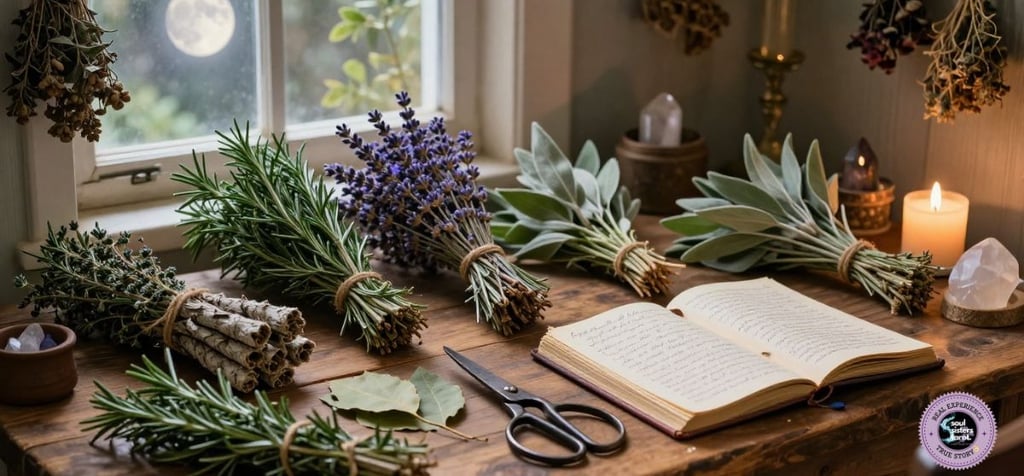
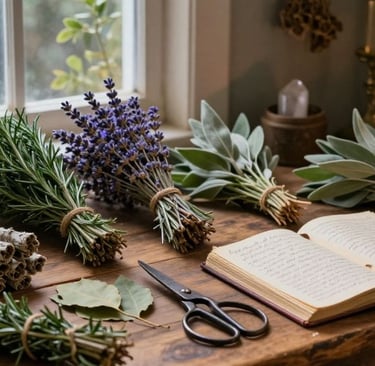
Looking for herbs for protection? Learn what rosemary, lavender, sage, mugwort, basil, and other herbs symbolize, plus simple ways to use them in everyday rituals.
MANIFESTATION & ENERGY WORK
Soul Sisters Tarot
7/7/202622 min read
Herbs for Protection: Spiritual Uses, Meanings & Ritual Ideas
This article is part of our Spiritual Protection collection, where we explore grounded spiritual practices that help you protect your energy, strengthen your boundaries, and create everyday rituals with intention.
What are herbs for protection?
Herbs for protection are plants traditionally associated with qualities such as resilience, grounding, courage, peace, renewal, and healthy boundaries. Across cultures, people have included protective herbs in rituals, home practices, and seasonal traditions as meaningful symbols of intention rather than as objects believed to create guaranteed supernatural results. Today, many people continue to use them to support reflection, connect with nature, and bring greater mindfulness into everyday life.
🌿 Herbs for Protection at a Glance
Common herbs: Rosemary, lavender, sage, mugwort, bay leaves, cedar, thyme, basil
Often symbolize: Protection, clarity, peace, courage, grounding, renewal, harmony
Common uses: Rituals, cleansing baths, protection jars, home rituals, meditation spaces, seasonal celebrations
Why have herbs become part of spiritual traditions across so many different cultures? It's an interesting question. After all, rosemary is just rosemary. Lavender is simply a flowering plant. A bay leaf is something many people keep in their kitchen cupboard.
Yet these ordinary plants have travelled through centuries of folklore, healing traditions, family customs, and spiritual practices, quietly collecting stories wherever they grew.
Perhaps that's because people have always learned by observing the natural world. Long before written spiritual traditions, nature became one of humanity's earliest teachers. They watched which plants survived harsh winters, which filled the air with calming fragrance, which remained green through changing seasons, and which became trusted companions in everyday life.
Over generations, those observations became stories, traditions, and eventually symbols that were shared within families and communities. Strength became cedar. Peace became lavender. Clarity became rosemary. The herbs themselves didn't change. The relationship people built with them did.
That's why herbs for protection continue to hold meaning today.
Whether you see them as spiritual tools, cultural traditions, or beautiful reminders of your intentions, herbs invite you to slow down and become more conscious of the qualities you want to cultivate. A sprig of rosemary won't make difficult decisions for you, but it can quietly remind you to approach them with clarity and courage. Lavender won't remove every worry, but its fragrance can encourage moments of calm whenever you need them most.
In this guide, you'll discover the traditional meanings of some of the most widely used herbs for protection, explore the history and symbolism behind them, learn simple ways to include them in everyday rituals, and find practical ideas for choosing herbs that reflect your own intentions and spiritual practice.
🍃 Soul Sisters Reminder
The most powerful part of any herb isn't found in its leaves or fragrance. It's found in the meaning you choose to give it and the intention you carry when you use it.
🌱 Why Have Herbs Been Used for Spiritual Protection?
Why Herbs Became Protection Symbols
Herbs became part of spiritual traditions because people connected their natural qualities with meaningful human values. Over generations, observation, folklore, family customs, and seasonal rituals gave herbs symbolic meanings such as peace, courage, grounding, resilience, clarity, and renewal that many people still use today.
The symbolic meanings of protective herbs developed gradually through generations of observation, folklore, traditional herbal practices, and cultural storytelling. Rather than appearing all at once, these meanings grew as communities associated certain plants with qualities such as resilience, peace, courage, healing, and renewal.
People have always looked to nature for guidance, comfort, and inspiration. Long before spirituality was written down in books, people observed the world around them and built traditions from what they experienced.
Plants became part of those traditions because they were woven into everyday life. They provided food, medicine, fragrance, shelter, and beauty, making them natural companions during life's most important moments. Because herbs were already part of everyday life through cooking, healing, gardening, and seasonal celebrations, they naturally became part of rituals that marked important moments throughout the year.
Think about how we still use plants today. We bring flowers to celebrate births and weddings, lay them beside those we've lost, decorate our homes with evergreen branches during winter, and give bouquets to people we love. Even today, we continue using plants to express emotions, celebrate milestones, comfort one another, and mark life's most meaningful transitions.
Herbs became part of spiritual traditions in much the same way. Over generations, people began associating certain plants with the qualities they seemed to represent. Lavender became connected with peace because of its calming fragrance. Rosemary came to symbolize clarity, remembrance, and protection. Cedar, known for its strength and longevity, became associated with grounding and resilience.
Although the details differ between cultures, these symbolic meanings were shaped gradually through observation, storytelling, local traditions, and everyday experience rather than through a single belief or practice.
Today, many people continue working with herbs for protection, not because every tradition agrees on exactly what each plant means, but because herbs provide a beautiful way to connect intention with action. Choosing rosemary before an important conversation or adding lavender to a ritual bath doesn't change who you are overnight. Instead, these small acts remind you of the qualities you want to bring into your own life and encourage you to approach the moment with greater awareness.
🍃 Protection Begins With Intention
One of the most common misconceptions is that a protective herb creates the protection on its own. In most spiritual traditions, herbs are understood as symbolic companions to intention rather than substitutes for personal responsibility, awareness, or healthy boundaries.
Most spiritual traditions offer a much gentler perspective. Herbs are seen as symbols that support a ritual, not substitutes for your own choices, awareness, or inner strength. A sprig of rosemary doesn't create courage for you, but it can remind you to face a challenge with courage. Lavender doesn't remove every worry, but it can help create a peaceful environment where it's easier to slow down and reconnect with yourself.
That's why two people can use the same herb in completely different ways, and both have meaningful experiences. The herb may be the same, but the intention behind it is personal. The same rosemary sprig could represent courage for one person, remembrance for another, and simply a connection to family traditions for someone else.
🌍 Every Tradition Has Its Own Stories
If you explore spiritual traditions from around the world, you'll quickly notice that there isn't one universal list of protective herbs. Plants grow in different climates, cultures develop their own customs, and families pass down their own ways of working with the natural world.
Rather than searching for the "most powerful" herb, it's often more meaningful to learn the stories behind different traditions and choose the plants whose symbolism genuinely resonates with you. A respectful spiritual practice grows through curiosity, personal experience, and intention rather than by trying to follow a universal list of "correct" herbs.
🍃 Soul Sisters Insight
Herbs don't become meaningful because every tradition agrees on their symbolism. They become meaningful because they help us remember the qualities we're intentionally choosing to cultivate each day.
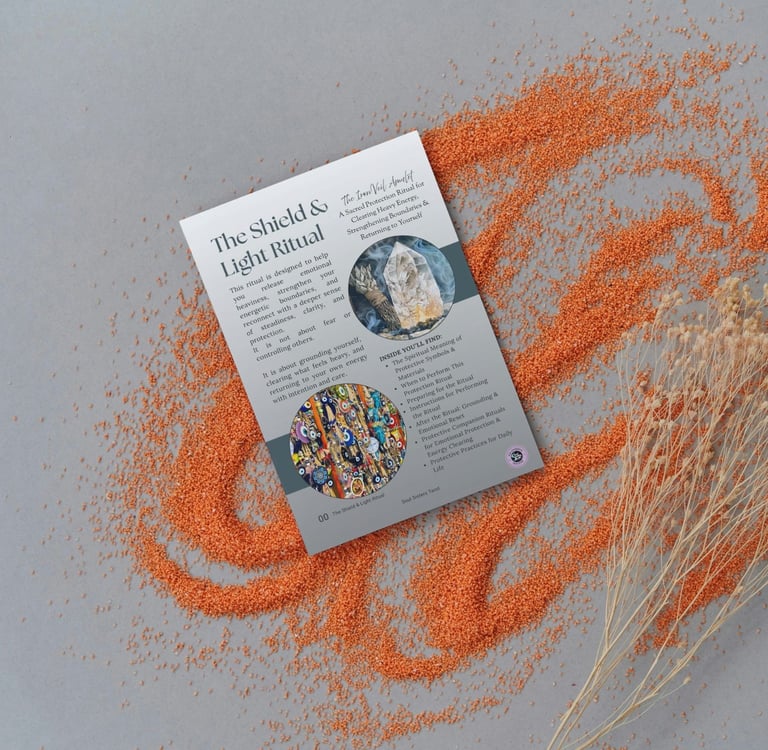
🛡️ The Shield and Light Ritual
Ready to move beyond learning and create your own protection ritual?
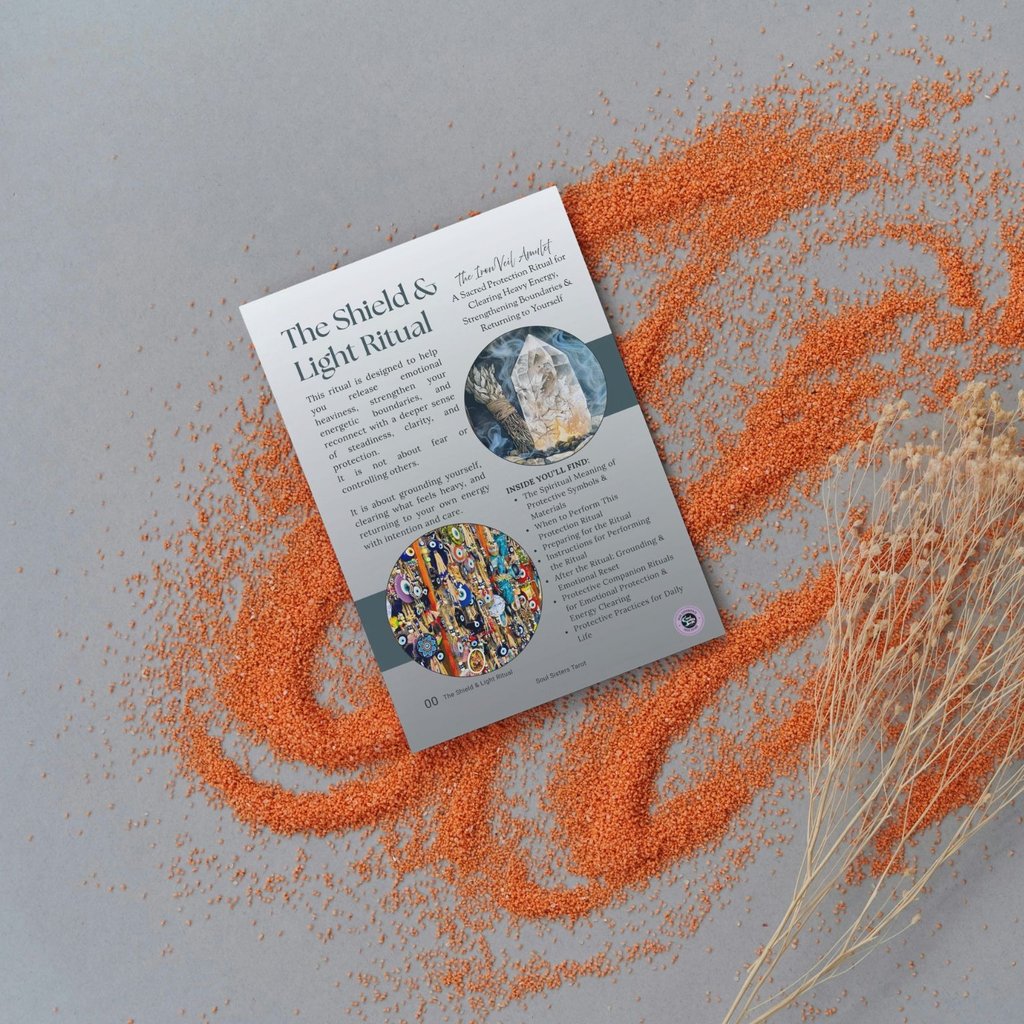
Reading about protective herbs is inspiring, but creating a ritual with them brings their symbolism to life. The Shield & Light Ritual combines herbs, crystals, sacred symbols, and grounding practices into a guided experience that helps you build meaningful rituals you can return to whenever life feels overwhelming.
🌿 The Most Popular Herbs for Protection
Popular Protection Herbs at a Glance
Rosemary: Clarity, protection, remembrance
Lavender: Peace, emotional balance, restful sleep
Sage: Cleansing, renewal, fresh beginnings
Mugwort: Intuition, dreams, reflection
Bay leaves: Intention, success, protection
Cedar: Grounding, strength, resilience
Thyme: Courage, confidence, perseverance
Basil: Harmony, abundance, protection
Different herbs have become associated with protection through folklore, traditional herbal practices, seasonal customs, and cultural traditions. Although their meanings vary, they commonly symbolize qualities such as courage, peace, grounding, clarity, renewal, resilience, and harmony.
People often ask which herb offers the greatest protection. The more interesting question is: protection from what?
Sometimes we need courage before a difficult conversation. Sometimes we need peace after a stressful week. Sometimes we're preparing for a new beginning, while other times we're simply trying to reconnect with ourselves.
Each herb carries its own traditional symbolism, making different plants meaningful companions for different seasons of life and different personal intentions.
The traditional meanings below aren't universal rules. They reflect common symbolism found across different cultures and spiritual traditions, while leaving space for your own personal connection to each plant.
🌿 Rosemary
Traditionally associated with: Protection, clarity, remembrance, purification.
Reach for rosemary when your mind feels cluttered, and you need to think clearly.
If there were one herb that appears again and again in protection traditions, it would probably be rosemary.
Long before it became a kitchen favourite, rosemary was carried by travellers, planted near homes, woven into wedding garlands, and included in rituals marking life's important transitions. Because it remained wonderfully fragrant even after drying, many cultures came to see it as a symbol of endurance, faithful remembrance, and quiet strength.
Today, rosemary is often chosen before important conversations, new beginnings, or moments that call for confidence and clear thinking. Rather than asking the herb to protect you, the ritual becomes a reminder to meet the moment with a steady heart and a clear mind.
If you're creating a ritual bath, you may also enjoy our guide to Spiritual Cleansing Bath: How to Release Heavy Energy & Restore Balance.
🌱 Soul Sisters Ritual Idea
Place a small sprig of rosemary beside your journal before making an important decision, keep it near your front door as a symbol of welcoming positive energy, or add it to a spiritual cleansing bath when you're ready to leave emotional heaviness behind. As you notice it throughout the day, let it remind you to return to your intention.
💜 Lavender
Traditionally associated with: Peace, calm, emotional balance, restful sleep
Reach for lavender when life feels louder than your inner peace.
Lavender represents a quieter kind of protection. Instead of helping us stand taller, it reminds us to soften.
Its calming fragrance has made it a favourite in homes and gardens for centuries, and many traditions associate it with emotional balance, peaceful sleep, and creating an atmosphere where the nervous system can finally begin to relax.
Whether you've had a stressful week, you're finding it difficult to switch off in the evenings, or you simply want to create a gentler space around yourself, lavender offers a beautiful reminder that peace is something we can intentionally cultivate.
🌱 Soul Sisters Ritual Idea
Add dried lavender to a spiritual cleansing bath, tuck a small sachet beneath your pillow, or place fresh lavender beside a candle during quiet evening reflection. Take a few slow breaths before ending your ritual.
🌿 Sage
Traditionally associated with: Cleansing, renewal, fresh beginnings
Reach for sage when you're ready to close one chapter and begin another.
Sage has become one of the best-known herbs in modern spiritual practice, but its story is much older than recent trends.
Across different cultures, various types of sage have been used to mark endings, fresh beginnings, and important transitions. Because white sage holds deep cultural and spiritual significance for many Indigenous communities, it's important to learn about its traditions and source it respectfully. Many people choose garden sage instead, creating meaningful rituals while honouring those cultural roots.
Rather than thinking of sage as something that "removes bad energy," it can be more meaningful to see it as a symbol that you're consciously choosing to leave something behind and make room for what comes next.
🌱 Soul Sisters Ritual Idea
Keep a small bundle of garden sage in your ritual space or include fresh leaves in a cleansing bath as a symbolic way of welcoming a fresh beginning.
🌙 Mugwort
Traditionally associated with: Intuition, dreams, reflection
Reach for mugwort when you're searching for answers that can't be found by overthinking.
Unlike many protective herbs, mugwort encourages us to look inward. For centuries, it has been connected with dreams, intuition, meditation, and spiritual reflection. Rather than helping us take action, it invites us to become still enough to hear our own inner voice.
Many people enjoy working with mugwort during journaling, tarot practice, meditation, or Full Moon rituals because it gently reminds us that clarity often arrives when we stop forcing it.
🌱 Soul Sisters Ritual Idea
Place mugwort beside your journal or tarot deck before spending quiet time in reflection, allowing it to become a symbolic reminder to trust your own inner wisdom.
🍃 Bay Leaves
Traditionally associated with: Intention, success, protection
Reach for bay leaves when you're ready to turn hopes into intentions.
For thousands of years, bay leaves have symbolized honour, achievement, and purpose. Victorious athletes, scholars, and leaders once wore laurel wreaths as symbols of accomplishment, and that connection with aspiration continues today.
Many people include bay leaves in rituals by writing a wish, affirmation, or intention on a single leaf. The practice isn't about predicting the future. It's about giving your goals a clear and meaningful place to begin.
🌱 Soul Sisters Ritual Idea
Write a meaningful intention on a bay leaf and keep it in your journal or on your altar as a daily reminder of the future you're actively creating. Return to it whenever you need to reconnect with your goal.
🌲 Cedar
Traditionally associated with: Grounding, strength, stability
Reach for cedar when life feels uncertain and you need to feel rooted again.
Towering cedar trees have long inspired feelings of strength, resilience, and quiet confidence. Across many traditions, cedar became associated with protection because it represented the ability to remain steady through changing seasons.
Its symbolism reminds us that true protection isn't always about building walls. Sometimes it's about developing roots that help us remain grounded no matter what's happening around us.
🌱 Soul Sisters Ritual Idea
Place cedar branches in your home, keep cedar wood in your sacred space, or spend time walking among cedar trees whenever you need to reconnect with steadiness and inner strength. Allow it to remind you that steadiness grows through consistency.
🌿 Thyme
Traditionally associated with: Courage, resilience, confidence
Reach for thyme when courage feels just out of reach.
Although thyme is best known as a culinary herb, it has also been linked with bravery and perseverance for centuries. Ancient traditions often connected thyme with people preparing to face challenges, reminding them that courage isn't the absence of fear. It's choosing to move forward despite it.
Sometimes that's the protection we need most.
🌱 Soul Sisters Ritual Idea
Keep a sprig of thyme near your workspace or add it to a protection sachet before stepping into situations that ask for confidence and resilience.
🌱 Basil
Traditionally associated with: Harmony, abundance, protection
Reach for basil when you want your home to feel warmer, calmer, and more welcoming.
Basil has long been associated with hospitality, harmony, prosperity, and care. In many cultures, it became a symbol of homes where people felt safe, nourished, and connected.
Its protective meaning isn't only about keeping negativity away. It's also about intentionally cultivating the kind of environment where kindness, gratitude, and abundance have room to grow.
🌱 Soul Sisters Ritual Idea
Grow basil near your kitchen or doorway, or include fresh basil in seasonal rituals as a reminder that the most peaceful homes are built through everyday acts of care and appreciation. Let it become a reminder to actively create the atmosphere you want your home to hold.
🍃 Soul Sisters Insight
The best herb for protection isn't necessarily the one with the longest history or the strongest reputation. It's the one whose symbolism continues to remind you of the qualities you're intentionally choosing to grow.
🍵 Simple Ways to Use Herbs in Protection Rituals
Simple Ways to Use Protection Herbs
Protection herbs can become part of everyday rituals in many different ways. People often include them in spiritual baths, protection jars, home cleansing rituals, meditation spaces, journaling practices, or simply keep them nearby as meaningful reminders of qualities such as peace, courage, clarity, and grounding.
Working with herbs for protection doesn't require elaborate ceremonies or a large collection of supplies. Many of the most meaningful rituals involve one carefully chosen herb, a clear intention, and a few quiet minutes of reflection woven naturally into everyday life.
One of the reasons herbs have remained part of spiritual traditions for so long is that they're incredibly easy to weave into everyday life.
You don't need to wait for a Full Moon or a special occasion. A few quiet minutes and one meaningful intention are enough.
Rather than asking, "What's the correct ritual?" try asking yourself, "What do I need today?"
Your answer will often point you toward the herb and ritual that best support the season of life you're currently moving through.
🛁 After a Day That Feels Emotionally Heavy
Some days stay with us long after they've ended. Perhaps you've had a difficult conversation, spent hours caring for other people, or simply feel mentally exhausted without knowing exactly why.
A spiritual cleansing bath offers a gentle way to create a transition between that experience and the rest of your evening. Adding herbs such as lavender for peace, rosemary for clarity, or chamomile for comfort transforms an ordinary bath into a quiet moment of reflection and renewal.
You don't need five different herbs or an elaborate ceremony. One herb chosen with intention is often enough. Allow the fragrance, warmth, and quietness of the moment to become part of the ritual instead of rushing toward an outcome.
👉 Read: Spiritual Cleansing Bath: How to Release Heavy Energy & Restore Balance.
🏡 When Your Home Needs a Fresh Start
Sometimes it's not you that feels heavy. It's your space. After periods of stress, illness, emotional overwhelm, or simply a busy season of life, many people feel drawn to refresh their homes as well as their minds.
That doesn't always mean performing an elaborate cleansing ritual. Opening the windows, dusting forgotten corners, bringing fresh herbs into your kitchen, or placing rosemary or cedar near your entrance can become small symbolic acts that mark a new beginning.
The ritual isn't about making your home perfect. It's about creating a home that reflects the atmosphere, boundaries, and sense of peace you want to return to each day.
👉 Read: How Energy Cleansing Can Change You and Your Home.
🫙 When You Want a Reminder That Lasts
Some rituals end the moment you blow out a candle. Others stay with you.
A protection jar is one of those lasting rituals. As you choose each herb, you're also choosing the qualities you want to cultivate. Rosemary for clarity. Lavender for peace. Thyme for courage. Bay leaves for intention.
Long after you've created it, the jar becomes a quiet reminder of the intentions you've chosen to carry into everyday life.
👉 Read: Simple Protection Spells and Rituals.
🕯️ Build a Space That Invites You to Pause
A sacred space doesn't have to be an elaborate altar. It might simply be the corner where you drink your morning tea, the shelf where you keep your journal, or the windowsill that catches the evening light.
Adding a small bundle of dried herbs, a candle, or another meaningful object turns that everyday place into a gentle invitation to slow down. Over time, simply sitting there can become part of your ritual.
The space doesn't become sacred because of what's on it. It becomes sacred because of how often you return to it with intention. Over time, the space itself can begin to signal to your mind that it's time to slow down, reflect, and reconnect with yourself.
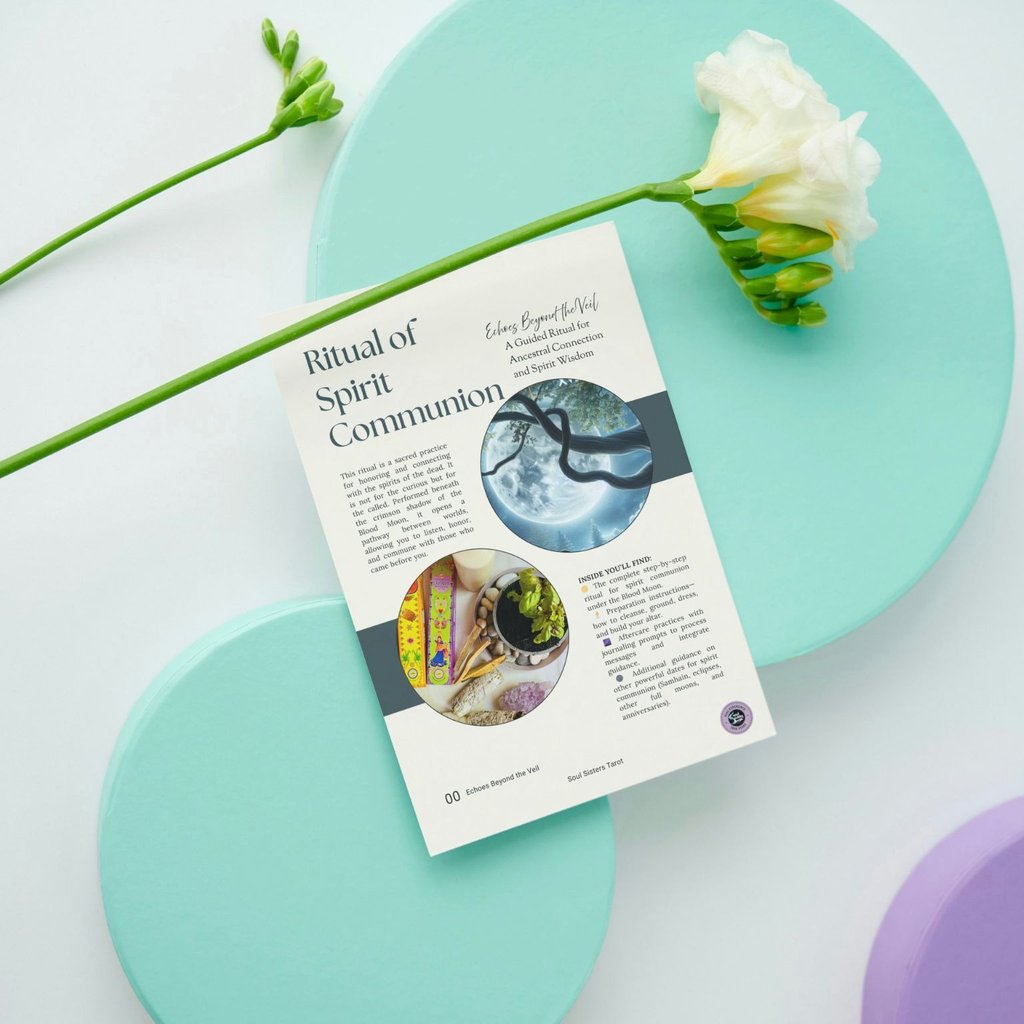
🕊️ Ritual of Spirit Communion
Have you ever wished you felt more connected to nature during your spiritual practice?
Herbs have helped people connect with the natural world for generations. If you're looking to deepen that relationship, the Ritual of Spirit Communion offers a gentle guided practice for slowing down, creating sacred space, and strengthening your connection with nature, intuition, and the quiet wisdom that surrounds you.
🌿 Let Herbs Become Part of Everyday Life
Not every ritual needs to feel like a ritual. A sprig of rosemary beside your laptop before an important meeting. A lavender sachet in your travel bag. Fresh basil growing in your kitchen window. A bay leaf tucked inside your journal before setting new goals.
These small moments may seem ordinary, but that's exactly what gives them their power. They quietly bring your intentions into the places where life actually happens, reminding you that spirituality isn't something reserved for special occasions.
It's something that can quietly accompany ordinary moments until those moments begin to feel a little more intentional.
🍃 Soul Sisters Insight
The most meaningful rituals rarely ask us to escape everyday life. Instead, they gently help us bring more presence, intention, and gratitude into the life we're already living.
🌼 Choosing Herbs That Feel Meaningful to You
How to Choose a Protection Herb
The best herb for protection is rarely the one with the strongest reputation. Instead, choose a herb whose traditional symbolism reflects the quality you want to strengthen, whether that's peace, courage, clarity, grounding, renewal, or emotional balance. A meaningful ritual begins with your intention rather than the herb itself.
There isn't one "best" herb for protection. The most meaningful choice is usually the herb whose traditional symbolism reflects the season of life you're currently experiencing and the qualities you hope to strengthen within yourself.
After reading about different herbs, it's natural to wonder which one you should choose first. Many people start looking for the "strongest" protection herb or the one that's believed to have the most powerful spiritual meaning. While it's natural to look for the "strongest" herb, meaningful spiritual practice is rarely about finding one perfect plant. It's about finding the symbol that genuinely supports your current intention.
The purpose of working with herbs isn't to collect the most impressive ingredients or follow someone else's list perfectly. It's about choosing symbols that genuinely reflect where you are in life and what you hope to cultivate within yourself. A ritual becomes personal when it speaks to your own experiences, not when it copies someone else's practice. The same person may even choose different herbs at different points in life as their priorities, challenges, and intentions naturally change.
If you've been feeling emotionally overwhelmed, you may naturally be drawn to lavender because it represents peace and gentleness. If you're preparing for an important decision or stepping into an unfamiliar situation, rosemary might feel like the right companion because of its long association with clarity and resilience. During times of transition, sage may become a meaningful reminder that every ending also creates space for a new beginning.
None of these choices is more correct than another. They simply reflect different intentions, different circumstances, and different chapters of your personal journey.
📓 365 Psychological Journal Prompts
Not sure which herb truly speaks to you?
Sometimes the best way to choose a meaningful ritual is to understand yourself first. The 365 Journal Prompts guide helps you explore your emotions, patterns, values, and intentions so your spiritual practices feel personal instead of performative.


💚 Trust Your Own Connection
Traditional meanings can be a wonderful place to begin, but they don't have to replace your own experiences.
Sometimes the herb that feels most meaningful has nothing to do with folklore. Perhaps the scent of rosemary reminds you of your grandmother's garden, lavender brings back memories of peaceful summer evenings, or basil makes you think of family meals and feeling at home. Those personal memories often become just as meaningful as traditional symbolism because they create an authentic emotional connection to the ritual.
Spiritual traditions have always evolved through people's relationships with the natural world. In many ways, you're continuing that tradition by allowing your own experiences to shape the way you work with herbs.
🌿 Let Your Practice Grow Naturally
Just as your life changes over time, your relationship with herbs may naturally change as well.
The herb that supports you during a stressful season may not be the one you reach for a year from now. As your life changes, your rituals can change with it. You might begin by working with lavender while you're learning to slow down and care for yourself, then later find yourself choosing thyme as you build confidence, or basil as you focus on creating a home that feels warm and welcoming.
There's no final collection you need to complete and no expectation that every spiritual practitioner should use the same herbs. A meaningful spiritual practice grows gradually through experience, curiosity, and repetition. Over time, you may find that certain herbs simply become trusted companions during particular seasons of your life.
🍃 Soul Sisters Insight
The most meaningful herb isn't always the one with the longest history or the strongest reputation. It's the one that quietly reminds you of the qualities you're choosing to nurture, one intentional day at a time.
🛡️ The Shield and Light Ritual
What if one herb became the beginning of a practice that grows with you?
The Shield & Light Ritual goes beyond individual herbs by bringing together traditional symbolism, grounding practices, protective herbs, crystals, and sacred tools in one complete guided ritual. Return to it whenever you need clarity, emotional balance, or a reminder of your own inner strength.
🪬 Turning Symbolism Into a Personal Ritual
Learning about herbs for protection is only the first step. Their traditional meanings and folklore offer inspiration, but their greatest value comes from the way you choose to weave their symbolism into your own everyday life.
A sprig of rosemary beside your journal. Lavender added to an evening bath after a difficult week. Basil growing on your windowsill as a reminder to create a warm and welcoming home. These moments may seem ordinary, yet they gradually become meaningful rituals that encourage you to pause, reflect, and reconnect with the qualities you're intentionally choosing to cultivate.
You don't need dozens of herbs or elaborate ceremonies to create a meaningful spiritual practice. One carefully chosen plant, returned to with intention again and again, can become a lasting reminder of the qualities you're nurturing, whether that's courage, peace, resilience, clarity, or renewal.
If you'd like to explore a more guided approach, The Shield & Light Ritual brings many of these symbolic tools together into one complete practice. Inside, you'll discover the traditional meanings of protective herbs, crystals, metals, and sacred symbols, learn how to create your own Iron Veil Amulet, and build a grounding ritual that you can return to whenever life feels overwhelming or emotionally heavy.
Whether you're just beginning to explore herbs or have practiced with them for years, remember that spirituality isn't about collecting more tools. It's about creating small, meaningful moments that help you become more present, more grounded, and more connected to yourself and the natural world.
Every guide in our Spiritual Protection collection explores another way to build simple rituals that fit naturally into everyday life.
If you'd like to continue exploring, you may also enjoy:
Manifestation & Energy Work for grounded spiritual practices that support everyday life.
Spiritual Rituals to discover rituals for seasonal celebrations, personal growth, and energy work.
Sisters Creation to browse our collection of journals, tarot guides, ritual collections, and printable spiritual resources.
🍃 Soul Sisters Insight
Herbs don't become meaningful because they're rare or mysterious. They become meaningful because they gently transform ordinary moments into opportunities to slow down, set an intention, and reconnect with the life you're intentionally growing.
With love,
Caitlin & Gerly,
Soul Sisters Tarot
❓ FAQ: Herbs for Protection
What herbs are commonly used for protection?
Some of the most widely recognised herbs for protection include rosemary, lavender, sage, mugwort, bay leaves, cedar, thyme, and basil. Through folklore, spiritual traditions, and cultural practices, these herbs have become associated with qualities such as clarity, courage, peace, grounding, renewal, resilience, and harmony.
Rather than searching for the "most powerful" herb, many people choose the one whose traditional symbolism best reflects the intention they want to bring into their ritual or everyday life.
Which herb is considered the strongest for protection?
There isn't one universally accepted "strongest" protection herb. Different cultures have different traditions, and the symbolism of herbs varies around the world. Instead of asking which herb is strongest, it can be more meaningful to ask which quality you want to strengthen. Rosemary is often associated with clarity, lavender with peace, sage with renewal, thyme with courage, cedar with grounding, and basil with harmony. The most meaningful herb is usually the one that reflects your current intention.
Can I grow protection herbs at home?
Absolutely. Many popular herbs for protection, including rosemary, lavender, thyme, basil, and sage, grow well in gardens, raised beds, or even sunny windowsills. Growing, watering, and caring for the plants can also become part of your spiritual practice, turning everyday gardening into a quiet ritual of intention and mindfulness.
Do dried herbs work as well as fresh herbs?
Yes. Fresh and dried herbs can both be used in spiritual rituals. Fresh herbs often bring vibrant fragrance and a stronger connection with the living plant, while dried herbs are convenient, easy to store, and commonly used in sachets, protection jars, and ritual baths. The choice depends more on your preference and the type of ritual than on any spiritual rule. Many traditional protection sachets, ritual jars, and herbal blends are made with dried herbs because they're practical, long-lasting, and easy to store.
Can I combine different herbs in one ritual?
Yes. Many people enjoy combining herbs whose traditional meanings complement one another. For example, you might pair rosemary with lavender for clarity and peace or thyme with basil to symbolize courage and harmony. There's no fixed recipe you have to follow. Choose combinations whose traditional meanings complement one another and support the purpose of your ritual rather than trying to include as many herbs as possible.
Which herbs are commonly used for energy cleansing?
Rosemary, sage, cedar, lavender, thyme, and other aromatic herbs are commonly included in rituals that symbolically refresh a home, ritual space, or personal environment. They may be used in cleansing baths, protection jars, sachets, or simple home rituals.
If you'd like to learn more about creating a peaceful atmosphere, explore our guide to How Energy Cleansing Can Change You and Your Home.
Can beginners use herbs in spiritual rituals?
Absolutely. In fact, herbs are one of the easiest ways to begin exploring spiritual practices because they don't require complicated rituals or expensive supplies. Many people start with a single herb that resonates with them, such as lavender for peace or rosemary for clarity, and gradually build their own personal rituals over time. Simple practices often become the most meaningful because they're easy to return to. Many experienced practitioners also continue using these same simple rituals, proving that meaningful spiritual practice doesn't have to become more complicated over time.
Do I need to burn herbs for them to be meaningful?
No. Burning herbs is only one tradition among many, and it isn't necessary to experience their symbolism. You can place herbs on your altar, add them to a spiritual cleansing bath, grow them in your garden, keep them in a small sachet, include them in a protection jar, or simply enjoy their fragrance while setting an intention. The meaning comes from the relationship you build with the ritual, not from one specific method of using the herbs. Many people prefer smoke-free rituals and simply use herbs as decorative symbols, in baths, sachets, journals, or quiet moments of reflection.
Can I use herbs during a Full Moon ritual?
Yes. Many people include herbs in Full Moon rituals as symbols of release, gratitude, reflection, or new intentions. Lavender is often chosen for peace, rosemary for clarity, and bay leaves for intention-setting. There are no strict rules about which herbs belong to each moon phase. Choose the herbs that best support the purpose of your ritual, whether you're releasing, reflecting, expressing gratitude, or setting new intentions.
Do I need lots of different herbs to create a meaningful ritual?
Not at all. One thoughtfully chosen herb can be far more meaningful than a collection of ingredients used without intention. Meaningful rituals are created through intention rather than quantity. One carefully chosen herb can become far more powerful as a personal reminder than a large collection of plants used without purpose.
Can I use kitchen herbs for spiritual rituals?
Yes. Many herbs used in spiritual traditions are also everyday culinary herbs. Rosemary, thyme, basil, sage, and bay leaves are all commonly found in kitchens as well as in spiritual practices. Their symbolic meaning doesn't depend on where they were purchased. What matters most is the intention you bring to the ritual and the relationship you build with the herb over time.
Can I use fresh and dried herbs together?
Absolutely. Fresh and dried herbs can be combined in the same ritual if that feels meaningful to you. Fresh herbs often bring vibrant fragrance and a stronger connection to the living plant, while dried herbs are practical for protection jars, sachets, baths, and long-term rituals. Many people simply choose whichever form is easiest to work with.
Do I need rare herbs for a protection ritual?
No. Meaningful rituals don't depend on rare or expensive herbs. In fact, many of the best-known herbs for protection, including rosemary, lavender, thyme, basil, sage, and bay leaves, are common garden or kitchen plants. One herb chosen with intention is often more meaningful than a large collection gathered simply because someone else recommended it.
🍃 Soul Sisters Insight
The best herb for protection isn't the one everyone else recommends. It's the one that gently reminds you of the qualities you're choosing to nurture in yourself, whether that's courage, peace, resilience, clarity, or hope. When you return to that reminder again and again, an ordinary plant can become part of an extraordinary personal practice.
Soul Sisters Tarot
A Soft Place to Grow.
💌 SOUL SISTERS WEEKLY
A thoughtful Sunday letter with tarot reflections, moon wisdom, self-love, and gentle encouragement.
© 2026. All rights reserved.
Inspirational Coaching OÜ
sisters@soulsisterstarot.com