💌 JOIN SOUL SISTERS WEEKLY → GET FREE WELCOME GIFTS 🎁
Receive a thoughtful Sunday letter, free Self-Love & Shadow Work guides, and monthly Full Moon rituals ✨


How to Understand Tarot Cards Without Memorizing (Finally!)
Still checking the guidebook every time you read? Learn how to understand tarot cards through imagery, storytelling, and real-life connections.
TAROT & SPIRITUAL INSIGHT
Soul Sisters Tarot
4/4/202625 min read

How to Understand Tarot Cards Without Memorizing Their Meanings
This guide is part of our Tarot learning journey, where we explore practical and intuitive ways to build real confidence with tarot.
One of the biggest misconceptions about learning tarot is that you need to memorize all 78 card meanings before you can give an accurate reading. It's easy to see why. Many guidebooks present tarot as a long list of keywords, making it feel more like studying for an exam than developing a spiritual practice.
But experienced readers rarely rely on memorized definitions alone. Instead, they observe the imagery, consider the context of the reading, recognize patterns between the cards, and trust their intuition to uncover the message. If you've been wondering how to understand tarot cards without memorizing every meaning, you're in exactly the right place.
Can You Understand Tarot Cards Without Memorizing Them?
Yes. While learning traditional tarot meanings is helpful, you don't need to memorize all 78 cards before you can read with confidence. Most experienced tarot readers combine symbolism, intuition, context, and storytelling to interpret the cards naturally. Understanding tarot is less about recalling definitions and more about recognizing what the cards are communicating in the moment.
Learning how to understand tarot cards is about developing observation, recognizing patterns, and understanding symbolism. The more you practice seeing how the images relate to real-life situations, the less you'll need to rely on memorized keywords.
As you continue, you may also find it helpful to explore the bigger picture in Tarot for Beginners: How to Read Tarot Cards for Clarity, Healing, and Spiritual Insight, where everything comes together in a grounded and supportive way.
At Soul Sisters Tarot, we've found that beginners often become more confident when they stop trying to remember every meaning and start asking better questions about what they see. That shift transforms tarot from something you study into something you experience.
🦉 Still reaching for the guidebook every time you pull a card? Our Tarot eBook: A Complete and Secret Guide to Tarot helps you understand why cards mean what they do, making them easier to remember naturally instead of through memorization.
In this guide, you'll discover practical ways to understand tarot cards through imagery, storytelling, intuition, and recurring patterns, so your readings feel more natural without relying on memorized meanings.
🍃 Soul Sisters Insight: Understanding Comes Before Remembering
When people first learn tarot, they often believe confidence comes from memorizing every card. In our experience, the opposite is usually true. Confidence grows when you learn to observe, ask thoughtful questions, and trust what you notice before searching for the "right" answer. The meanings become easier to remember because they begin to make sense, not because you've forced yourself to memorize them.
🌿 Why You Don’t Need to Memorize Tarot Meanings
Is Memorizing Tarot Card Meanings Necessary?
No. Memorizing tarot card meanings can be helpful, but it isn't the only way to become a confident reader. Many experienced tarot readers rely on symbolism, context, intuition, and the relationships between the cards rather than recalling fixed definitions from memory.
It's easy to assume tarot is something you have to study until you've memorized every meaning. After all, there are 78 cards, each with traditional interpretations, symbols, and keywords. That can make learning tarot feel overwhelming before you've even done your first reading.
But tarot isn't designed to be read like a textbook. It's designed to be experienced.
Every tarot card has traditional meanings, but those meanings change depending on the question you're asking, the surrounding cards, and the story unfolding in the reading. The same card can represent different experiences in different situations without contradicting its core message.
A card's meaning is shaped by several factors, including the question being asked, the cards surrounding it, your own observations, and the context of the person's situation. That's why no guidebook can provide a single interpretation that fits every reading.
If you rely only on memorization, readings can feel stiff and disconnected. But when you begin to understand tarot, something changes.
As you move away from memorization, you'll probably notice that:
You spend more time observing the artwork instead of searching your memory.
Different meanings emerge naturally as the context changes.
Your readings begin to flow like conversations instead of quizzes.
You become more confident explaining why a card means something, rather than simply repeating a keyword.
This is where intuitive tarot interpretation begins to open up. You don't understand tarot because you've memorized the cards. You remember the cards because you've begun to understand them.
🍃 Soul Sisters Insight: Tarot Isn't Testing Your Memory
The goal of a tarot reading isn't to remember the perfect definition. It's to understand what the card is communicating in this particular moment. We've found that readers grow much faster when they stop worrying about being "correct" and start becoming curious about what they're seeing.
🍃 Soul Sisters Notes
“For a long time, I thought forgetting a card's meaning meant I wasn't good at tarot. But when I stopped trying to remember every keyword and started paying attention to what was happening in the artwork, my readings became clearer. I realized the message had been there all along. I just wasn't looking for it.” – Caitlin
So if memorization isn't the answer, what should you focus on instead? The first step is learning to truly observe what's already in front of you. If you're just starting out, you may also enjoy Your First Tarot Reading Experience as a Beginner, where we explore how understanding tarot grows naturally through practice rather than perfect recall.
🦉 Tarot eBook: Complete & Secret Guide to Tarot
Still reaching for your guidebook every time you pull a card?
Our Tarot eBook helps you move beyond memorizing keywords. You'll learn how to understand symbolism, connect cards through storytelling, recognize patterns, and build confidence in your own interpretations, making tarot feel natural instead of overwhelming.


🔮 How to Understand Tarot Cards Through Imagery
How Can You Understand Tarot Cards Just by Looking at Them?
Tarot cards are filled with visual symbols, emotions, and stories that reveal meaning before you ever open a guidebook. By observing the artwork, facial expressions, colors, movement, and atmosphere, you can begin understanding a card naturally instead of relying only on memorized definitions.
Every tarot card was designed to communicate through images as much as words. Long before you remember traditional meanings, you can begin understanding a card by observing what it shows, how it feels, and the story unfolding within the artwork.
This doesn't replace traditional tarot knowledge. It gives you a natural starting point that makes those meanings easier to understand and remember over time.
Instead of asking, “What does this card mean?” try asking, “What do I see?”
Notice What Stands Out First
When you look at a card, your attention will naturally go somewhere. Your eyes rarely land on the same detail by accident. The first thing that captures your attention often reflects the part of the message that is most relevant to your question. Another reader might notice something completely different, and that's perfectly normal.
It might be:
the expression on someone's face
a hand reaching toward something
a bright object that draws your attention
storm clouds, sunlight, or open landscapes
a figure looking toward or away from another person
That first impression matters. It often reflects the core energy of the card in that moment.
Ask Simple, Grounded Questions
You don’t need complex analysis. Start with:
What is happening in this scene?
What emotion does this image create?
How does that relate to my question?
If this were a moment in someone's life, what might be happening?
For example:
Imagine a card showing someone walking away from neatly stacked cups. Without knowing the traditional meaning, you might notice that they aren't running away in fear. They're choosing to leave something behind. That could suggest moving on, searching for deeper meaning, or recognizing that something no longer feels fulfilling.
You didn’t memorize that meaning. You understood it.
🍃 Soul Sisters Insight: The Artwork Is Your First Teacher
Before you search for a meaning, spend a few moments with the image itself. Tarot was designed as a visual language, and the artwork often reveals more than a single keyword ever could. The more you practice observing before interpreting, the more naturally the cards begin to speak to you.
Once you begin observing the imagery, the next step is seeing how cards interact with one another. A simple spread makes this much easier because each card becomes part of a larger story. If you're looking for an easy place to practice, explore our Three-Card Tarot Spread for Beginners, where you'll learn how individual cards begin working together naturally.
🔍 Real Examples: How to Understand Tarot Cards Without Memorizing Meanings
What's the Best Way to Practice Understanding Tarot Cards?
One of the easiest ways to understand tarot without memorizing meanings is to practice with real cards. Instead of trying to recall definitions, observe the artwork, describe what you see, notice the emotions it creates, and connect those observations to everyday life.
The best way to build confidence is to practice with real cards. As you read through the following examples, notice that we're not trying to remember the "correct" meanings. Instead, we're asking simple questions that help the artwork tell its own story.
Over time, this approach becomes second nature, making traditional meanings much easier to understand and remember.
The Fool — A New Beginning
What do you notice?
Before thinking about meanings, spend a few moments simply looking at the card. Where do your eyes go first? Is it the edge of the cliff, the traveler's relaxed expression, the bright sky, or the small bundle they're carrying? Notice which detail catches your attention without trying to explain why.
Ask yourself
What story is unfolding here?
Does this person seem fearful, excited, or completely at peace?
If this were a real moment in someone's life, what might be happening?
Which detail feels most important, and why?
What might this suggest?
Without opening a guidebook, you might naturally describe this card as embracing a new opportunity, trusting the unknown, taking a leap of faith, or beginning a new chapter with curiosity instead of fear. Notice how you arrived at those ideas by observing the image, not by remembering a keyword.
In real life
This card might appear when you're starting a new job, moving to a new place, beginning a relationship, launching a creative project, or choosing growth over certainty.
Three of Swords — Emotional Pain
What do you notice?
Take a moment to study the artwork before searching for a meaning. Does your attention immediately go to the heart, the swords, the storm clouds, or the emptiness surrounding them? Which part of the image creates the strongest emotional response?
Ask yourself
If this image represented a real experience, what might it be?
Does this pain feel sudden or something that has been carried for a long time?
What emotions surface as you look at the card?
Is this card asking you to avoid pain or acknowledge it?
What might this suggest?
You may naturally arrive at ideas like heartbreak, disappointment, emotional healing, difficult conversations, or accepting painful truths. Depending on the reading, the card may be less about suffering itself and more about what healing begins once the truth is finally faced.
In real life
This card could appear after a breakup, during conflict with someone you love, while grieving a loss, or when you're processing emotions you've tried to push aside.
Queen of Cups — Emotional Awareness
What do you notice?
Look closely before thinking about traditional meanings. Notice the Queen's posture, the calm water surrounding her, and the way she gently holds the cup. Does the scene feel rushed or peaceful? Does it invite reflection or action?
Ask yourself
How does this person seem to handle their emotions?
What feeling does this image create for me?
If this were someone I knew, how would I describe them?
What can I learn from the way they're responding to the moment?
What might this suggest?
Without memorizing meanings, you may naturally recognize compassion, emotional maturity, intuition, patience, or the ability to stay calm while navigating complex feelings.
In real life
This card could reflect caring for someone you love, making a decision with both your heart and your mind, practicing self-care, or learning to trust your emotional wisdom.
Eight of Cups — Walking Away
What do you notice?
Spend a few moments studying the scene. Notice that the cups are neatly arranged rather than broken or scattered. Watch where the figure is walking and how the atmosphere feels. Does this seem like running away or making a conscious choice?
Ask yourself
Why would someone leave something that still appears valuable?
What might they be searching for?
Does this feel like loss, growth, or both?
What emotion stands out most strongly?
What might this suggest?
Instead of simply thinking "walking away," you may recognize themes of personal growth, searching for deeper meaning, leaving comfort behind, or realizing that something no longer fulfills you.
In real life
This card might appear when leaving an unfulfilling career, ending a relationship that has run its course, changing your priorities, or beginning a journey of self-discovery.
Page of Pentacles — Learning Something New
What do you notice?
Take a close look before searching for definitions. Notice how carefully the Page studies the pentacle. They aren't rushing toward a goal; they're completely focused on learning from what's in front of them.
Ask yourself
What are they paying attention to?
Does this feel like the beginning of a journey or the end of one?
What opportunities could grow from this moment?
What does this image teach me about learning?
What might this suggest?
You may naturally see curiosity, patience, steady progress, learning, and building a strong foundation before taking bigger steps.
In real life
This card often appears when starting a course, learning a new skill, exploring a career opportunity, developing a creative talent, or investing time in something that will grow over time.
🍃 Soul Sisters Insight: Every Card Has More Than One Story
You may have noticed that none of these examples relied on a single keyword or "correct" definition. That's because tarot isn't designed to give the same answer every time. The question, the surrounding cards, and your own observations all shape the message. The more you practice looking first and interpreting second, the more naturally the cards begin to speak to you.
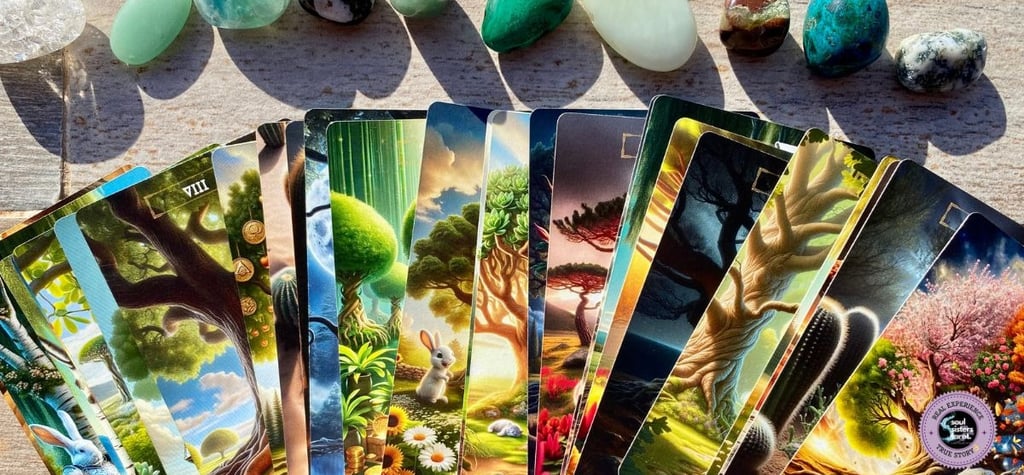
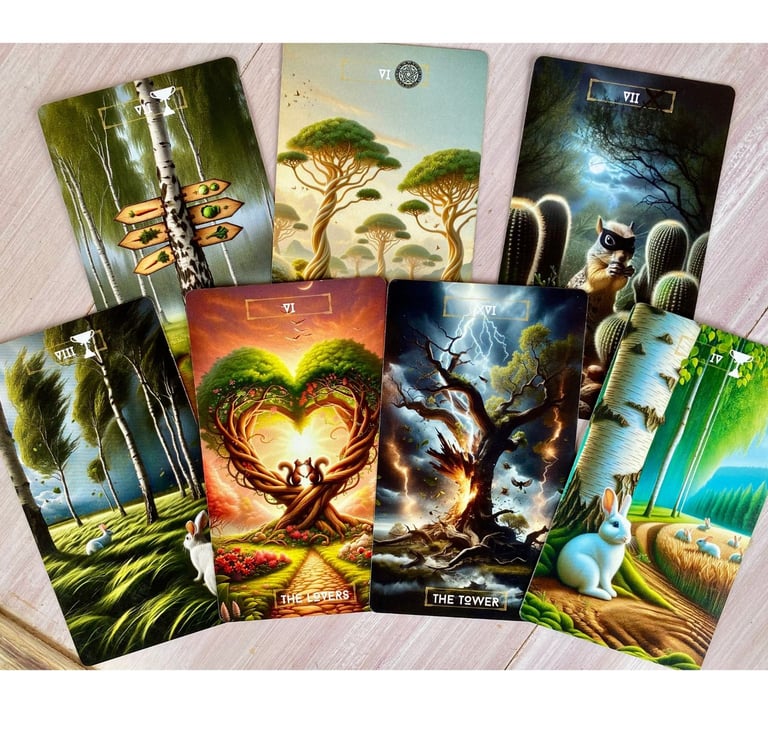
🌳 If you feel drawn to connect with tarot in a more intuitive and natural way, our Spiritual Forest Tarot Deck was created to guide you gently through each message. Designed to tell its story effortlessly, these cards are especially supportive if you are just beginning your journey and want something that feels clear, grounding, and easy to understand.
As you've seen, every card tells a story on its own. But tarot becomes even more intuitive when you stop looking at individual cards and begin seeing how those stories connect across an entire reading.
✨ How to Understand Tarot Cards Using Storytelling
How Does Storytelling Help You Understand Tarot Cards?
Storytelling makes tarot easier to understand because it encourages you to connect the cards instead of interpreting each one separately. Rather than memorizing individual meanings, you follow the flow of the reading and notice how the cards build a shared message together.
One of the easiest ways to understand tarot without memorizing meanings is to stop looking at each card as a separate definition. Instead, imagine every card as one scene in a larger story. Each new card adds another piece to the picture, helping the overall message become clearer.
See Each Card as a Scene
Imagine you've paused a movie halfway through. You don't know exactly what happened before or what will happen next, but you can still understand a surprising amount just by looking at the characters, their expressions, and what's happening around them.
Tarot works in a very similar way. Each card captures a single moment, and your job is to understand what that moment is showing you.
Who is in this scene?
What seems to be happening?
What emotions are present?
What might happen next?
If this scene were part of a movie, what would the story be?
This approach is especially helpful when reading multiple cards together.
If you’d like to practice this, you can explore how to read a 5-card tarot spread step by step, where storytelling becomes even clearer.
Connect the Cards Together
When you lay several cards side by side, don't interpret them one at a time and stop there. Instead, ask how they influence one another.
Does one card explain why another card appeared?
Does the energy become lighter or heavier as you move across the spread?
Are the figures moving toward one another or turning away?
Does one card introduce a challenge while another offers guidance?
You are not recalling definitions. You are reading a narrative.
Imagine you pull The Fool, The Hermit, and The Star. Instead of memorizing three separate meanings, notice the journey. Someone takes a leap into the unknown, spends time reflecting and learning, then discovers hope and renewed direction. Even without knowing every traditional definition, the story already begins to make sense.
🍃 Soul Sisters Insight: Stories Are Easier to Remember Than Definitions
Think about your favorite book or film. You probably don't remember every detail, but you remember how the story made you feel. Tarot works in much the same way. When you understand the story unfolding across the cards, the meanings become easier to remember because they have context instead of existing as isolated keywords.
🍃 Soul Sisters Notes
“One day I stopped trying to solve each card separately and simply looked at the spread as a whole. Suddenly it felt less like decoding symbols and more like reading a story. That was the moment tarot became something I could understand instead of something I had to memorize.” – Caitlin
If you'd like to practice reading cards as connected scenes instead of separate meanings, our guide to the 5-Card Tarot Spread is a wonderful next step. It shows how individual cards begin working together to tell a complete story.
Storytelling helps you understand what the cards are saying together. The next step is learning to trust your own response to that story, even when it doesn't perfectly match the guidebook.
🌙 How to Understand Tarot Cards Through Your Intuition
How Can You Trust Your Intuition When Reading Tarot?
Trusting your intuition doesn't mean ignoring traditional tarot meanings. It means noticing your first impressions, observing what stands out in the card, and combining those observations with your knowledge of tarot. Intuition becomes stronger through practice, reflection, and experience, not by guessing.
After spending time observing the imagery and following the story of the cards, you'll probably notice something interesting. Certain details seem to stand out before you even begin thinking about traditional meanings. That's intuition at work. It isn't about predicting the future or receiving perfect answers. It's about recognizing the subtle thoughts, emotions, and observations that naturally arise when you engage with the cards.
This is the heart of how to understand tarot cards in a deeper, more personal way. Intuition is not something mysterious or reserved for a few people. It’s something you already use in everyday life. It’s the quiet sense you get about a situation. The feeling that something resonates, or doesn’t.
Tarot simply gives that inner voice a visual language.
What Is Intuitive Tarot Interpretation?
Intuitive tarot interpretation doesn't mean making up meanings or ignoring the guidebook. Instead, it means paying attention to your own observations before looking for confirmation elsewhere.
You might notice:
One symbol keeps drawing your attention.
A particular emotion appears as soon as you see the card.
The card reminds you of a recent conversation or experience.
One detail suddenly feels especially important to the question you're asking.
These first impressions often become valuable clues when combined with traditional tarot knowledge. You may begin to notice that sometimes a card “feels different” than expected. That doesn’t mean you are wrong. It means you are engaging with the card.
If you'd like to strengthen this skill even further, our guide to Intuitive Tarot Reading explores practical ways to develop confidence in your own interpretations while staying grounded in traditional tarot knowledge.
Intuition isn't about hearing a louder voice. It's about learning to pay attention to the quieter one that's already there.
A Simple Intuition Practice
When you pull a card, try this:
Sit with the card for a few moments in silence
Notice your first emotional response
Ask yourself: “What does this feel like?”
Let your answer come without correcting it
You might feel unsure at first. That’s completely natural. Intuition becomes clearer through practice, not pressure.
Try This During Your Next Reading
Before reaching for your guidebook, spend one minute with the card.
Ask yourself:
What was the first thing I noticed?
What emotion did this card create?
If I had to describe this card in one sentence, what would I say?
What part of this feels most relevant to my question?
Only after answering those questions should you compare your observations with the traditional meaning. You'll often discover that your first impression and the guidebook complement each other rather than compete.
🍃 Soul Sisters Insight: Intuition Isn't the Opposite of Learning
Many beginners believe they must choose between intuition and traditional tarot meanings. In reality, the strongest readings usually come from combining both. Study gives you a foundation. Intuition helps you apply that knowledge to the person, the question, and the moment in front of you.
🍃 Soul Sisters Notes
“I used to assume my first impression was wrong because it didn't match the guidebook exactly. Over time, I realized those first observations were often pointing me toward the message I needed to explore. The guidebook gave me language for what I was already beginning to understand.” – Caitlin
Over time, you may find that your readings become less about searching for the “right meaning”… and more about listening.
Once you begin trusting your own observations, another shift often happens. Instead of seeing 78 completely separate cards, you start recognizing familiar themes that appear again and again throughout the deck.
📓 365 Psychological Journal Prompts
What if your best tarot teacher is your own journal?
Our 365 Psychological Journal Prompts help you explore your thoughts, emotions, and life experiences. The better you understand yourself, the easier it becomes to recognize the messages your tarot cards are reflecting back to you.


🧭 Understanding Tarot Without Memorizing Through Patterns
How Do Patterns Help You Understand Tarot Cards?
Recognizing patterns makes tarot easier because you stop treating every card as a completely separate meaning. Instead, you begin noticing recurring themes, emotional journeys, and connections throughout the deck, making interpretations feel more natural and much easier to remember.
One of the biggest turning points in learning tarot happens when you stop seeing 78 separate cards and start recognizing the connections between them. Instead of memorizing dozens of isolated meanings, you begin noticing familiar themes that appear again and again throughout the deck.
This makes tarot feel less overwhelming because your brain naturally remembers patterns more easily than long lists of information.
Instead of memorizing each card individually, you begin to recognize patterns of energy that repeat across the deck.
Recognizing Repeating Themes
As you continue reading tarot, you'll notice that many cards explore similar life experiences from different perspectives. Rather than asking, "What does this exact card mean?" try asking:
Is this card showing a beginning or an ending?
Does this feel like growth or resistance?
Is the energy moving forward or standing still?
Is this encouraging action or reflection?
When you begin to notice these patterns, something changes. This makes tarot feel more intuitive and less overwhelming.
Understanding the Flow of the Cards
Patterns also appear within a reading itself. As you move from one card to the next, ask yourself:
Does the situation seem to be improving or becoming more challenging?
Is each card adding a new piece of information?
Does one card explain another?
Can I see a beginning, middle, and possible outcome?
When you look at cards this way, you start to see progression instead of isolated meanings. It becomes easier to understand how one card leads into another, especially in spreads.
Learning the Structure Without Pressure
You don't need to memorize every suit or every number immediately. A gentle understanding of the deck's structure is often enough to help you find your bearings during a reading.
For example:
Major Arcana often highlights important life lessons or significant turning points.
Minor Arcana usually reflects everyday experiences, relationships, decisions, and personal growth.
The four suits help you recognize whether the reading is focusing more on emotions, thoughts, practical matters, or creativity.
Even a light understanding of this structure helps you orient yourself during a reading.
If you'd like a structured way to recognize these patterns without feeling overwhelmed, our Tarot Guidebook for Beginners explores the connections between the cards step by step, helping you build understanding instead of relying on memorization.
🍃 Soul Sisters Insight: Your Brain Naturally Looks for Patterns
Think about how you recognize faces, songs, or places. You don't memorize every tiny detail. You notice familiar patterns that help everything make sense. Learning tarot works in much the same way. The more patterns you recognize, the less you'll feel the need to remember every individual meaning.
The goal isn't to remember 78 separate cards. It's to recognize the handful of human experiences they keep returning to.
🍃 Soul Sisters Notes
“The biggest shift came when I stopped trying to remember every card separately. I began noticing that many cards were exploring similar themes in different ways. Suddenly the deck felt connected instead of overwhelming, and remembering the meanings became much easier.” – Caitlin
As you continue, you may notice that tarot begins to feel less like 78 separate meanings… and more like a connected system that speaks to you in patterns, emotions, and stories. As you begin recognizing these patterns, tarot starts to feel much more natural. Even so, there are still a few common habits that can make understanding the cards harder than it needs to be.
🔮 7 Day Tarot Guidance – Daily Clarity & Emotional Support
Want to build confidence one reading at a time?
If you're craving ongoing clarity rather than a single tarot session, our 7 Day Tarot Guidance delivers one hand-pulled tarot card and one intuitive message directly to your inbox every day for 7 days.
Our 7 Days of Tarot Guidance gives you a gentle daily practice to help you connect with your cards, reflect on their messages, and develop your own reading style without feeling overwhelmed.

⚠️ Common Mistakes That Block Understanding
Why Do Some People Struggle to Understand Tarot Cards?
Many beginners struggle with tarot because they focus on finding the "right" meaning instead of understanding the card in context. Relying only on keywords, doubting your first impressions, or trying to learn everything at once can make tarot feel much more difficult than it really is.
If you've ever felt like tarot simply isn't "clicking," the problem may not be your ability. Often, it's the learning approach that's creating unnecessary pressure. A few common habits can make understanding the cards feel much harder than it needs to be.
Most people don't struggle because tarot is complicated. They struggle because they're trying to learn it in a way that was never meant to work.
Over-Relying on Keywords
Keywords are useful when you're first learning, but they're only starting points. If you stop at a single definition, you can easily miss what the card is communicating in the context of your reading.
The next time you pull a card, read the keyword last. Spend a minute observing the artwork, describing the scene, and noticing your own impressions before checking the guidebook. You'll often discover that the keyword confirms your observations instead of replacing them.
Ignoring Your Own Voice
Many beginners notice something interesting the moment they pull a card, then immediately dismiss it because it doesn't match what they expected.
Instead of assuming your first impression is wrong, treat it as a clue. Ask yourself why that symbol, emotion, or detail stood out. Even if your interpretation changes later, those first observations often reveal something meaningful about the reading.
Trying to Learn Everything at Once
It’s natural to want to “get it right” quickly. But tarot is not something you master all at once. It unfolds gradually, through experience. When you try to memorize every card at the same time, it can create pressure and confusion.
Rather than studying all 78 cards in a single week, choose one or two cards each day. Spend time looking at the artwork, journaling your observations, and noticing how those cards appear in everyday life. Small, consistent practice is far more effective than trying to memorize everything at once.
Instead, you may find it more helpful to:
Focus on a few cards at a time
Reflect on your daily pulls
Let meanings build naturally through practice
Tarot becomes clearer not through force, but through familiarity.
🍃 Soul Sisters Insight: Progress Comes From Practice, Not Perfection
Many beginners believe they need to know every card before they can trust themselves. In reality, confidence grows through repeated experience. Every reading teaches you something new, and every card becomes a little more familiar each time you meet it. The goal isn't to know everything. It's to keep building your understanding, one reading at a time.
"Looking back, I wasn't struggling because tarot was too difficult. I was struggling because I thought I had to learn everything before I was allowed to trust myself. Once I slowed down and focused on understanding one card at a time, everything became much more enjoyable." – Caitlin
If some of these habits sound familiar, you may also enjoy Common Tarot Mistakes Beginners Make, where we explore practical ways to avoid the learning traps that often slow new readers down.
Once you let go of these habits, understanding the cards becomes much more natural. The final step is giving yourself regular opportunities to apply what you've learned in everyday life.
💗 Understanding Tarot Through Real-Life Experiences
How Can Real-Life Experiences Help You Understand Tarot Cards?
One of the best ways to understand tarot cards without memorizing their meanings is to connect them to real-life experiences. When you recognize a tarot card in everyday situations, its meaning becomes easier to understand, remember, and apply during future readings.
One of the easiest ways to understand tarot cards is to stop thinking of them as symbols on a piece of cardboard and start noticing them in everyday life.
Every tarot card reflects a human experience. Love, disappointment, courage, change, self-doubt, hope, growth, and new beginnings are things we all encounter. When you recognize these experiences around you, the cards stop feeling abstract and begin to feel familiar.
This idea is at the heart of our Tarot Through the Wheel of Life series, where we explore how tarot archetypes appear in everyday situations, personal growth, seasonal celebrations, and spiritual experiences. Instead of memorizing meanings, you begin recognizing them in your own life.
🍃 Soul Sisters Insight: Life Is Your Greatest Tarot Teacher
The more you pay attention to everyday experiences, the easier tarot becomes to understand. Every difficult conversation, fresh start, celebration, setback, or moment of courage gives new meaning to the cards. Over time, you stop remembering tarot because you studied it. You remember it because you've lived it.
Ask: Where Have I Seen This Before?
Does this remind me of something in my life?
Have I felt this energy before?
When have I felt this emotion in my own life?
What situation in my life reflects this card today?
This builds emotional memory, not mental pressure.
If you'd like to see what this looks like in practice, our Tarot Through the Wheel of Life series explores how tarot archetypes appear in familiar life experiences and spiritual themes.
You might enjoy exploring:
If the Strawberry Moon Were a Tarot Card: The Empress Meaning, where abundance, creativity, and growth come to life.
If Money Blocks Were a Tarot Card: Five of Pentacles Meaning, which explores scarcity, self-worth, and opening yourself to new opportunities.
If Shadow Work Were a Tarot Card: The Moon Meaning, where uncertainty, intuition, and the unconscious become easier to understand.
If Self-Love Were a Tarot Card: Strength Meaning, which shows how quiet courage and self-compassion appear in everyday life.
Once you begin recognizing tarot in everyday life, you'll find it much easier to apply those insights during your own readings. One gentle way to practice is with our Tarot Spread for Self-Love and Emotional Healing, where the cards become personal reflections rather than meanings to memorize.
Gentle Reflection Practice
The next time you pull a card, pause before reaching for the guidebook.
Ask yourself:
What is this card helping me notice about my life today?
Have I lived through an experience like this before?
What emotions or memories does this card bring to the surface?
If this card could offer one piece of guidance, what might it say?
Spend a few minutes reflecting before comparing your observations with the traditional meaning. You may be surprised by how much you already understand.
🦉 If you feel drawn to understand tarot more deeply and build your own connection with the cards, our Tarot eBook: A Complete and Secret Guide to Tarot offers a gentle and structured way to learn at your own pace.
✨ If you feel drawn to continue your journey beyond this and explore tarot in a more personal and supported way, you may wish to explore the tools, readings, and guidance available through Sisters Creation, where each offering is designed to support clarity, intuition, and self-awareness in a gentle, grounded way.
🦉 Tarot eBook: Complete & Secret Guide to Tarot
Ready to stop memorizing tarot and start truly understanding it?
If you're ready to build lasting confidence with tarot, our Tarot eBook brings together everything you've learned in this guide and expands on it with practical lessons, symbolism, spreads, and real-life examples that help the meanings stay with you long after you've closed the book.
🌿 Understanding Tarot Is About Connection, Not Memorization
Throughout this guide, you've seen that understanding tarot isn't about remembering 78 separate definitions. It's about learning to observe, ask thoughtful questions, recognize patterns, and connect the cards to your own experiences.
Every reading helps you build that understanding. The more time you spend with the cards, the more familiar their stories become. What once felt confusing gradually begins to feel natural, not because you've memorized every meaning, but because you've learned how to see what the cards are trying to show you.
There will still be moments when a card surprises you or doesn't make sense right away, and that's completely normal. Tarot is a lifelong practice of curiosity and reflection. Every reading offers another opportunity to learn something new, both about the cards and about yourself.
If there's one thing we'd love you to remember, it's this: You don't need to memorize tarot to understand it. You need to spend time with it.
That understanding grows one reading, one question, and one real-life experience at a time.
🍃 Soul Sisters Notes
“I used to think tarot would give me answers. But over time, I realized it was helping me ask better questions. It didn’t tell me what to do; it helped me understand what I already felt but couldn’t quite see.” – Caitlin
If you feel ready to explore further, you can continue your journey with Tarot Guidance: Find Clarity, Self-Discovery & Your Tarot Path.
You don’t need to memorize tarot to understand it. You only need to be present, curious, and willing to listen.
With love,
Caitlin & Gerly,
Soul Sisters Tarot
❓ Frequently Asked Questions About How to Understand Tarot Cards Without Memorizing
Do I need to memorize all 78 tarot cards?
No. Most experienced tarot readers didn't memorize all 78 cards before they started reading. Instead, they built their understanding gradually by exploring the imagery, symbolism, recurring patterns, and real-life experiences connected to each card. As you practice, many meanings become familiar naturally without forcing yourself to remember every definition.
What is the easiest way to learn tarot card meanings?
The easiest way to learn tarot card meanings is to combine observation with practice. Look closely at the card's imagery, reflect on what stands out, ask how it relates to your question, and compare your thoughts with a guidebook. Journaling your readings and connecting the cards to everyday life also helps the meanings become much easier to remember.
How long does it take to understand tarot cards?
There isn't a set timeline because everyone learns differently. Some people begin feeling confident after a few weeks of regular practice, while others take several months to develop their own reading style. Rather than focusing on speed, aim for consistency. Even a few readings each week will help you recognize patterns and build confidence over time.
Can a tarot card have more than one meaning?
Yes. Tarot cards rarely have just one fixed meaning. Their message depends on the question you're asking, the surrounding cards, the position in the spread, and your current situation. Traditional meanings provide an important foundation, but context shapes how the card should be interpreted in each reading.
Should I use a guidebook every time I read tarot?
Yes, especially when you're learning. A guidebook is a valuable learning tool, not something to feel guilty about using. Many readers first spend a few moments observing the card and reflecting on their own impressions before checking the guidebook for additional insight. Over time, you'll probably rely on it less as the meanings become more familiar.
What should I do if I don't understand a tarot card at all?
Don't rush to force an answer. Spend a few minutes observing the artwork, noticing your first impressions, and thinking about the question you asked. Read the guidebook, reflect on how its meaning connects to your situation, and revisit the card later if needed. Some cards reveal their message gradually as you gain more experience.
Can I understand tarot even if I'm not naturally intuitive?
Absolutely. Intuition isn't something you're simply born with. It's a skill that develops through observation, reflection, and regular practice. You don't need to consider yourself psychic to become a confident tarot reader. The more time you spend with the cards, the more naturally your intuition begins to work alongside your knowledge of tarot.
Should beginners read reversed tarot cards?
Not necessarily. Many experienced readers recommend learning the upright meanings first before introducing reversals. Building confidence with the core symbolism creates a stronger foundation, making reversed cards much easier to understand later. There's no right or wrong approach, so choose the method that feels most comfortable for your learning style.
Can I learn tarot by reading for myself?
Yes. Reading for yourself is one of the best ways to build confidence because you already understand the situations, emotions, and questions behind the reading. Keeping a tarot journal and reflecting on your readings over time helps you recognize patterns, strengthen your intuition, and deepen your understanding of the cards.
Why does understanding tarot become easier with experience?
Tarot reflects real human experiences rather than isolated definitions. The more life you live, the more connections you begin to see between the cards and your own journey. A card that once felt confusing may suddenly make perfect sense after you've experienced a similar challenge, relationship, or turning point. Over time, tarot becomes less about remembering meanings and more about recognizing the stories the cards are telling.
Soul Sisters Tarot
A Soft Place to Grow.
💌 SOUL SISTERS WEEKLY
A thoughtful Sunday letter with tarot reflections, moon wisdom, self-love, and gentle encouragement.
© 2026. All rights reserved.
Inspirational Coaching OÜ
sisters@soulsisterstarot.com