💌 JOIN SOUL SISTERS WEEKLY → GET FREE WELCOME GIFTS 🎁
Receive a thoughtful Sunday letter, free Self-Love & Shadow Work guides, and monthly Full Moon rituals ✨


Tarot Guidebook PDF for Beginners: Learn Tarot Step by Step With Confidence
(And Finally Understand Your Readings Without Confusion or Self-Doubt)
Learning tarot should feel clearer than this. Yet even after studying card meanings, practicing spreads, and trying to develop your intuition, you may still find yourself wondering what the cards actually mean in a real reading.
This tarot guidebook PDF for beginners is designed to help you learn tarot step by step, connect card meanings to real-life situations, and build a reading process you can return to whenever you feel stuck or unsure.
If you know individual tarot cards but struggle to turn them into a clear, coherent reading, the missing piece may not be more information. You may simply need a practical method for bringing card meanings, intuition, and context together.
Many beginners reach this point because learning tarot is often presented as a collection of separate pieces: memorize the cards, learn a few spreads, study symbolism, and practice trusting your intuition.
Those pieces matter, but reading tarot requires knowing how to connect them. A card does not exist in isolation during a reading. Its meaning is shaped by the question, its position in the spread, the cards around it, and the real-life situation you are exploring.
👉 If you are still building your foundation, start with our Tarot for Beginners guide, where you can learn the essential tarot concepts before going deeper into reading and interpretation.
The goal is not simply to know what each tarot card means. It is to know what to do with that meaning when the card appears in front of you.
This guidebook gives you a practical 5-step tarot reading flow you can use again and again, taking you from your question to the cards, to interpretation, and finally to a clear message you can relate to your situation.
What does a tarot guidebook teach you?
A good tarot guidebook should do more than give you a meaning for every card. It should teach you how to use those meanings in an actual reading. This tarot guidebook shows you how to connect the question, card meanings, spread positions, surrounding cards, intuition, and real-life context into a clear interpretation.
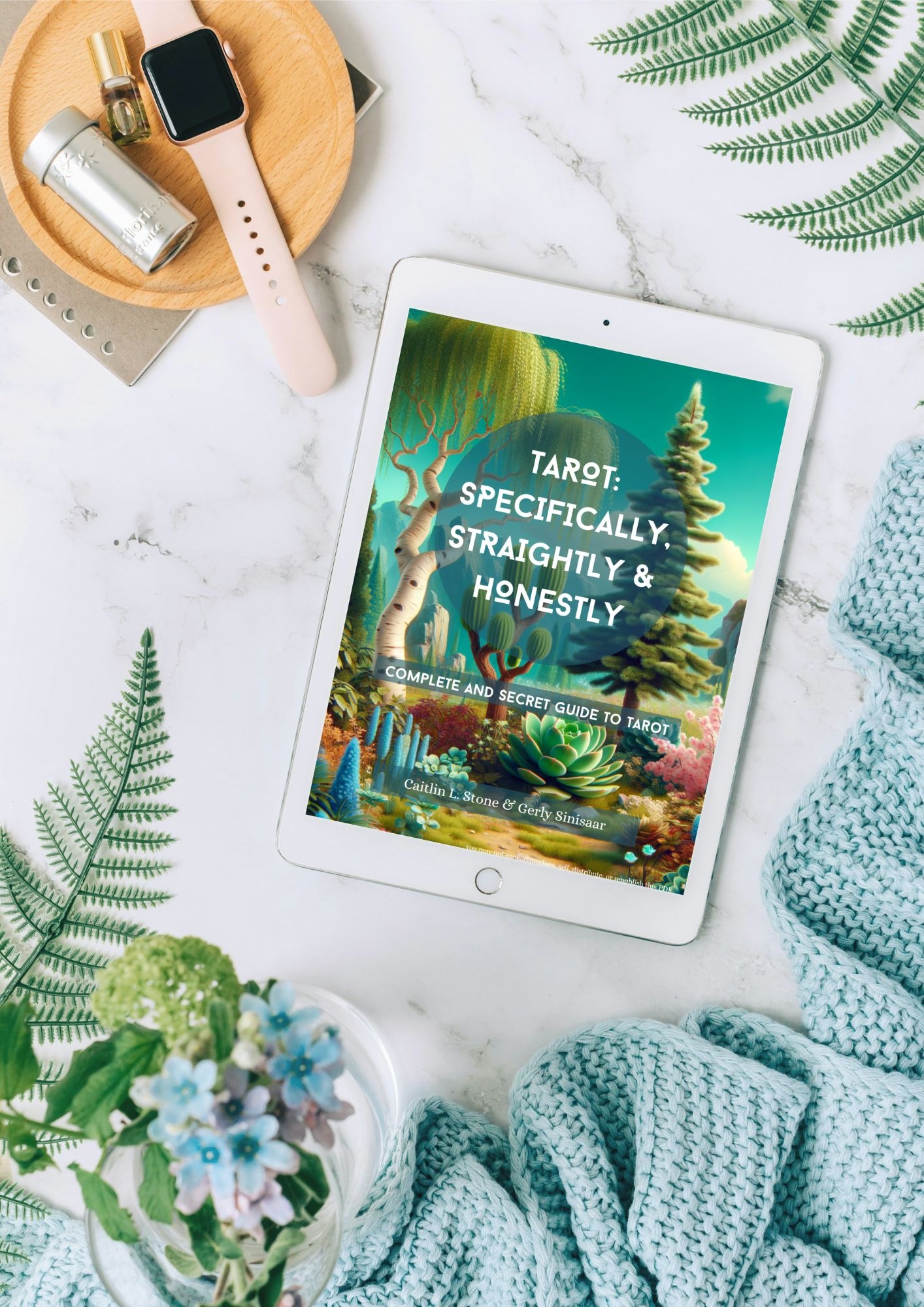
👉 Spiritual Forest Tarot eBook
was created around a simple 5-step reading flow you can follow in every reading, helping you move beyond memorizing meanings and start reading tarot in a way that feels clear, grounded, and reliable.


🪄 Why learning tarot often feels harder than it should
Many people start learning tarot by doing exactly what they are told to do: study the card meanings, practice simple spreads, and look up unfamiliar cards when they get stuck. Yet when they sit down for an actual reading, knowing the individual meanings does not always make the interpretation easier.
You might recognize the Three of Swords, for example, but still wonder whether it represents heartbreak, a difficult truth, an old wound, or something entirely different in the situation you are asking about. The card meaning gives you a starting point. The reading requires you to determine how that meaning applies here, in this particular question and context.
That is why tarot can feel much easier to study than to actually read. Studying teaches you what the cards can represent. Reading asks you to decide which part of that meaning matters in this particular situation.
If you keep asking yourself, “Why do I know the card meanings but still struggle with my readings?”, the answer is often found in the gap between learning tarot and interpreting tarot.
The difficulty is not necessarily a lack of effort or intuition. A common challenge is that beginner tarot resources can separate skills that actually need to be used together during a reading.
For example, you may learn:
• Card meanings: what a card traditionally represents
• Spreads: where and why a card appears in a particular position
• Intuition: the personal impressions, associations, and observations that arise as you look at the cards
The real skill is learning how to bring those three together without letting any one of them take over the entire reading.
🔮 Knowing the cards is not the same as reading the spread
This distinction becomes much clearer when you see it in an actual reading.
Imagine you ask:
“What do I need to understand about my current career situation?”
You pull three cards:
Eight of Pentacles → Two of Swords → The Chariot
Knowing the individual meanings gives you useful information. The Eight of Pentacles can point toward skill-building, practice, and dedicated work. The Two of Swords can suggest hesitation, avoidance, or an unresolved decision. The Chariot can represent determination, direction, and taking deliberate control of your path.
But a reading is not simply:
Card 1 = this. Card 2 = this. Card 3 = this.
You also need to consider how the cards relate to the question and to one another.
In this example, the spread could suggest that developing your skills is not the main obstacle. The bigger issue may be hesitation about which direction to commit to, followed by a need to make a deliberate choice and move forward.
That movement from individual meanings to a connected interpretation is one of the most important skills in tarot reading.
And this is where many beginners discover why memorizing more meanings does not necessarily make their readings clearer.
You can know the traditional meaning of every card in your deck and still struggle to answer:
• Which part of this card's meaning applies to my question?
• How does this card change because of its position in the spread?
• What does it add to the cards around it?
• Am I interpreting the card in the context of the situation, or simply repeating a memorized definition?
• How do I bring my intuitive impression into the reading without ignoring the traditional symbolism?
If you are still relying heavily on memorization, our guide on How to Understand Tarot Cards Without Memorizing Their Meanings can help you develop a more flexible way of working with the cards.
These are interpretation skills. They develop through practice, but having a clear process to follow can make that practice much more focused.
🍃 Soul Sisters Notes:
A tarot card does not have to mean only one thing. Its traditional symbolism gives you a foundation, but the question, spread position, surrounding cards, and real-life context help you decide which part of that symbolism is relevant. Learning to make that connection is not ignoring the card meaning. It is learning how to read it.
When tarot feels confusing, the answer is not always to memorize another list of card meanings. Sometimes the more useful next step is learning a repeatable way to move from a question to individual cards, to the relationship between those cards, and finally to an interpretation that makes sense in real life.
That is the skill this guidebook is designed to help you practice.
💬 “Most people don’t struggle with tarot because they can’t learn it.
They struggle because they’ve never been shown how to connect the cards into a clear message.
This guide was created to change that — to help tarot finally make sense in a way you can trust.”
— Caitlin
📖 Why most tarot guidebooks don’t actually help
Once you begin learning tarot, it is natural to look for a guidebook that can make the cards easier to understand. A good tarot guidebook should give you a reliable foundation, but it should also help you answer the questions that arise when you are actually sitting with a spread.
That is where some beginner resources can fall short. You may have pages of card meanings, lists of spreads, and explanations of tarot symbolism, yet still wonder:
“I know what these cards mean individually, but how do I put them together?”
The challenge is that knowing tarot information and knowing how to use that information during a reading are two different skills.
A card reference can tell you that the Hermit is associated with introspection, solitude, inner wisdom, and stepping back from outside noise. But if you pull the Hermit while asking, “Why do I feel so disconnected from everyone around me?”, you still need to determine which aspect of that symbolism is relevant.
Perhaps the card is reflecting a genuine need for solitude. Perhaps it is highlighting a period of self-reflection. Or perhaps the issue is not isolation itself, but the need to step away from other people's opinions long enough to hear your own thoughts.
The guidebook gives you the foundation. Your reading requires you to apply that foundation to the question.
🔮 Where the gap usually appears
A beginner resource can be excellent at explaining individual pieces of tarot while still leaving you unsure how those pieces work together.
You may understand:
• What the Major and Minor Arcana represent
• The traditional meanings associated with individual cards
• How different tarot spreads are structured
• Basic tarot symbolism and imagery
But during a real reading, you also need to know:
• Which part of a card's meaning is most relevant to your question
• How the position of a card changes the way you approach its meaning
• How two or more cards influence the interpretation of one another
• When your intuitive impression adds useful context
• How to turn several observations into one clear message
That is the practical gap between studying tarot and reading tarot.
And it is often the reason someone can spend months learning card meanings while still feeling uncertain when they actually pull the cards.
🧭 More information is not always the answer
When a reading feels confusing, the instinct is often to study another card meaning, buy another book, or look up several different interpretations online.
Sometimes that helps. But if the underlying problem is that you don't have a clear way to interpret the information you already have, more information can actually create more possibilities to second-guess.
Imagine pulling the Two of Pentacles and finding five different interpretations online: balancing priorities, financial pressure, adapting to change, juggling responsibilities, or trying to maintain stability.
All of those may be valid expressions of the card.
The question is not: “Which meaning is the correct one?”
The more useful question is: “Which part of this card's symbolism best fits the question, the position, the surrounding cards, and the situation I am reading about?”
That is where a structured reading process becomes useful.
🌿 A good tarot guidebook should help you make that connection
A practical tarot guidebook should not replace your judgment with a fixed answer. It should give you enough structure to make your own interpretation more confidently.
You should be able to open the guide when you are unsure and know what to consider next:
• Start with the question
• Look at the card's traditional symbolism
• Consider its position in the spread
• Examine the cards around it
• Notice your intuitive response
• Bring everything back to the real-life situation
• Form a clear interpretation instead of collecting endless possible meanings
The purpose of structure is not to make every reading identical. It is to give you somewhere to go when you feel stuck.
🍃 Soul Sisters Notes
We don't believe becoming better at tarot means memorizing more and more information until you can recite every possible meaning. A stronger skill is learning how to work with what you already know. When you understand how to move from symbolism to context, the cards become much easier to interpret without needing to force a single "correct" answer.


🔮 A tarot guidebook that actually teaches you how to read
Knowing the meaning of a tarot card is only the beginning. The real challenge starts when you have the cards in front of you and need to understand what they mean together, in response to your actual question.
That is the gap the Spiritual Forest Tarot eBook was created to address.
Instead of treating tarot as a collection of 78 separate card definitions, this guidebook gives you a 5-step reading flow that helps you move through an actual reading from beginning to end.
🌲 What happens during the 5-step tarot reading flow?
The process gives you a clear sequence to follow when you read:
• Start with the question you actually want the cards to explore
• Look at the cards through their traditional meanings and symbolism
• Consider each card in relation to its position in the spread
• Look for connections, contrasts, and patterns between the cards
• Bring your interpretation back to the real-life situation and form a clear message
This means that when a reading feels confusing, you do not have to immediately pull more cards or search for another interpretation online.
You have a process to return to.
That structure can be especially helpful when you are still learning because it gives you a way to practice the skill of interpretation rather than simply collecting more tarot information.
🧭 From card meaning to real-life interpretation
Imagine pulling The Hermit in a reading about your next career move.
A traditional meaning might point toward solitude, introspection, inner wisdom, or stepping back from outside influences.
But the guidebook encourages you to go further.
You might ask:
• What is the question actually asking me to understand?
• What does The Hermit represent in this particular spread position?
• Do the surrounding cards reinforce the idea of stepping back, or suggest something different?
• Is this a period for gathering information before making a decision?
• What could "stepping back" look like in this person's actual career situation?
The goal is not to invent a meaning that is unrelated to the card.
The goal is to take the traditional symbolism and learn how to apply it thoughtfully to the situation in front of you.
That is what turns a card meaning into a tarot interpretation.
✨ Built for practice, not just reading
The Spiritual Forest Tarot eBook is designed to be something you can return to while you practice.
You can use it when you are:
• Learning tarot for the first time
• Unsure how to interpret a card in context
• Struggling to connect several cards in a spread
• Second-guessing an interpretation that initially felt right
• Looking for a practical spread for a specific question
• Ready to move beyond memorizing individual card meanings
The aim is not to make you dependent on the guidebook.
It is to give you enough structure and understanding that, over time, you need to reach for it less often.
🍃 Soul Sisters Notes
A useful tarot guidebook should eventually help you become more independent as a reader. If every reading requires someone else to tell you what the cards mean, you are collecting interpretations rather than developing your own reading skill. The best use of a guidebook is as a foundation you can practice from, question, and gradually make your own.
💬 “We wanted this guide to help with the moment when you are sitting with the cards and thinking, ‘Okay, I know what these cards mean. But what do they mean together?’ That is where reading really begins.”
— Caitlin
🌲 What you’ll find inside this tarot guidebook PDF
This tarot guidebook PDF is designed as a practical resource for learning tarot from the foundations through to actual readings. Instead of giving you information to study and leave on the page, it gives you a structured framework you can use while practicing with your own cards.
👉 🌿 The 5-Step Tarot Reading Flow
The core of the guide is a repeatable reading process that gives you a clear starting point whenever you sit down with your cards.
• How to move from your question to the cards and then to a clear interpretation
• What to consider at each stage of a reading
• How to approach a reading when you are unsure where to begin
• A repeatable structure you can return to as you gain experience
🌙 A clear foundation for understanding tarot
Before you can confidently interpret a spread, you need to understand the structure you are working with.
• An introduction to the 78-card tarot structure
• The Major and Minor Arcana and how they differ
• The symbolism, themes, and practical interpretations associated with the cards
• Guidance for noticing suits, numbers, repeating themes, and Major Arcana patterns in a reading
• A foundation that helps you understand the cards rather than simply memorize definitions
🔮 Complete meanings for both Major and Minor Arcana
The guide includes meanings for the full tarot deck, giving you a reference point whenever you need to check a card.
• Clear interpretations and symbolism for the Major and Minor Arcana
• Traditional symbolism explained in accessible language
• Guidance for applying meanings rather than treating them as fixed answers
• Context to help you understand how a card's message can shift depending on the reading
🧭 How to apply the reading flow in real-life situations
Knowing the steps is useful. Understanding how to apply them is what turns them into a reading skill.
• How to work through a reading from the first card to the final interpretation
• How to connect multiple cards into a coherent message
• How to consider the question, spread position, surrounding cards, and context
• How to avoid getting stuck when several possible interpretations seem to fit
✨ Practical tools for building confidence
The guide also gives you practical ways to approach common questions and make your readings easier to work with.
• Yes / No / Maybe guidance for every card
• Approaches for different types of tarot questions
• Practical techniques for interpreting cards when you feel uncertain
• Tools you can use while practicing your own readings
✨ Worked examples of real tarot readings
• A relationship reading showing how cards can reveal emotional dynamics and past patterns
• A career reading showing how opportunities, skills, and overload can appear together
• A personal growth reading focused on inner awareness, uncertainty, and hope
• Step-by-step demonstrations of the 5-Step Tarot Reading Flow in practice
💫 Tarot applied to real-life situations
Tarot becomes much easier to understand when you can see how its symbolism applies beyond abstract definitions.
• Love, relationships, and emotional situations
• Money, work, and career questions
• Life direction and personal decisions
• Self-reflection and understanding your current circumstances
The purpose is not to use tarot to make every decision for you. It is to give you a structured way to explore a situation, notice what you may be overlooking, and reflect on the choices available to you.
🌿 Practical tarot spreads for different situations
A spread gives your reading structure by giving each card a specific role or position.
• A simple 1-card spread for quick questions and daily guidance
• A Yes/No spread for straightforward questions and learning the positive or negative orientation of cards
• A 3-card Past/Present/Future spread for exploring a situation and understanding yourself better
• Timeline reading guidance for spreads that unfold over a longer period
🌲 A guide that grows with you
You do not need to master everything in the guide at once.
You can use it differently as your tarot practice develops:
• As a learning resource when you are starting out
• As a reference when you forget or question a card meaning
• As a step-by-step framework when a reading feels difficult
• As a practice companion while you develop your own interpretation style
The goal is to help you move from knowing what tarot cards mean to understanding how to work with them in an actual reading.
🌿 Who this tarot guidebook is for
This guidebook is for anyone who wants to understand tarot cards more clearly and feel more confident using them in an actual reading.
It may be right for you if:
🌱 You’re new to tarot
If you are still learning the cards and sometimes find yourself looking at a spread thinking, “I know what these cards mean individually, but how do I put them together?”, this guide gives you a clear place to start.
You’ll find straightforward card interpretations, symbolism, practical meanings, and a simple 5-Step Tarot Reading Flow that helps you move from individual card meanings to a complete reading.
🔮 You know the cards but struggle with readings
Knowing the meaning of every card does not automatically make it easy to read a spread.
This guidebook is also for readers who already know the cards but want more structure when connecting them, recognizing patterns, understanding the dominant energy, and turning several cards into one clear message. The guide specifically teaches you to read the connection between cards, rather than simply listing their meanings.
💜 You want to read tarot for yourself
If you use tarot for reflection, clarity, relationships, career questions, personal growth, or everyday guidance, the guide helps you bring the cards back into your real situation instead of leaving them as abstract symbols.
✨ You want to read tarot for other people
The guidebook was created partly because there are many tarot resources that explain card meanings, but fewer that help you understand what to actually say when reading for someone else.
The worked examples also show how a reading can be developed step by step through relationship, career, and personal-growth questions.
🌙 You want tarot to feel less overwhelming
You don't need to memorize endless meanings or keep adding more information every time you pull a card.
The guidebook is built around a simple idea: clarity comes from knowing how to use what you already have. Its 5-step method gives you a repeatable structure you can return to whenever a reading feels scattered or difficult to interpret.
🌿 You’re still developing your own reading style
This guide isn't about telling you that there is only one "correct" way to read tarot. The ebook itself explains that there are many spreads and approaches, and that readers can develop methods they feel comfortable with.
Instead, it gives you a foundation you can keep returning to as your own relationship with the cards develops.
💫 In short
This guidebook is for beginners, developing readers, and experienced tarot readers who want a clearer, more practical way to understand cards and turn them into meaningful readings.
You don't have to know everything before you begin. And you don't have to stop learning just because you already do.
You can simply open the guide, find the card or spread you need, and let it help you make sense of the reading in front of you.
✨ From confusion to clarity in your tarot readings
One of the most common difficulties when learning tarot is discovering that knowing the meanings of the cards is not the same as knowing how to read them.
You may recognize the individual cards in a spread and understand their traditional meanings, yet still struggle to determine how those meanings relate to the question you asked. When several cards appear together, it can become tempting to interpret each one separately, look up additional meanings, or keep analyzing until you are no longer sure which interpretation to trust.
This is often where tarot begins to feel more complicated than it needs to be.
The challenge is not always a lack of knowledge. It can be a lack of structure.
A tarot reading requires you to bring several different elements together: the question, the individual cards, the relationships between those cards, your understanding of the situation, and your own intuitive observations. Without a clear process, these elements can remain disconnected, even when you understand each of them individually.
That is why this guidebook introduces a 5-Step Tarot Reading Flow, a simple and repeatable structure designed to help you move through a reading from beginning to end. The process takes you from defining the question to understanding each card, connecting the cards into a larger story, applying the interpretation to your real-life situation, and finally forming a clear message.
🌙 Understanding the cards is only the beginning
The first stage of a reading is to understand what each card represents. The guidebook provides grounded interpretations and shows how those meanings can relate to real-life situations. However, the purpose is not simply to memorize definitions. It is to recognize what a card is expressing within the particular reading you are doing.
From there, the reading becomes more than a collection of individual card meanings.
You begin looking for patterns. Repeating suits, numerical patterns, Major Arcana cards, dominant energies, similarities, and contrasts can all help reveal where the focus of a reading lies. The guidebook then takes this one step further by showing how cards can support, challenge, or modify one another and how their interaction creates a larger story.
This is an important distinction in tarot:
A reading is not simply a list of card meanings. It is an interpretation of how those cards relate to one another in response to a particular question.
🔮 Bringing tarot into real-life situations
A technically correct interpretation can still feel unhelpful if it remains abstract.
The next stage is therefore to consider what the cards mean within the situation being explored. A relationship reading may involve emotional dynamics, communication, or recurring patterns. A career reading may relate to decisions, responsibilities, opportunities, or the direction in which your energy is moving.
The guidebook encourages you to bring the cards back to the question rather than forcing a predetermined interpretation onto the situation. This is where symbolic understanding becomes practical guidance.
🐦 Learning to recognize the central message
The final stage is synthesis. After considering the question, the individual cards, their connections, and their real-life context, you need to determine what the reading is actually communicating as a whole.
This is often where beginners overcomplicate their readings. When an interpretation does not immediately feel certain, it can be tempting to keep adding meanings and possibilities. The guidebook takes the opposite approach: clarity comes from simplifying what is already present, rather than continually adding more information.
One useful way to test your interpretation is to ask: If I had to explain this reading in one or two sentences, what would I say?
The answer does not need to contain every possible meaning of every card. It needs to communicate the central message of the reading.
🌑 A structured approach makes tarot easier to work with
This is the fundamental difference between studying tarot meanings and learning to read tarot.
You can spend a great deal of time learning individual cards and still feel uncertain when faced with an actual spread. A structured process gives those meanings somewhere to go. It helps you understand how to begin, what to look for as the reading develops, and how to bring the interpretation together at the end.
The goal is not to remove intuition from tarot. Quite the opposite. The guidebook presents structure as a way of giving intuition a clearer foundation. As you practice moving through the process, the connections between cards can become more natural, and interpretations that once required considerable effort can gradually become easier to recognize.
The aim is not to memorize more and more information. It is to learn how to work with what you already know.
And that is the foundation of the approach inside this guidebook.
💬 “There’s a moment in learning tarot where you realize the problem was never the cards — it was not having a way to bring everything together.
Once that clicks, readings stop feeling uncertain… and start feeling clear, steady, and something you can actually trust.”
— Caitlin
🌙 Begin reading tarot with clarity and confidence
Learning tarot is not about memorizing 78 cards and hoping the right meaning comes to you when you lay them out. Understanding individual cards is important, but a meaningful tarot reading comes from knowing how to bring those meanings together, consider the question, recognize the relationship between the cards, and apply the message to real life.
That is why this guidebook focuses on how to read tarot, not simply what the cards mean.
Inside, you will learn a structured five-step approach that can be used across different types of readings, from a simple daily card to questions about relationships, career, personal growth, decisions, and longer-term direction. You will have clear card interpretations and symbolism to refer back to, practical spreads to work with, and real reading examples that show how the process comes together.
You do not have to become an expert before you start reading. You can learn one card, one question, and one reading at a time. As you practice connecting the cards and applying them to real situations, the process becomes easier to understand and more natural to navigate.
Tarot is a practice you grow into through experience. Let this guidebook give you the structure to begin that practice with greater clarity, confidence, and trust in your own developing reading style.
🌲 Your Tarot Journey Starts Here
Whether you are holding your first deck or have already been reading tarot for a while, you can return to this guide whenever you need a clearer way forward.
👉 Spiritual Forest Tarot eBook
💬 “Tarot is not meant to feel confusing.
It’s meant to feel like something you can sit with, understand, and trust.
Once you have the right structure, everything that once felt unclear begins to come together — naturally and without force.”
— Caitlin
🌿 Still feeling unsure? Start with what’s holding you back
If something still feels unclear, you're not alone. Many people feel drawn to tarot but get stuck at a specific point in their learning journey.
Sometimes it's confusion. Sometimes it's self-doubt.
Sometimes it's feeling like you know the cards, but not how to bring them together into a reading that makes sense.
If that sounds familiar, start with the challenge that best matches your experience.
🔮 Explore common tarot challenges
• Why do my tarot readings not make sense?
• Why do I doubt my tarot readings?
• Why can’t I read tarot cards correctly?
• Why is tarot so confusing for beginners?
• Why does my intuition not work when reading tarot?
Each guide explores one common tarot obstacle in depth and gives you practical ways to understand what may be missing in your readings.
🌙 Build a Stronger Tarot Foundation
If you're still learning the basics, visit our Tarot for Beginners pillar, where you'll find step-by-step guides, beginner-friendly tarot spreads, card meanings, and practical reading techniques to help you build confidence from the ground up.
🌿 Explore Tarot Through the Wheel of Life
Want to understand tarot beyond traditional card meanings? Visit Tarot Through the Wheel of Life to explore how tarot reflects life experiences, emotions, seasons, relationships, personal growth, and spiritual milestones through the cards.
✨ When you're ready for a clear, structured approach that brings everything together, the Spiritual Forest Tarot Guidebook is your next step.
🌳 FAQ About This Tarot Guidebook PDF
Is this tarot guidebook PDF suitable for complete beginners?
Yes. The guidebook provides a structured introduction to tarot and is designed to make working with the cards easier to understand in practice. It explains the Major and Minor Arcana, individual card meanings and symbolism, practical spreads, and a five-step process for approaching a tarot reading. The guide also includes worked reading examples, so you can see how the different parts come together in an actual reading.
Do I need to memorize all tarot card meanings to use this guide?
No. The guidebook emphasizes that knowing individual meanings is only part of reading tarot. Its five-step reading process is designed to help you move from understanding individual cards to connecting them, considering the question and context, and forming a clear message. The guide can also be used as a reference while you are still learning the cards.
Will this help me feel more confident in my tarot readings?
It is designed to give you a clearer structure for approaching tarot readings. Instead of treating a reading as a collection of separate card meanings, the guide teaches you to consider the question, understand each card, connect the cards, apply the reading to real life, and form a clear message. Having a repeatable process can make readings easier to approach and reduce the uncertainty that comes from not knowing what to do next.
Can I use this tarot guidebook with my own tarot deck?
The guide follows the traditional 78-card tarot structure of the Major and Minor Arcana, so the card meanings and reading process are applicable beyond one specific deck. The guide was created alongside the Spiritual Forest Tarot Cards, whose imagery was designed to work with traditional tarot symbolism, but the reading principles can be applied when working with other traditional tarot decks as well.
Can this guidebook help me learn to read tarot for other people?
Yes. The guide explains how to move from individual card meanings to a clear message within a reading, and it was created with practical reading in mind, including the experience of explaining what the cards are saying when reading for someone else. It can therefore be used both for personal readings and as you develop your ability to read for others.
What will I learn from this tarot guidebook?
The guidebook covers the structure of tarot, Major and Minor Arcana card meanings and symbolism, practical approaches to tarot questions, Yes/No/Maybe guidance, tarot spreads, and a structured five-step reading process. It also demonstrates the process through worked examples covering areas such as relationships, career, personal growth, and longer-term readings.
How is this tarot guidebook different from a book that only gives tarot card meanings?
Understanding individual card meanings is important, but a tarot reading involves more than identifying what each card represents. This guidebook places particular emphasis on how the cards work together within a reading. Its five-step process takes you from the question and individual cards through connection, real-life application, and finally to a clear message. This gives you a practical framework for using the meanings you learn rather than leaving them as isolated definitions.
Does the guidebook include tarot spreads?
Yes. The guidebook includes several practical spreads, including one-card readings, Yes/No readings, Past/Present/Future, timeline readings, and other spreads for specific situations. It also explains how to approach longer timeline readings as a sequence or process rather than treating tarot as an exact prediction of specific dates.
Does the guidebook show examples of actual tarot readings?
Yes. The guidebook includes worked examples that demonstrate the five-step reading process in practice. These examples include readings about relationships, career, personal growth, and a 12-month tarot reading, showing how the cards can be connected and interpreted within a specific question and context.
Is this a digital tarot guidebook PDF?
Yes. The tarot guidebook is provided as a PDF, making it a reference you can return to while learning and practicing your readings.
Do I need to be an experienced tarot reader to use it?
No. The guide can support you at different stages of learning. If you are new to tarot, it provides a foundation for understanding the cards and approaching readings. If you already know many card meanings but struggle to connect them into a reading, the five-step structure gives you a practical framework for working with that knowledge.
Soul Sisters Tarot
A Soft Place to Grow.
💌 SOUL SISTERS WEEKLY
A thoughtful Sunday letter with tarot reflections, moon wisdom, self-love, and gentle encouragement.
© 2026. All rights reserved.
Inspirational Coaching OÜ
sisters@soulsisterstarot.com