💌 JOIN SOUL SISTERS WEEKLY → GET FREE WELCOME GIFTS 🎁
Receive a thoughtful Sunday letter, free Self-Love & Shadow Work guides, and monthly Full Moon rituals ✨



First Tarot Reading: Why the Cards Don't Make Sense (Yet)
Feeling lost after your first tarot reading? Discover why the cards seem confusing, the beginner mistake almost everyone makes, and how to read tarot with confidence.
TAROT & SPIRITUAL INSIGHT
Soul Sisters Tarot
4/4/202624 min read
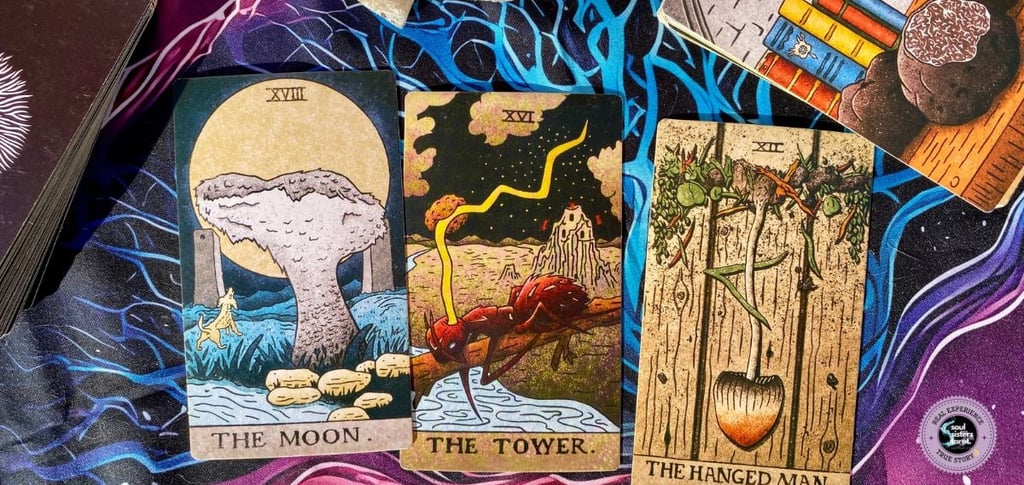
Your First Tarot Reading: What to Do, Ask & Expect as a Beginner
This guide is part of our Tarot learning journey, where we gently walk you through building confidence with tarot at your own pace.
Your first tarot reading can feel exciting, mysterious, and, if you're honest, a little intimidating. You might be wondering whether you're shuffling the cards correctly, asking the right questions, or if you'll understand anything at all. If the cards don't make immediate sense, don't worry. That's one of the most common experiences beginners have, and it doesn't mean you're doing anything wrong.
Can Your First Tarot Reading Feel Confusing?
Yes. It's completely normal for your first tarot reading to feel confusing or uncertain. Most beginners don't instantly understand every card or know how the messages fit together. Tarot is a skill that develops through practice, reflection, and curiosity. The goal of your first reading isn't perfection. It's simply to begin building a conversation with the cards and with yourself.
In this guide, you'll learn what to realistically expect from your first tarot reading, how to prepare, what questions to ask, and why the cards may not make sense right away. More importantly, you'll discover why confusion is often part of learning tarot and how every reading helps build confidence, understanding, and trust in your own intuition.
If you're completely new to tarot, you may also enjoy exploring Tarot for Beginners, which introduces the foundations of tarot, explains how the cards work together, and helps you build confidence before diving into your first reading.
If you've ever wondered whether you're simply "bad" at tarot because the cards don't make sense, our guide on Why Is Tarot So Confusing for Beginners? explains why almost every new reader experiences this stage and how confidence grows with practice.
🍃 Soul Sisters Insight
One of the biggest misconceptions about a first tarot reading is that experienced readers immediately "know" what every card means. The truth is that confidence grows through experience, not instant certainty. Every reader starts exactly where you are now: learning to observe, reflect, and trust the process one card at a time.
🔮 Every confident tarot reader started with a single reading.
If you'd like extra guidance as you learn, explore the readings, spiritual tools, and supportive resources available through Sisters Creation. Each offering is designed to help you build confidence, deepen your intuition, and develop a tarot practice that feels natural, personal, and grounded.
For now, take a deep breath and let go of the idea that your first reading has to be perfect. Tarot isn't a test you pass or fail. It's the beginning of a relationship with the cards, your intuition, and, most importantly, yourself.
🌿 What Is a First Tarot Reading for a Beginner Really Like?
What Should You Expect From Your First Tarot Reading?
Your first tarot reading is rarely about receiving instant answers or predicting the future. Instead, it's an opportunity to explore your current thoughts, emotions, and circumstances from a new perspective. Many beginners are surprised that tarot often raises meaningful questions before providing complete clarity, and that's a normal part of learning to read the cards.
Your first tarot reading is less about predicting the future and more about understanding yourself. Rather than revealing a fixed destiny, the cards encourage you to pause, reflect, and notice patterns, emotions, and possibilities that may already be unfolding in your life. This shift in perspective is often what makes tarot feel both surprising and deeply meaningful.
Many beginners expect tarot to deliver dramatic predictions or unmistakable signs. In reality, a first reading often feels much quieter. Instead of providing certainty, the cards invite reflection. Rather than telling you exactly what will happen next, they encourage you to look at your situation from a different angle.
You may notice:
A growing sense of reflection instead of immediate certainty.
Emotional clarity about a situation you've been carrying for some time.
New perspectives that help you understand yourself or your choices more deeply.
Questions that continue unfolding even after you've put the cards away.
Tarot doesn't tell you what must happen. Instead, it reflects the energies, choices, and patterns surrounding your situation, giving you an opportunity to respond with greater awareness rather than simply reacting on autopilot.
If you're wondering why some cards feel difficult to understand at first, our guide to Tarot Card Meanings explains how the symbolism, imagery, and traditional interpretations work together. You'll quickly discover that understanding tarot isn't about memorizing definitions. It's about learning to recognize the different layers of each card.
🍃 Soul Sisters Insight
One of the biggest surprises for new readers is realizing that a "good" tarot reading doesn't always answer every question immediately. Sometimes it's greatest gift is helping you notice something you hadn't been willing to see before. Clarity often arrives in layers, not all at once.
🍃 Soul Sisters Notes
“I remember expecting my first reading to give me a clear answer about what to do next. Instead, the cards reflected something I had been quietly avoiding. It wasn’t what I thought I needed, but it was exactly what helped me move forward.” – Caitlin
If you've ever finished a reading feeling more confused than confident, our guide on Why Don't My Tarot Readings Make Sense? explores why this happens and how your understanding naturally grows with experience.
Once you know what a first tarot reading is really meant to feel like, the next step is preparing yourself, not for a perfect reading, but for an honest one.
✨ How to Prepare for Your First Tarot Reading as a Beginner
How Should You Prepare for Your First Tarot Reading?
Preparing for your first tarot reading doesn't require special rituals or perfect conditions. The most important step is approaching the cards with curiosity instead of pressure. A quiet space, an open mind, and a meaningful question will help you receive far more from the experience than trying to do everything "correctly."
Preparing for your first tarot reading is much simpler than many beginners expect. You don't need special abilities, expensive tools, or elaborate rituals. What matters most is creating enough space to slow down, become present, and approach the cards with curiosity rather than the pressure to get everything right.
Create a calm space
You don't need candles, crystals, or a perfectly peaceful room unless those things genuinely help you focus. Even a few uninterrupted minutes and a willingness to be present can create the right environment for a meaningful reading.
Set an intention
Before you shuffle the cards, take a moment to connect with why you're reading. A simple intention helps focus your attention without trying to control what the cards will reveal.
What do I want clarity about?
What feels unclear or heavy right now?
What am I hoping to understand better?
This helps guide your reading without forcing outcomes. Remember, your intention isn't to force a specific answer. It's simply to invite greater understanding of whatever is most important right now.
Get familiar with your cards
Before your first reading, spend a few quiet moments simply looking through your deck. Notice which cards immediately catch your attention, which illustrations feel comforting, and which ones spark curiosity. Becoming familiar with the artwork before you begin makes the reading feel much more natural and less intimidating.
If handling the cards still feels unfamiliar, our guide on How to Shuffle Tarot Cards shares simple techniques that help you prepare your deck without worrying about whether you're doing it the "right" way.
🍃 Soul Sisters Insight
Many beginners spend so much time preparing the "perfect" reading that they never actually begin. Tarot doesn't ask for perfection. It asks for honesty, curiosity, and a willingness to learn. Your first reading is the start of a relationship with the cards, not a final exam.
🦉 Tarot eBook: Complete & Secret Guide to Tarot
The more familiar you become with tarot, the less intimidating your first readings will feel.
Our Tarot eBook: A Complete and Secret Guide to Tarot helps you understand the cards, common symbols, spreads, and reading techniques in a clear, beginner-friendly way. Instead of feeling overwhelmed by everything you don't know, you'll build the confidence to explore tarot one reading at a time.


If you're worried about making mistakes before you've even started, our guide on Why Can't I Read Tarot Cards Correctly? explains why nearly every beginner feels this way and how confidence develops through practice rather than perfection.
Once you've prepared your space and your mindset, the next step is understanding what actually happens during a reading and why your experience may be very different from what you imagined.
🔮 What to Expect During a Tarot Reading Experience
What Happens During Your First Tarot Reading?
A first tarot reading is usually much quieter and more reflective than many beginners expect. Instead of revealing dramatic predictions, the cards invite you to explore your thoughts, emotions, and current circumstances with greater awareness. Every reading unfolds differently, and it's completely normal if the messages don't become clear immediately.
Knowing what to expect can make your first tarot reading feel much less intimidating. While every reading is unique, most beginners quickly discover that tarot isn't about getting instant answers. It's about slowing down, asking thoughtful questions, and allowing the cards to reveal new perspectives one step at a time.
You won’t “do it wrong.”
There is no perfect way to read tarot, especially when you're just beginning. Experienced readers don't always see exactly the same message in every card either. What matters is approaching the reading with honesty, curiosity, and a willingness to explore rather than trying to find one "correct" interpretation.
The meanings may feel intuitive
Some cards will immediately feel meaningful, almost as if they describe exactly what you're experiencing. Others may seem confusing or unrelated at first. That's completely normal. As you continue practicing, you'll begin noticing patterns, recurring themes, and personal connections that make the messages feel much clearer.
🍃 Soul Sisters Insight
One of the most common misconceptions about tarot is that every card should make perfect sense the moment you turn it over. In reality, many meaningful readings continue unfolding long after you've finished. Sometimes understanding arrives hours or even days later, once you've had time to reflect on what the cards revealed.
It’s a dialogue, not a performance
Tarot isn't a performance where you have to prove that you're intuitive enough. Think of it as a conversation between you, the cards, and your current situation. The more honestly you engage with that conversation, the more meaningful your readings become over time.
If you're unsure how to arrange your cards, our guide to Tarot Spreads for Beginners introduces simple layouts that make your first readings feel structured, approachable, and much easier to follow.
If you find yourself questioning every interpretation, you're not alone. Our guide on Why Do I Doubt My Tarot Readings? explores why self-doubt is so common in the beginning and how confidence develops with experience.
Once you know what a reading is likely to feel like, the next step is learning how to ask questions that encourage meaningful guidance instead of limiting the conversation.
🧭 How to Choose the Right Questions for Your First Tarot Reading
What Questions Should You Ask During Your First Tarot Reading?
The best questions for a first tarot reading encourage reflection rather than prediction. Open-ended questions help you explore your thoughts, emotions, and options instead of searching for fixed answers about the future. This approach creates richer, more meaningful readings and helps you develop confidence as you learn.
The quality of your tarot reading often begins with the quality of your question. While it's natural to want certainty, tarot tends to offer its deepest guidance when you ask questions that invite understanding rather than demand predictions. Learning this early will transform the way you read the cards.
The most helpful tarot questions create space for insight. Instead of asking the cards to tell you exactly what will happen, invite them to help you understand your situation, your choices, or the energy surrounding a decision.
Helpful types of questions
Questions like these encourage the cards to explore possibilities, perspectives, and personal growth:
“What should I understand about this situation?”
“What energy is influencing me right now?”
“What can help me move forward?”
These kinds of questions often reveal guidance you may never have considered if you had focused only on predicting the outcome.
Questions to avoid
Questions that seek absolute certainty often limit the conversation because tarot is designed to encourage awareness rather than guarantee future events:
“Will this definitely happen?”
“Is this person the one?”
“What exact date will this change?”
If you notice yourself searching for certainty, try asking what you can learn, change, or become aware of instead. You'll often receive much richer guidance. Tarot works best with open-ended questions that allow insight to unfold.
🍃 Soul Sisters Insight
One of the simplest ways to improve your readings is to become curious instead of certain. When you stop asking the cards to prove something and start asking them to help you understand something, your readings naturally become deeper, clearer, and far more personal.
If you're unsure where to begin, explore our guide to Tarot Questions for Beginners, where you'll find thoughtful question ideas that encourage reflection, clarity, and meaningful conversations with the cards.
🍃 Soul Sisters Notes
“I used to ask tarot very direct questions, hoping for certainty. Over time, I noticed the most meaningful readings came when I softened my questions and allowed space for insight instead of control. That shift changed everything about how I read.” – Caitlin
If you still feel like your intuition disappears the moment you start reading, our guide on Why Does My Intuition Not Work When Reading Tarot? explains why this happens and shares practical ways to build trust in your own interpretations.
Once you've learned how to ask meaningful questions, the next step is choosing a simple spread that helps those questions unfold naturally.
📓 365 Psychological Journal Prompts
The questions you ask yourself shape the answers you discover.
Our 365 Psychological Journal Prompts are designed to help you explore your thoughts, emotions, beliefs, and life experiences through meaningful self-reflection. As you become more comfortable asking yourself thoughtful questions, you'll often find that asking powerful questions during tarot readings becomes much more natural too.


🃏 Choosing a Simple Spread for Your First Tarot Reading for Beginners
What Is the Best Tarot Spread for Your First Reading?
The best tarot spread for your first reading is usually the simplest one. One-card and three-card spreads help you focus on understanding the cards without becoming overwhelmed by too much information. As your confidence grows, you can gradually explore larger spreads that offer greater depth and detail.
One of the biggest mistakes beginners make is assuming that larger tarot spreads provide better answers. In reality, the opposite is often true. Simple spreads allow you to focus on understanding each card, notice how the messages connect, and build confidence without feeling overwhelmed.
A 1-card reading
A one-card reading is one of the most powerful ways to begin learning tarot. Instead of trying to interpret several cards at once, you can focus on a single message, explore its symbolism, and become familiar with how one card relates to your question.
A 3-card spread
Once you're comfortable with one-card readings, a three-card spread adds just enough depth without becoming confusing. It encourages you to explore how different aspects of a situation connect while still keeping the reading easy to follow.
A gentle structure like:
Past
Present
Future
or
Situation
Challenge
Guidance
There isn't one "correct" three-card spread. As you gain experience, you'll naturally discover layouts that suit your questions and reading style best.
If you'd like to explore this layout in more detail, our guide to the Three-Card Tarot Spread explains how each position works and how beginners can use it to gain clear, practical guidance.
🍃 Soul Sisters Insight
You don't become a better tarot reader by pulling more cards. You become a better reader by spending more time with each card. Slowing down allows you to notice details, patterns, and intuitive impressions that are easy to miss when a spread feels too complicated.
As your confidence grows, you may begin wanting to explore more complex situations or understand how several influences interact. That's when a five-card spread can offer greater depth while still providing a clear structure for your reading.
If you're feeling nervous before your reading or your mind feels especially busy, choosing a calming spread can help you focus on reflection rather than worry. Gentle layouts designed for emotional support often make the experience feel less overwhelming and easier to process.
Once you've chosen a simple spread, you might start wondering whether you're ready to read for yourself or if it's better to begin with someone else. The good news is that self-readings are often one of the best ways to learn.
🌙 Can You Read Tarot for Yourself as a Beginner?
Can Beginners Read Tarot for Themselves?
Yes. Reading tarot for yourself is one of the best ways to build confidence, develop your intuition, and become familiar with the cards. While it's natural to worry about being too emotionally involved, self-readings can be incredibly insightful when you approach them with honesty, curiosity, and an open mind.
In fact, many experienced tarot readers began by reading for themselves. Self-readings allow you to practice regularly, become familiar with the cards, and develop a personal understanding of how tarot speaks to you. They also help you build trust in your own intuition long before you begin reading for anyone else.
If you're wondering whether you're too emotionally involved to read your own cards, our guide on Can You Read Tarot for Yourself? explores the benefits, common challenges, and practical ways to approach self-readings with greater clarity.
As you begin reading for yourself, remember:
Be honest about what you hope the cards will say and stay open to hearing something different.
Notice your first impressions before reaching for a guidebook or second-guessing yourself.
Avoid asking the same question repeatedly in hopes of receiving a different answer.
Give yourself time to reflect instead of expecting every message to make sense immediately.
🍃 Soul Sisters Insight
Reading for yourself isn't about being perfectly objective. It's about becoming more self-aware. Some of your most meaningful readings may challenge your assumptions, reveal patterns you've overlooked, or gently encourage you to see your situation from a completely new perspective.
Your first self-readings may feel uncertain, and that's completely normal. Every reading teaches you something, even if that lesson is simply learning to slow down, observe more carefully, or trust your own perspective a little more than you did before.
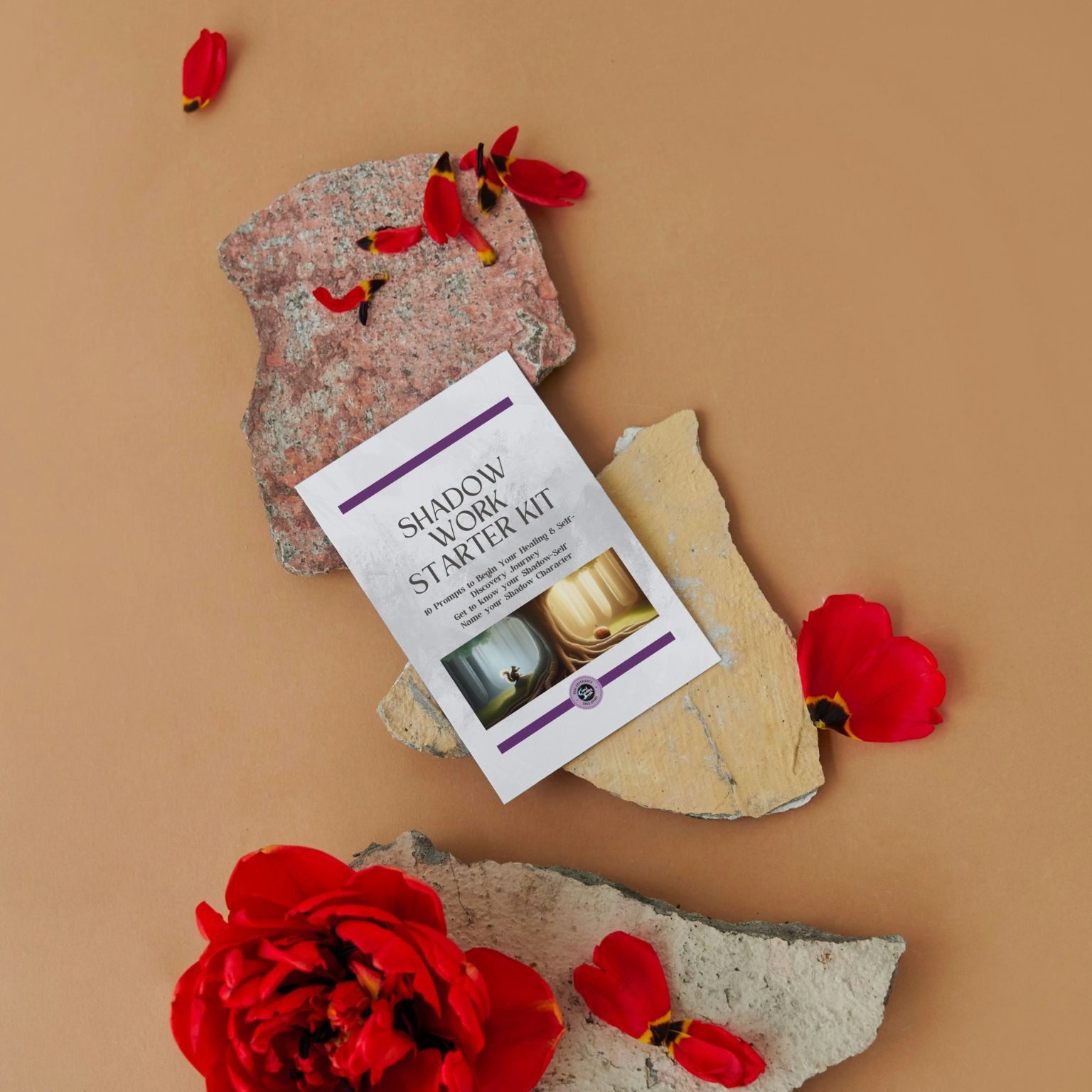
🌷 Free Shadow Work Starter Kit
Sometimes the hardest part of reading tarot isn't understanding the cards. It's understanding yourself.
Our Free Shadow Work Starter Kit helps you gently explore the fears, limiting beliefs, and emotional patterns that can influence how you interpret your readings. As your self-awareness grows, you'll often find it easier to approach the cards with honesty, openness, and greater trust in your own intuition.

As you become more comfortable reading for yourself, another question often comes up: should you cleanse your tarot deck before using it for the first time?
🧼 Do You Need to Cleanse Your Tarot Deck Before the First Reading?
Do You Need to Cleanse a Tarot Deck Before Using It?
No. Cleansing a tarot deck before your first reading is entirely optional. Some readers enjoy creating a ritual to mark a new beginning, while others simply start shuffling and reading right away. There is no universal rule. The most important thing is choosing an approach that helps you feel present and connected to your deck.
One of the first questions many beginners ask is whether a tarot deck needs to be cleansed before it's used. The simple answer is no. Cleansing is a personal practice, not a requirement, and choosing to skip it doesn't make your readings any less meaningful or intuitive.
Some people enjoy cleansing their deck because it helps them mark a fresh beginning or create a quiet moment of intention before reading. Others feel just as connected by simply shuffling the cards and getting started. Both approaches are equally valid.
If you'd like to explore different approaches, our guide on How to Cleanse Your Tarot Deck explains several simple methods and helps you decide whether cleansing feels meaningful for your own practice.
If you choose to cleanse your deck, many readers prefer simple practices such as:
Shuffling with intention
Taking a quiet moment to reset
Keeping your deck in a special place
🍃 Soul Sisters Insight
Cleansing isn't about removing "bad energy" from your cards. For many people, it's simply a mindful pause before a reading. Whether you cleanse your deck or not, your presence, intention, and willingness to reflect will always have a greater influence on your reading than any ritual itself.
🌳 If you feel drawn to connect with tarot in a more intuitive and natural way, our Spiritual Forest Tarot Deck was created to guide you gently through each message. Designed to feel clear and grounding, it can be especially supportive when you are just beginning and want something easy to connect with.
There isn't one correct way to begin working with a tarot deck. What matters most is finding a practice that helps you feel calm, present, and open to whatever the cards may reveal. As your relationship with your deck grows, you'll naturally discover which rituals, if any, feel meaningful to you.
Whether you choose to cleanse your deck or simply begin reading, the next challenge many beginners face is understanding what the cards are actually trying to say.
📖 How to Understand Your Cards Without Feeling Overwhelmed
What Should You Do If You Don't Understand Your Tarot Cards?
If you don't understand your tarot cards, don't assume you've done anything wrong. Most beginners need time to recognize the symbolism, connect the meanings to their own lives, and build confidence in their interpretations. Start by observing the imagery, noticing your first impressions, and then comparing them with the traditional meanings. Understanding develops gradually with practice.
One of the biggest worries after a first tarot reading is looking at the cards and thinking, "I have absolutely no idea what this means." If that sounds familiar, you're in good company. Every experienced tarot reader has faced that exact moment. Understanding the cards isn't something that happens instantly. It's a skill that grows one reading at a time.
The good news is that you don't need to memorize all 78 cards before you begin. In fact, trying to remember every keyword often creates more pressure than clarity. Learning to observe first and interpret second is a much more natural way to build confidence.
Before reaching for a guidebook, spend a moment simply observing the card. Ask yourself:
Which part of the artwork immediately catches my attention?
What emotions does this card bring up?
What is the first word or thought that comes to mind?
How might this card connect to the question I asked?
These first impressions often become the foundation for a much richer interpretation.
🍃 Soul Sisters Insight
Beginners often believe experienced readers instantly know what every card means. In reality, many experienced readers still pause to study the artwork, notice new details, and reflect on how the card relates to the question. Tarot isn't about remembering every meaning. It's about learning to observe with curiosity.
Once you've explored your own observations, compare them with the traditional meanings of the card. This helps you understand both the established symbolism and how it connects to your personal experience. Over time, you'll naturally begin combining knowledge and intuition instead of relying on one or the other.
If you'd like extra support as you learn, our Tarot Guidebook PDF explains every card in a clear, beginner-friendly way while encouraging you to build confidence in your own interpretations rather than simply memorizing keywords.
The more readings you complete, the more familiar the cards become. Little by little, you'll stop searching for the "right" meaning and start recognizing the message that feels most relevant to your own situation. That's when tarot begins to feel less like studying and more like having a conversation.
🦉 Tarot eBook: Complete & Secret Guide to Tarot
Learning tarot doesn't happen all at once; it happens one card at a time.
Our Tarot eBook: A Complete and Secret Guide to Tarot was created to help beginners move beyond memorizing keywords and start understanding how the cards connect with real life. With practical explanations, symbolism, and intuitive guidance, it's designed to help your readings feel clearer, more meaningful, and far less overwhelming.
As your confidence begins to grow, you may eventually feel curious about sharing tarot with someone else. Before you do, it's helpful to understand how reading for another person differs from reading for yourself.
🤝 What If You Want to Read for Someone Else?
Can Beginners Read Tarot for Other People?
Yes. Beginners can read tarot for friends, family, or loved ones, as long as they approach the reading with honesty, respect, and realistic expectations. Reading for someone else is less about having all the answers and more about creating a supportive space where the cards encourage reflection, conversation, and self-awareness.
After gaining a little confidence with your own readings, it's natural to become curious about reading for friends or family. While reading for someone else can feel exciting, it also brings a different kind of responsibility. Your role isn't to predict another person's future. It's to help them explore their situation with honesty, compassion, and an open mind.
If you're ready to take that next step, our guide on How to Do a Tarot Reading for Someone Else walks you through preparing for the reading, asking thoughtful questions, and creating a safe, supportive experience for the person sitting across from you.
As you begin reading for others, remember:
Offer guidance and perspective rather than telling someone what they "should" do.
Respect the other person's choices, even if the cards suggest a different direction.
Be honest when something isn't immediately clear instead of feeling pressured to have every answer.
Encourage reflection and conversation rather than creating fear or certainty about the future.
🍃 Soul Sisters Insight
One of the kindest things you can do as a tarot reader is admit when you don't know something. People don't need perfect interpretations. They need someone who is present, thoughtful, and willing to explore the cards with them instead of pretending to have all the answers.
Reading for others becomes easier with practice, but the most important skill isn't interpreting every card perfectly. It's learning how to listen, ask thoughtful questions, and create a space where meaningful conversations can unfold naturally.
Whether you read for yourself or eventually begin reading for others, your first experiences with tarot often leave you feeling more than one emotion at a time. That's completely normal.
🌱 Common Emotions After Your First Tarot Reading
How Should You Feel After Your First Tarot Reading?
There isn't one "correct" way to feel after your first tarot reading. Some people leave feeling inspired and reassured, while others feel thoughtful, emotional, or even slightly confused. Tarot often begins a process of reflection rather than providing instant certainty, so it's completely normal for your understanding to deepen over time.
Your first tarot reading may leave you feeling lighter, more emotional, more curious, or even a little uncertain. Every response is valid because tarot doesn't simply provide information. It encourages reflection, and that reflection looks different for everyone.
You might feel:
Calm and reassured, as if you've finally put words to something you've been feeling for a long time.
Thoughtful and reflective, noticing new perspectives you hadn't considered before.
Slightly confused, because some messages take time to unfold rather than making sense immediately.
Emotionally aware, recognizing feelings or patterns that had been sitting quietly beneath the surface.
Curious to keep exploring, realizing that one reading has opened the door to a much deeper journey.
🍃 Soul Sisters Insight
One of the biggest misconceptions about tarot is that every reading should leave you with complete certainty. Sometimes the most meaningful readings don't answer every question. Instead, they leave you with a new perspective that continues unfolding over the next few days or even weeks.
Whatever you're feeling after your reading, try not to judge it too quickly. Tarot doesn't always offer immediate clarity, and that's perfectly okay. Some insights arrive in the moment, while others become meaningful only after you've had time to reflect, notice patterns, or experience something new in your everyday life.
One of the best ways to turn those first impressions into lasting confidence is to spend a few quiet moments reflecting on what your reading brought up.
💫 A Soft Reflection to Deepen Your Tarot Reading Experience
What Should You Do After Your First Tarot Reading?
After your first tarot reading, take time to reflect on what stood out rather than rushing into another reading. Notice which cards stayed with you, what emotions surfaced, and whether new insights appear over the following days. Tarot often continues revealing its meaning long after the cards have been put away.
Before putting your cards away, give yourself a few quiet moments to reflect. Your first reading isn't only about interpreting the cards. It's also about noticing how the experience made you feel and what it encouraged you to see differently. Reflection is where many of tarot's deepest lessons begin to unfold.
You might ask yourself:
Which card stayed in my mind the longest, and why?
Did anything surprise me during this reading?
What emotions came up while I was interpreting the cards?
How does this reading relate to what's happening in my life right now?
What's one small action I can take based on what I've learned today?
🍃 Soul Sisters Insight
A meaningful tarot reading doesn't always change your life in one moment. More often, it changes the way you look at a situation. That small shift in perspective is often where real growth begins.
This is where tarot becomes truly powerful, not in the cards themselves, but in how you integrate their message.
🍃 Soul Sisters Notes
“I’ve had readings where nothing seemed clear in the moment. But later, something would shift, and I would suddenly understand what the cards were pointing to. Tarot has its own timing, and learning to trust that was one of the most important lessons for me.” – Caitlin
Confidence doesn't arrive because you've memorized every card or completed a certain number of readings. It grows quietly through experience. Every question you ask, every symbol you notice, and every reading you reflect on strengthens your relationship with the cards and, perhaps even more importantly, with yourself.
Over time, you may notice:
Your intuition feels more natural.
Your interpretations become more thoughtful and confident.
You spend less time searching for the "right" answer and more time listening to your own insights.
Reading tarot becomes less about predicting the future and more about understanding yourself.
📓 365 Psychological Journal Prompts
The more deeply you understand yourself, the more meaningful your tarot readings become.
Our 365 Psychological Journal Prompts are designed to help you explore your thoughts, emotions, beliefs, and personal growth through gentle daily reflection. As you build greater self-awareness, you'll often find that understanding the cards and trusting your intuition become much more natural, too.
If you'd like to continue building confidence one reading at a time, explore our guide to Daily Tarot Reading Practice, where you'll discover a simple routine for developing your intuition without feeling overwhelmed.
✨ From Your First Reading to Lasting Confidence
Your first tarot reading isn't a test of your intuition or your ability to understand every card perfectly. It's the beginning of a conversation, one that grows richer each time you shuffle the deck, ask an honest question, and give yourself permission to listen.
Some readings will feel immediately clear. Others may only make sense days or even weeks later. Both experiences are part of learning tarot, and both deserve your patience.
Keep showing up with curiosity. Keep asking thoughtful questions. Keep trusting that understanding grows one reading at a time.
And whenever you feel ready to take the next step, explore Tarot Guidance: Find Clarity, Self-Discovery & Your Tarot Path, where you'll find beginner-friendly resources, practical guidance, and inspiration to support every stage of your tarot journey.
With love,
Caitlin & Gerly,
Soul Sisters Tarot
🔮Frequently Asked Questions About First Tarot Reading for Beginners
What should you expect from your first tarot reading as a beginner?
A first tarot reading is usually more reflective than predictive. Rather than revealing a fixed future, the cards often help you better understand your current emotions, challenges, relationships, or decisions. Some messages may feel immediately meaningful, while others make sense only after you've had time to reflect. The goal of your first reading isn't to have every answer. It's to begin building a relationship with the cards and with your own intuition.
How do I prepare for my first tarot reading?
You don't need elaborate rituals or years of study to begin reading tarot. Find a quiet space where you won't be interrupted, take a few slow breaths, and think about the question or situation you'd like guidance on. A calm, curious mindset is far more valuable than trying to perform the "perfect" tarot reading. Remember that your first reading is an opportunity to learn, not a test to pass.
Can you do a tarot reading wrong as a beginner?
Not in the way most beginners imagine. There isn't a "perfect" way to read tarot, and making a mistake won't ruin your reading. What matters most is approaching the cards with honesty, curiosity, and an open mind. The only real mistake is expecting perfection instead of allowing yourself to learn. Every reading, even the confusing ones, teaches you something valuable about the cards and about yourself.
What questions should I ask in my first tarot reading?
Open-ended questions usually lead to the most meaningful readings because they encourage insight rather than simple yes-or-no answers. Questions like "What do I need to understand about this situation?" or "What lesson can I learn right now?" invite deeper reflection and often reveal perspectives you hadn't considered. The quality of your question often shapes the quality of your reading.
Is it normal to feel confused during a tarot reading experience?
Yes, it's completely normal. Nearly every tarot reader experiences moments of uncertainty, especially in the beginning. Tarot is a language of symbols, patterns, and personal reflection, so understanding develops over time rather than all at once. Feeling confused doesn't mean you've done anything wrong. It simply means you're learning to see the cards in a new way.
What is the biggest mistake beginners make during their first tarot reading?
The biggest mistake beginners make is believing they have to find the one "correct" meaning for every card. Tarot isn't a test of memorization. Each card carries layers of symbolism that should be interpreted in the context of your question, your intuition, and your current situation. The more you focus on understanding the message instead of finding the perfect answer, the more natural your readings will become.
How accurate is a tarot reading for beginners?
Tarot accuracy isn't about predicting exact events or finding one "correct" interpretation. It's about how honestly the reading reflects your current thoughts, emotions, and experiences. Even as a beginner, your readings can be surprisingly meaningful when you approach the cards with curiosity instead of trying to prove whether you're "right." As your knowledge of the cards and confidence grow, your interpretations often become richer and more nuanced.
What if I don't understand the cards in my first tarot reading?
If you don't understand your cards straight away, don't assume you've done anything wrong. Most beginners need time to become familiar with tarot symbolism and learn how the cards connect to real-life situations. Start by observing the imagery, noticing your first impressions, and then comparing them with the traditional meanings. With each reading, you'll begin recognizing patterns and trusting your interpretations more naturally. Confusion isn't a sign that tarot isn't for you. It's often the first step toward developing confidence.
How long does it take to feel confident with tarot?
There isn't a set timeline because everyone learns differently. Some beginners begin trusting their interpretations after a few weeks, while others build confidence over several months of regular practice. The more you read, reflect, and revisit past readings, the more familiar the cards become. Confidence doesn't come from memorizing every meaning. It grows one reading at a time.
How many cards should I pull in my first tarot reading?
Less is often more when you're just beginning. A one-card pull or a simple three-card spread gives you enough information to practice interpreting the cards without feeling overwhelmed. Reading fewer cards also allows you to spend more time exploring the symbolism and connecting the messages to your question. As your confidence grows, you can gradually explore larger spreads and more detailed readings.
Soul Sisters Tarot
A Soft Place to Grow.
💌 SOUL SISTERS WEEKLY
A thoughtful Sunday letter with tarot reflections, moon wisdom, self-love, and gentle encouragement.
© 2026. All rights reserved.
Inspirational Coaching OÜ
sisters@soulsisterstarot.com