🍂 READY TO UNDERSTAND YOURSELF ON A DEEPER LEVEL? → EXPLORE THE FOOL'S JOURNEY 💫
A 22-week self-awareness journey with a personal spiritual guide. Get 20% off with code HUNTER20 ✨



Shadow Work Prompts for Self-Worth: What Shaped Your Value?
You weren't born questioning your worth. Explore 35 shadow work prompts for self-worth to uncover the beliefs and experiences that shaped it.
SELF-LOVE, HEALING & INNER WORK
Soul Sisters Tarot
3/14/202618 min read


Shadow Work Prompts for Self-Worth: 35 Deep Healing Questions
This guide is part of our Shadow Work collection, where we explore emotional healing, shadow integration, and deeper self-awareness practices.
Many people move through life quietly questioning their worth.
You might notice subtle thoughts such as “I’m not good enough,” “I always mess things up,” or “Other people deserve love more than I do.” Sometimes these beliefs feel so familiar that we barely question them.
Yet beneath these quiet thoughts often live deeper beliefs about who we are and what we deserve. These beliefs can influence relationships, boundaries, confidence, self-talk, and the choices we make without us fully realizing it.
Many people only begin to recognize these patterns once they start reflecting more intentionally. Working with a guided shadow work journal can be especially helpful because it creates space to explore hidden beliefs, emotional wounds, and self-worth stories that may have been operating quietly in the background for years.
Shadow work invites us to explore the hidden beliefs and emotional wounds that shape how we see ourselves. When we gently bring these patterns into awareness, we begin to loosen their hold on our lives.
Using shadow work prompts for self-worth can be a powerful way to begin this process. Writing creates space for thoughts, emotions, memories, and beliefs that might otherwise remain hidden beneath daily life. This is not about judging yourself, fixing yourself, or forcing positive thinking. It is about becoming aware of the patterns that have quietly shaped your relationship with yourself.
Many people discover that self-worth grows not from trying harder to love themselves, but from understanding the hidden stories that taught them they were unworthy in the first place.
What Is Shadow Work for Self-Worth?
Shadow work for self-worth is the process of exploring hidden beliefs, emotional wounds, and unconscious patterns that influence how you see yourself. Rather than focusing only on confidence or self-esteem, shadow work helps uncover where feelings of inadequacy, self-doubt, perfectionism, people-pleasing, or the need for approval may have originated. As these hidden patterns become visible, it often becomes easier to develop self-compassion, healthier boundaries, and a more balanced relationship with yourself.
In this guide, we will explore how journaling can support healing and share thoughtful shadow work prompts for self-love and self-worth that help you reconnect with your inner value.
Take your time with these reflections. Self-worth wounds are often built over years, which means meaningful healing rarely happens in a single journaling session.
If you're new to shadow work, our guide on How to Do Shadow Work to Heal Your Inner Self explains the foundations of exploring hidden emotions, triggers, beliefs, and unconscious patterns safely and gently.
If you are new to this path, you may also want to explore our broader Self-Love, Healing & Inner Work resources, where we gently explore emotional growth, self-compassion, and deeper self-understanding.
🌑 What Self-Worth Looks Like in Shadow Work
When people think about self-worth, they often imagine confidence or self-esteem. Shadow work approaches self-worth a little differently. Instead of focusing only on how you feel about yourself today, shadow work explores the deeper beliefs, emotional experiences, and unconscious patterns that may have shaped those feelings over time.
Rather than trying to build confidence on top of hidden wounds, shadow work invites us to look at the beliefs that quietly shape how we see ourselves.
What Causes Low Self-Worth?
Low self-worth is often shaped by experiences such as criticism, rejection, emotional neglect, unrealistic expectations, bullying, comparison, conditional love, or repeated messages that a person's needs, feelings, or achievements are not enough. Over time, these experiences can become internal beliefs that continue influencing self-perception long after the original situation has passed.
Self-worth wounds often reveal themselves through patterns such as:
A fear of disappointing others
Feeling like you must prove your value
Struggling to accept compliments
Comparing yourself constantly
Feeling like love must be earned
Feeling guilty for resting or prioritizing yourself
Believing your achievements determine your worth
These patterns are not flaws or signs that something is wrong with you. They are often protective responses that developed earlier in life when your mind was trying to make sense of difficult experiences, relationships, or expectations. Shadow work allows us to gently explore where these beliefs came from and how they continue to influence our behavior today.
Many of these patterns are closely connected to childhood experiences. If you're curious about where self-worth wounds often begin, our guide on Shadow Work and the Inner Child explores how early experiences can continue shaping self-perception, relationships, and emotional patterns in adulthood.
Over time, many people discover that self-worth is not something they have to earn, prove, or achieve. It is something they begin to reconnect with as old beliefs, fears, and emotional wounds lose their influence. Shadow work helps uncover what has been standing between you and the value that was already there.
🌿 Signs Self-Worth Wounds May Be Affecting Your Life
Self-worth wounds are not always obvious. Many people assume low self-worth looks like insecurity, self-hatred, or a complete lack of confidence. But often it shows up in quieter ways.
You overthink a simple mistake for days. You struggle to accept a compliment without explaining it away. You achieve something important, then immediately focus on what still isn't good enough. You constantly wonder whether you're doing enough, giving enough, achieving enough, or being enough.
You may never consciously think: "I don't feel worthy."
Instead, self-worth wounds often sound like:
"I should be further along by now."
"Everyone else seems to have it figured out."
"I don't want to let anyone down."
"If I work harder, maybe I'll finally feel good enough."
"I need to prove myself."
"What if people see that I'm not as capable as they think?"
Common Signs of Self-Worth Wounds
You may be carrying self-worth wounds if you:
struggle to accept compliments or positive feedback
feel guilty when you rest, slow down, or prioritize your own needs
constantly compare yourself to other people
rely on external validation to feel confident in your choices
fear disappointing others more than disappointing yourself
believe your value depends on productivity, achievement, or success
find it difficult to set boundaries without feeling selfish
minimize your strengths while focusing on your flaws
feel responsible for earning love, approval, or acceptance
These patterns are often rooted in a painful belief: "Who I am is not enough. I need to become more in order to deserve love, respect, success, or belonging."
Shadow work helps bring these beliefs into awareness. Because once you can see the story, you can begin questioning whether it was ever true.
What Are the Signs of Low Self-Worth?
Common signs of low self-worth include excessive self-criticism, people-pleasing, perfectionism, difficulty accepting compliments, fear of failure, comparison, weak boundaries, and feeling that your value depends on achievement or approval from others. While these patterns may appear different on the surface, they are often connected to the same underlying fear: that who you are right now is somehow not enough.
🕯️ Why Journaling Helps Heal Self-Worth
Self-worth wounds often operate quietly in the background of our lives. They influence how we speak to ourselves, how we respond to criticism, what we believe we deserve, and how we show up in relationships, work, and everyday situations.
Journaling helps bring these hidden patterns into awareness. Thoughts that normally pass unnoticed become visible on the page, making it easier to recognize beliefs that may have been shaping your self-worth for years.
Can Journaling Improve Self-Worth?
Yes. Journaling can support self-worth by helping you identify hidden beliefs, emotional wounds, and self-critical thought patterns that influence how you see yourself. When these patterns become visible, it often becomes easier to question them, develop self-compassion, and build a healthier relationship with yourself.
As you reflect honestly, you may begin to notice:
Hidden fears about rejection
Childhood memories connected to self-doubt
Patterns of self-criticism
Emotional triggers connected to worthiness
Situations where you seek validation instead of trusting yourself
Awareness is often the first step toward healing. Many self-worth beliefs feel true simply because they have been repeated for so long. Seeing them written down creates an opportunity to examine them more closely instead of automatically accepting them as facts.
You may suddenly realize that the belief "I'm not enough" did not begin with you. It may have grown from a childhood experience, repeated criticism, unrealistic expectations, rejection, or a painful moment that was never fully processed. Understanding where a belief came from does not erase it overnight, but it often softens the shame surrounding it.
Journaling gives those experiences space to be seen, understood, and processed. Over time, many people notice that self-judgment begins to soften and self-awareness becomes easier. Instead of automatically believing every critical thought, they become more curious about where it came from and whether it truly reflects who they are.
When you begin exploring self-worth more deeply, it can sometimes feel difficult to untangle where these beliefs come from or how they connect to your current thoughts and reactions.
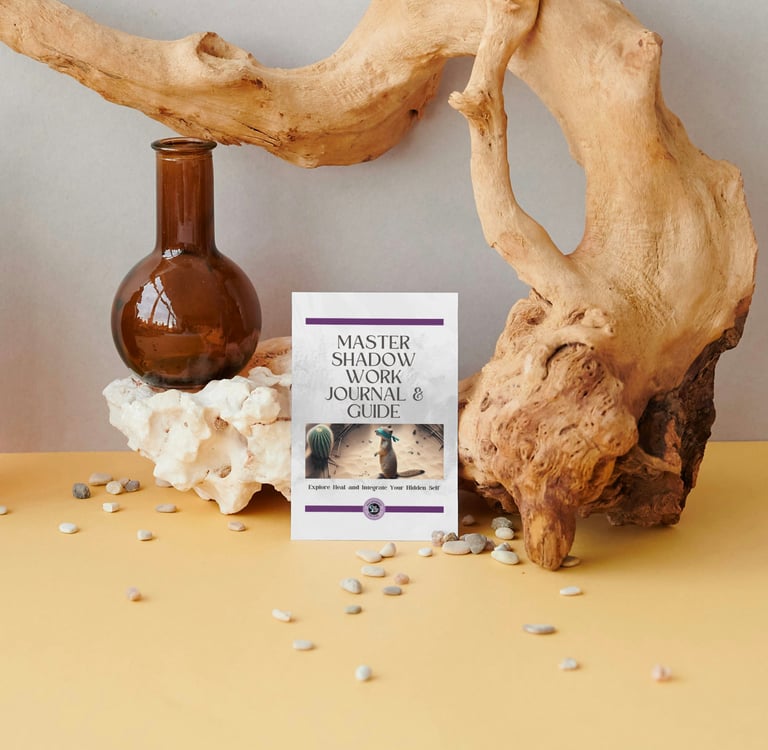
Working with a guided shadow work journal can help you move through these reflections more gently — giving you a structured way to explore self-worth, inner criticism, and emotional patterns without feeling overwhelmed.
🤍 Master Shadow Work Journal & Guide
Do you keep repeating the same self-critical thoughts, but never seem to get to the root of them?
Self-worth wounds are often layered. What looks like self-doubt on the surface may be connected to old beliefs, childhood experiences, perfectionism, people-pleasing, or a fear of not being enough.
The Master Shadow Work Journal provides guided prompts, structured reflections, and deeper exercises designed to help you uncover these hidden patterns and explore them with greater clarity and self-compassion.

🌘 Gentle Shadow Work Prompts for Self-Worth
These shadow work prompts for self-worth are designed to help you explore the beliefs and emotional patterns that may influence how you see yourself. Move slowly through them. You do not need to answer them all at once.
What Are the Best Shadow Work Prompts for Self-Worth?
The best shadow work prompts for self-worth help uncover hidden beliefs about value, acceptance, love, success, and belonging. Questions about childhood experiences, self-criticism, people-pleasing, perfectionism, emotional triggers, and the need for approval can often reveal the deeper stories that shape how you see yourself today.
Sometimes the most meaningful insights do not appear while you're writing. They emerge later through reflection, awareness, and the small shifts that happen when hidden beliefs begin coming into the light.
How Do Shadow Work Prompts Improve Self-Worth?
Shadow work prompts improve self-worth by helping you identify hidden beliefs, emotional wounds, and self-critical patterns that influence how you see yourself. As these beliefs become easier to recognize, many people develop greater self-awareness, self-compassion, and a healthier relationship with themselves. The goal is not to force positive thinking, but to understand the stories that shaped your sense of worth and decide whether they still deserve influence over your life.
Understanding Your Self-Worth Story
When did I first begin to question my worth?
What messages about my value did I receive growing up?
Were there moments when I felt I had to earn love or approval?
What experiences made me feel “not good enough”?
Who in my life influenced how I see myself today?
Many people discover that these early experiences quietly shape their adult self-image. Recognizing these patterns can feel emotional, but it also creates space for compassion toward the younger version of yourself who learned these beliefs. Many people discover that what they believed was a personal flaw was actually a survival strategy, a protective response, or a story they absorbed from their environment.
Exploring Your Inner Critic
What does my inner critic usually say to me?
When do I hear that voice the most?
Whose voice does my inner critic remind me of?
What emotions appear when I criticize myself?
What would I say to a friend who spoke about themselves this way?
These self-esteem shadow work prompts can help you notice how often your inner dialogue may be shaped by old conditioning rather than truth. The goal is not to silence your inner critic completely. It is to understand where that voice came from and whether it still deserves the authority you've given it.
Noticing Self-Worth Triggers
When do I feel most insecure about myself?
What situations make me feel like I am not enough?
How do I react when someone criticizes me?
How do I react when someone praises me?
What situations make me compare myself to others?
These moments often reveal where hidden wounds around worth are still active. Triggers are not proof that something is wrong with you. They are often invitations to explore beliefs that have been operating beneath the surface for years.
Sometimes these triggers are connected to deeper patterns like people-pleasing or perfectionism. If you recognize these tendencies, you may find additional insight in our guide to Shadow Work Prompts for People-Pleasing Patterns, which explores how the need for approval can be tied to deeper self-worth wounds.
You may also notice that some triggers are connected to perfectionism, self-sabotage, or a fear of failure. These patterns often share the same underlying question: "Am I enough as I am?"
🌗 Shadow Work Prompts for Self-Love and Compassion
Healing self-worth is not only about uncovering painful beliefs. It is also about changing the way you respond to yourself once those beliefs become visible. Many people spend years speaking to themselves with a level of criticism they would never direct toward someone they love. Self-compassion helps interrupt that pattern.
These shadow work prompts for self-love invite you to explore what it might feel like to treat yourself with the same understanding, patience, and kindness that you readily offer to others.
Can Shadow Work Help You Love Yourself?
Yes. Shadow work can support self-love by helping you understand the beliefs, experiences, and emotional wounds that contribute to self-criticism or feelings of unworthiness. As hidden patterns become visible, many people find it easier to practice self-compassion and develop a healthier, more accepting relationship with themselves.
Reconnecting With Your Inner Value
What qualities do I genuinely appreciate about myself?
When have I shown strength during difficult times?
What small acts of kindness have I offered others?
What would my younger self need to hear from me today?
What parts of myself deserve more appreciation?
Many people initially struggle with these questions. That is completely normal. If self-appreciation feels uncomfortable, notice that resistance with curiosity rather than judgment. The discomfort itself may reveal how unfamiliar self-kindness has become and where healing is still needed.
Healing Old Self-Worth Wounds
What painful experiences shaped my sense of worth?
What emotions from those experiences remain unresolved?
What did I need during those moments that I did not receive?
How might I offer that compassion to myself now?
What would healing that wound look like for me?
Shadow work invites us to sit with these memories gently and honestly. You are not forcing yourself to relive pain or reopen old wounds. You are creating space to acknowledge experiences that shaped how you learned to see yourself and what you came to believe you deserved.
🌷 Free Shadow Work Starter Kit
Do you want to start healing, but you're not sure where to begin?
Self-worth wounds can feel overwhelming when you're trying to untangle years of self-criticism, people-pleasing, or feeling like you're never enough.
Our Free Shadow Work Starter Kit offers gentle prompts, beginner-friendly exercises, and supportive guidance to help you explore these patterns with greater awareness and self-compassion.


🌓 Self-Esteem Shadow Work Prompts for Hidden Patterns
Sometimes low self-worth expresses itself through behaviors we barely notice. These prompts help uncover subtle patterns that may be protecting deeper insecurities.
How Does Low Self-Worth Show Up in Everyday Life?
Low self-worth often appears through patterns such as perfectionism, people-pleasing, fear of failure, difficulty setting boundaries, self-criticism, overachievement, or constantly seeking approval from others. These behaviors are often attempts to avoid rejection, criticism, or feelings of inadequacy rather than reflections of a person's true value.
Perfectionism and Self-Worth
Do I feel like I must be perfect to be accepted?
What happens inside me when I make mistakes?
What am I afraid others will think if I fail?
Who taught me that mistakes were unacceptable?
What would it feel like to allow myself to be imperfect?
Perfectionism is often rooted in the belief that mistakes make us less worthy of love, acceptance, success, or belonging. Over time, the pressure to "get everything right" can become exhausting because self-worth becomes tied to performance rather than self-acceptance.
If this pattern resonates with you, our guide to Shadow Work Prompts for Overcoming Perfectionism explores how these beliefs develop and how they can soften over time.
People-Pleasing and Worthiness
When do I say yes even when I want to say no?
What fears appear when I consider disappointing someone?
Do I believe my value depends on helping others?
What would change if I believed my needs mattered too?
What boundaries might support my self-respect?
People-pleasing often develops as a way to secure love, acceptance, approval, or emotional safety. Beneath the habit of keeping everyone else happy, there is often a deeper fear of rejection, conflict, abandonment, or not being valued. Recognizing this pattern is not about blaming yourself. It is about understanding the emotional needs that created it and learning that your worth does not depend on meeting everyone else's expectations.
As these hidden patterns become easier to recognize, many people begin noticing emotions they have been carrying for years beneath the surface. This is often where deeper healing begins.
🤍 Master Shadow Work Journal & Guide
Do you keep repeating the same patterns, even when you know they're hurting you?
People-pleasing, perfectionism, self-criticism, and the need for approval often begin much deeper than we realize. What looks like a habit on the surface may actually be a hidden self-worth wound asking to be understood.
The Master Shadow Work Journal helps you uncover these patterns through guided prompts, deeper reflections, and structured exercises designed to build self-awareness, self-trust, and lasting emotional healing.
🌕 A Gentle Reminder When Self-Worth Work Feels Emotional
Exploring self-worth can bring up strong feelings. Many people expect journaling to reveal thoughts. What often surprises them is how many emotions are connected to those thoughts.
Memories, grief, anger, sadness, shame, disappointment, or loneliness may surface as you begin exploring the experiences that shaped how you see yourself. This is a natural part of emotional healing.
Why Does Shadow Work for Self-Worth Feel So Emotional?
Shadow work for self-worth can feel emotional because it often explores experiences, beliefs, and wounds that influenced how a person learned to see themselves. As these memories and emotions come into awareness, feelings such as sadness, grief, anger, shame, or vulnerability may surface. While uncomfortable, this awareness is often an important part of the healing process.
Shadow work invites us to acknowledge these feelings rather than immediately push them away, explain them, or judge them. Emotions are not proof that you are doing something wrong. They are often signs that something meaningful is asking for your attention.
If journaling begins to feel overwhelming, it is okay to pause. Take a few slow breaths. Step outside. Drink water. Move your body. Return to the present moment before continuing. Healing does not require pushing yourself beyond your emotional capacity.
This work is not meant to be rushed. Self-worth wounds are often built over years, which means healing rarely happens all at once. Every moment of awareness, compassion, and honesty is part of the process. You deserve patience, kindness, and understanding from yourself while you move through it.
🌷 Free Shadow Work Starter Kit
Worried about opening something you're not ready for?
Shadow work does not have to begin with your deepest wounds. Often, the most meaningful healing starts with gentle awareness, simple reflections, and small moments of honesty.
Our Free Shadow Work Starter Kit offers beginner-friendly prompts and supportive exercises designed to help you explore shadow work at a pace that feels safe and manageable.
🔮 Creating a Supportive Shadow Work Journaling Practice
Working with shadow work prompts for self-worth becomes even more meaningful when you create a journaling practice that feels safe, supportive, and consistent.
Self-worth wounds often involve self-criticism, pressure, perfectionism, or the belief that you need to "do things right." Creating a gentle journaling ritual can help remind you that this work is not about performance. It is about honest self-exploration.
How Do You Practice Shadow Work Journaling for Self-Worth?
Shadow work journaling for self-worth begins by creating a safe space to reflect on thoughts, emotions, triggers, beliefs, and experiences connected to self-esteem and self-value. Many people find it helpful to journal consistently, answer prompts honestly, and approach their reflections with curiosity rather than judgment. The goal is not to find perfect answers but to better understand yourself.
Small rituals can help create a sense of safety and presence before you begin. You might consider:
Lighting a candle before journaling
Choosing a quiet, calm space
Writing without editing or censoring your thoughts
Allowing emotions to move through you naturally
Ending your session with a grounding activity
Many people also find it helpful to have structure when exploring self-worth. Self-worth wounds can be subtle. Sometimes they appear as thoughts. Sometimes they appear as habits, emotional reactions, relationship patterns, or an inner voice that has been present for so long it feels like the truth. A structured journaling approach can make these patterns easier to recognize and explore.
🖤 Master Shadow Work Journal
Do your reflections often leave you with more questions than answers?
Self-worth wounds can be difficult to untangle because they often appear through hidden beliefs, emotional triggers, perfectionism, people-pleasing, and years of self-criticism.
The Master Shadow Work Journal provides guided prompts, structured exercises, and deeper reflections designed to help you explore these patterns with greater clarity, self-awareness, and self-compassion.
👉 Explore the Master Shadow Work Journal
No journaling session will heal every wound overnight. But each honest reflection creates an opportunity to understand yourself more deeply and challenge beliefs that may no longer belong to you.
🌿 Returning to Your Natural Worth
Many people begin shadow work believing they need to learn how to feel worthy. But often the deeper work is understanding why they stopped feeling worthy in the first place. Self-worth wounds rarely appear out of nowhere. They are often built through experiences, relationships, expectations, criticism, rejection, comparison, or moments that quietly taught us something about ourselves.
Sometimes the lesson becomes: "I need to work harder to be accepted."
Sometimes it becomes: "My needs are less important than everyone else's."
Sometimes it becomes: "If I make a mistake, people will stop valuing me."
Over time, these beliefs can feel so familiar that they begin to sound like the truth.
Shadow work creates an opportunity to question those stories. Not to replace them with forced positivity. Not to convince yourself that everything is perfect. But to ask a simple and powerful question: "Is this belief actually mine, or is it something I learned?"
That question can change everything. Because many of the beliefs that shape self-worth were created by experiences that happened years ago. They may explain why you feel the way you do, but they do not have to define how you see yourself forever.
Every reflection, journal entry, emotional trigger, and moment of awareness helps bring those patterns into the light. And once you can see them clearly, you can begin deciding which beliefs deserve to come with you and which ones are ready to be left behind.
You can also explore Sisters Creation, where we share shadow work tools, self-love resources, guided journals, and supportive practices designed to help you build a healthier relationship with yourself.
Self-worth is not created the moment you finally become good enough. More often, it returns when you stop measuring your value through the beliefs that taught you that you weren't.
With love,
Caitlin & Gerly,
Soul Sisters Tarot
❓ Frequently Asked Questions About Shadow Work Journal Prompts for Self-Esteem and Self-Worth
What are shadow work journal prompts for self-esteem?
Shadow work journal prompts for self-esteem are reflective questions designed to help uncover hidden beliefs, emotional wounds, and unconscious patterns that influence how you see yourself. Rather than focusing only on confidence, these prompts encourage deeper exploration of self-doubt, criticism, perfectionism, people-pleasing, and the experiences that may have shaped your sense of worth.
How can shadow work prompts help improve self-worth?
Shadow work prompts help improve self-worth by bringing hidden beliefs and emotional patterns into awareness. Many feelings of inadequacy develop from experiences that were never fully examined or questioned. Journaling creates an opportunity to understand where these beliefs came from and whether they still reflect the truth about who you are today.
What are some powerful shadow work prompts for self-worth?
Powerful shadow work prompts for self-worth often explore childhood experiences, self-criticism, emotional triggers, people-pleasing, perfectionism, and the need for approval. Questions such as "When did I first begin to question my worth?" or "What does my inner critic want me to believe?" can reveal deeper patterns that influence self-esteem and self-perception.
How do I start shadow work journaling for self-esteem?
A simple way to begin is by choosing one reflection question and answering it honestly without worrying about writing the "right" response. Start with topics such as self-criticism, approval-seeking, insecurities, or moments when you feel not good enough. The goal is not perfect answers but greater awareness of the beliefs and emotions that shape your self-worth.
Why do shadow work prompts about self-worth feel emotional?
Shadow work prompts about self-worth often explore experiences connected to rejection, criticism, comparison, emotional neglect, or feelings of not being enough. Because these experiences helped shape how you see yourself, journaling about them can bring emotions such as sadness, grief, shame, anger, or vulnerability to the surface. This emotional awareness is often part of the healing process.
How often should I use shadow work prompts for self-esteem?
There is no perfect schedule. Some people journal several times a week, while others prefer slower reflection. Consistency is often more important than frequency. Giving yourself time to process your responses between journaling sessions can lead to deeper insight and emotional understanding.
Can shadow work help with low self-esteem?
Yes. Shadow work can help with low self-esteem by uncovering the beliefs, experiences, and emotional wounds that contribute to negative self-perception. As these patterns become visible, many people find it easier to challenge self-critical thoughts, develop self-compassion, and build a healthier relationship with themselves.
What are good shadow work questions for self-worth?
Good shadow work questions for self-worth explore where feelings of inadequacy, shame, comparison, or self-doubt originated. Questions about childhood experiences, approval-seeking, perfectionism, criticism, boundaries, and self-acceptance often provide meaningful insight into how self-worth beliefs developed.
Is shadow work journaling effective for building confidence?
Shadow work journaling can support confidence by helping you understand the beliefs and fears that undermine it. Many confidence struggles are connected to hidden fears of rejection, failure, criticism, or not being enough. As these patterns become easier to recognize, confidence often grows from greater self-understanding rather than external validation.
What should I do if shadow work prompts trigger strong emotions?
If shadow work prompts bring up strong emotions, it is important to slow down and practice self-care. Take a break, step outside, focus on grounding activities, or return to your reflections another day. Shadow work is most effective when approached with patience and emotional safety rather than pressure or urgency.
Why Do I Feel Like I'm Never Good Enough?
Feeling like you are never good enough is often connected to beliefs that developed through criticism, comparison, rejection, unrealistic expectations, or experiences where love and approval felt conditional. Over time, these experiences can create an internal standard that is impossible to satisfy. Shadow work helps explore where these beliefs originated and whether they still deserve influence over how you see yourself today.
Can Childhood Experiences Affect Self-Worth?
Yes. Many self-worth beliefs begin during childhood. Experiences such as criticism, emotional neglect, bullying, unrealistic expectations, parentification, or feeling responsible for other people's emotions can shape how a person learns to view themselves. Shadow work helps bring awareness to these early influences and how they may continue affecting self-worth in adulthood.
Why Do I Struggle to Accept Compliments?
Difficulty accepting compliments is often connected to underlying self-worth beliefs. If part of you believes you are not good enough, praise may feel uncomfortable, exaggerated, or undeserved. Shadow work can help uncover the beliefs that make positive feedback difficult to receive and support a more balanced view of your strengths and accomplishments.
What Is the Difference Between Self-Worth and Self-Esteem?
Self-worth and self-esteem are closely related, but they are not exactly the same. Self-esteem is often connected to how you evaluate your abilities, achievements, or performance. Self-worth refers to the deeper belief that you have value regardless of success, productivity, appearance, or external validation.
Someone may have strong self-esteem in certain areas of life while still struggling with deeper feelings of unworthiness. Shadow work often focuses on self-worth because it explores the underlying beliefs that shape how a person sees themselves.
Soul Sisters Tarot
A Soft Place to Grow.
💌 SOUL SISTERS WEEKLY
A thoughtful Sunday letter with tarot reflections, moon wisdom, self-love, and gentle encouragement.
© 2026. All rights reserved.
Inspirational Coaching OÜ