🍂 READY TO UNDERSTAND YOURSELF ON A DEEPER LEVEL? → EXPLORE THE FOOL'S JOURNEY 💫
A 22-week self-awareness journey with your own personal spiritual guide. Get 20% off with code HUNTER20 ✨



Shadow Work Journal:
How to Use It, Benefits &
The Best Journals for Deep Healing
It doesn’t always start with a clear question.
Sometimes it begins as a feeling.
You notice yourself reacting more strongly than you want to.
The same relationship patterns keep repeating.
Certain situations trigger emotions that seem bigger than the moment itself.
And no matter how much you think about it, you still don't fully understand why.
And at some point, you come across the idea of a shadow work journal.
Maybe you've already tried journaling before. Maybe you've reflected on your patterns, listened to podcasts, watched videos, or read self-help books. But something still feels unfinished, as though you're circling the same questions without fully reaching the root of them.
You might be wondering:
What is a shadow work journal?
Can a shadow work journal actually help you change anything?
And how do you even begin without feeling overwhelmed?
If you’ve been searching for a way to understand yourself more deeply — not just on the surface, but at the root — shadow work journaling can become one of the most powerful tools in your inner work practice.
What is a shadow work journal?
A shadow work journal is a guided journal designed to help you explore emotional triggers, recurring patterns, fears, beliefs, and hidden parts of yourself. Through structured prompts and reflection exercises, it helps you understand why you think, feel, and react the way you do.
In this guide, you’ll learn:
• what a shadow work journal really is
• how shadow work journaling helps uncover emotional patterns
• whether a shadow work journal is right for you
• what to look for in a journal that actually supports healing
• and how to begin in a way that feels safe and supportive
🖤 Start Your Shadow Work Journey
If you're ready to move beyond simply noticing your patterns and start understanding where they come from:


🧠 What Is a Shadow Work Journal?
A shadow work journal is a guided space designed to help you explore the parts of yourself that are often hidden, suppressed, or difficult to face.
What is a shadow work journal used for?
A shadow work journal is used to explore emotional triggers, recurring patterns, fears, beliefs, and unconscious reactions. It helps you understand why certain experiences affect you so strongly and supports deeper self-awareness through guided reflection.
These "shadow" aspects often show up in everyday life, even when you don't recognize them at first. They can include:
• emotional triggers
• fears and insecurities
• past experiences that still affect you
• patterns in relationships
• self-sabotaging behaviors
You may notice these patterns when you keep having the same argument, feel unexpectedly emotional in certain situations, struggle to set boundaries, or find yourself reacting in ways that don't fully make sense. Shadow work journaling helps you slow down and explore what may be happening beneath the surface.
Unlike regular journaling, which often focuses on daily thoughts or events, a shadow work journal is more intentional.
It gently guides you to look beneath the surface.
Instead of asking “What happened today?”
It asks:
• Why did this affect me so deeply?
• Where have I felt this before?
• What belief might be driving this reaction?
What do you write in a shadow work journal?
People often write about emotional triggers, recurring relationship patterns, fears, insecurities, difficult experiences, limiting beliefs, and situations that create strong emotional reactions. The goal is not simply to describe what happened, but to understand what it reveals about your inner world.
This is why many people specifically look for journals for shadow work rather than using a blank notebook.
Because when you're exploring deeper emotional patterns, structure can make the difference between simply venting and genuinely understanding yourself.
Without guidance, it’s easy to:
• stay on the surface
• avoid difficult insights
• or feel overwhelmed without knowing how to process what comes up
A well-designed shadow work journal helps you move beyond awareness and into understanding by providing:
• carefully structured prompts
• a clear progression from awareness to understanding
• space to reflect safely and at your own pace
And if you’re using a shadow work journal PDF, you also have the flexibility to:
• revisit exercises when patterns resurface
• print and work through sections gradually
• build a personal journaling routine without pressure or time limits
At its core, shadow work journaling is not about fixing yourself.
It's about understanding the thoughts, emotions, beliefs, and protective patterns that may have been influencing your life for years without your awareness.
When those patterns become visible, you gain more clarity, more choice, and a deeper understanding of yourself.
If you're new to this practice and want to understand the foundations of shadow work before diving deeper, you can explore our full shadow work guide here.
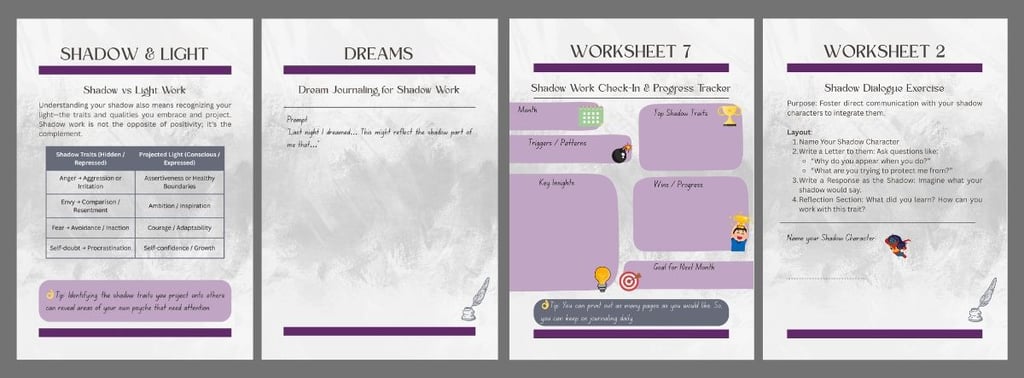

🌙 How Shadow Work Journaling Helps You Heal
Shadow work journaling is not just about writing your thoughts down.
It’s about learning to understand why you feel, react, and respond the way you do.
How does a shadow work journal help you heal?
A shadow work journal helps you heal by bringing unconscious thoughts, beliefs, emotions, and patterns into awareness. As you begin to understand what is driving your reactions, you gain more choice in how you respond and create space for lasting change.
Many of the patterns we experience — like overreacting to small things, putting others first, or feeling triggered in certain situations — don’t come from the present moment alone.
They are often rooted in:
• past experiences
• learned beliefs
• emotional memories
• and ways we adapted to feel safe
This is why you can know something logically and still struggle emotionally. You may understand that a situation is not dangerous, yet still feel anxious, rejected, guilty, or overwhelmed. Shadow work journaling helps bridge the gap between what you know and what you still carry emotionally.
A shadow work journal helps you slow this process down.
Can shadow work journaling help with emotional triggers?
Yes. Shadow work journaling helps you identify what triggered you, how you reacted, and what deeper belief or emotional wound may be connected to the experience. Over time, this awareness can help reduce automatic reactions and create more emotional clarity.
Instead of reacting automatically, you begin to notice:
• what triggered you
• how your body responded
• what thoughts came up
• and what deeper belief might be underneath it
Over time, this creates a shift that many people describe as feeling less controlled by their emotions and more connected to themselves.
You move from:
• reacting without awareness → responding with understanding
• feeling overwhelmed → recognizing patterns
• judging yourself → becoming more compassionate toward your own experience
You may already recognize some of these experiences in your own life, even if you've never thought of them as shadow work before.
This is especially important when working through patterns like:
• emotional triggers
• people-pleasing
• self-sabotage
• repeating relationship dynamics
For example, you might recognize yourself in patterns like
👉 Why do you feel easily triggered?
👉 Why do you tend to put others first?
👉 Why do you keep repeating the same relationship cycles?
These are not random experiences.
Why do the same emotional patterns keep repeating?
Repeating emotional patterns often have deeper roots than the situation happening in the moment. They can be connected to old beliefs, emotional wounds, fears, or protective responses that continue influencing how you react. Shadow work journaling helps bring these patterns into awareness so they can be understood more clearly.
They are connected to deeper emotional patterns that can be explored and understood through shadow work journaling.
Without structure, these patterns can feel confusing and difficult to change.
But with guided journals for shadow work, you’re not just reflecting —
You’re actively working through the layers behind your reactions.
And over time, something begins to change.
Not overnight.
Not all at once.
But gradually, you start to:
• feel less controlled by your reactions
• understand yourself more clearly
• and make different choices in situations that once felt automatic
This is where real healing begins.
Not in forcing yourself to change, but in understanding the patterns, beliefs, and emotional responses that have been shaping your experience beneath the surface.
Awareness comes first. Change follows.
✨ If you're already recognizing yourself in these patterns, this is exactly the kind of reflection and self-discovery the journal is designed to support.
📊 Benefits of Using Journals for Shadow Work
When people search for journals for shadow work, they’re often looking for more than just a place to write.
They’re looking for a way to understand themselves more deeply — and to finally make sense of patterns that feel confusing or repetitive.
They may be asking themselves:
Why do I keep reacting this way?
Why does the same situation keep happening?
Why do I understand the problem but still struggle to change it?
A well-structured shadow work journal supports this process in ways that unstructured journaling often cannot.
What are the benefits of using a shadow work journal?
A shadow work journal helps you understand emotional triggers, recurring patterns, limiting beliefs, and unconscious reactions. Many people use journals for shadow work to increase self-awareness, process emotions more effectively, and gain deeper insight into why certain experiences keep repeating.
Here are some of the most meaningful benefits:
🌿 Deeper Self-Awareness
One of the biggest shifts that happens through shadow work journaling is awareness.
You begin to notice:
• what triggers you
• how you respond
• what thoughts and beliefs are underneath
Instead of reacting automatically, you start seeing the patterns behind your reactions. This can be the first time you realize that what feels like a random reaction may actually be part of a much deeper pattern.
🌙 Emotional Clarity
Many emotions feel overwhelming because they are unclear.
Through guided reflection, a shadow work journal helps you:
• name what you’re feeling
• understand where it comes from
• process it in a safe, structured way
This can make emotions feel less overwhelming because you are no longer trying to manage something you don't understand.
🔄 Understanding Repeating Patterns
If you’ve ever felt like:
• the same situations keep happening
• you react the same way again and again
• certain relationship dynamics repeat
Shadow work journaling helps you connect the dots.
Why do the same patterns keep repeating?
Many repeating patterns are connected to unconscious beliefs, emotional wounds, fears, or protective behaviors. Journals for shadow work help you recognize these connections so you can understand what keeps driving the pattern beneath the surface.
🧠 Reduced Emotional Reactivity
As you begin to understand what is happening beneath your reactions, something important starts to shift.
You create space between:
• what you feel
• how you respond
This leads to:
• fewer impulsive reactions
• more grounded responses
• greater emotional control
🌱 Healing of Inner Child Patterns
Many of our strongest emotional reactions are connected to experiences and needs that were formed much earlier in life.
A guided shadow work journal helps you explore:
• childhood patterns
• unmet needs
• emotional memories
🚀 Breaking Cycles of Self-Sabotage
Instead of asking, "What's wrong with me?" you begin asking, "What is this behavior trying to protect me from?"
Shadow work journaling helps you:
• recognize self-sabotaging behaviors
• understand why they exist
• begin to respond differently over time
🧩 Why Structure Matters in Journals for Shadow Work
This is why many people find that journals for shadow work help them go deeper than a blank notebook ever could.
Without structure, it’s easy to:
• stay on the surface
• avoid deeper insights
• feel overwhelmed
A structured journal gives you:
• clear prompts
• direction
• a safe progression
Are journals for shadow work better than regular journaling?
For many people, yes. While regular journaling can help with self-expression, journals for shadow work provide structured prompts and reflection exercises designed to uncover deeper emotional patterns, beliefs, and unconscious behaviors.
✍️ Shadow Work Journal Prompts (Try These)
If you’re new to shadow work journaling, you don’t need to start with something complicated.
Even a few honest questions can begin to reveal patterns you may not have noticed before.
What are shadow work journal prompts?
Shadow work journal prompts are guided questions designed to help you explore emotional triggers, fears, beliefs, relationship patterns, and unconscious behaviors. They encourage deeper self-reflection by helping you look beneath surface thoughts and understand the emotions driving your reactions.
The goal is not to find perfect answers. The goal is to become curious about your reactions, emotions, and experiences. Often, the most important insights come from the questions that make you pause for a moment before answering.
Here are a few beginner-friendly shadow work journal prompts to help you start exploring your inner world:
• When do I feel most emotionally triggered, and what usually happens in those moments?
• What situations make me feel anxious, rejected, or not good enough?
• Do I tend to put others first? Why does that feel safer?
• What am I afraid would happen if I expressed my true feelings?
• What patterns keep repeating in my relationships or daily life?
• When I feel overwhelmed, what am I actually needing in that moment?
• What belief about myself might be underneath this reaction?
How many shadow work journal prompts should you do at once?
One prompt is often enough. Shadow work is less about answering lots of questions and more about giving yourself time to reflect honestly. Many people gain more insight from exploring one prompt deeply than from rushing through several at once.
You don’t need perfect answers.
You don’t need to go deep all at once.
Even noticing small patterns is enough to begin.
But this is also where many people get stuck.
You ask a few questions.
You notice a pattern.
You have a moment where something suddenly makes sense.
And then you wonder:
"What do I do with this now?"
That’s completely normal.
Shadow work can feel unclear without structure.
Why do shadow work journal prompts sometimes feel difficult?
Shadow work prompts can feel difficult because they explore emotions, beliefs, and experiences that may have been avoided or unconscious for a long time. Feeling challenged does not mean you're doing it wrong. It often means you're exploring something meaningful.
This is where many people discover that guidance matters just as much as reflection.
🖤 If you want a guided process instead of guessing what to ask next…
Inside, you’ll find:
• 100+ structured shadow work prompts
• guided exercises for emotional patterns and triggers
• step-by-step reflection so you don’t feel lost
• a clear path from awareness → understanding → change
A structured shadow work journal helps you move beyond isolated insights and begin connecting the deeper patterns behind them.
Instead of asking isolated questions, you begin to follow a process.
That process is what allows deeper insights to unfold — safely and gradually.
And that’s where shadow work journaling becomes truly transformative.
🧩 What to Look for in a Good Shadow Work Journal
Not all shadow work journals offer the same level of support.
And when you’re working with deeper emotional patterns, the structure of the journal matters more than most people expect.
A well-designed shadow work journal should not just give you space to write.
It should guide you.
Many people start with a blank notebook and quickly realize they keep writing about the same issues without gaining much clarity. A well-designed shadow work journal helps you move beyond repeating your thoughts and begin understanding what is happening underneath them.
What should a good shadow work journal include?
A good shadow work journal should include guided prompts, a clear structure, emotional safety practices, reflection exercises, and tools for identifying patterns and triggers. The goal is not simply to write about your experiences but to understand them more deeply.
🌿 Guided Prompts (Not Just Blank Pages)
A blank notebook can help you vent, process, or organize your thoughts.
But shadow work is not only about expressing what happened. It is about understanding why it affected you so deeply.
It requires direction.
Look for a journal that includes:
• thoughtfully designed prompts
• questions that go beyond surface-level reflection
• guidance that helps you explore emotions safely
Can you do shadow work with a regular journal?
Yes, but many people find it harder to go deeper without guidance. A shadow work journal provides structured prompts that help uncover emotional patterns, beliefs, and triggers that may otherwise remain hidden.
This is what allows you to move from “I feel something” → “I understand why I feel this way.”
🧠 Clear Structure and Progression
Without structure, it’s easy to:
• jump between topics
• avoid deeper insights
• feel overwhelmed
A strong journal should guide you step by step.
From:
• awareness
→ to understanding
→ to integration
Without this progression, it is easy to become aware of a problem without knowing how to work with it.
This creates a sense of safety and direction, especially if you’re new to shadow work.
🌙 Emotional Safety and Grounding
Shadow work can bring up intense emotions. Some people assume shadow work should feel intense all the time. In reality, the most effective shadow work often happens when you feel safe enough to be honest with yourself.
That’s not a problem, but it needs to be supported.
A good journal should include:
• grounding or reflection exercises
• space to pause and process
• a pace that doesn’t force you too deep too fast
This is especially important when working through triggers, past experiences, or inner child patterns.
🔄 Tools for Understanding Patterns
The most valuable journals for shadow work don’t just ask questions.
They help you see patterns. Because insight rarely comes from a single answer. It usually comes from noticing what keeps repeating.
Look for tools like:
• trigger mapping
• belief exploration
• relationship pattern reflection
• emotional tracking
These help you connect the dots between what you feel and why it keeps happening.
💻 Format That Fits Your Routine
Many people prefer a shadow work journal PDF because it offers flexibility.
You can:
• print the pages and write by hand
• move at your own pace without pressure
• return to specific sections whenever needed
The best shadow work journal is not necessarily the most beautiful or the most complicated. It's the one that feels supportive enough that you keep returning to it when life brings up new patterns to explore.
Is a shadow work journal worth it?
For many people, yes. A structured shadow work journal can provide guidance, clarity, and a consistent process for exploring emotional patterns. Instead of wondering what to reflect on next, you have a framework that helps you go deeper over time.
🖤 If you're looking for a shadow work journal that combines structure, depth, emotional safety, and practical guidance:
🏆 Best Shadow Work Journal for Deep Healing
If you've been reflecting on your emotions and noticing the same triggers, fears, or relationship patterns showing up again and again, you may have already discovered something important:
Awareness alone does not always create change.
You can understand your patterns, and still find yourself reacting the same way.
This is one of the most frustrating parts of personal growth. You know what's happening. You can often explain it logically. But in the moment, the pattern still takes over.
That's where deeper reflection and consistent practice become important.
And this is where structured inner work becomes important.
What is the best shadow work journal for beginners?
The best shadow work journal for beginners provides guided prompts, clear structure, emotional safety, and step-by-step reflection exercises. It should help you explore patterns and triggers without feeling overwhelmed or lost.
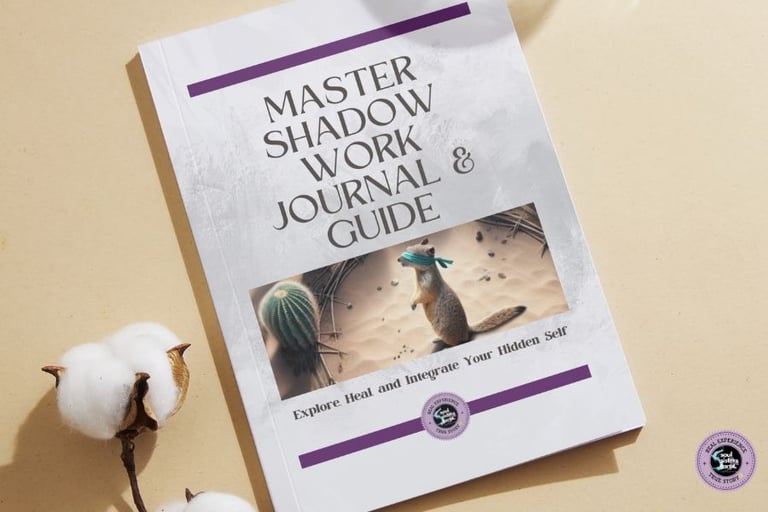

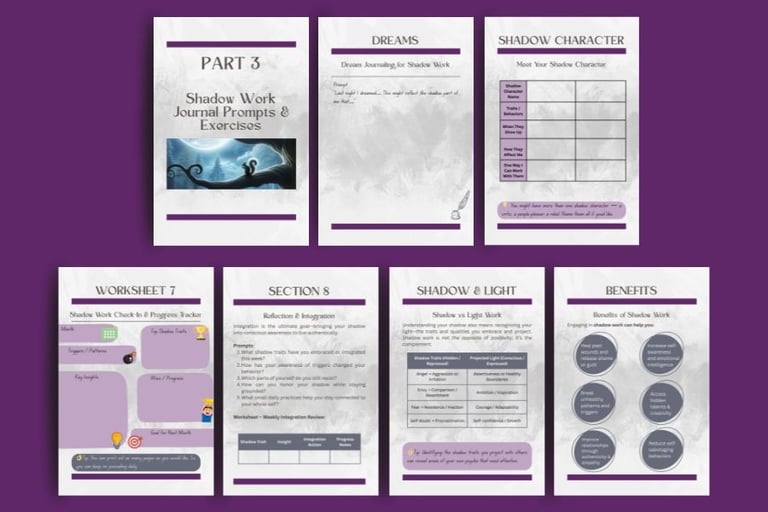
🖤 Master Shadow Work Journal & Guide
The Master Shadow Work Journal & Guide was created to help you move beyond simply noticing patterns and begin understanding where they come from, why they repeat, and how to work with them more consciously.
What makes a good shadow work journal?
A good shadow work journal combines guided prompts, structured reflection, pattern exploration, and emotional safety. The most effective journals help you move beyond awareness and support a deeper understanding of your emotional responses and behaviors.
Instead of trying to “fix” yourself, this journal helps you understand:
• why you react the way you do
• what emotional triggers are connected to
• how past experiences influence your present
• how to reconnect with your needs and boundaries
• how to shift patterns over time, not just in the moment
✨ What Makes This Shadow Work Journal Different
Rather than giving you random prompts to answer, the journal is designed to help you build a clearer picture of how your thoughts, emotions, triggers, and beliefs connect.
• 235 pages of structured inner work and reflection
• 100+ guided shadow work prompts
• worksheets for triggers, patterns, and beliefs
• inner child exploration and emotional mapping tools
• step-by-step progression so you don’t feel lost
• designed for long-term growth, not quick fixes
This is not just a collection of prompts.
It’s a guided process that helps you move from:
• awareness → understanding → real change
💫 What You’ll Gain From This Journal
Over time, many people notice that they are no longer just reacting to life. They begin understanding themselves in a way that makes healthier choices feel more natural.
• deeper self-awareness and emotional clarity
• understanding of hidden patterns and triggers
• healing of the inner child and emotional wounds
• stronger self-compassion and self-trust
• reduced self-sabotage and emotional reactivity
• greater confidence, clarity, and authenticity
🧠 WHO THIS IS FOR
You do not need to be experienced with shadow work to use this journal.
In fact, many people begin because they are simply tired of repeating the same emotional patterns without understanding why.
This journal is a good fit if you:
• feel stuck in repeating emotional or relationship patterns
• want to understand yourself on a deeper level
• are ready to explore your inner world in a structured way
• prefer guidance instead of guessing what to reflect on
• want a tool you can return to over time
🖤 Start Your Shadow Work Journey Today
Whether you're completely new to shadow work or ready to go deeper, this shadow work journal is designed to support you every step of the way.
You don’t need to go through everything at once.
You can move at your own pace, choose what feels right, and return to the journal whenever patterns come up again.
That's where the real transformation happens.
Not through one breakthrough moment, but through returning to yourself again and again with honesty, curiosity, and compassion.
💻 Shadow Work Journal PDF – Digital vs Printable
Many people searching for a shadow work journal are specifically looking for something they can start using right away.
This is why a shadow work journal PDF can be a practical and flexible option.
What is a shadow work journal PDF?
A shadow work journal PDF is a downloadable digital journal that contains guided prompts, reflection exercises, and worksheets designed to help you explore emotional patterns and increase self-awareness. Many people choose PDF journals because they can be used immediately and printed as needed.
Instead of waiting or overthinking where to begin, you can simply download the journal and start when you feel ready.
For many people, getting started is actually the hardest part. Having immediate access to a guided journal removes some of that friction and makes it easier to begin while the motivation is still there.
🌿 Why Many People Choose a Shadow Work Journal PDF
A printable format allows you to:
• begin immediately, without delays
• print only the pages you need
• work through the journal at your own pace
• revisit specific sections when patterns resurface
Are printable shadow work journals effective?
Yes. Printable shadow work journals can be just as effective as physical journals because the value comes from the reflection process itself. Many people prefer printable formats because they can revisit exercises, reprint pages, and work through the material at their own pace.
This makes the process feel more personal, flexible, and easier to fit into your own pace and routine.
🖊️ Printable vs Traditional Journals
A traditional notebook can be helpful for general reflection.
But when it comes to shadow work, structure is often what makes the biggest difference.
The format matters less than the guidance inside it. Whether you use a printable PDF, a digital file, or a physical journal, the most important thing is having prompts and exercises that help you explore your patterns in a meaningful way.
Is a shadow work journal PDF better than a notebook?
Not necessarily. A notebook can work well if you already know what to explore. However, many people find that a shadow work journal PDF provides more support because it includes structured prompts, worksheets, and exercises that guide deeper reflection.
With a guided shadow work journal PDF, you’re not just writing freely:
You’re following a thoughtful process designed to support deeper understanding.
This is one reason many people choose guided shadow work journal PDFs. They provide a clear place to begin and a structured path to return to whenever new patterns emerge.


⚠️ Common Mistakes When Starting Shadow Work Journaling
Shadow work journaling can be a powerful tool.
But without the right approach, it can also feel confusing, overwhelming, or even discouraging.
Many people start with good intentions — and then stop, not because it doesn’t work, but because the process feels unclear.
Some people assume they are doing shadow work incorrectly when they feel uncomfortable, emotional, or unsure of what to write next. In reality, these experiences are often a normal part of the process.
What are common shadow work journaling mistakes?
Common shadow work journaling mistakes include going too deep too quickly, judging yourself instead of observing your experiences, expecting immediate results, being inconsistent, and trying to do shadow work without enough structure or support.
Here are some of the most common mistakes to be aware of:
🌑 Going Too Deep Too Fast
It’s natural to want quick answers.
But diving into heavy emotions too quickly can feel overwhelming.
Shadow work is not about forcing breakthroughs; it’s about building awareness gradually.
• moving too fast can lead to emotional overload
• it can make you avoid the practice altogether
• it creates pressure instead of safety
A slower, more consistent approach is far more effective. The goal is not to uncover everything at once. The goal is to build enough self-awareness and emotional safety that deeper insights can emerge naturally over time.
🧠 Judging Yourself Instead of Observing
One of the biggest blocks in shadow work is self-judgment.
Instead of exploring what comes up, many people think:
• “Why am I like this?”
• “This shouldn’t still affect me.”
• “I should be past this already.”
This shuts the process down.
Shadow work journaling is not about being perfect.
It’s about being honest. Curiosity creates insight. Judgment usually shuts it down.
Can you do too much shadow work at once?
Yes. Trying to process too much too quickly can lead to emotional overwhelm and make it harder to stay consistent. Shadow work is usually more effective when approached gradually and at a pace that feels manageable.
🔄 Being Inconsistent
Doing a few prompts once in a while can bring awareness.
But real change comes from returning to the process.
• patterns don’t reveal themselves all at once
• deeper insights unfold over time
• consistency builds emotional understanding
Often, the most important patterns only become visible after you've reflected on them more than once.
Even a few minutes regularly can be more powerful than doing everything at once.
🧩 Not Having Enough Structure
This is one of the most common reasons people stop.
Without guidance, it’s easy to:
• stay on the surface
• repeat the same thoughts
• avoid deeper reflection
• feel lost in the process
This is why many people look specifically for journals for shadow work rather than using a blank notebook.
Structure doesn’t limit you; it supports you. It helps you move beyond asking random questions and begin following a process that reveals deeper connections over time.
💔 Expecting Immediate Change
Shadow work is not a quick fix.
You might understand a pattern today and still experience it again tomorrow.
That doesn’t mean it’s not working.
• awareness comes first
• change follows over time
• repetition is part of the process
Many people notice understanding before they notice transformation. That understanding is often the first sign that the work is already beginning to have an effect.
This is not failure.
It’s how real transformation happens.
Why does shadow work journaling sometimes feel difficult?
Shadow work journaling can feel difficult because it encourages you to explore emotions, beliefs, and patterns that may have been hidden or avoided for a long time. Feeling challenged does not mean you're failing. It often means you're becoming aware of something important.
🖤 If you want a process that helps you go deeper without feeling lost, rushed, or overwhelmed:
⚖️ Shadow Work Journal vs Regular Journaling
At first, it might seem like any notebook could work for shadow work.
And for some people, it can. But many people discover that they keep writing about the same frustrations, worries, or situations without gaining much new insight. That's often where a more structured shadow work approach becomes helpful.
And while general journaling can be helpful for expressing thoughts and emotions, it doesn’t always lead to deeper understanding on its own.
The difference is not just in writing; it’s in what the writing is designed to do.
What is the difference between a shadow work journal and regular journaling?
Regular journaling is often used to process thoughts, emotions, and daily experiences. A shadow work journal is designed to help you explore deeper emotional patterns, triggers, beliefs, and unconscious behaviors through guided reflection and structured prompts.
🧠 Regular Journaling
Regular journaling is often:
• open-ended and unstructured
• focused on daily thoughts or events
• helpful for emotional release
• guided by whatever comes to mind
It can be a supportive habit, especially for clearing your mind or processing everyday experiences.
But it does not always encourage you to explore why certain patterns, emotions, or reactions keep repeating.
Can you do shadow work in a regular journal?
Yes. You can do shadow work in any notebook. However, many people find that guided prompts and structured exercises make it easier to uncover deeper patterns and stay focused on the reflection process.
🌙 Shadow Work Journaling
Shadow work journaling is more intentional and guided.
It focuses on:
• understanding emotional triggers
• identifying repeating patterns
• exploring deeper beliefs
• connecting past experiences to present reactions
Instead of just expressing what you feel, you begin to understand why you feel it.
This shift from expression to understanding is what makes shadow work journaling different from most forms of journaling.
🧩 Why Structure Makes the Difference
Without structure, it’s easy to:
• repeat the same thoughts
• avoid uncomfortable insights
• stop when things get unclear
A well-designed shadow work journal helps you follow a path instead of trying to figure everything out on your own.
It helps you move step by step, without needing to constantly figure out what to ask or where to go next.
Do you need a shadow work journal?
No. A dedicated shadow work journal is not required. However, many people find that having guided prompts, worksheets, and a structured process makes shadow work feel more approachable, organized, and effective.
This is why many people choose structured journals for shadow work. They provide guidance when you feel stuck, direction when you're unsure where to begin, and a process that helps deeper insights emerge over time.
Often, the difference is not how much you write. It's whether the questions you're asking help you uncover something new.
🖤 If you've spent time journaling but still feel like you're circling the same patterns without fully understanding them:
👉 Explore the Master Shadow Work Journal & Guide
🔁 How to Stay Consistent With Shadow Work Journaling
Starting a shadow work practice is one thing.
Staying consistent with it is where real change begins.
Many people start with enthusiasm, complete a few prompts, have a powerful insight, and then slowly stop. Not because the process isn't helping, but because life gets busy or they aren't sure what to do next.
And this is often the part people struggle with — not because they lack motivation, but because the process can feel unclear, emotional, or difficult to maintain.
How do you stay consistent with shadow work journaling?
The easiest way to stay consistent with shadow work journaling is to keep the practice simple, approachable, and flexible. Small, regular reflection sessions are often more effective than trying to do deep emotional work all at once.
The key is not doing more.
It’s making the process feel sustainable.
🌿 Start Small and Keep It Simple
You don’t need to do deep shadow work every day.
In fact, trying to do too much at once can lead to burnout.
A more supportive approach is:
• choosing one prompt at a time
• spending just a few minutes reflecting
• allowing yourself to stop when it feels like enough
Consistency grows from simplicity. A single meaningful reflection is often more valuable than forcing yourself through pages of journaling when you don't have the energy for it.
How often should you use a shadow work journal?
There is no perfect schedule. Some people journal daily, while others reflect a few times per week. What matters most is creating a rhythm that feels sustainable and allows time for reflection and integration.
🌙 Create a Gentle Routine
Shadow work doesn’t need to be rigid.
But having a small ritual can help:
• journaling at the same time of day
• creating a calm, quiet space
• pairing it with something grounding (like tea or music)
The goal is not to create another task on your to-do list. The goal is to create a space where reflection feels easier to return to.
This helps your mind associate journaling with safety, not pressure.
🧠 Let Yourself Pause When Needed
Some prompts may bring up strong emotions.
That’s part of the process, but it doesn’t mean you need to push through.
You can:
• take breaks
• come back later
• skip prompts that don’t feel right in the moment
Shadow work is not about forcing yourself.
It’s about building trust with yourself.
Sometimes the healthiest choice is taking a step back, grounding yourself, and returning when you feel ready.
🔄 Return to the Process, Not Perfection
You don’t need to be consistent every day.
You just need to return.
What if I stop shadow work journaling for a while?
That's completely normal. Shadow work is not about perfection or maintaining a streak. The most important thing is returning when you feel ready and continuing from where you left off.
Even if you stop for a week, a month, or longer, you can always return. Progress is not lost simply because you paused.
That’s why having a structured shadow work journal can help:
You don’t have to figure out where to start each time again.
Many people make the biggest changes not because they journal more, but because they keep coming back to the process when new patterns appear.
🖤 You don't need to do everything perfectly to make progress.
FAQ: Shadow Work Journal
What is a shadow work journal?
A shadow work journal is a guided journal designed to help you explore emotional triggers, recurring patterns, fears, beliefs, and unconscious behaviors. Unlike regular journaling, it uses structured prompts and reflection exercises to help you understand why you think, feel, and react the way you do.
How do I start shadow work journaling?
You can start shadow work journaling by choosing one simple prompt and answering it honestly without worrying about having the "right" response. Focus on curiosity rather than perfection. Many people find that guided prompts make it easier to move beyond surface-level thoughts and explore deeper patterns.
Do I need a shadow work journal, or can I use a regular notebook?
You can absolutely use a regular notebook for shadow work. However, many people find it difficult to know what questions to ask or how to go deeper on their own. A structured shadow work journal provides guidance, prompts, and exercises that help uncover emotional patterns more effectively.
What is a shadow work journal PDF?
A shadow work journal PDF is a downloadable digital journal that includes guided prompts, worksheets, and reflection exercises. Many people choose PDF journals because they can be printed, reused, and started immediately without waiting for a physical journal to arrive.
How long does it take to see results from shadow work journaling?
Some people experience insights after their first few journaling sessions, while a deeper changes often happen gradually over time. Shadow work is not about quick fixes. The process usually begins with awareness, followed by understanding, and eventually leads to meaningful shifts in thoughts, emotions, and behaviors.
Do shadow work journals actually work?
Yes, many people find shadow work journals helpful because they provide a structured way to explore emotions, triggers, and recurring patterns. While journaling alone will not instantly solve every problem, it can increase self-awareness, emotional clarity, and understanding of the deeper beliefs influencing your experiences.
Is a shadow work journal good for beginners?
Yes. A guided shadow work journal can be one of the easiest ways for beginners to start shadow work because it provides prompts, exercises, and direction. Instead of trying to figure everything out on your own, you have a structured process to follow at your own pace.
What should I write in a shadow work journal?
You can write about emotional triggers, fears, insecurities, recurring relationship patterns, limiting beliefs, childhood experiences, or situations that create strong emotional reactions. The goal is not simply to describe what happened but to understand what the experience may be revealing about your inner world.
Is shadow work journaling safe?
Shadow work journaling is generally safe when approached gently and at a pace that feels manageable. The goal is not to force yourself into painful memories or intense emotions but to explore your experiences with curiosity and self-compassion. If difficult emotions become overwhelming, taking breaks or seeking professional support can be helpful.
How often should I use a shadow work journal?
There is no perfect schedule. Some people journal daily, while others reflect a few times per week. Consistency is usually more important than frequency. Even short, regular sessions can help you build awareness and recognize patterns over time.
Why does shadow work journaling feel uncomfortable?
Shadow work journaling can feel uncomfortable because it brings attention to emotions, beliefs, and experiences that may have been ignored or pushed aside. This discomfort is often a sign that you are exploring something meaningful rather than doing something wrong.
Can shadow work journaling help with anxiety, triggers, or relationships?
Yes. Shadow work journaling can help you understand the emotional patterns behind anxiety, recurring triggers, relationship challenges, and self-sabotaging behaviors. By identifying the beliefs and experiences connected to these patterns, you can begin responding with greater awareness and clarity.
What makes a good shadow work journal?
A good shadow work journal includes guided prompts, clear structure, emotional safety, and exercises that help you identify patterns and triggers. The most effective journals do more than provide space to write. They guide you through a process of awareness, understanding, and reflection.
Can a shadow work journal help with self-sabotage?
Yes. Many self-sabotaging behaviors are connected to unconscious fears, beliefs, or protective patterns. Shadow work journaling can help you identify these underlying influences and understand why certain behaviors keep repeating, which creates opportunities for healthier choices over time.
Are shadow work journals worth it?
For many people, yes. A structured shadow work journal can provide guidance, clarity, and a clear path for self-reflection. Instead of wondering what to write about next, you have prompts and exercises designed to help you explore your patterns more deeply and consistently.
🌑 You May Also Be Exploring These Patterns
Many people don't start shadow work because they're interested in psychology. They start because something in their life keeps repeating. A trigger they don't understand. A relationship pattern that keeps returning. A feeling of being stuck, overwhelmed, or not fully themselves.
What patterns can shadow work help you understand?
Shadow work can help you explore patterns such as people-pleasing, self-sabotage, fear of abandonment, emotional triggers, relationship challenges, perfectionism, and low self-worth. These experiences often have deeper emotional roots that become easier to understand through reflection and self-awareness.
If you're drawn to shadow work, you may already be noticing some of these patterns in your own life.
These experiences are often connected to deeper beliefs, emotional wounds, fears, or protective patterns that operate beneath the surface. Understanding them is one of the reasons many people begin shadow work journaling.
You don't need to relate to all of them. Even recognizing one pattern can be enough to start uncovering something important.
If something feels familiar, you can explore these topics more deeply:
👉 Why Am I a People Pleaser?
👉 Why Am I So Easily Triggered?
👉 Why Do I Self-Sabotage?
👉 Why Do I Keep Attracting the Same Relationships?
👉 Why Do I Fear Abandonment?
Many people discover that the pattern they thought was the problem is actually a clue pointing toward something deeper underneath.
Take your time exploring what resonates most. Shadow work is not about fixing every pattern at once. It's about understanding yourself one layer at a time.
The more clearly you understand your patterns, the easier it becomes to recognize what your reactions, emotions, and experiences may be trying to show you.
🖤 If you're ready to move beyond simply noticing these patterns and begin understanding them more deeply:
Soul Sisters Tarot
A Soft Place to Grow.
💌 SOUL SISTERS WEEKLY
A thoughtful Sunday letter with tarot reflections, moon wisdom, self-love, and gentle encouragement.
© 2026. All rights reserved.
Inspirational Coaching OÜ
sisters@soulsisterstarot.com