💌 JOIN SOUL SISTERS WEEKLY → GET FREE WELCOME GIFTS 🎁
Receive a thoughtful Sunday letter, free Self-Love & Shadow Work guides, and monthly Full Moon rituals ✨



Why Am I a People Pleaser?
(Why You Always Put Others First)
If you constantly put other people's needs ahead of your own, struggle to say no, or feel responsible for keeping everyone happy, you may have asked yourself:
Why am I a people pleaser?
People-pleasing is rarely about being nice. It is usually about feeling safe.
Most people-pleasing behaviors develop when a person learns that conflict, disappointment, criticism, or rejection carries an emotional cost. Over time, the brain begins treating other people's comfort as a priority and your own needs as a risk.
People pleasing is not a sign that you value others too much. It is often a sign that you have learned to value yourself too little.
What starts as a strategy for maintaining connection can eventually become automatic.
You may find yourself:
• saying yes when you want to say no
• feeling guilty for having needs
• avoiding conflict even when something feels unfair
• overthinking how others feel about you
• prioritizing everyone else while neglecting yourself
The pattern can become so familiar that it no longer feels like a choice. It feels like who you are. But people-pleasing is not an identity.
It is a learned response.
People pleasers are not afraid of saying no. They are afraid of what saying no might cost them.
For one person, that cost is rejection. For another, there is conflict. For another, it is guilt. For another, it is the fear of being seen as selfish, difficult, or unlovable.
The goal of people pleasing is not approval. The goal is emotional safety.
That is why logic alone rarely changes the pattern. Part of you may know that setting boundaries is healthy. Part of you may know that your needs matter. Yet the pattern continues because people-pleasing lives deeper than conscious decision-making. It often lives in emotional conditioning, attachment wounds, learned beliefs, and nervous system responses that were formed years ago.
People pleasing often begins as protection. The problem is that many people continue protecting themselves long after the danger is gone.
Understanding why you became a people pleaser is the first step toward changing the pattern. Once you understand what the behavior is protecting you from, you can begin addressing the root cause instead of fighting the symptom.
In this guide, you'll learn what causes people-pleasing, why some people feel responsible for everyone around them, and the hidden emotional patterns that keep this cycle alive.
People-pleasing is often the visible behavior. The real cause usually exists beneath the surface. Hidden fears of rejection, abandonment, conflict, or disapproval can quietly shape your choices for years without you realizing it. This is why many people find that exploring Shadow Work helps them understand not just what they do, but why they do it. If you'd like to explore these deeper patterns, visit our Shadow Work guide.
🧠 Why Do People Become People Pleasers?
Most people do not become people pleasers because they are naturally selfless or unusually kind. They become people pleasers because they learn that certain behaviors create better outcomes in relationships. Over time, the brain pays attention to patterns.
If speaking up leads to criticism, staying quiet may feel safer. If expressing needs creates tension, suppressing those needs may feel easier. If being helpful earns praise, approval, or affection, helping others can become closely tied to self-worth.
The brain is constantly asking one question:
"What helps me maintain connection?"
When certain behaviors repeatedly protect relationships or reduce emotional discomfort, those behaviors become habits. Eventually, they can become part of a person's identity.
This is why many people-pleasers describe feeling unable to stop, even when they recognize the pattern is harming them. The behavior is no longer a conscious strategy. It has become an automatic response. People-pleasing often starts as a behavior but eventually becomes a belief system.
Instead of simply helping others, a person may begin believing:
• My needs are less important than other people's needs.
• Keeping others happy is my responsibility.
• Disappointing someone means I have done something wrong.
• Conflict is something to avoid rather than navigate.
• My value comes from what I do for others.
These beliefs can influence decisions, relationships, and boundaries for years without being questioned.
Many people are not afraid of conflict itself. They are afraid of what conflict seems to mean.
To one person, conflict means rejection. To another, it means abandonment. To another, it means losing approval, disappointing someone, or being viewed as selfish.
This is why two people can experience the same situation and react completely differently. The reaction is not determined by the event itself. It is shaped by the meaning the mind attaches to it.
People are rarely controlled by the situation. They are controlled by what the situation appears to say about them.
Understanding these underlying beliefs is often the first step toward understanding why people-pleasing developed and why it can feel so difficult to change.
People-pleasing is often less about being liked and more about avoiding the pain of being left, rejected, or disconnected.
Many people discover that beneath their people-pleasing is a deeper fear of abandonment. When connection feels uncertain, keeping other people happy can begin to feel safer than expressing your own needs.
If this resonates with you, explore How to Heal Fear of Abandonment, where we examine how abandonment fears shape relationships, emotional reactions, and recurring behavioral patterns.
🔄 Why Do I Always Put Others First?
Many people assume they put others first because they are naturally caring, generous, or empathetic. While those qualities can certainly be part of the picture, they do not fully explain why some people consistently ignore their own needs, tolerate unhealthy situations, or feel responsible for everyone around them.
People-pleasing often changes the direction of a person's attention. Instead of regularly checking in with their own feelings, needs, and boundaries, they become highly focused on the emotions, reactions, and expectations of other people. Over time, this can create a habit of monitoring the external world while becoming increasingly disconnected from the internal one.
People-pleasing teaches people to become observers of other people's emotions while becoming strangers to their own.
This pattern usually develops gradually. A person learns to notice subtle signs of disappointment, tension, criticism, or disapproval because those signals feel important. The ability to anticipate other people's reactions may have once helped them avoid conflict, maintain connection, or navigate a difficult emotional environment. What was originally a survival strategy can eventually become a default way of relating to the world.
As a result, many people-pleasers become exceptionally skilled at understanding what other people need while struggling to identify their own needs. They may know exactly how to support a friend, comfort a partner, or help a family member, yet feel uncertain when asked a simple question about what they want for themselves.
The longer a person spends prioritizing everyone else's needs, the easier it becomes to believe that their own needs are less important.
For some people, putting others first also becomes closely tied to self-worth. Being helpful, reliable, accommodating, or needed can begin to feel like evidence of being valuable. Over time, saying yes is no longer just a behavior. It becomes part of a person's identity and how they measure their worth in relationships.
This helps explain why people-pleasing can be so difficult to change. The challenge is not simply learning how to say no. The challenge is questioning the beliefs that have quietly linked love, acceptance, and belonging to self-sacrifice.
When self-worth becomes dependent on being needed, setting boundaries can feel less like self-respect and more like risking rejection.
Many people who constantly put others first are not choosing other people's needs over their own because they do not matter. They are doing it because, somewhere along the way, they learned that maintaining connection felt more important than honoring themselves.
For many people, these patterns not only affect daily interactions. They also influence the relationships they choose, tolerate, and remain in. People often repeat relationship patterns not because they are looking for the same person, but because they are operating from the same emotional blueprint.
When self-worth becomes tied to being needed, accepted, or approved of, it can become easier to overlook unhealthy dynamics and repeat familiar relationship cycles.
If you find yourself repeatedly attracting similar partners or experiencing the same relationship challenges, explore Why Do I Keep Attracting the Same Relationships?, where we examine how unconscious beliefs and emotional patterns can shape the connections you create.
⚠️ Common People Pleasing Behavior Signs
Many people assume they would immediately recognize people-pleasing behavior in themselves. In reality, the pattern often feels normal because it has been part of their relationships for so long.
People-pleasing is not always obvious. It does not only appear as constantly agreeing with others or avoiding conflict. It can also show up in subtle ways that feel responsible, considerate, or helpful on the surface while quietly costing you your energy, authenticity, and peace of mind.
You may be struggling with people-pleasing if you:
• feel guilty when you say no, even when your reason is completely valid
• worry excessively about disappointing other people
• replay conversations in your mind and wonder whether you upset someone
• apologize for things that are not your responsibility
• avoid expressing opinions that might create disagreement
• feel responsible for managing other people's emotions
• agree to commitments you do not have the time or energy for
• struggle to identify your own needs before considering everyone else's
• feel uncomfortable when someone is unhappy with you
• base important decisions on how others might react
While these behaviors may look different on the surface, they are often connected by the same underlying fear: the belief that maintaining connection is more important than expressing yourself honestly.
People-pleasing is not defined by being helpful. It is defined by consistently abandoning your own needs in order to protect a relationship, avoid discomfort, or gain a sense of safety.
This distinction is important because kindness and people-pleasing are not the same thing. A kind person helps because they want to. A people-pleaser often helps because they feel they have to.
The difference between kindness and people-pleasing is choice. One comes from genuine desire. The other comes from fear, guilt, or obligation.
Recognizing these patterns is not about judging yourself. It is about becoming aware of behaviors that may once have protected you but no longer support the life and relationships you want to create.
🌷 Free Shadow Work Starter Kit
Noticing These Patterns in Yourself?
Recognizing people-pleasing is often the first step. Understanding where those patterns come from is the next step. Our Free Shadow Work Starter Kit can help you begin exploring the beliefs, fears, and emotional habits that may be influencing your relationships and decisions.


🌙 What Is People-Pleasing Protecting You From?
One of the most useful questions in shadow work is not:
"Why do I keep doing this?"
It is:
"What would feel unsafe if I stopped?"
Most people-pleasing behaviors persist because they are performing a psychological function. They are not random habits, personality flaws, or signs of weakness. They are strategies the mind developed to help navigate situations that once felt emotionally threatening. This is why people-pleasing often survives long after a person recognizes that it is exhausting, unhealthy, or no longer necessary.
The mind does not hold onto behaviors because they are effective. It holds onto behaviors because they feel familiar, predictable, and safe.
From a shadow work perspective, the behavior itself is rarely the most important part of the pattern. The more important question is what the behavior is attempting to prevent.
For example, saying yes to everyone may not really be about being helpful. Avoiding conflict may not really be about keeping the peace. Constantly putting others first may not really be about kindness.
The behavior is often protecting a deeper belief or emotional fear that remains largely unconscious. A person who struggles to set boundaries may discover they are not actually afraid of saying no. They may be afraid of what saying no seems to mean.
If someone becomes disappointed, does that mean you have failed them?
If someone becomes upset, does that mean you have done something wrong?
If someone pulls away, does that mean you are no longer valued?
People are rarely reacting to the event itself. They are reacting to what the event appears to say about them.
This is why two people can experience the same situation and respond completely differently. One person can say no without guilt, while another feels anxious for days. The difference is not the situation. The difference is the meaning attached to it.
Shadow work helps bring these hidden meanings into awareness.
Many people discover that beneath their people-pleasing are beliefs such as:
• "My needs create problems."
• "Love must be earned."
• "Conflict threatens connection."
• "Being useful makes me valuable."
• "If I disappoint people, they will leave."
These beliefs often operate quietly in the background, influencing decisions, relationships, and self-worth without ever being consciously examined.
People-pleasing is often the visible behavior. The real pattern exists underneath it.
That is why lasting change rarely begins by forcing yourself to say no more often. It begins by understanding the fears, assumptions, and emotional rules that taught you saying yes was necessary in the first place.
🌷 Free Shadow Work Starter Kit
Begin Exploring the Patterns Beneath People-Pleasing
People-pleasing often makes more sense once you understand the fears, beliefs, and emotional patterns underneath it. If you're just beginning this journey, our Free Shadow Work Starter Kit offers beginner-friendly exercises, reflection prompts, and simple shadow work practices to help you start uncovering those hidden layers.
🌱 Why Understanding the Pattern Doesn't Automatically Change It
One of the most frustrating parts of people-pleasing is that awareness often arrives long before change.
You may already recognize the pattern in your life. You may know that you struggle to say no. You may understand that you prioritize other people's needs, avoid conflict, or feel responsible for keeping everyone happy.
Yet despite that awareness, you may still find yourself repeating the same behaviors.
This often creates a second layer of frustration. Many people begin questioning themselves:
"If I understand the problem, why do I keep doing it?"
The answer is that understanding and conditioning are not the same thing.
Awareness can reveal a pattern. Awareness does not automatically rewrite the pattern.
Most people-pleasing behaviors were repeated hundreds or even thousands of times before they were ever questioned. Over the years, the behavior has become associated with relief, safety, connection, or emotional protection. The brain begins treating the pattern as familiar territory, even when the outcome is no longer helpful.
This is why people can continue repeating behaviors they consciously disagree with. The conscious mind can want one thing while the conditioned mind continues choosing another.
From a shadow work perspective, the challenge is rarely a lack of knowledge. The challenge is that unconscious beliefs, emotional memories, and protective strategies often continue operating beneath conscious awareness.
A person may genuinely believe they deserve healthy boundaries while still feeling guilty every time they set one. They may understand that disagreement is normal while still feeling anxious when someone is upset with them. They may know their needs matter while continuing to put themselves last. The contradiction exists because intellectual understanding and emotional conditioning are not processed in the same way.
People do not change when they understand a pattern. They change when they understand what the pattern has been protecting.
This is why shadow work focuses on the beliefs, fears, and emotional assumptions underneath the behavior. Instead of asking only, "How do I stop people-pleasing?", it asks a deeper question:
"What does this behavior believe it is protecting me from?"
The answer to that question often reveals the real reason the pattern has survived for so long.
If you're ready to explore the unconscious beliefs, fears, and emotional assumptions beneath your people-pleasing patterns, our guide to Shadow Work Prompts for People-Pleasing Patterns can help you uncover the deeper layers driving the behavior through structured reflection and journaling.
🖤 Knowing the Pattern Is Not the Same as Knowing the Root Cause
By now, you may recognize many of your people-pleasing patterns.
You may understand why you struggle to say no.
You may recognize the fear of disappointing others.
You may even see how these patterns affect your relationships, decisions, and sense of self-worth.
But recognition and understanding are not always the same thing.
Many people can identify their patterns long before they understand what created them.
This is where deeper shadow work becomes valuable.
People-pleasing is often driven by unconscious beliefs, emotional rules, and protective strategies that operate beneath conscious awareness. Until those deeper layers are explored, the behavior can continue repeating even when you genuinely want to change it.
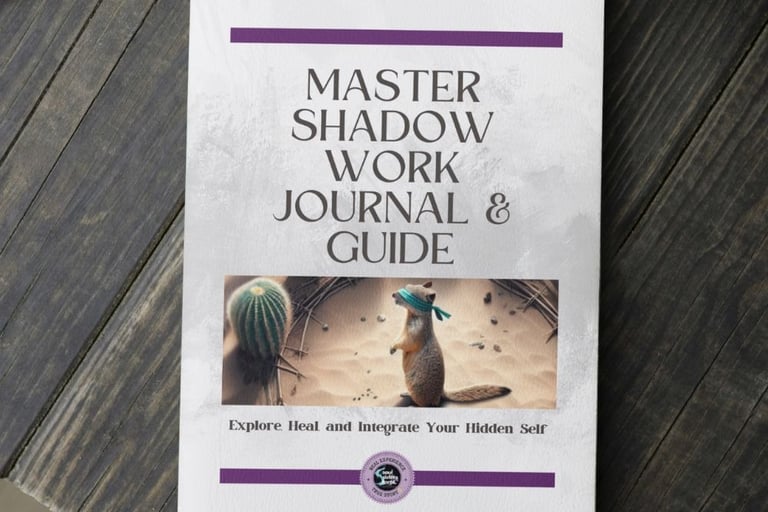
The Master Shadow Work Journal & Guide was created to help you move beyond recognizing the pattern and begin uncovering the beliefs, fears, and emotional conditioning underneath it.
📘 Master Shadow Work Journal & Guide
People rarely stay stuck because they do not know what they are doing. They stay stuck because they do not yet understand why they are doing it.
It gives you a clear, structured path to:
• uncover the hidden beliefs driving people-pleasing
• identify emotional triggers beneath automatic reactions
• explore fears of rejection, abandonment, and disapproval
• recognize the emotional rules shaping your relationships
• rebuild self-trust through deeper self-awareness
This is not just a journal.
It’s a guided process you can return to whenever patterns come up again.
✨ What makes it different
• 235 pages of deep, structured inner work
• 100+ powerful shadow work prompts
• worksheets for triggers, patterns, and emotional integration
• inner child and belief-mapping exercises
• tools for long-term healing, not quick fixes

If you’re ready to stop repeating this pattern, this is your next step.
🌸 Understanding the Pattern Is the Beginning of Changing It
Many people spend years believing that people-pleasing is simply part of their personality. They describe themselves as "too nice," "too sensitive," or "someone who always puts others first."
But people-pleasing is rarely an identity. More often, it is a collection of learned emotional rules about relationships, connection, conflict, approval, and self-worth.
What feels like personality is often conditioning repeated long enough to feel permanent.
This is why understanding the origin of the pattern matters. When you recognize that people-pleasing was learned, it becomes easier to see that it can also be unlearned. That does not mean change happens overnight. Patterns built over years rarely disappear because of a single insight. But awareness creates something powerful: choice.
The moment you can recognize a pattern, you are no longer completely controlled by it.
A pattern can only operate automatically for as long as it remains unquestioned.
This is one of the most important goals of shadow work. Not to judge the behavior, suppress it, or force it to disappear, but to understand the fears, beliefs, and emotional assumptions that keep it alive.
Because people-pleasing is rarely the real issue.
The behavior is the surface. The belief underneath it is where lasting change begins.
If this article helped you understand why you became a people pleaser, the next step is learning how the pattern affects your daily life, relationships, boundaries, and self-worth.
For that, explore People Pleasing: Why You Can't Stop (and How to Finally Break Free), where we focus on the healing process and practical steps for creating healthier relationships with yourself and others.
🤍 Master Shadow Work Journal & Guide
Go Beyond Awareness and Explore the Root Cause
Recognizing a pattern is an important first step, but lasting change often requires a deeper understanding of the beliefs and emotional conditioning beneath it. The Master Shadow Work Journal & Guide helps you explore recurring patterns, emotional triggers, self-worth, relationships, and the unconscious beliefs that keep behaviors like people-pleasing in place.


FAQ: Why Am I a People Pleaser?
Why am I a people pleaser even when I know it hurts me?
People-pleasing often continues even after you recognize the pattern because awareness does not automatically change emotional conditioning. Many people learned early in life that avoiding conflict, disappointing others, or expressing needs carried emotional consequences. The behavior may no longer serve you, but part of your mind still associates it with safety, connection, or belonging.
People often continue repeating patterns they understand because understanding a pattern is different from feeling safe enough to change it.
Why do I always put others first even when it hurts me?
You may put others first because it feels emotionally safer than risking conflict, rejection, or disappointment. This pattern often comes from learned beliefs that your needs are less important or that keeping others happy protects your relationships.
What are the signs of people-pleasing behavior?
Common people-pleasing behavior signs include difficulty saying no, feeling guilty when setting boundaries, over-apologizing, avoiding conflict, and prioritizing others’ needs over your own, even when it leads to exhaustion or resentment.
Why do I feel responsible for other people's emotions?
People-pleasers often develop a heightened sensitivity to other people's moods, reactions, and emotional needs. Over time, this awareness can evolve into an unconscious belief that it is their job to prevent disappointment, solve problems, or keep everyone comfortable. While empathy is healthy, responsibility for another person's emotions can become emotionally exhausting.
Empathy allows you to understand someone else's feelings. Responsibility convinces you that their feelings are yours to manage.
Can people-pleasing affect romantic relationships?
Yes. People-pleasing can influence who you choose, what behaviors you tolerate, and how you communicate your needs. Constantly prioritizing a partner's happiness over your own can create imbalance, resentment, and a loss of authenticity within the relationship.
People-pleasing does not create healthy relationships by avoiding conflict. It often creates unhealthy relationships by avoiding honesty.
What is the root cause of people-pleasing?
The root cause of people-pleasing is often a combination of learned beliefs, emotional conditioning, and fears related to rejection, conflict, criticism, abandonment, or disconnection. While the behavior may look like kindness on the surface, it is frequently driven by a deeper need to feel safe, accepted, or valued in relationships.
People-pleasing is rarely about helping others. More often, it is about protecting yourself from something that feels emotionally threatening.
How do I know if I am a people pleaser in relationships?
You may be a people pleaser in relationships if you avoid expressing your needs, fear disappointing your partner, overgive to maintain a connection, or feel anxious about how others perceive you. These patterns often come from deeper emotional fears.
Can people-pleasing be changed, or is it permanent?
People-pleasing is not permanent. With awareness, emotional reflection, and consistent inner work, these patterns can shift over time. Many people gradually build stronger boundaries and a deeper sense of self-trust.
Is people-pleasing a trauma response?
People-pleasing can be a trauma response, but not always. It often develops in environments where approval, harmony, or emotional caregiving is felt necessary for maintaining connection. Whether the experience involved trauma, chronic criticism, emotional unpredictability, or conditional acceptance, the pattern usually develops as an adaptation to an emotional environment rather than a conscious choice.
People-pleasing is often less about who you are and more about what your environment taught you was necessary.
Why do I feel guilty when I say no?
Many people feel guilty when saying no because they have learned to associate boundaries with disappointing others. If your sense of safety, acceptance, or self-worth became connected to meeting other people's expectations, setting limits can feel emotionally uncomfortable even when the boundary is healthy.
Guilt is not always a sign that you are doing something wrong. Sometimes it is a sign that you are doing something unfamiliar.
Can shadow work help with people-pleasing?
Yes. Shadow work helps uncover the unconscious beliefs and emotional assumptions that often drive people-pleasing behaviors. Rather than focusing only on changing actions, shadow work explores the fears, wounds, and internal rules beneath the pattern, making it easier to understand why the behavior developed and why it continues repeating.
The behavior is usually visible. The belief driving the behavior is often hidden. Shadow work helps bring that hidden layer into awareness.
Soul Sisters Tarot
A Soft Place to Grow.
💌 SOUL SISTERS WEEKLY
A thoughtful Sunday letter with tarot reflections, moon wisdom, self-love, and gentle encouragement.
© 2026. All rights reserved.
Inspirational Coaching OÜ
sisters@soulsisterstarot.com