💌 JOIN SOUL SISTERS WEEKLY → GET FREE WELCOME GIFTS 🎁
Receive a thoughtful Sunday letter, free Self-Love & Shadow Work guides, and monthly Full Moon rituals ✨



Listen to Your Body: Is body's intuition trying to warn you?
Ever wonder if that tight chest, tiredness, or uneasy feeling means something? Learn how to listen to your body, recognize your body’s intuition, and understand when a feeling may be trying to get your attention.
SELF-LOVE, HEALING & INNER WORK
Soul Sisters Tarot
10/6/202524 min read


How to Listen to Your Body (And Trust What It’s Telling You)
This guide is part of our Self-Love Journey, where we explore emotional healing, self-compassion, and gentle practices that help you build a deeper and more supportive relationship with yourself.
Learning how to listen to your body means paying attention to physical sensations, emotions, energy levels, tension, comfort, and other signals without immediately dismissing them or assuming you already know what they mean. Your body constantly responds to stress, environment, relationships, habits, emotions, and physical conditions, and becoming more aware of those responses can help you notice when you need rest, a boundary, a change of pace, or further support.
You may already recognize some of the signs your body is telling you something is wrong: a tight stomach before a difficult conversation, tense shoulders after weeks of stress, exhaustion that makes everything feel harder, or a sense of relief when you finally say no. But a body signal is not automatically a message that you are on the wrong path, and it is not always intuition. Anxiety, illness, lack of sleep, stress, medication, hormones, and many other factors can create similar sensations.
This is where body awareness becomes more useful than simply trying to “trust your gut.” Learning how to listen to your body is about noticing a signal first, becoming curious about what may be contributing to it, and then deciding what response makes sense. Sometimes your body is asking you to slow down. Sometimes it is reflecting emotional stress. Sometimes it is telling you that something needs medical attention. And sometimes a recurring sensation may help you recognize that a situation, relationship, or choice deserves closer attention.
In this guide, we’ll explore how to listen to your body, what your body’s intuition can mean, the signs your body may be telling you something is wrong, and how to distinguish intuitive awareness from anxiety or other stress responses. You’ll also learn practical ways to develop body awareness through reflection, journaling, mindful observation, and grounded self-reflection.
Learning to notice these signals can become an important part of self-love and inner healing, because it is difficult to care for yourself well when you routinely ignore what you are feeling, needing, or experiencing.
💖 If you often notice a feeling in your body but immediately question whether you can trust it, understanding why you doubt yourself so much can help you explore the self-doubt that may be getting in the way of listening to yourself.
💖 Free Self-Love Guide
If you've spent a long time ignoring what you need, you may not even know where to begin.
Our Free Self-Love Guide offers simple practices for reconnecting with yourself through self-awareness, reflection, and everyday acts of care. It's a gentle place to start if learning to listen to your body is also helping you realize that you've been putting your own needs aside.


🌸 What Is Body’s Intuition? How to Listen to Your Body Without Overthinking
Body’s intuition is the way physical sensations, emotions, memories, and nervous-system responses can provide information about how you are experiencing a situation. Learning how to listen to your body means noticing these signals without automatically assuming that every sensation is either a warning or a prediction.
Your body is constantly responding to what is happening around you. A difficult conversation may leave you with a tight chest. A stressful environment may show up as muscle tension or digestive discomfort. A person you feel safe with may be accompanied by a sense of ease and relaxation. These reactions can be useful information, but they still need context.
This is where body awareness becomes more useful than simply trying to “trust your gut.” Instead of asking, “Is my body telling me yes or no?”, try asking: “What am I noticing, and what might be contributing to this response?”
That small shift matters. It allows you to listen to your body without turning every physical sensation into a message that must immediately be obeyed.
🌿 Body intuition is information, not a guarantee
When people talk about body intuition, they often mean a felt sense that appears before they can consciously explain why something feels right or wrong. Sometimes that feeling reflects useful information gathered from previous experiences, subtle environmental cues, emotional patterns, or changes in your nervous system. But intuition is not infallible.
A racing heart can mean excitement, fear, stress, caffeine, or physical illness. A calm feeling does not automatically mean that a situation is safe. And a “gut feeling” should not be treated as a medical diagnosis or proof that something will happen.
This is especially important when learning how to listen to your body. The goal is not to become hypervigilant about every sensation. The goal is to become curious about your body's signals and better at putting them into context.
🧠 Your brain and body are constantly communicating
Your brain does not operate separately from your body. The nervous system continuously processes information from inside and outside the body, while physiological changes can influence attention, emotion, memory, and decision-making. This helps explain why emotions can have such noticeable physical effects.
You might experience:
A tight jaw when you are under pressure
A fluttering or unsettled feeling in your stomach before a difficult conversation
Shallow breathing when you feel threatened or overwhelmed
Heaviness or fatigue when you have been emotionally drained
Relaxed muscles and easier breathing when you feel safe
A sudden increase in energy when something feels exciting or meaningful
These are signals to investigate, not instructions to blindly follow. The more often you pause and notice what is happening in your body, the easier it becomes to recognize your own patterns.
🌙 How to listen to your body and understand what it is telling you
You do not need a complicated spiritual practice to begin. Start with a simple three-step process:
Notice → Name → Investigate.
Notice: What physical sensation are you experiencing right now?
Name: What emotion, thought, or situation seems to be happening alongside it?
Investigate: What else could explain this response? Are you tired, hungry, stressed, overstimulated, excited, uncomfortable, or remembering something from a previous experience?
For example, imagine that your stomach tightens every time you receive a message from a particular person. Rather than immediately deciding, “My intuition says this person is bad,” you could become curious: What happens in this relationship? What am I afraid of? Have my boundaries been respected? Does this reaction happen with other people too?
That kind of observation turns a vague “gut feeling” into something you can actually learn from. And if you have spent years second-guessing your own reactions, this process can also become part of rebuilding self-trust because you are learning to notice your internal experience instead of immediately dismissing it.
🌱 The difference between body awareness and body intuition
Body awareness is noticing what is happening inside you. Body intuition is the interpretation or felt sense you may develop from that information. That distinction is worth remembering.
Body awareness might tell you: “My shoulders are tense, and my stomach feels unsettled.”
Body intuition might make you think: “Something about this situation does not feel right.”
The first is an observation. The second is an interpretation. Keeping those two steps separate helps you stay grounded. You can take your body's response seriously without assuming you already know exactly what it means. This is also why practices such as journaling, reflection, meditation, and tarot can be useful here. They can create space to examine your reactions and patterns rather than simply reacting to them.
If you want to explore the broader relationship between self-awareness and self-connection, Mastering the Art of Self-Love offers a deeper look at building a more supportive relationship with yourself.
And if you notice that you regularly dismiss your own feelings or look outside yourself for reassurance, Why Do I Doubt Myself So Much? can help you explore why trusting your own internal signals may feel difficult.
🍃 Soul Sisters Notes
“One of the hardest things about learning to listen to your body is realizing that a strong reaction does not automatically mean your body is telling you the truth. Sometimes the body is remembering something. Sometimes it is warning you. Sometimes it is simply exhausted. Learning to listen means becoming curious before deciding what the signal means.” — Caitlin & Gerly
🧭 Signs Your Body Is Telling You Something Is Wrong
Sometimes your body reacts to a situation before you have consciously worked out why it feels wrong. You may notice persistent tension, exhaustion, a change in your breathing, stomach discomfort, restlessness, or a strong urge to withdraw. These experiences can be useful signals to pay attention to, but they are not automatic proof that you are on the wrong path. The goal is to notice the pattern, consider the context, and then decide what deserves your attention.
🌿 When your body keeps saying “something is off”
A single headache or restless night cannot tell you whether a relationship, job, or life decision is wrong. Patterns are more informative than isolated sensations.
You may want to slow down and investigate when you repeatedly notice:
Tension or discomfort around a particular person or situation
Exhaustion that seems connected to how you are spending your time
Feeling constantly “on edge” in a particular environment
Difficulty relaxing even when nothing obvious is happening
A recurring urge to avoid something you have been forcing yourself to tolerate
Irritability or emotional exhaustion that keeps returning
Physical stress responses whenever you cross a particular boundary
A growing sense that your daily life no longer reflects what matters to you
These are not instructions from your body telling you exactly what to do. They are invitations to pay attention.
🧠 Your body may notice a pattern before your mind has words for it
Sometimes you cannot immediately explain why something feels uncomfortable. You simply notice that you become tense around a particular person, feel drained after certain interactions, or experience relief when you imagine stepping away from a situation.
This can happen because your brain and nervous system are continuously processing information, including subtle social and environmental cues that may not reach conscious awareness immediately. Your physical response can therefore become part of the information you use to understand an experience. But context matters.
Feeling anxious does not automatically mean something is dangerous. Feeling calm does not automatically mean something is safe. Your response may be influenced by stress, past experiences, expectations, exhaustion, or other factors. That is why learning to listen to your body is different from blindly following every sensation.
🌙 Ask what the signal might be pointing toward
When you notice a recurring physical or emotional response, try asking:
What happens before I feel this way?
Does this happen in other situations too?
What am I thinking or remembering when the sensation appears?
Have I been ignoring a need or boundary?
Am I exhausted, overstimulated, anxious, or under pressure?
What does the situation itself tell me?
What would I notice if I stopped trying to convince myself that everything is fine?
These questions help you move from “My body is telling me something is wrong” to something much more useful: “My body is giving me information, and I want to understand it.”
🖤 When your body keeps reacting to a person or situation
One of the most useful things you can observe is repetition. Perhaps you feel completely fine until you enter a particular environment. Maybe your shoulders tense whenever a certain person calls. Maybe you repeatedly feel drained after conversations where you have to defend your needs. Or perhaps you notice a strange sense of relief whenever you imagine saying no.
Rather than immediately labeling this as intuition, treat it as information worth exploring. What is happening in that relationship? Are your boundaries respected? Do you feel heard? Are you constantly monitoring yourself? Are you able to be honest?
Your body's response cannot tell you the entire story, but it may encourage you to look more closely at a story you have been avoiding.
If you have become disconnected from your own needs while trying to keep other people happy, People-Pleasing: Why We Put Others First and How to Stop is a natural next step.
🍃 Soul Sisters Notes
“Sometimes your body notices that you are uncomfortable long before you are ready to admit that you are unhappy. You do not have to immediately know what the feeling means. You can simply stop, listen, and become curious about what you have been asking yourself to tolerate.” — Caitlin & Gerly
🌱 Your body is a source of information, not an oracle
Your body can give you information. It cannot give you certainty about every situation. A stomachache may be stress, something you ate, anxiety, or a physical condition. A racing heart may be fear, excitement, caffeine, or something that deserves medical attention. A feeling of calm may reflect genuine safety, but it can also simply mean that something feels familiar.
So when you notice a signal, don't immediately ask: “Is my body telling me this is right or wrong?”
Ask: “What is my body experiencing, and what else do I need to understand?”
🍃How Your Body Tells You to Slow Down
Sometimes the message your body is sending is not that you are on the wrong path. It is simply that you are moving too fast to keep going the way you are. When stress and demands continue without enough recovery, your body may begin showing signs through fatigue, irritability, difficulty concentrating, changes in sleep, muscle tension, or a growing inability to switch off.
Learning how to listen to your body means noticing these signals before they become the point where your body forces you to stop.
🌙 You are tired even when you think you should be fine
One of the easiest signals to dismiss is persistent tiredness. You may tell yourself that you just need to push through another day, finish one more task, answer one more message, or catch up on everything before you allow yourself to rest. But when exhaustion becomes your normal baseline, it is worth paying attention.
Ask yourself:
Am I actually recovering between demanding days?
Have I been treating rest as something I have to earn?
Am I constantly functioning on adrenaline?
What would change if I stopped expecting myself to operate at full capacity?
Sometimes your body does not need another productivity strategy. It needs recovery.
🧠 Your mind becomes harder to access
Mental overload does not always feel like dramatic stress. Sometimes it looks like staring at the same task without being able to focus, forgetting small things, feeling unusually indecisive, or becoming overwhelmed by simple choices.
When you notice this happening repeatedly, consider whether your brain is simply overloaded. Difficulty concentrating can be a reason to pause rather than a reason to criticize yourself.
Instead of: “Why can't I get anything done?” try: “What has my mind been carrying, and what can I take off the list?” That small shift turns cognitive overload into information rather than another reason to attack yourself.
🌿 Your patience disappears
Another subtle sign that you may need to slow down is becoming irritated by things that normally would not bother you. You snap more quickly. Small interruptions feel enormous. You have less patience for conversations, decisions, noise, or other people's needs. You may even wonder why everyone suddenly seems so exhausting.
Sometimes the problem is not everyone around you. Sometimes you are simply depleted. Before making a major judgment about your relationships or your life, check the basics. Have you slept? Have you eaten properly? Have you had any quiet time? Have you been carrying too many responsibilities for too long?
Your body cannot always tell you “you need a weekend off.” Sometimes it tells you by making everything feel harder.
🌙 When small accidents make you pause
Sometimes slowing down is not something you consciously decide to do. You simply notice that you are rushing through everything.
You trip over something. Knock your leg against the table. Drop your keys for the third time. Walk into a door because your mind is already five steps ahead. These moments can have completely ordinary explanations, of course, but there is an interesting spiritual and reflective tradition of viewing repeated little accidents as a reminder to slow down and become more present.
You do not have to believe that the universe caused the accident to find the reflection useful.
Instead of asking, “Was this a sign?” try asking, “Have I been rushing?”
Maybe you have been moving too quickly, thinking about the next task instead of where you are, ignoring exhaustion, or trying to accomplish too much at once. In that sense, the accident itself does not need to carry a mystical meaning. It can simply become the moment that makes you notice what your body has already been trying to tell you: you need to pause.
🫧 You cannot seem to switch off
If you finally have free time but immediately fill it with scrolling, work, errands, messages, or mental planning, your body may never get the opportunity to come down from a constantly activated state.
Slowing down can therefore mean more than physically sitting still. It can mean creating moments where nothing is required from you.
Try taking ten minutes without consuming information or solving a problem. Sit somewhere quiet. Walk without your phone. Take a few slow breaths. Notice what you hear, feel, and see. You are not wasting time. You are giving yourself an opportunity to notice what has been happening underneath the noise.
🌱 Your body keeps asking for the same thing
Perhaps you keep thinking:
I need more sleep.
I need a break.
I need some time alone.
I need to stop saying yes to everything.
I need to get outside.
I need help.
When the same need keeps returning, pay attention to the repetition.
You do not have to turn it into a spiritual message. You do not have to decide that the universe is sending you a sign. Sometimes your body is simply communicating a need that you have been postponing. And listening to your body can be as simple as responding to that need.
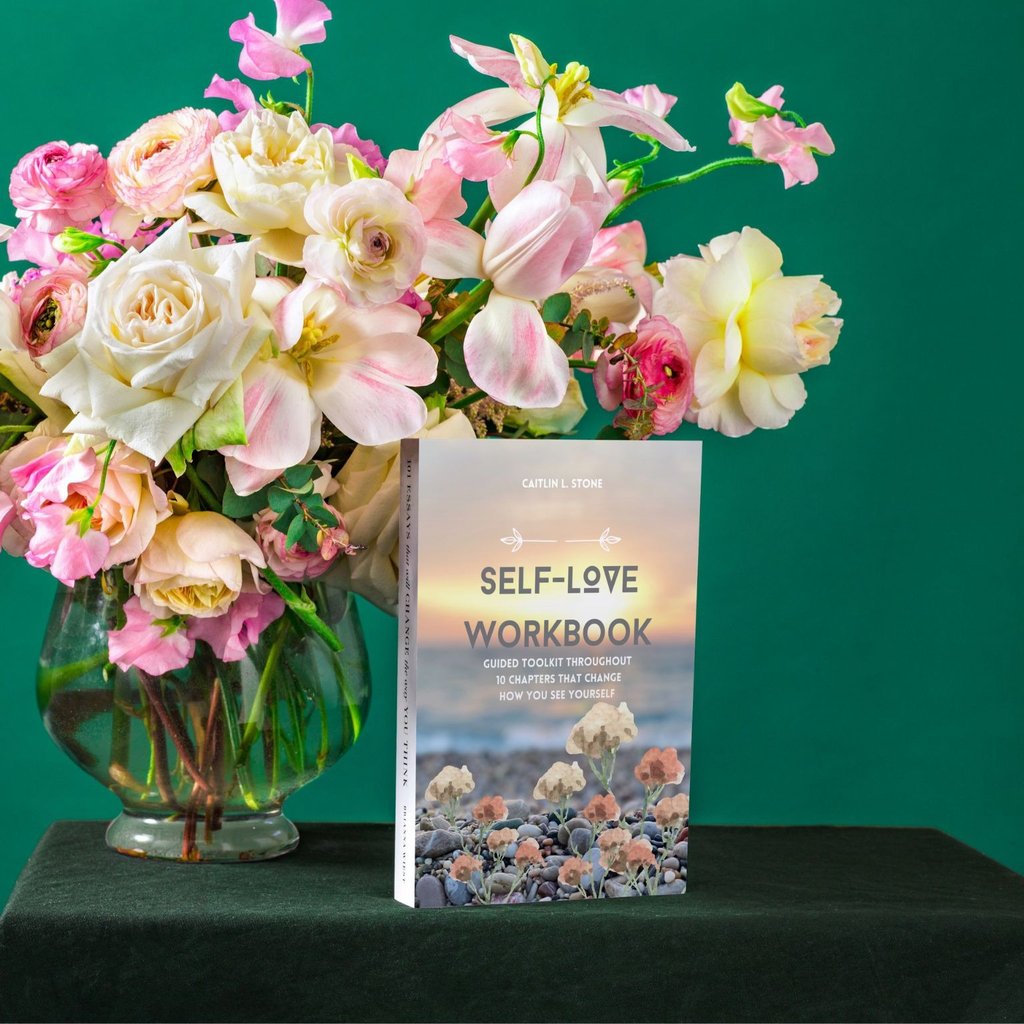
❤️ Self-Love Workbook
Once you start noticing the pattern, the next question is: what do you actually do with it?
Our Self-Love Workbook gives you space to explore your emotions, needs, boundaries, self-talk, and relationship with yourself through guided reflection. If you are beginning to recognize recurring reactions in your body and emotions, the workbook can help you slow down, understand those patterns, and turn awareness into a more supportive relationship with yourself.
🍃 A simple body check-in
When you feel yourself becoming overwhelmed, pause and ask: What is my body asking for right now?
Not what you should be doing.
Not what would make everyone else happy.
Not what would make you more productive.
What do you actually need?
Maybe the answer is food. Maybe it is sleep. Maybe it is movement, quiet, connection, a boundary, support, or simply ten minutes where nobody needs anything from you. You do not have to act on every sensation immediately. But learning to hear the request before overriding it is a powerful form of self-trust.
🍃 Soul Sisters Notes
“I used to think listening to my body meant waiting until it became impossible to ignore. Now I think it means noticing the whisper before it has to become a scream.” — Caitlin & Gerly
And if you have spent years overriding your needs, this is exactly where How to Reconnect With Yourself can help. Reconnection often begins with something surprisingly simple: finally paying attention to what you have been feeling all along.
🧠 Body Signals and Emotions: What Your Body May Be Telling You
Emotions do not only happen in your thoughts. They can change how your body feels, moves, breathes, and responds. You might notice your stomach tightening when you feel anxious, your shoulders rising when you are under pressure, your body becoming heavy when you are emotionally exhausted, or your breathing becoming easier when you finally feel safe and relaxed. Learning to listen to your body means becoming familiar with these patterns without assuming that every sensation has one fixed meaning.
🌿 Anxiety and tension
Anxiety can show up physically through a racing heart, tight muscles, shallow breathing, stomach discomfort, restlessness, sweating, or a feeling that you cannot fully relax. These sensations are useful information about your current state, but they do not automatically tell you why you feel anxious.
Your body might be responding to an actual problem. It might be anticipating something uncertain. It might be reacting to accumulated stress. Or it might be remembering an experience that felt threatening in the past. The sensation is real. The interpretation still needs context.
🌸 Joy, safety and ease
Your body can also tell you when something feels nourishing. You might notice that your shoulders drop, your breathing becomes deeper, your face relaxes, or you suddenly have more energy when you are doing something meaningful or spending time with someone you feel comfortable around.
These moments can teach you something important about yourself. Pay attention to what creates a sense of aliveness, ease, curiosity, or genuine connection. Over time, these patterns can help you understand what supports your wellbeing rather than only noticing what drains you.
🌙 Sadness and emotional heaviness
Emotional pain can also have a physical weight. You may feel slower, heavier, tired, tense, or disconnected from your surroundings. Sometimes you want to withdraw or sleep more than usual. Sometimes your body simply feels like it has less energy available.
Rather than immediately trying to fix the feeling, you can begin by asking:
What am I carrying right now?
What emotion have I not allowed myself to fully acknowledge?
What would feel supportive rather than demanding?
Your body does not always need you to solve the problem immediately. Sometimes it needs you to recognize that something hurts.
🪻 Anger and the need for a boundary
Anger can be particularly useful to notice because it often carries information about limits, unmet needs, or perceived unfairness.
You might notice your jaw tightening, your muscles becoming tense, your heart beating faster, or a sudden surge of energy. That does not mean every angry reaction means someone has crossed a boundary. But recurring anger can be worth investigating.
Ask:
What happened?
What did I need in that moment?
Was a boundary crossed?
Have I been saying yes when I actually wanted to say no?
Sometimes anger is pointing toward something that needs to be expressed. Sometimes it is showing you that you are already depleted.
🍃 Emotional patterns become more useful when you track them
The most valuable information often comes from repetition. One tense stomach before one meeting does not tell you very much. But if your stomach tightens before every conversation with the same person, or you consistently feel exhausted after saying yes to certain requests, a pattern begins to emerge.
This is why body awareness works best as observation rather than interpretation. Notice the sensation. Notice the emotion. Notice the situation. Then look for patterns over time.
You are not trying to make your body prove that something is right or wrong. You are learning your own language.
🍃 Soul Sisters Notes
“Your body speaks in patterns more often than in dramatic revelations. The same tightness, exhaustion, relief, or sense of ease may keep appearing around certain situations until you finally stop long enough to notice what connects them.” — Caitlin & Gerly
🌿 Is It Anxiety or Body Intuition?
One of the hardest parts of learning how to listen to your body is knowing whether a physical reaction is intuition, anxiety, stress, or an old emotional pattern. Anxiety often brings urgency, catastrophic thinking, or a strong need to act immediately, while what people describe as intuition may feel quieter and more persistent. But there is no single physical sensation that proves something is intuition, and anxiety can sometimes be subtle too.
Instead of trying to label the feeling immediately, ask: What am I noticing? What happened before this reaction? What facts do I actually have? Have I felt this way in similar situations before? Am I exhausted, stressed, afraid, or reminded of something from the past?
You do not have to decide instantly whether your body is giving you an intuitive message. You can listen without obeying, investigate without dismissing, and give yourself time to understand the pattern. That is a much more grounded way to build trust in your body's signals.
If you often struggle to tell whether a strong physical reaction is your body’s intuition or anxiety, our guide Is It My Intuition or Just Anxiety? goes deeper into the differences between intuitive signals, fear, anxiety, and old emotional patterns.
🍃 Soul Sisters Notes
“You don't have to know immediately whether something is intuition, fear, or an old pattern. Sometimes self-trust simply means saying, ‘I notice this. I don't understand it yet, but I'm willing to listen.’” — Caitlin & Gerly
✨ How to Listen to Your Body: Reflection, Journaling and Tarot
Once you begin noticing your body's signals, supportive practices can help you slow down enough to understand them. Reflection, journaling, and tarot are not ways to prove what your body is telling you. They are tools for creating space to notice patterns, ask better questions, and reconnect with your own experience.
🌿 Reflection: pause before you interpret
You do not always need another technique. Sometimes the most useful practice is simply stopping for a moment and noticing what is happening inside you.
When you feel tension, discomfort, ease, or a sudden emotional shift, pause and ask:
What am I noticing in my body?
What happened just before this feeling appeared?
What emotion is present?
Is this sensation familiar to me?
What might I need right now?
Reflection helps you separate the physical signal from the story you immediately attach to it. That small pause can make it easier to respond thoughtfully instead of reacting automatically.
🌙 Journaling: notice patterns over time
A single body sensation can be difficult to interpret. Patterns are much more informative. Journaling gives you somewhere to record what you notice: how your body feels around certain people, situations, decisions, environments, or periods of stress. Over time, you may begin to see connections that are difficult to notice in the middle of everyday life.
You could keep a simple body awareness journal and record:
Situation → Body sensation → Emotion → Thoughts → What happened next
You do not need to write pages every day. A few honest observations can be enough to help you recognize recurring patterns.
If you want more structured support for this kind of reflection, our 365 Psychological Journal Prompts for Self-Discovery and Self-Love can give you questions to explore your emotions, patterns, needs, and relationship with yourself.
📓 365 Psychological Journal Prompts
Sometimes the hardest part of self-reflection is knowing what to ask yourself.
Our 365 Psychological Journal Prompts for Self-Discovery and Self-Love gives you a full year of thoughtful questions to explore emotions, patterns, relationships, needs, and your inner world. Instead of wondering what to write, you can take one question at a time and use journaling to uncover the patterns behind what your body may be trying to bring to your attention.


🔮 Tarot: use the cards as a reflective mirror
Tarot can also be useful here, especially when you already enjoy working with symbolic tools. Rather than asking the cards to diagnose what your body is experiencing or tell you whether a sensation is “really” intuition, use them to explore the situation from another perspective.
For example, you could ask:
What might I be overlooking about this situation?
What emotion am I not acknowledging?
What do I need to pay attention to right now?
What would support me through this uncertainty?
Then notice your response to the card. Does something feel familiar? Do you feel resistance, relief, curiosity, or nothing at all?
If you've ever wondered Can You Read Tarot for Yourself?, this is exactly where self-reading can become a useful reflective practice. You do not need to predict the future or find a definitive answer. The cards can simply help you ask yourself better questions and notice what your own reactions are telling you.
For a more self-love-focused approach, you can also explore Tarot Spreads for Self-Love, with questions designed to help you reflect on your needs, emotions, boundaries, and relationship with yourself.
The card does not have to give you the answer. It can simply give your conscious mind another doorway into a question you are already carrying.
🦉 Tarot eBook: Complete & Secret Guide to Tarot
If tarot is already part of how you reflect, you may be ready to go deeper than simply looking up card meanings.
Our Complete & Secret Guide to Tarot is a 134-page guide to tarot symbolism, card meanings, and developing your own relationship with the cards. If you use tarot as a reflective mirror, it can help you move beyond memorizing meanings and become more confident exploring the questions, emotions, and patterns that come up in your own readings.


🌸 The goal is greater self-awareness
Reflection helps you pause. Journaling helps you recognize patterns. Tarot can help you look at those patterns from a different perspective.
None of these tools replaces medical care, evidence, or your own judgment. Their value is much simpler: they create more space between what you experience and how quickly you react to it. And sometimes, that space is exactly where learning to listen to your body begins.
🩺 When to Seek Medical Support
While learning to listen to your body is powerful, persistent or severe physical symptoms should always be evaluated by a medical professional. Body awareness complements professional care — it does not replace it.
Trust your intuition, but also seek support when something feels physically concerning.
🫶 Learning to Listen to Your Body Without Overthinking
Learning how to listen to your body does not mean assuming that every headache, stomach flutter, moment of fatigue, or sudden feeling is a message you need to decode. It means becoming more aware of what is happening inside you, noticing patterns, considering the context, and giving yourself enough space to respond rather than automatically react.
Sometimes your body may be telling you that you need to slow down. Sometimes a physical reaction may be connected to stress, anxiety, exhaustion, excitement, or an old emotional pattern. And sometimes a symptom simply needs proper medical attention. Listening to your body means taking the signal seriously without assuming you already know exactly what it means.
Over time, this kind of awareness can strengthen your relationship with yourself. You may begin to notice when you are pushing past your limits, overriding a boundary, ignoring an emotion, or staying somewhere that consistently leaves you feeling depleted. You may also become more familiar with what calm, safety, joy, and genuine connection feel like in your own body.
That is where body awareness becomes part of self-trust. You are not trying to become someone who never feels anxious or uncertain. You are learning to notice what is happening, become curious about it, and decide what deserves your attention.
Reflection and journaling can help you recognize your patterns over time, while tarot can offer another way to explore the emotions and questions beneath your physical responses. If you want to continue that deeper work, our Self-Love Journey brings together practices for developing a more supportive and connected relationship with yourself.
Your body does not need you to interpret every signal perfectly. It needs you to pay attention. Sometimes listening means resting. Sometimes it means asking a difficult question. Sometimes it means setting a boundary. Sometimes it means getting more information or seeking professional help.
And sometimes, it simply means pausing long enough to notice what you have been feeling all along.
If you want to explore more of the tools we've created for that process, you can discover our journals, self-love practices, tarot guidance, and spiritual resources inside Sisters Creation.
With Love,
Caitlin & Gerly,
Soul Sisters Tarot
❓FAQ: Body’s Intuition & Listening to Your Body
How do I learn how to listen to my body?
You learn how to listen to your body by regularly noticing physical sensations, emotions, and changes in your energy without immediately judging or interpreting them. Start by pausing when you notice tension, fatigue, discomfort, calmness, or a strong emotional reaction and ask what you are feeling, where you feel it, what happened before it appeared, and what you might need. Over time, this creates greater body awareness and helps you recognize your own patterns instead of automatically dismissing or overreacting to them.
What are the signs your body is telling you something is wrong?
Signs your body is telling you something is wrong can include persistent fatigue, muscle tension, headaches, digestive changes, sleep problems, changes in appetite, irritability, or a recurring sense of physical discomfort. These signals do not automatically mean that you are on the wrong path or that something is emotionally wrong, because physical symptoms can have many causes. The useful first step is to notice whether a symptom is new, persistent, worsening, connected to stress or a particular situation, or accompanied by other changes, and seek medical advice when appropriate.
What is the body’s intuition?
The body’s intuition is the felt sense that can arise from physical sensations, emotions, learned experiences, and information your brain may be processing before you consciously understand it. It may feel like a subtle sense of ease, discomfort, hesitation, or recognition in a particular situation. Body intuition can provide useful information, but it is not infallible, so the healthiest approach is to notice the signal, consider the context, and avoid treating every physical sensation as a prediction or absolute truth.
How can I tell if my body is trying to tell me something?
You can explore what your body is telling you by noticing the sensation, identifying what happened before it appeared, and looking for patterns rather than interpreting one reaction in isolation. Ask yourself where you feel the sensation, what emotion is present, whether you have experienced it before, and what else could explain it, such as stress, exhaustion, excitement, hunger, or anxiety. This helps you listen to your body with curiosity instead of turning every sensation into a warning.
What does it mean when your body feels uncomfortable around someone?
Feeling uncomfortable around someone can be useful information, but it does not automatically prove that the person is unsafe or that your intuition is correct. Your reaction may be connected to the person's behavior, a genuine boundary concern, anxiety, a previous experience, or a situation that reminds your nervous system of something familiar. Pay attention to the feeling, but also look at the person's actual behavior, whether your boundaries are respected, and whether the discomfort is consistent over time.
How do I know if it is intuition or anxiety?
Intuition and anxiety can both create strong physical sensations, so the feeling alone cannot always tell you which one you are experiencing. Anxiety often involves urgency, catastrophic thinking, repeated checking, or a strong need to make the uncertainty disappear, while an intuitive feeling may be quieter and more consistent, but neither pattern is a perfect test.
Can stress affect how I listen to my body?
Yes, stress can make body signals harder to interpret because stress itself can cause physical sensations such as muscle tension, changes in breathing, digestive discomfort, fatigue, and a racing heart. When you are highly stressed or exhausted, a strong physical reaction may reflect your current nervous-system state rather than a clear message about a particular person or situation. This is why slowing down, considering context, and checking what else might be contributing to the sensation are important parts of learning how to listen to your body.
Can your body tell you when you are on the wrong path in life?
Your body's reactions can sometimes highlight that something in your life deserves attention, but physical sensations cannot reliably prove that you are on the wrong path. Ongoing exhaustion, tension, loss of enjoyment, anxiety, or other recurring reactions may encourage you to examine your workload, relationships, boundaries, values, or emotional needs. Treat these experiences as information worth exploring rather than as a supernatural sign that automatically tells you what decision to make.
What does your body tell you when you need to slow down?
Your body may signal that you need to slow down through persistent tiredness, irritability, difficulty concentrating, muscle tension, disrupted sleep, feeling emotionally overwhelmed, or a noticeable drop in your ability to recover from everyday demands. These signs can have many causes, so they should not automatically be interpreted as burnout or emotional misalignment. They can, however, be a useful reminder to check your current workload, rest, stress levels, and basic needs before continuing to push yourself.
Can journaling help you listen to your body?
Yes, journaling can help you listen to your body by making recurring connections between physical sensations, emotions, situations, and behaviors easier to recognize. A simple entry can record what happened, what you felt in your body, what emotion was present, what you were thinking, and what happened afterward. Looking back at these observations can reveal patterns that are difficult to notice in the middle of everyday life.
Can tarot help you understand what your body is telling you?
Tarot can be used as a reflective tool to explore the emotions, questions, and patterns you associate with a physical reaction, but it should not be used to diagnose symptoms or replace medical advice. You might ask a tarot card what you may be overlooking, what emotion needs attention, or what could support you through a situation, then use your own reaction to the card as another opportunity for reflection.
When should I seek medical help for physical symptoms?
You should seek medical advice when physical symptoms are persistent, severe, unusual for you, worsening, or concerning enough that you are unsure what is causing them. Listening to your body includes taking physical symptoms seriously rather than assuming they are always emotional or intuitive messages. Body awareness, journaling, meditation, and spiritual practices can support self-awareness, but they should complement rather than replace appropriate medical evaluation.
Soul Sisters Tarot
A Soft Place to Grow.
💌 SOUL SISTERS WEEKLY
A thoughtful Sunday letter with tarot reflections, moon wisdom, self-love, and gentle encouragement.
© 2026. All rights reserved.
Inspirational Coaching OÜ
sisters@soulsisterstarot.com