💌 JOIN SOUL SISTERS WEEKLY → GET FREE WELCOME GIFTS 🎁
Receive a thoughtful Sunday letter, free Self-Love & Shadow Work guides, and monthly Full Moon rituals ✨



Hunter’s Moon Shadow Work: Find Your Shadow Character
What shadow character appears when you feel threatened, rejected, or uncertain? Explore Hunter’s Moon shadow work to uncover hidden patterns, fears, and what drives your reactions.
MOON PHASES & RITUALS
Soul Sisters Tarot
9/12/202626 min read


Hunter’s Moon Shadow Work: Find Your Shadow Character
This article is part of our Hunter’s Moon collection, where you’ll discover the spiritual meaning of the Hunter’s Moon, seasonal rituals, reflective practices, tarot guidance, and inspiring ways to work with this special Full Moon. It is also part of our Full Moons collection, where we explore the symbolism, traditions, and spiritual lessons of every named Full Moon throughout the year.
Shadow characters are recognizable patterns that can emerge when you feel threatened, rejected, uncertain, unseen, or emotionally unsafe. Learning how to identify your shadow character means paying attention to the version of yourself that repeatedly appears in those moments. Maybe you become The Chaser when you fear losing someone's attention, The Controller when you cannot predict what will happen, The People-Pleaser when you worry about disappointing someone, or The Perfectionist when you are afraid of getting something wrong.
The Hunter’s Moon gives us a particularly fitting way to explore these patterns because its symbolism revolves around seeking, pursuing, observing, following clues, and deciding what deserves your energy. Shadow work takes that imagery inward and asks a more personal question: Who inside you is doing the chasing?
In this guide, we’ll explore eight shadow characters you may recognize in yourself, including The Chaser, The Avoider, The Controller, The Prover, The People-Pleaser, The Doubter, The Protector, and The Perfectionist. You’ll learn what each pattern may look like in everyday life, what it could be trying to protect or achieve, and how to identify the shadow character behind your own recurring reactions.
You may recognize yourself in one character, several, or different ones depending on the situation. These are not fixed personality types or diagnoses. They are simply a way of giving language to patterns that can otherwise be difficult to see while you are inside them.
If you’re looking for a broader introduction to shadow work, our Shadow Work guide explores the practice, emotional patterns, triggers, and self-sabotaging behaviours in more depth. And if you want to understand the Hunter’s Moon symbolism behind this exploration, Hunter’s Moon Symbols: The Spiritual Meaning of the Hunt looks at the hunter, trail, forest, moonlight, animals, and other imagery connected with this Full Moon.
The real question here is not simply “What is my shadow?” It is: “Which version of me appears when something I care about feels threatened, and what is that part of me trying to do?” That is where your shadow character begins to reveal itself.
🏹 Free Hunter's Moon Ritual Download
Want to take your Hunter’s Moon shadow work off the screen and into your own ritual space?
Our Free Hunter’s Moon Rituals give you beautifully illustrated ritual pages you can download, print, and keep in your journal, grimoire, or Book of Shadows. Inside, you’ll find the three Hunter’s Moon practices created for this collection, including rituals for direction, shadow work, and inner strength. If you want to make your Hunter’s Moon reflection more tangible, these pages give you something beautiful to return to as you explore what you are seeking, what you are ready to release, and where you want your energy to go.


🌑 What Is a Shadow Character?
A shadow character is a recognizable pattern of behavior, thought, or emotional reaction that tends to appear when something inside you feels threatened, rejected, uncertain, unseen, or emotionally unsafe. It describes a version of yourself that becomes more dominant under particular circumstances. You may feel confident and relaxed most of the time, for example, but become noticeably different when you fear disappointing someone, losing control, being rejected, or making a mistake.
This does not mean you have a separate personality hiding inside you. Shadow characters are a reflective framework for understanding your shadow self, not clinical diagnoses or fixed psychological types. You may recognize several different shadow characters in yourself, and the one that appears can change depending on the situation.
A useful way to understand the pattern is: Trigger → Shadow Character → Automatic Pattern → Hidden Need
Imagine sending someone a message and receiving no reply. The trigger is the silence. The Doubter might appear, immediately questioning whether you said something wrong or whether the person has lost interest. The automatic pattern could be checking your phone repeatedly, replaying the conversation, or imagining negative explanations. Beneath that reaction may be a genuine need for reassurance, security, clarity, or connection.
This is where shadow characters become useful. The behavior often makes more sense when you look beneath it.
A People-Pleaser may be trying to create belonging. A Controller may be trying to create certainty. A Perfectionist may be trying to avoid criticism. An Avoider may be trying to escape emotional discomfort. The strategy may no longer serve you, but it may have developed because, at some point, it seemed like a useful way to protect yourself or meet an important need.
That is why understanding your shadow requires more curiosity than judgment. Instead of asking, “Why am I like this?”, you can begin asking: “What happens inside me that makes this version of me take over?”
That question shifts your attention from judging the behavior to understanding the pattern behind it.
Once you can recognize the pattern while it is happening, you gain something incredibly valuable: a moment of choice. You can pause before the automatic response becomes your next action and ask whether the strategy that once protected you is actually what you need now.
And that is exactly what we will explore through the eight shadow characters below.
🌒 Why Do We Develop Shadow Characters?
Shadow characters rarely appear out of nowhere. Many patterns we struggle with today began as ways of coping with situations that once felt difficult, unpredictable, or emotionally painful. Someone who learned that keeping everyone happy reduced conflict may grow into an adult who automatically says yes even when exhausted. Someone who experienced frequent criticism may become highly perfectionistic because getting everything right once felt like the safest way to avoid judgment.
This is why shadow patterns can be difficult to recognize. They often contain strategies that once made sense. The problem is that the same strategy can continue operating long after the original situation has changed.
You might learn to please people to maintain connection, control situations to create certainty, avoid difficult conversations to protect yourself from conflict, or prove your abilities to feel worthy of recognition. Eventually, these responses can become so automatic that you experience them simply as “who I am.”
But a repeated pattern is not necessarily your identity. Your shadow character may be trying to protect you using an old strategy. The Controller may be trying to prevent uncertainty. The Doubter may be trying to prevent a painful mistake. The Prover may be trying to secure recognition.
One way these patterns become easier to notice is through emotional triggers. A reaction that feels unusually intense can be a clue that something deeper has been touched. If particular situations repeatedly bring out the same response, our guide to Shadow Work Triggers: Why You Feel Emotionally Triggered can help you explore what may be underneath those reactions.
Your reactions to other people can offer clues too. Someone else's confidence might irritate you, their boundaries might make you uncomfortable, or their behavior might provoke an unusually strong judgment. This does not automatically mean you are projecting, but recurring reactions toward others can become useful material for self-reflection. Our guide to Shadow Work and Projection: Understanding the Parts of Yourself You See in Others explores this connection more deeply.
Shadow work begins when you become curious about the strategy instead of immediately criticizing yourself for having it. Ask: “What is this part of me trying to protect me from?”
That question shifts the focus from fighting the behavior to understanding the fear or unmet need underneath it. Once you understand what the pattern is trying to accomplish, you can begin looking for healthier ways to meet that need.
This is where the eight shadow characters become useful. They give you language for recognizing patterns that might otherwise feel confusing, contradictory, or simply like “the way I am.”
🌷 Free Shadow Work Starter Kit
What if the pattern you keep struggling with has a deeper story underneath?
Our Free Shadow Work Starter Kit is a gentle place to begin exploring the fears, beliefs, emotional reactions, and recurring patterns that can sit beneath your everyday behavior. If the idea of shadow characters has made you recognize something in yourself, these guided exercises can help you look a little deeper without turning self-reflection into self-judgment. Use them to begin asking what your patterns may be trying to protect, avoid, or communicate.


🌑 8 Shadow Characters You May Recognize in Yourself
Shadow work can become easier to understand when you stop thinking of your shadow as one mysterious hidden version of yourself and start noticing the different patterns that appear in everyday situations. You might strongly recognize yourself in one character, see pieces of several, or notice that different characters emerge depending on what you are experiencing.
These shadow characters are not fixed personality types or psychological diagnoses. Think of them as mirrors. Each describes a common pattern that can take over when a particular fear, need, or emotional wound is activated.
As you read, resist the urge to decide immediately, “This is me.” Instead, notice the descriptions that make you pause or think, “Oh... I do that.” Those moments can be useful clues.
The Hunter’s Moon offers an especially fitting lens because its symbolism revolves around seeking, following signs, patience, awareness, and knowing where to direct your energy. Our guide to Hunter’s Moon Symbols: The Spiritual Meaning of the Hunt explores these ideas more deeply, but here we are turning that symbolism inward.
The question becomes much more personal: What are you pursuing, avoiding, controlling, proving, or protecting yourself from, and which shadow character tends to appear when you do?
🏹 1. The Chaser
“If I can just get this, I’ll finally feel okay.”
The Chaser is always moving toward something. It might be a relationship, achievement, someone's attention, financial success, recognition, certainty, or the next exciting goal. There is nothing inherently unhealthy about wanting something or working toward a meaningful goal. The shadow appears when getting it becomes tied to your sense of worth, safety, or emotional fulfillment.
You may think, “Once I get this job, then I'll relax,” or “Once this person chooses me, I'll finally feel secure.” You reach one milestone and almost immediately need another. The satisfaction never quite lasts because the real pursuit is often happening beneath the visible goal.
This is where the Hunter’s Moon becomes a powerful mirror. The symbolism of the hunt can represent knowing what you are seeking, while shadow work asks you to look more closely at why you are seeking it.
The Chaser may be pursuing something genuinely meaningful, or it may be trying to outrun an uncomfortable feeling.
Ask yourself: What do I believe I will finally feel once I catch what I am chasing?
The answer may reveal that what you truly want is not the achievement, relationship, or outcome itself, but the feeling you believe it will give you. That distinction can change what you decide to pursue next.
🌲 2. The Avoider
“If I don’t face it, I don’t have to deal with it.”
The Avoider protects itself by creating distance from whatever feels uncomfortable. That might mean postponing an important decision, avoiding a difficult conversation, distracting yourself when emotions become intense, or repeatedly finding something else to do when a particular task makes you uneasy.
Avoidance can be surprisingly subtle. You might tell yourself that you are waiting for the right time, gathering more information, or simply too busy. Sometimes those explanations are completely reasonable. The shadow pattern appears when the same type of situation keeps being postponed, even though part of you knows it needs attention.
The Avoider is not necessarily lazy or unmotivated. Avoidance can be a strategy for protecting yourself from discomfort, disappointment, conflict, vulnerability, or the possibility of getting something wrong. Understanding that does not mean allowing the pattern to continue. It gives you a more useful question to work with.
Notice what happens immediately before you avoid something. Do you feel anxious, exposed, overwhelmed, or afraid of disappointing someone? Do you suddenly become interested in ten other things?
Ask yourself: What am I afraid will happen if I stop avoiding this?
Once you identify the fear beneath the avoidance, you can begin deciding whether you actually need protection or whether you need a small, manageable way to move forward.
🎛️ 3. The Controller
“If I can control everything, nothing can hurt me.”
The Controller tries to reduce uncertainty by keeping as much as possible within reach. You may recognize this pattern when you feel compelled to plan every detail, anticipate every possible problem, manage how other people respond, or become particularly uncomfortable when circumstances change unexpectedly.
Sometimes control looks highly productive. You make detailed plans, prepare for every possibility, take responsibility for everything, and become the person everyone relies on. The difficulty begins when preparation turns into an inability to tolerate uncertainty. You may struggle to delegate, repeatedly check things that are already done, become frustrated when someone does something differently, or spend enormous amounts of energy trying to predict an outcome that cannot be guaranteed.
The Controller often has a reasonable intention underneath the behavior. It wants to prevent something from going wrong. It may believe that staying prepared, careful, or involved enough can prevent disappointment, rejection, conflict, failure, or loss.
But control has limits. Other people's choices, unexpected events, and the future itself cannot be managed completely.
Instead of immediately telling yourself to “let go,” become curious about what you are trying so hard to prevent.
Ask yourself: What am I trying to make certain, and what am I afraid might happen if I can't control it?
That question can reveal whether your energy is helping you respond to the situation or simply keeping you busy trying to eliminate uncertainty that no amount of planning can remove.
🏆 4. The Prover
“I need to show them that I am enough.”
The Prover measures worth through achievement, recognition, productivity, or being seen as capable. You may recognize this shadow character when accomplishing something feels less like a satisfying expression of what you can do and more like evidence that you deserve respect, love, attention, or belonging.
The Prover can be incredibly driven. It may work harder than everyone else, take on more responsibility, pursue increasingly difficult goals, or struggle to enjoy an achievement before immediately moving toward the next one. Rest can feel uncomfortable because slowing down creates a question the Prover would rather avoid: Who am I when I am not accomplishing something?
Perfectionism can sometimes become part of this pattern too. If being impressive feels necessary for feeling secure, making a mistake can feel much more threatening than the situation itself would suggest. A small criticism may suddenly feel like proof that all your effort was not enough.
There is nothing wrong with ambition, excellence, or wanting to be proud of your work. The shadow appears when achievement becomes a condition for feeling worthy.
Notice what happens emotionally after you succeed. Do you feel genuinely satisfied, or do you immediately need another accomplishment to reassure yourself?
Then ask: What do I believe would happen if I stopped proving myself?
Your answer may reveal a deeper need for recognition, acceptance, belonging, or reassurance that achievement alone cannot permanently provide.
🤝 5. The People-Pleaser
“If everyone is happy with me, I will be safe.”
The People-Pleaser often becomes highly attuned to other people's moods, expectations, and reactions. You may find yourself saying yes before checking whether you actually have the capacity, changing your opinion to avoid disagreement, taking responsibility for other people's feelings, or giving more than you genuinely have to give.
From the outside, this pattern can look like kindness, generosity, or being easy to get along with. Those qualities are not the problem. The shadow appears when keeping other people comfortable consistently comes at the expense of being honest about your own needs.
You might know that you want to say no but immediately imagine the other person's disappointment. You may rehearse how to phrase a simple boundary so carefully that you end up agreeing anyway. Or perhaps you feel responsible for repairing someone's mood even when you did nothing wrong.
The People-Pleaser may have learned that approval creates security, while disagreement creates the possibility of rejection or conflict. That can make authenticity feel surprisingly risky.
Pay attention to the moments when you automatically agree. Before answering, give yourself a little space and ask what you actually want.
Then explore the deeper question: What am I afraid someone will think or do if I disappoint them?
The answer can help separate genuine care for another person from the fear that you must keep everyone happy to remain worthy of connection.
🪞 6. The Doubter
“Maybe I shouldn't trust myself.”
The Doubter questions decisions, abilities, instincts, desires, and even positive experiences. You may recognize this shadow character when you keep looking for another opinion after making a decision, repeatedly change your mind, or spend so much time analyzing every possibility that taking action becomes increasingly difficult.
Sometimes doubt is useful. It can encourage you to gather information, notice risks, and reconsider an assumption. The shadow appears when questioning becomes a way of avoiding trust.
You might know what you want but immediately list all the reasons it could go wrong. You may receive praise and wonder whether the person really meant it. You might have a strong instinct about a situation but dismiss it because you cannot prove it logically. Or you may keep researching long after you have enough information to make a reasonable choice.
The Doubter can create the illusion that one more piece of information will finally make you certain. Yet some decisions simply cannot come with complete certainty. At some point, you have to decide what you know, what you do not know, and whether you trust yourself enough to move forward anyway.
When you notice the Doubter appearing, separate healthy questioning from endless self-questioning. Ask what evidence you genuinely need and what you may be using as a reason to postpone the decision.
Then ask yourself: What decision would I make if I trusted myself enough to choose?
You may discover that the answer was there long before you felt completely confident enough to hear it.
🛡️ 7. The Protector
“I won’t let that happen to me again.”
The Protector develops around the instinct to prevent old pain from happening again. It may appear after experiences of rejection, betrayal, disappointment, criticism, or feeling that you had to handle too much on your own. Once activated, this shadow character can become highly guarded, suspicious, defensive, or determined to need no one.
The Protector can be difficult to recognize because it often looks strong. You may tell yourself that you are simply independent, realistic, selective about who you trust, or unwilling to tolerate certain behavior anymore. Sometimes those boundaries are healthy and necessary. The question is whether the response fits what is actually happening now, or whether an old experience is influencing how you interpret the present.
You might pull away from someone before they have given you a reason to distrust them. You may refuse help because needing someone feels dangerous. Or you may become defensive when you sense criticism, even when the other person is not attacking you.
The Protector is not your enemy. It is often the part of you that learned to stay alert because being vulnerable once came with a cost. Shadow work allows you to appreciate that protective intention while deciding whether the same strategy is still necessary.
When you notice yourself becoming guarded, pause before automatically closing the door.
Ask yourself: Am I responding to what is happening now, or protecting myself from something that happened before?
That distinction can help you keep the boundaries that genuinely protect you without allowing old fear to make every new situation feel unsafe.
✨ 8. The Perfectionist
“If I get everything right, I can’t be criticized.”
The Perfectionist wants to eliminate mistakes before they have a chance to expose you. You may notice this pattern when you spend far longer than necessary editing something, delay starting because you cannot do it perfectly, struggle to finish work that is already good enough, or constantly compare your progress with what other people seem to be achieving.
Perfectionism can look like high standards, and sometimes high standards genuinely help us create meaningful work. The shadow appears when the fear of getting something wrong becomes stronger than the desire to participate, experiment, learn, or finish.
You might rewrite a message ten times because you are afraid of how it will be received. You may postpone a project because you believe you need to know everything before beginning. Or you may dismiss something you did well because you can immediately see the things that could have been better.
The Perfectionist is often trying to create safety through correctness. If everything is flawless, perhaps there will be nothing to criticize, reject, or question. But perfection cannot guarantee acceptance, and constantly trying to achieve it can quietly turn everyday life into an endless evaluation of your own performance.
When you notice this character appearing, ask whether the standard you are pursuing is genuinely helping you or whether fear is setting the standard.
Then ask yourself: What do I believe perfection would protect me from?
The answer may reveal that what you need is not another improvement, but permission to be human while you learn, create, make decisions, and grow.
🧭 How to Find Your Shadow Character
Recognizing a shadow character is less about choosing a label and more about noticing which version of you repeatedly appears in certain situations. The clearest clues often come from moments when your reaction feels stronger, faster, or more automatic than the situation itself seems to require.
You may already have a feeling about which character sounds familiar, but don't rush to decide. Instead, look at your own behavior and follow the pattern backward: What triggered it? What did you automatically do? What were you trying to achieve or avoid? What did you actually need?
If you want to strengthen this kind of everyday awareness, our guide Hunter’s Moon Self-Awareness: Morning Rituals for Inner Clarity offers simple practices for noticing your thoughts, emotions, reactions, and recurring patterns before you slip into autopilot.
🤍 Master Shadow Work Journal & Guide
What if understanding your shadow was not about finding what is wrong with you, but finally understanding why you react the way you do?
Our Master Shadow Work Journal & Guide is designed to help you explore the hidden patterns beneath your thoughts, emotions, reactions, fears, and behaviors. If identifying your shadow character has helped you recognize a pattern, this guided journal gives you space to explore where it may come from, what it is trying to protect, and what you may actually need underneath the automatic response. It is a deeper space for continuing the questions that begin when you stop judging yourself and start becoming curious.


🔎 Step 1: Notice What Keeps Triggering You
Start with situations that repeatedly bring out a strong reaction. Perhaps you become anxious when someone does not respond, defensive when you receive feedback, frustrated when plans change, or uncomfortable when someone seems disappointed with you.
You do not need to decide what the reaction means yet. Simply collect the evidence.
Ask yourself: What situations seem to bring out a version of me that I don't particularly like or understand?
🔄 Step 2: Notice What You Automatically Do
Once you identify a recurring situation, look at what happens next. Instead of asking “What's wrong with me?”, ask: “What do I do next?”
Do you chase reassurance? Withdraw? Over-explain? Try to regain control? Say yes? Start overthinking? Work harder? Give up before you can fail?
Your automatic response is often one of the clearest clues to your shadow pattern.
🎭 Step 3: Give the Pattern a Character
Now look back at the eight shadow characters and notice which one most closely resembles your response.
You may recognize yourself immediately, or you may see pieces of several. Perhaps The Prover appears around work while The People-Pleaser appears in relationships. There is no need to force yourself into one category. These characters are simply language for patterns that might otherwise be difficult to describe.
🪞 The Fool's Journey Self-Awareness Course
What if recognizing your shadow character could become the beginning of a much deeper journey of self-discovery?
The Fool’s Journey Self-Awareness Course is a 22-week journey inspired by the archetypal path of the Tarot, created to help you explore the beliefs, emotions, choices, challenges, patterns, and experiences that shape your sense of self. Identifying a shadow character can show you one recurring pattern, but deeper self-awareness comes from understanding how those patterns fit into the larger story of who you are and who you are becoming. If this exploration has made you curious about yourself beyond a single reaction or behavior, The Fool’s Journey gives you space to keep following that curiosity.


🫶 Step 4: Identify What the Character Wants
Once you recognize the pattern, ask what it is trying to achieve. Maybe it wants approval, certainty, control, belonging, protection, recognition, or reassurance. Consider what the character believes it will gain by behaving this way.
For example, The Chaser may believe that reaching the next goal will finally create security, while The Controller may believe that preventing every possible problem will keep disappointment away.
This question moves you beyond “What am I doing?” toward “What is this behavior trying to accomplish?”
🌑 Step 5: Ask What the Character Is Afraid Of
Now go beneath the visible behavior. What feels threatening about this situation?
Perhaps you are afraid of rejection, failure, being misunderstood, losing control, disappointing someone, being vulnerable, or discovering that you are not as certain as you wanted to be.
You may find that the behavior makes much more sense once you understand the fear underneath it.
🌱 Step 6: Separate the Need From the Strategy
This may be the most important step. A genuine need can exist even when the strategy you use to meet it is no longer helpful.
You may genuinely need security, but controlling everyone around you cannot guarantee it. You may genuinely need connection, but constantly pleasing people can leave you disconnected from yourself. You may genuinely want to feel capable, but endlessly proving yourself can turn achievement into exhaustion.
Ask yourself: “What do I genuinely need, and is this shadow character's strategy actually the healthiest way to meet that need?”
This gives shadow work somewhere useful to go. You are no longer simply trying to stop a behavior. You are understanding what the behavior has been trying to accomplish, then creating space to choose a more conscious response.
And that is really the point of finding your shadow character. You are not looking for something wrong with you. You are learning to recognize the pattern before it automatically takes over.
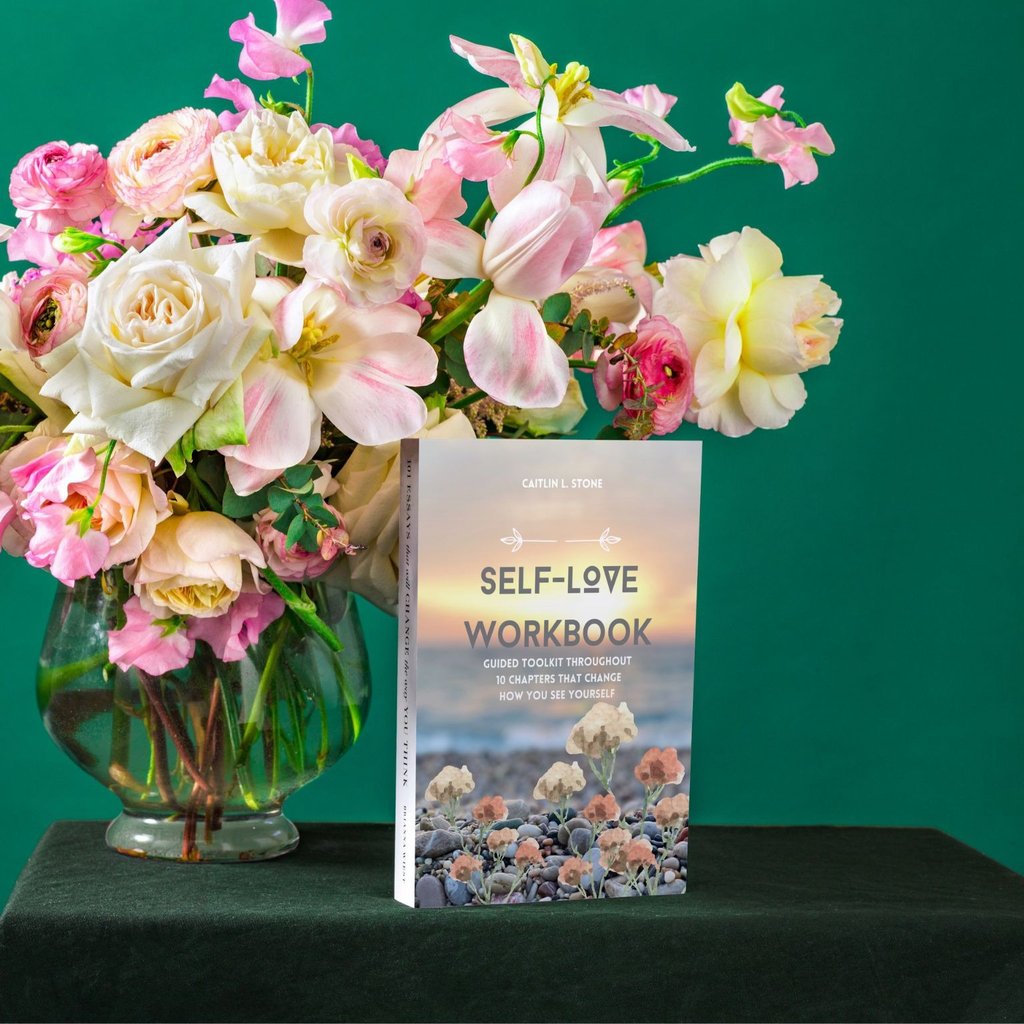
❤️ Self-Love Workbook
What if understanding your shadow also meant learning to treat yourself with more compassion?
Our Self-Love Workbook offers a gentle space to explore your needs, emotions, boundaries, patterns, and relationship with yourself without turning self-reflection into another reason to criticize yourself. Shadow work can bring uncomfortable parts of you into awareness, but understanding those parts does not require shame or self-punishment. If you are learning to recognize your patterns while still offering yourself patience and compassion, this workbook can help you continue that work from a kinder place.
🦌 What Does Your Shadow Character Have to Do With the Hunter’s Moon?
The Hunter’s Moon offers a powerful metaphor for shadow work because the symbolism of the hunt naturally raises questions about what we pursue and why we pursue it. When you are deeply focused on something you want, it can be surprisingly difficult to step back and examine the motivation behind the pursuit.
Shadow work creates that pause. You may be chasing a promotion because you genuinely want the opportunity to grow, or because some part of you believes success will finally prove that you are good enough. You may be pursuing a relationship because you feel a genuine connection, or because The Chaser desperately wants to feel chosen. You may be avoiding a decision because you need more information, or because The Doubter is afraid to trust itself.
The Hunter’s Moon asks: What are you pursuing?
Shadow work takes the question deeper: Why are you pursuing it?
And then comes the question that connects the two: Who inside you believes you need to catch it?
That answer can change how you understand a goal, relationship, decision, or even something you have been trying to release.
Our Hunter’s Moon Tarot Spread: Where Is Your Inner Compass Leading You? offers another reflective way to explore what you are pursuing, what may be influencing your direction, and where your energy is currently going. Tarot can be particularly useful here because the imagery gives you something outside your usual thought patterns to respond to.
If you need a quieter way to approach these questions before journaling or pulling cards, our Hunter’s Moon Meditation: Connect With Your Inner Guidance offers a space to slow down and listen to what may be underneath the most obvious answer.
The goal is not to assume that every desire is secretly a shadow pattern. Sometimes you genuinely want what you are pursuing. Shadow work simply gives you an opportunity to understand why you want it, what you are bringing into the pursuit, and whether your direction is being chosen consciously or influenced by an old protective pattern.
📝 Shadow Character Reflection
Once you have identified a shadow character that feels familiar, give yourself some time to explore it without trying to change it immediately. You do not need a huge list of journal prompts or an elaborate shadow-work ritual. A few honest questions can reveal a surprising amount when you answer them without trying to sound wiser, calmer, or more healed than you actually feel.
Choose the character that seems to appear most often, then complete these statements in your journal:
When I become this character, I tend to...
I usually react by...
I am trying to get...
I am trying to avoid...
I am afraid that...
I believe I need this because...
What I actually need may be...
A healthier response could be...
Pay particular attention to the difference between what the character wants and what you genuinely need. The Chaser may want someone's attention while actually needing reassurance. The Controller may want certainty while actually needing to feel safe with some uncertainty. The People-Pleaser may want everyone's approval while actually needing connection that does not require self-abandonment.
Then bring your Hunter’s Moon reflection back to the question of direction: What am I truly seeking beneath the thing I think I want?
If writing comes naturally to you, our Hunter’s Moon Journal Prompts: What Are You Truly Seeking? can help you continue exploring the motivations, fears, and desires that surfaced during this exercise.
Finally, sit with one question for a little longer: What would happen if this character didn't have to run the show today?
You do not have to eliminate the pattern. You are creating enough awareness to recognize when it appears and enough space to decide whether you want to follow it. That small pause is where shadow work becomes a practice of self-awareness rather than another reason to judge yourself.
📓 365 Psychological Journal Prompts
What if one question could reveal something about yourself you had never noticed before?
Our 365 Psychological Journal Prompts for Self-Discovery & Self-Love gives you a full year of thoughtful questions exploring emotions, beliefs, relationships, patterns, choices, boundaries, and your sense of self. Shadow work often begins with one honest question, but the answer can lead somewhere much deeper.


🌿 You Are Not Your Shadow Character
One of the most important things to remember when exploring shadow characters is that recognizing a pattern does not mean turning it into an identity. You are not “a Controller” because you sometimes need certainty, or “a People-Pleaser” because you struggle to say no. These characters are simply language for recognizing patterns.
A useful shift is: “A controlling pattern appears in me when I feel uncertain.”
That separates who you are from what you sometimes do and gives you room to respond differently.
Your shadow character may appear strongly in one area of life and barely at all in another. It may also become more active during periods of stress, uncertainty, or emotional pressure. With greater awareness, you can begin noticing its signals before the automatic behavior takes over.
Shadow work is not about defeating your shadow or becoming someone who never feels afraid, doubtful, defensive, or avoidant. It is about recognizing these patterns, understanding what they may be trying to protect, and choosing how you want to respond.
And perhaps that is the deeper lesson of the Hunter’s Moon.
You may spend a lot of time asking “What am I chasing?”
Shadow work asks you to pause and ask: “Who inside me is doing the chasing?”
Is it fear? The need to prove yourself? The desire to avoid disappointment? Or is it simply you, consciously choosing what matters?
The goal is not to silence your shadow character. It is to recognize when it has taken the wheel. Because once you can see the pattern, you have something you did not have before: a moment of choice.
If you'd like to continue exploring self-discovery, shadow work, Tarot, rituals, and personal growth, we warmly invite you to explore Sisters Creation, where we've gathered our ritual guides, shadow-work resources, journals, Tarot tools, self-discovery workbooks, and other soulful digital creations designed to support you as you keep learning, reflecting, and growing.
With love,
Caitlin & Gerly,
Soul Sisters Tarot
❓ FAQ: Hunter’s Moon Shadow Work: How to Find Your Shadow Character?
What is Hunter’s Moon shadow work?
Hunter’s Moon shadow work is a reflective practice that uses the symbolism of the Hunter’s Moon to explore hidden patterns, emotional reactions, fears, and behaviors that may influence how you pursue, avoid, control, or protect yourself. The Hunter’s Moon is associated with themes of seeking, preparation, observation, focus, and purposeful action, making it a useful seasonal lens for examining your own motivations. You can ask not only what you are pursuing, but what part of you is driving that pursuit and what it hopes to find.
Why is the Hunter’s Moon a good time for shadow work?
The Hunter’s Moon can be a meaningful time for shadow work because its symbolism encourages observation, seeking, preparation, instinct, and conscious use of your energy. These themes naturally complement shadow work, which asks you to slow down and notice the patterns beneath your reactions and choices. Autumn also creates a natural seasonal pause for considering what you have learned, what you are carrying forward, and what may need greater awareness before the next chapter begins.
What energy is associated with the Hunter’s Moon?
The Hunter’s Moon is commonly associated with themes of seeking, focus, preparation, observation, instinct, and purposeful action. In spiritual reflection, these themes can become prompts for examining where your attention is going and what you are pursuing. For shadow work, an especially useful question is whether your actions are being guided by a conscious desire or by an automatic pattern seeking safety, approval, certainty, control, or protection.
What are the best Hunter’s Moon shadow work questions?
The best Hunter’s Moon shadow work questions explore what you are pursuing, avoiding, protecting, proving, or trying to control beneath your conscious intentions. Try asking: What am I truly seeking? What am I afraid will happen if I stop chasing it? What pattern appears when I feel rejected or uncertain? What am I trying to control, and what am I afraid might happen if I cannot? What am I protecting myself from? What would I choose if I trusted myself more? These questions can help you recognize the shadow character behind a recurring pattern.
How do I identify my shadow character during the Hunter’s Moon?
You can identify your shadow character by noticing which version of you repeatedly appears when you feel threatened, rejected, uncertain, unseen, or emotionally unsafe. Pay attention to what triggers you and what you automatically do afterward. Do you chase reassurance, avoid discomfort, try to control the situation, prove yourself, please others, doubt yourself, become protective, or demand perfection? Looking for the same response across different situations can reveal which shadow character is most active.
How do I know which shadow character I am?
You can identify a shadow character by looking for the recurring pattern between a trigger, your automatic response, and the need or fear underneath it. For example, if uncertainty repeatedly makes you take control, The Controller may be a useful description of that pattern; if rejection makes you chase reassurance, The Chaser may fit better. You do not need to choose only one character, because different patterns can appear in different areas of your life. The goal is not to find the “correct” label, but to recognize the behavior you want to understand.
Can you have more than one shadow character?
Yes, you can recognize more than one shadow character in yourself, and different characters may become active in different situations. You might become The People-Pleaser in relationships, The Prover at work, and The Controller when plans become uncertain. Shadow characters are not fixed personality types, so there is no requirement to choose a single one. Pay attention to which pattern appears in a particular situation and what that part of you seems to be trying to achieve or protect.
Can a shadow character change over time?
Yes, a shadow character can become less automatic as you develop greater self-awareness and learn healthier ways to meet the needs underneath the pattern. The goal of shadow work is not necessarily to eliminate a part of yourself, but to recognize the pattern earlier and create more choice around how you respond. A person who once controlled situations to feel safe, for example, may gradually become more comfortable with uncertainty without needing to control every outcome.
What is the difference between a shadow character and my personality?
A shadow character describes a recurring pattern that tends to appear under particular emotional conditions, while your personality is the broader and more stable collection of traits, tendencies, and characteristics that make up how you generally experience and respond to life. You may be naturally organized without being The Controller, or naturally conscientious without being The Perfectionist. The important clue is whether the behavior becomes automatic or intensified when a particular fear, need, or emotional trigger is activated.
Can I use Tarot for Hunter’s Moon shadow work?
Yes, Tarot can be used as a reflective tool for Hunter’s Moon shadow work by helping you explore motivations, fears, patterns, and the direction of your energy through symbolic imagery. Instead of asking the cards to predict what will happen, you can ask questions such as: What am I not seeing about what I am pursuing?, What shadow pattern is influencing my choices?, or What do I need to understand about my current direction? Our Hunter’s Moon Tarot Spread: Where Is Your Inner Compass Leading You? was created specifically to explore these themes.
Can journaling help with Hunter’s Moon shadow work?
Journaling can help with Hunter’s Moon shadow work by making recurring thoughts, emotional reactions, motivations, and behavioral patterns easier to see. Writing gives you space to slow down and examine what you are seeking, what you are avoiding, and what keeps triggering the same response. Our Hunter’s Moon Journal Prompts: What Are You Truly Seeking? offers reflective questions designed to help you explore these motivations and your inner direction during the Full Moon.
What other practices work well with Hunter’s Moon shadow work?
Meditation, journaling, Tarot, self-awareness practices, and symbolic reflection can all complement Hunter’s Moon shadow work. Meditation can help you notice thoughts and emotions before reacting, journaling can reveal recurring patterns, Tarot can offer symbolic perspectives, and morning self-awareness practices can help you recognize shadow characters in everyday situations. Our Hunter’s Moon Meditation: Connect With Your Inner Guidance, Hunter’s Moon Self-Awareness: Morning Rituals for Inner Clarity, and Hunter’s Moon Symbols: The Spiritual Meaning of the Hunt offer different ways to continue the exploration.
What should I do after identifying my shadow character?
After identifying your shadow character, focus on understanding what the pattern is trying to achieve or protect rather than judging yourself for having it. Ask what triggers the character, what it is trying to get, what it is afraid of, and what you genuinely need underneath the automatic behavior. Then consider whether there is a healthier way to meet that need. Recognition is already an important step because it creates a pause between the trigger and your response.
Are shadow characters psychological diagnoses?
No, shadow characters are not psychological diagnoses or officially recognized clinical personality types. They are a reflective framework used to describe recurring patterns such as chasing, avoiding, controlling, people-pleasing, doubting, protecting, proving, and perfectionism. They can give you useful language for noticing automatic behavior, but they should not be used to diagnose yourself or another person. The purpose is understanding the pattern, not putting yourself into another box.
Soul Sisters Tarot
A Soft Place to Grow.
💌 SOUL SISTERS WEEKLY
A thoughtful Sunday letter with tarot reflections, moon wisdom, self-love, and gentle encouragement.
© 2026. All rights reserved.
Inspirational Coaching OÜ
sisters@soulsisterstarot.com