🍂 READY TO UNDERSTAND YOURSELF ON A DEEPER LEVEL? → EXPLORE THE FOOL'S JOURNEY 💫
A 22-week self-awareness journey with a personal spiritual guide. Get 20% off with code HUNTER20 ✨



Shadow Work Prompts for Abandonment Wounds (Deep Healing Guide)
Explore powerful shadow work prompts for abandonment healing practices. Discover inner child shadow work prompts and journaling questions to gently heal abandonment wounds.
SELF-LOVE, HEALING & INNER WORK
Soul Sisters Tarot
3/14/202612 min read


Shadow Work Prompts for Abandonment Wounds (Deep Healing Guide)
This guide is part of our Shadow Work collection, where we explore emotional healing, shadow integration, and deeper self-awareness practices.
Abandonment wounds are among the deepest emotional experiences many people carry. They often begin in childhood but continue to shape our relationships, self-worth, and sense of safety long into adulthood.
You may notice this wound appearing in subtle ways. A fear that people will leave. A strong need for reassurance. Anxiety when someone pulls away emotionally. Or the urge to cling tightly to relationships that feel uncertain.
Abandonment wounds are often less about being alone and more about what being left seems to say about your worth, lovability, or importance to others.
Shadow work invites us to gently bring these hidden fears into awareness. Instead of pushing them away, we listen to them with compassion.
One of the most supportive ways to begin this process is through journaling. Reflective questions help us explore emotions that may have been buried for years. Many people find it easier to explore these emotions safely when they can move through them slowly — especially when working with a guided shadow work journal that helps hold space for difficult feelings without becoming overwhelming.
In this guide, you will find shadow work prompts for abandonment healing practices designed to help you explore your emotional patterns with care and curiosity.
If you are exploring your emotional healing journey more broadly, you may also find guidance within our Self-Love, Healing & Inner Work collection, where we explore practices that nurture deeper self-connection.
This is not about blaming yourself or others. This is a gentle process of awareness.
Take your time with these prompts. Some may bring up powerful emotions. Others may simply open a small doorway of insight.
Both are meaningful steps toward healing.
🕯️ Understanding Abandonment Wounds in Shadow Work
Before exploring shadow work prompts abandonment, it can help to understand what abandonment wounds often look like in everyday life.
Many people associate abandonment only with obvious experiences, such as a parent leaving or a breakup. While those experiences can certainly create deep emotional pain, abandonment wounds can also develop through quieter patterns.
For example:
Feeling emotionally unseen or unsupported as a child
Caregivers who were physically present but emotionally unavailable
Repeated rejection in friendships or relationships
Growing up in unpredictable or unstable environments
Experiences of neglect or inconsistent affection
👉 These patterns are often explored more deeply in the context of emotional roots and relationship dynamics → Why Do I Fear Abandonment?
When these experiences occur early in life, the inner child learns powerful emotional lessons.
You may begin to believe:
“People always leave.”
“I’m too much.”
“If I don’t please others, they will abandon me.”
“I must hold on tightly, or I will be alone.”
These beliefs often move into the shadow. We may not consciously recognize them, but they quietly shape our reactions and relationships. Many abandonment wounds do not come from a single event. They develop from repeated experiences that slowly teach the nervous system that connection is uncertain and loss is something that must always be anticipated.
Many people first notice these patterns when they begin exploring: Shadow Work and the Inner Child, which explains how early emotional experiences continue to influence adult behavior.
Shadow work invites us to gently revisit these patterns, not to relive pain, but to understand the emotional story beneath them. And journaling can become a powerful tool in that process.
📜 Why Shadow Work Prompts Are Helpful for Abandonment Healing
When we carry abandonment wounds, emotions often become tangled and difficult to name. You may feel anxious in relationships but not fully understand why. You may react strongly to small moments of distance or rejection. Sometimes the mind quickly creates stories about being unwanted or forgotten.
Shadow work prompts help slow this process down. Instead of reacting automatically, journaling invites reflection.
When abandonment wounds are activated, it can be easy to get pulled into intense emotional reactions or overwhelming thoughts.
Working with a guided shadow work journal can help you slow down and process these feelings more safely — giving you a structured way to explore your fears, inner child needs, and relationship patterns without becoming emotionally flooded.
🖤 If you want a more supportive and grounded way to work through abandonment patterns:
👉 Explore the Master Shadow Work Journal & Guide
You may begin to notice:
Where your fears originated
Which situations trigger abandonment feelings
What your inner child may still need to express
How your protective patterns developed
Many people discover that writing allows emotions to surface in a way that feels safer than speaking them aloud.
If you’re new to reflective journaling, our guide on Why Shadow Work Journal Prompts Are Helpful for Healing explores how writing can support emotional integration and self-awareness.
Think of these prompts not as questions you must answer perfectly, but as doorways into deeper understanding. Sometimes the most meaningful insights appear slowly, over time. The goal of shadow work is not to find the "right" answer. The goal is to uncover the beliefs, fears, and emotional stories that have been operating unnoticed for years.
Abandonment wounds can sometimes lead to patterns of self-abandonment, where you disconnect from your own needs in order to feel safe or accepted.
🌷 Free Shadow Work Starter Kit
Not sure where to start with shadow work?
Many people know they carry abandonment wounds but struggle to identify the beliefs, fears, and emotional patterns hiding beneath them. The Free Shadow Work Starter Kit helps you begin exploring your shadow safely with beginner-friendly guidance, reflection exercises, and foundational prompts.


🌑 Shadow Work Prompts Abandonment: Exploring the Roots
These prompts focus on understanding where abandonment fears may have begun. You may wish to journal slowly, taking one prompt at a time.
Reflection Prompts
When do I most strongly fear being abandoned or rejected?
What situations make me feel emotionally unsafe in relationships?
What is my earliest memory of feeling left behind, ignored, or emotionally alone?
How did the adults in my childhood respond when I needed comfort?
Did I ever feel that my emotions were too much for others?
What messages about love and belonging did I learn growing up?
When someone pulls away from me emotionally, what thoughts immediately appear?
Do I notice patterns of clinging, withdrawing, or people-pleasing in relationships?
What part of me is most afraid of being left?
If my abandonment fear had a voice, what would it say?
You may notice that some prompts awaken emotions that have been buried for a long time. This is natural. Shadow work invites us to listen gently rather than judge what arises.
If journaling begins to feel overwhelming, pause and take a few slow breaths. Emotional healing unfolds best when we move at a pace that feels safe.
🌙 Inner Child Shadow Work Prompts for Abandonment
Abandonment wounds often live within the inner child. The younger part of us that once needed safety, love, and reassurance may still be holding onto unresolved pain.
These inner child shadow work prompt reflections are designed to reconnect with that part of yourself.
Inner Child Reflection Prompts
What did I need most as a child when I felt alone or afraid?
When I imagine my younger self during difficult moments, what emotions do I see?
Did I learn to hide my feelings in order to keep people close?
When did I first start believing I had to earn love or approval?
What did abandonment feel like in my childhood body?
If my younger self could speak freely now, what would they say?
What reassurance would my inner child most want to hear today?
How can I show my younger self that they are safe now?
What kind of love did I long for but rarely received?
What would healing look like for my inner child?
Working with the inner child can be deeply emotional but also profoundly healing. Moving slowly and having a consistent space to return to can make this process feel more stable, especially when emotions begin to surface more deeply.
If this topic resonates strongly for you, exploring Shadow Work and the Inner Child can provide deeper insight into how childhood experiences shape adult emotional patterns.
This process is not about blaming the past. It is about offering compassion to the parts of ourselves that were once unseen.
🔮 Healing Abandonment Shadow Work Prompts for Relationships
Abandonment wounds often reveal themselves most clearly in relationships.
You may notice patterns such as:
Fear when someone becomes distant
Difficulty trusting others fully
A tendency to over-give to avoid being left
Emotional withdrawal when you expect rejection
These healing abandonment shadow work prompts help explore how abandonment fears appear in your current relationships.
Relationship Reflection Prompts
What behaviors do I notice in myself when I fear someone might leave?
Do I seek reassurance often, or do I hide my fears completely?
Have I ever stayed in unhealthy relationships because I feared being alone?
Do I struggle to trust when someone shows genuine care?
What patterns appear in my romantic relationships?
Do I feel responsible for keeping relationships stable or peaceful?
How do I respond when someone disappoints or withdraws?
What does emotional safety look like for me in a relationship?
How would my relationships change if I trusted that I am worthy of love?
What boundaries could help protect my emotional well-being?
These reflections may reveal patterns you have never fully connected before. That awareness is not a failure. It is a powerful step toward emotional freedom.
Awareness is often the first breakthrough. Understanding why the pattern exists is where deeper healing begins.
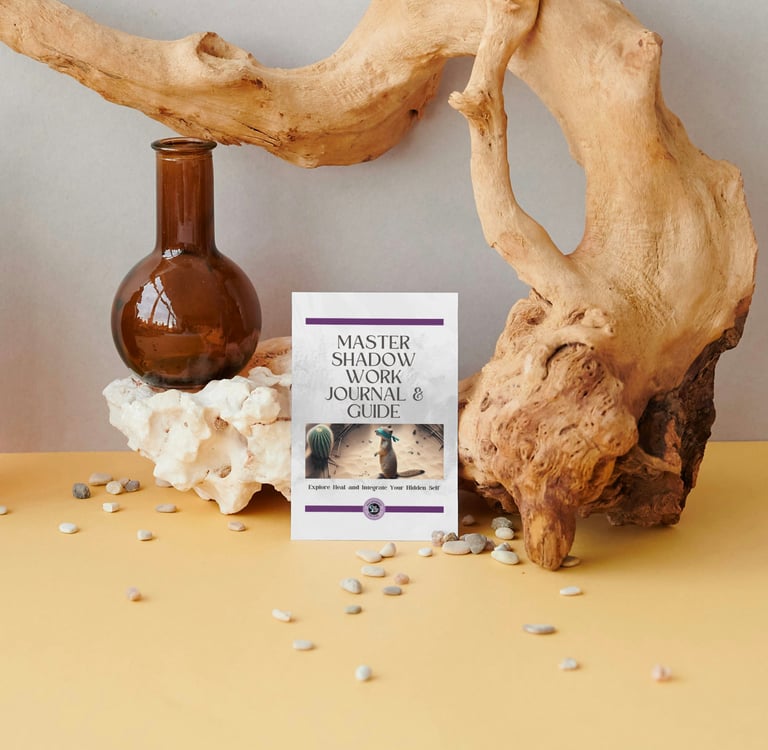
🤍 Master Shadow Work Journal & Guide
Sometimes the hardest part of healing abandonment wounds is recognizing how often the same fears, beliefs, and relationship patterns repeat.
If you find yourself uncovering deeper layers through these prompts, the Master Shadow Work Journal & Guide offers a structured way to continue that exploration with 100+ guided prompts, emotional healing exercises, and deeper shadow work practices designed to help you understand patterns at the root.

📖 Deeper Shadow Questions for Abandonment Patterns
Sometimes a few prompts open the door to much deeper reflection. If you feel ready to continue exploring your emotional patterns, our guide to 75 Shadow Work Questions to Ask Yourself offers a wide range of reflective questions for deeper self-discovery.
For now, you might explore a few additional prompts related specifically to abandonment wounds.
Deeper Reflection Prompts
What do I believe abandonment says about my worth?
When I imagine someone leaving me, what fear lies underneath that image?
Do I associate love with uncertainty or instability?
How have abandonment fears shaped my life choices?
What part of me still expects to be left behind?
What would emotional security feel like in my body?
What beliefs about love am I ready to release?
How can I begin creating a sense of safety within myself?
Shadow work often reveals that many of our fears were once protective strategies. The mind developed them in order to keep us emotionally safe. Recognizing those patterns is the first step toward gently transforming them.
✨ Creating a Safe Journaling Practice
When working with abandonment wounds, it helps to create a supportive environment for your reflections.
You may wish to:
Journal in a quiet, calm space
Light a candle or create a peaceful atmosphere
Pause whenever emotions become overwhelming
Write freely without judging your thoughts
Remind yourself that healing happens gradually
Many people also find it helpful to keep all their reflections in one dedicated space. A structured journal can make it easier to track emotional patterns and insights over time.
If you would like deeper support, having a structured journaling practice can help you move through these reflections with more clarity, safety, and emotional awareness over time.
Think of journaling not as a task you must complete, but as a conversation with yourself. Some days, the pages may be full. On other days, you may write only a few sentences.
Both are meaningful.
🌿 A Gentle Reminder While Healing Abandonment Wounds
Shadow work can bring powerful emotions to the surface, especially when exploring abandonment.
If you notice strong sadness, fear, or grief appearing during these prompts, it may help to pause and reconnect with your body.
You might try:
placing a hand over your heart
taking a few slow breaths
stepping outside for fresh air
reminding yourself that you are safe in this moment
Emotional healing is not a race. Many people discover that the most important part of shadow work is not finding answers quickly, but learning to sit with their emotions without pushing them away. Your feelings deserve patience and compassion.
🌺 Moving Forward With Compassion for Yourself
Healing abandonment wounds is a deeply personal journey. Shadow work invites us to look at parts of ourselves we may have hidden for many years. The fear of being left. The longing for reassurance. The quiet belief that we must work hard to be loved.
Yet within that exploration, something powerful begins to happen. You may start to see that these fears were never signs of weakness. They were simply the heart’s way of trying to stay safe. With time, awareness, and gentle reflection, those patterns can begin to soften.
If you would like more structured tools for exploring your emotional patterns, you may also wish to explore the Sisters Creation, where we share supportive resources for shadow work, emotional healing, and self-discovery practices.
Remember that this journey unfolds step by step. You are not broken for carrying abandonment wounds. You are human. And every moment of awareness is a quiet step toward healing.
With love,
Caitlin & Gerly,
Soul Sisters Tarot
❓FAQ: Shadow Work Prompts for Abandonment Wounds
What are shadow work prompts for abandonment wounds?
Shadow work prompts for abandonment wounds are guided journaling questions designed to help you uncover the hidden fears, beliefs, memories, and emotional patterns connected to abandonment. These prompts encourage deeper self-reflection by helping you explore where your fears began, how they show up in relationships today, and what emotional needs may still be seeking attention and healing. The goal is not simply to remember the past. It is to understand how the past may still be influencing the present.
How can shadow work help heal abandonment issues?
Shadow work helps heal abandonment issues by bringing unconscious fears, beliefs, and protective patterns into awareness. Many abandonment wounds operate beneath the surface, influencing relationships, self-worth, and emotional reactions without being fully recognized. By exploring these hidden layers, you can begin understanding why certain situations feel so emotionally charged and gradually respond with greater awareness and self-compassion. Healing often begins when you stop asking "What's wrong with me?" and start asking "What happened that taught me to feel this way?"
When should I use abandonment shadow work prompts?
Use abandonment shadow work prompts whenever you notice recurring fears of rejection, strong emotional reactions to distance, relationship anxiety, reassurance-seeking, or patterns that seem difficult to understand or change. They can be especially helpful when the same fears continue appearing across different relationships or life situations. Repeated emotional patterns are often invitations to explore something deeper.
Why do abandonment wounds make relationships feel so intense?
Abandonment wounds often cause the nervous system to become highly sensitive to signs of rejection, distance, or disconnection. As a result, situations that may seem minor to others can trigger strong emotional reactions because they activate older fears about loss, rejection, or being left behind. Abandonment wounds often cause people to react not only to what is happening, but to what they fear might happen next.
Why does abandonment show up in adult relationships?
Abandonment wounds often show up most clearly in adult relationships because relationships naturally activate our deepest needs for connection, belonging, and emotional safety. When those needs felt uncertain in the past, even small moments of distance, conflict, or uncertainty can trigger fears that are much larger than the present situation. Relationships rarely create abandonment wounds. More often, they reveal wounds that were already there.
Can shadow work help with fear of abandonment?
Yes. Shadow work helps uncover the unconscious beliefs, emotional memories, and protective patterns that often drive abandonment fears. By bringing these hidden fears into awareness, it becomes easier to understand why certain situations feel so emotionally charged and begin responding differently. Fear of abandonment often becomes easier to heal once the hidden beliefs beneath it become visible.
Can shadow work prompts make emotions stronger?
Yes. Shadow work prompts can sometimes bring sadness, grief, fear, anger, or loneliness to the surface because they encourage you to explore experiences that may have been avoided for a long time. While this can feel uncomfortable, it is often part of the healing process. Bringing emotions into awareness allows them to be acknowledged, understood, and processed rather than remaining hidden beneath the surface. Healing does not create emotions that were not there. It often reveals emotions that have been waiting to be acknowledged.
How can I support myself emotionally while doing shadow work?
When exploring abandonment wounds, move at a pace that feels emotionally manageable. Take breaks when needed, create a calming environment, and remember that healing is not measured by how quickly you uncover answers. Many people find it helpful to combine journaling with grounding practices such as deep breathing, walking, rest, or connecting with supportive people. The goal of shadow work is not to overwhelm yourself. It is to create enough safety for honest self-reflection.
Should shadow work prompts focus on childhood?
Not always, but childhood experiences are often an important place to begin because many abandonment wounds develop during our earliest relationships. Exploring childhood memories can help reveal the beliefs, fears, and emotional expectations that continue shaping adult relationships. However, present-day experiences, relationship patterns, and emotional triggers can also provide valuable insight. The goal is not to blame the past. It is to understand how the past may still be influencing the present.
Why do abandonment wounds often lead to people-pleasing?
Many people learn early in life that keeping others happy feels safer than risking rejection. As a result, abandonment wounds can contribute to people-pleasing behaviors, overgiving, difficulty setting boundaries, and prioritizing other people's needs over your own. People-pleasing is often an attempt to prevent abandonment before it happens.
What’s the best way to journal shadow work prompts?
The best way to journal shadow work prompts is slowly and honestly. Rather than trying to find perfect answers, focus on noticing emotions, memories, thoughts, and patterns that arise naturally. Some prompts may lead to immediate insights, while others may reveal their meaning over time. Consistency is often more valuable than depth in a single session. Shadow work is less about finding answers quickly and more about learning to ask yourself better questions.
What is the difference between abandonment wounds and fear of abandonment?
Abandonment wounds are the deeper emotional injuries created by experiences of rejection, neglect, inconsistency, or loss. Fear of abandonment is often the ongoing emotional response that develops from those wounds. In simple terms, the wound is the root, while the fear is one of the ways the wound continues to show up in everyday life. Abandonment wounds are often the root. Fear of abandonment is one of the branches.
What beliefs are commonly hidden beneath abandonment wounds?
Many people discover beliefs such as:
• People always leave.
• I am too much.
• I am not enough.
• Love is conditional.
• I have to earn a connection.
Shadow work helps bring these beliefs into awareness so they can be questioned rather than automatically accepted as truth. Many abandonment wounds are sustained by beliefs that were learned long ago but never consciously examined.
Soul Sisters Tarot
A Soft Place to Grow.
💌 SOUL SISTERS WEEKLY
A thoughtful Sunday letter with tarot reflections, moon wisdom, self-love, and gentle encouragement.
© 2026. All rights reserved.
Inspirational Coaching OÜ