💌 JOIN SOUL SISTERS WEEKLY → GET FREE WELCOME GIFTS 🎁
Receive a thoughtful Sunday letter, free Self-Love & Shadow Work guides, and monthly Full Moon rituals ✨


The Meaning of Litha: Why Was the Summer Solstice Once Sacred?
Explore the meaning of Litha and discover why ancient midsummer traditions celebrated the summer solstice with fires, rituals, and powerful symbolism. Why did people consider this day so important?
SEASONAL & SPIRITUAL TRADITIONS
Soul Sisters Tarot
5/24/202612 min read
Litha Meaning Explained: Traditions, Rituals & Summer Solstice Origins
This guide belongs to our Summer Solstice collection, where we explore seasonal rituals, spiritual meanings, and meaningful practices designed to help you connect with the energy of growth, reflection, and personal transformation.
Long before modern calendars, summer vacations, and seasonal traditions as we know them today, people watched the movement of the sun closely. The longest day of the year was not simply another date on a calendar. It marked a powerful turning point in nature's cycle and was often celebrated as a sacred moment of light, vitality, and life at its fullest expression.
Within many pagan and nature-based traditions, this midsummer celebration became known as Litha.
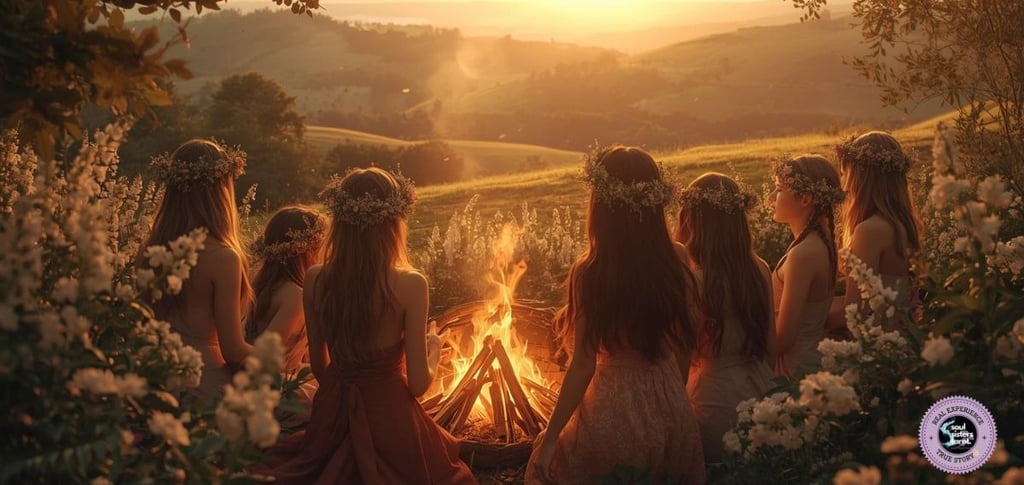
For centuries, people welcomed this season through bonfires, gatherings, rituals, flowers, and celebrations connected with the sun at its yearly peak. Many believed the summer solstice carried powerful energy, making it a meaningful time for honoring nature, welcoming abundance, and celebrating the visible fullness of life before the gradual return of darker days.
Today, many people discover Litha through modern pagan traditions, seasonal spirituality, or simple curiosity. Yet one question often appears:
What does Litha actually mean, and why has this midsummer celebration remained meaningful for so many people?
Whether you are discovering Litha for the first time or looking for a deeper understanding of Litha's meaning, traditions, and rituals, this guide will help you explore the history, symbolism, and spiritual roots behind this ancient summer celebration.
🌞 What Is Litha and What Does Litha Mean?
Litha is a midsummer celebration observed around the summer solstice and is one of the eight festivals in the modern pagan Wheel of the Year. Associated with the longest day of the year, Litha celebrates light, vitality, abundance, and the visible fullness of life at the height of summer.
Yet what makes Litha interesting is not simply when it happens. It is why this moment mattered so deeply.
Long before clocks, digital calendars, or modern holidays, people lived much closer to the rhythms of nature. The movement of the sun affected farming, survival, seasonal preparations, and everyday life itself. Because of this, the longest day of the year was often viewed as more than an astronomical event. It became a moment of meaning.
Why Is Litha Called Litha?
The name Litha is commonly linked to the writings of Bede, an Anglo-Saxon monk and historian who described the midsummer months in early Germanic traditions. While historians continue to debate exactly how the term was used historically, modern pagan and Wiccan traditions later adopted Litha as the name for the summer solstice celebration within the Wheel of the Year.
Today, Litha is widely used to describe the midsummer festival associated with the longest day of the year, making it one of the best-known seasonal celebrations in modern pagan spirituality.
Historically, Litha often carried symbolism connected with:
the strength and warmth of the sun
abundance and visible growth
celebration and community
gratitude for nature's gifts
fertility and life energy
the changing cycle between light and darkness
There is also a fascinating contrast at the heart of Litha itself. The summer solstice marks the greatest amount of daylight in the year. Yet from this moment forward, daylight slowly begins to decrease again.
Because of this, many traditions viewed Litha not only as a celebration of fullness but also as a reminder that nature constantly moves through cycles. Nothing remains at its peak forever, and every season eventually gives way to another.
If you would like to explore more seasonal celebrations, sacred traditions, and spiritual practices throughout the year, continue exploring our Sacred Celebrations & Spiritual Traditions guide, where we honor the wisdom and symbolism carried through changing seasons.
For many people today, Litha remains meaningful not only because of its history, but because it quietly asks a question that still feels relevant:
What in my life has reached a season of growth, visibility, or fullness?
📜 The Pagan Roots and History Behind Litha
Although many people discover Litha through modern pagan traditions today, the story behind midsummer celebrations reaches much further into the past.
Long before seasonal holidays became organized traditions, people lived in close relationship with the natural world. The changing position of the sun influenced planting, harvests, survival, and the rhythm of everyday life. Seasonal turning points were not simply dates to remember. They often carried practical importance as well as spiritual meaning.
The longest day of the year naturally stood out.
After months of increasing daylight, midsummer arrived at a moment when the sun appeared to reach its greatest strength. For many ancient communities, this was not viewed as an ordinary event. It became a time for celebration, gratitude, and honoring the visible fullness of life surrounding them.
Across different regions and cultures, midsummer traditions varied, but many practices repeatedly appeared:
ceremonial fires and bonfires
gatherings and community celebrations
flowers, herbs, and greenery used for decoration
honoring fertility and seasonal abundance
rituals connected with protection, blessings, and prosperity
Bonfires held particularly strong symbolism in many European traditions. Fire often represented the visible power of the sun itself. Some communities gathered around large fires, while others carried torches or moved through smoke as part of rituals believed to bring protection, purification, good fortune, or blessings for crops and future harvests.
What makes the history of Litha especially fascinating is that many cultures separated by distance and time still returned to similar ideas.
People repeatedly celebrated:
light at its strongest point
the visible abundance of nature
gratitude for growth already received
connection with the community
the understanding that every season eventually changes
Modern Litha later became part of the pagan Wheel of the Year and is now widely observed within Wiccan and contemporary pagan traditions. Yet many of its deeper themes existed long before the modern celebration itself took shape.
If you would like to explore the deeper symbolism connected with midsummer imagery and traditions, explore our Summer Solstice Symbols: Sunflowers, Fire, Herbs, Bees & Sacred Meanings guide.
What makes Litha meaningful is not only its rituals or history. Across centuries, people repeatedly returned to the same idea: Some moments in nature felt important enough to stop and celebrate.
💖 Free Self-Love Guide
Ancient traditions often begin with a simple question: What needs more attention in your life right now?
Our Free Self-Love Guide offers gentle practices and reflections to help you reconnect with yourself, strengthen self-worth, and create more space for what truly matters.


🔥 Traditional Litha Celebrations and Midsummer Customs
While Litha later became part of modern pagan traditions, many customs connected with midsummer existed long before the celebration received its current name. What makes these traditions interesting is that they were rarely only about ceremony.
For many communities, midsummer celebrations became moments where practical life, seasonal change, and spiritual meaning naturally blended together. People were not simply observing the longest day of the year. They were recognizing a moment when nature itself appeared to stand at its fullest expression.
Across different regions, celebrations looked different, yet many customs repeatedly appeared:
large bonfires and ceremonial fires
gatherings with family and local communities
decorating homes and gathering places with flowers and greenery
collecting herbs and plants during midsummer
singing, dancing, and sharing seasonal food
traditions connected with blessings, protection, fertility, and abundance
Bonfires became especially important in many European traditions.
In some places, fires were lit on hilltops and remained burning late into the night. People gathered around them, danced, sang, and celebrated together. Some traditions believed that fire symbolized the visible strength of the sun itself, while others associated it with purification, protection, or attracting good fortune for future harvests.
Plants and herbs also carried special meaning. Certain flowers and herbs were sometimes collected during midsummer because they were believed to hold stronger symbolic or spiritual significance during the season's peak. Some traditions connected them with healing, blessings, protection, or prosperity.
What becomes fascinating when looking across many of these customs is that they repeatedly return to the same idea: People were not only celebrating what they hoped to receive. They were celebrating what had already arrived.
Visible growth, warmth, community, light, and the fullness of life itself had become reasons to stop and celebrate.
Many symbols and traditions connected with Litha eventually evolved into practices that carried meanings of prosperity, abundance, and welcoming positive change. If you would like to explore how these themes appear within modern seasonal practices, explore our Summer Solstice Manifestation: How to Work With Expansion & Opportunity Energy guide.
🔥 What Did Fire Symbolize During Litha?
If one symbol appears again and again throughout Litha traditions, it is fire. At first glance, this might seem strange. The summer solstice is already the brightest day of the year, so why did so many midsummer celebrations include bonfires, torches, and ceremonial flames?
For many ancient communities, fire was not simply a source of light. It was seen as an earthly reflection of the sun itself.
The summer solstice marked the moment when the sun appeared strongest. Crops were growing, nature was thriving, and life seemed filled with movement and vitality. Lighting fires became a way of honoring that power and celebrating the season's visible abundance. Yet there was another layer of meaning beneath many midsummer fire traditions.
The summer solstice marks the peak of light, but it also marks the moment when daylight slowly begins to decrease again. Ancient people lived much closer to seasonal cycles than most of us do today, and many understood that even the brightest day of the year contained the beginning of a new transition.
Because of this, fire became more than a symbol of celebration. It became a reminder that every season eventually changes.
Many midsummer traditions associated fire with:
the power and vitality of the sun
gratitude for nature's abundance
protection and blessings
fertility and future harvests
transformation and renewal
the cycle between growth and decline
Perhaps this is why fire remained such an important part of Litha celebrations for centuries. It symbolized both the fullness of the present moment and the understanding that nothing in nature remains unchanged forever.
For many people today, lighting a candle during Litha is not only a connection to ancient traditions. It can also become a quiet reminder to appreciate what is flourishing now before the season shifts once again.
If you would like to explore the deeper meanings behind fire, sunflowers, herbs, bees, and other midsummer imagery, explore our Summer Solstice Symbols: Sunflowers, Fire, Herbs, Bees & Sacred Meanings guide, where we explore the symbolism that has appeared throughout summer solstice and Litha traditions for centuries.
🕯️ Modern Litha Rituals and Ways People Celebrate Today
One of the most interesting things about Litha is that the celebration did not disappear as cultures changed. Instead, many traditions gradually evolved.
Modern Litha celebrations often look very different from the customs practiced centuries ago, yet many of the ideas beneath them remain surprisingly familiar. People still feel drawn toward marking seasonal turning points, spending time outdoors, celebrating warmth and light, and pausing long enough to recognize moments that feel meaningful.
Today, people celebrate Litha in many different ways. Some follow pagan or Wiccan traditions closely, while others simply use the season as an opportunity to reconnect with nature or create personal rituals that feel meaningful to them.
Modern celebrations often include:
lighting candles, bonfires, or symbolic fire rituals
creating seasonal altars with flowers, herbs, or natural objects
spending time outdoors during sunrise or sunset
gathering with family and friends
journaling or reflecting on personal growth
preparing seasonal meals or sharing food together
practicing gratitude and honoring the visible fullness of the season
What feels particularly interesting is that many people now celebrate Litha less as a formal religious event and more as a personal experience.
For some, it becomes a chance to slow down and step away from routine. For others, it becomes an opportunity to notice what has grown, changed, or reached a season of fullness within their own lives.
This shift reflects something that has quietly remained consistent throughout many versions of Litha across time: People repeatedly create rituals around moments that remind them to stop, pay attention, and recognize that life itself moves in cycles.
If you would like to explore reflective seasonal practices connected with growth and personal insight, explore our Summer Solstice Journal Prompts for Growth & Emotional Clarity guide.
🌻 Summer Self-Love Bucket List
Midsummer was never meant to be experienced only through reading.
If you're ready to bring more joy, playfulness, and meaningful experiences into the season, explore our Summer Self-Love Bucket List filled with simple ways to reconnect with yourself this summer.


☀️ Is Litha the Same as the Summer Solstice?
One of the most common points of confusion around Litha is that many people assume it is simply another name for the summer solstice. They are closely connected, but they are not exactly the same thing.
The summer solstice refers to the natural event itself, while Litha developed as a celebration observed around that seasonal turning point within modern pagan and nature-based traditions.
What makes the difference interesting is that the summer solstice exists whether people celebrate it or not. Litha emerged later as a way of giving meaning, tradition, and ritual to that moment.
Throughout history, this has happened repeatedly across cultures. People often built customs around events that felt significant in the natural world. Seasonal changes, harvest periods, and the movement of the sun frequently became more than practical observations. They became moments people gathered around, celebrated, and carried forward through tradition.
Because of this, not everyone interested in the summer solstice connects with Litha, and not everyone who celebrates Litha follows the same spiritual path. Some people approach it through modern pagan practices. Others feel drawn to its historical roots, seasonal symbolism, or curiosity about ancient celebrations.
Understanding the difference helps explain why Litha continues appearing in modern spiritual conversations today. It is not simply another word for midsummer. It is one interpretation of how people have chosen to celebrate and give meaning to that moment across time.
If you would like to explore more seasonal celebrations and spiritual traditions throughout the year, continue exploring our Sacred Celebrations & Spiritual Traditions guide, where we honor the symbolism and meaning carried through changing seasons.
🌅 Why Litha Still Feels Meaningful Today
What makes Litha interesting is not only that people celebrated it centuries ago. It is that people continue returning to similar ideas even now.
Across different places, traditions, and periods of history, people repeatedly gathered around moments in nature that felt larger than ordinary life. They lit fires, celebrated together, watched seasonal changes, and created traditions around events that seemed important enough to remember.
Modern life looks very different today.
Most people no longer organize their lives around harvest cycles, seasonal preparations, or the movement of the sun. Yet many people still feel drawn toward slowing down, spending time outdoors, marking meaningful moments, or creating rituals that help them feel more connected to something beyond everyday routines.
Perhaps this is one reason Litha continues to feel relevant. Beneath its history, customs, and symbolism sits a question that has followed people for generations:
What moments in life deserve to be noticed rather than rushed through?
Maybe that is why midsummer celebrations have survived for so long. Not because people were only celebrating sunlight or the longest day of the year, but because they were recognizing something that still feels familiar today: Some moments feel important enough to pause for.
If you would like to explore the broader meanings and practices connected with midsummer, you may also enjoy our Summer Solstice Rituals: Spiritual Meaning, Traditions & Sacred Practices guide.
If meaningful rituals, seasonal traditions, and spiritual tools speak to you, you can also explore our Sisters Creation collection, where we share soulful resources, rituals, and intentional creations designed to support personal growth and spiritual connection.
With love and light,
Caitlin & Gerly,
Soul Sisters Tarot
❓ Frequently Asked Questions About Litha Meaning
What does Litha mean?
Litha is a midsummer celebration observed around the summer solstice within modern pagan and nature-based traditions. It is commonly associated with sunlight, vitality, visible growth, and the fullness of life during the longest day of the year.
What is Litha, and what does it celebrate?
Litha is a seasonal celebration connected with midsummer and the longest day of the year. Traditionally, it celebrates light, abundance, nature, and the visible fullness of life during the peak of summer.
Why was the summer solstice sacred to ancient people?
For many ancient cultures, the summer solstice marked the longest day of the year and the moment when the sun appeared strongest. Because daily life depended heavily on seasonal cycles, farming, and successful harvests, this turning point carried deep practical and spiritual significance. Many communities celebrated the solstice with fires, rituals, feasts, and gatherings as a way of honoring light, expressing gratitude, welcoming abundance, and recognizing the powerful relationship between human life and the natural world.
Did ancient people celebrate Litha?
Not exactly. While many ancient cultures celebrated midsummer and the summer solstice, the modern name "Litha" is primarily associated with contemporary pagan and Wiccan traditions. The celebrations themselves are often much older than the name and include a wide variety of customs, festivals, fires, and seasonal traditions that existed across different cultures.
Is Litha a pagan holiday?
Litha is commonly associated with modern pagan and Wiccan traditions and is recognized as one of the eight festivals within the Wheel of the Year. However, many people today also connect with Litha through seasonal spirituality, symbolism, or historical interest without following a specific religion.
Is Litha the same as the summer solstice?
No. The summer solstice is the natural seasonal event itself, while Litha developed as a celebration observed around that moment. They are closely connected, but they are not exactly the same thing.
When is Litha celebrated?
Litha is usually celebrated around the summer solstice, which commonly occurs around June 20–21 in the Northern Hemisphere. Dates can vary slightly from year to year.
What do people do for Litha?
Modern Litha celebrations vary widely. People may light candles or fires, spend time outdoors, gather with others, create seasonal altars, work with herbs and flowers, reflect on personal growth, or celebrate the season in meaningful ways.
Why is Litha important?
Litha is important because it celebrates a unique moment in the yearly cycle: the point when daylight reaches its maximum length. For many ancient communities, this was more than an astronomical event. It marked a season of abundance, visible growth, community celebration, and gratitude for nature's gifts. The summer solstice also carried a deeper meaning because it represented both the peak of light and the beginning of its gradual decline, reminding people that all seasons move through cycles of growth and change.
What symbols are connected with Litha?
Litha is often connected with symbols associated with midsummer, such as sunlight, fire, flowers, greenery, herbs, and nature imagery. These symbols commonly reflect themes of vitality, warmth, and visible growth.
Do you have to be pagan to celebrate Litha?
No. While Litha has strong connections with pagan traditions, many people today explore it through seasonal practices, nature-based spirituality, symbolism, or personal rituals without following a specific spiritual path.
Soul Sisters Tarot
A Soft Place to Grow.
💌 SOUL SISTERS WEEKLY
A thoughtful Sunday letter with tarot reflections, moon wisdom, self-love, and gentle encouragement.
© 2026. All rights reserved.
Inspirational Coaching OÜ
sisters@soulsisterstarot.com