💌 JOIN SOUL SISTERS WEEKLY → GET FREE WELCOME GIFTS 🎁
Receive a thoughtful Sunday letter, free Self-Love & Shadow Work guides, and monthly Full Moon rituals ✨



Shadow Work and Self-Love: Why Loving Yourself Can Feel Wrong
Shadow work and self-love expose a strange contradiction: you can know you deserve love and still resist receiving it. Here’s what may be underneath.
SELF-LOVE, HEALING & INNER WORK
Soul Sisters Tarot
3/22/202620 min read


Shadow Work and Self-Love: Why Healing Your Shadow Helps You Love Yourself
This guide is part of our Self-Love Journey, where we explore emotional healing, self-compassion, and gentle practices that help you build a deeper and more supportive relationship with yourself.
Shadow work and self-love are connected, but they are not the same practice. Self-love focuses on developing self-compassion, self-respect, acceptance, and a healthier relationship with yourself, while shadow work involves becoming aware of the emotions, needs, traits, and patterns you have learned to hide, reject, or judge. When these hidden parts continue to influence how you see yourself, they can make genuine self-acceptance feel surprisingly difficult.
You may understand that you deserve kindness and still criticize yourself constantly. You may practice affirmations yet feel uncomfortable believing positive things about yourself. You may want healthier boundaries but feel guilty whenever you put your own needs first. You may even wonder why you keep repeating reactions or relationship patterns that you consciously want to change.
This is where shadow work can become a powerful companion to self-love. Rather than asking you to simply think more positively about yourself, shadow work encourages you to become curious about the parts of yourself you have pushed away. What emotion are you judging? What need have you learned to dismiss? What trait were you taught was unacceptable? What part of yourself are you still trying to hide?
Understanding these patterns does not mean assuming every difficult emotion comes from childhood or that every reaction contains a hidden wound. Shadow work is best approached as a reflective practice, not a diagnostic system. Its value lies in helping you notice recurring patterns and explore them with greater honesty and compassion.
As part of our broader Self-Love, Healing & Inner Work pillar, this guide explores how shadow work and self-love differ, where they overlap, why hidden patterns can interfere with self-acceptance, and how shadow integration can support a more compassionate relationship with yourself.
If you are new to shadow work, you can also explore our complete shadow work hub, which covers different approaches to emotional awareness, self-reflection, and inner work.
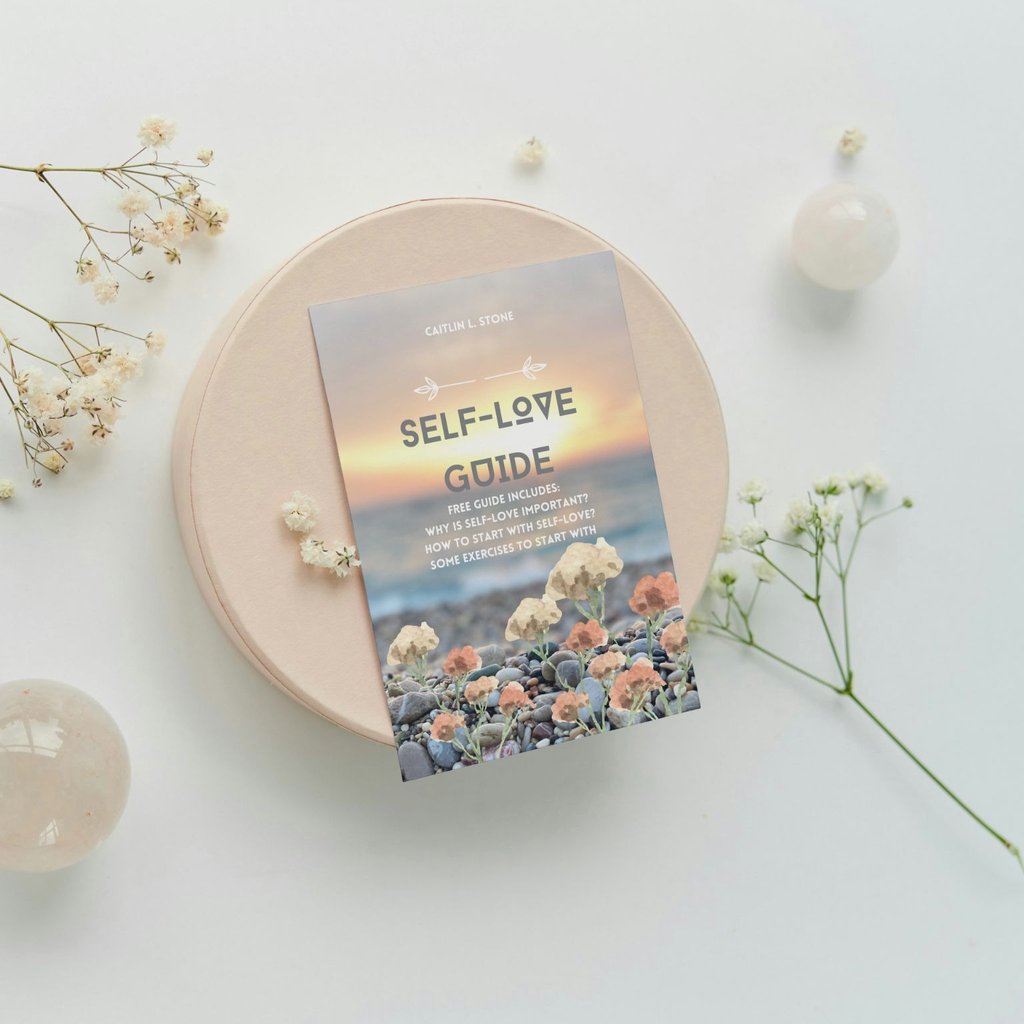
💖 Free Self-Love Guide
You may understand that you deserve self-love, but still struggle to actually feel it.
Our Free Self-Love Guide offers gentle, practical guidance for building a more compassionate relationship with yourself, making it a supportive starting point before you explore the deeper patterns that can make self-acceptance difficult.

🌿 How Shadow Work and Self-Love Work Together
Shadow work and self-love serve different purposes, but they can strengthen each other. Shadow work helps you notice the parts of yourself you struggle to accept, while self-love gives you a compassionate way to respond to what you discover. One brings hidden patterns into awareness; the other helps you meet those patterns without turning them into another reason to judge yourself.
For example, imagine you become extremely upset when someone criticizes your work. Shadow work might encourage you to explore why criticism feels so threatening, what the reaction reminds you of, or what belief about yourself becomes activated. Self-love changes what happens next. Instead of concluding, “I am too sensitive,” you might recognize, “This reaction is telling me something important, and I can listen without attacking myself.”
That distinction matters. Shadow work is not about finding everything that is wrong with you. Self-love is not about convincing yourself that everything is fine. Together, they create space for honest self-awareness without abandoning compassion.
If you are still learning the foundations of shadow work, our guide on How to Do Shadow Work to Heal Your Inner Self offers a more detailed introduction to the practice itself. Here, our focus is narrower: understanding what happens when shadow awareness becomes part of your self-love journey.
Shadow Work Helps You See What Self-Love Alone May Not Reach
Sometimes you know intellectually that you should be kinder to yourself, but your emotional reactions tell a different story.
You might say:
“I know I deserve to rest, but I feel guilty whenever I do.”
“I know I am worthy, but I constantly need other people's approval.”
“I want to set boundaries, but saying no makes me feel like a bad person.”
“I want to love myself, but I cannot accept certain parts of who I am.”
These contradictions can be useful places for deeper reflection. Shadow work asks you to look beneath the surface and explore the beliefs, fears, unmet needs, or learned patterns that may be influencing your response.
This is also where themes such as The Inner Critic and Self-Abandonment can become relevant. The goal is not to label every difficult reaction as a hidden wound, but to notice when a recurring pattern seems to be standing between you and a more accepting relationship with yourself.
Self-Love Gives Shadow Work a Different Direction
Without self-compassion, inner work can easily become another form of self-criticism. You might spend hours analyzing your reactions and searching for everything you need to “heal,” only to walk away believing you are more broken than you thought.
Self-love creates a different foundation. Instead of asking, “What is wrong with me?”, you can ask: “What am I beginning to understand about myself?”
Instead of trying to eliminate an emotion, you can become curious about what it might be communicating. Instead of judging a pattern immediately, you can consider what purpose it may once have served and whether it still serves you now.
This is where shadow work becomes especially meaningful within a self-love journey. You are not exploring your difficult parts so you can reject them more intelligently. You are exploring them so you can understand yourself more honestly.
If you are exploring self-love alongside this deeper inner work, our Self-Love Journey brings together practical guidance for self-compassion, self-awareness, and building a more supportive relationship with yourself.
🍃 Soul Sisters Notes
“For me, the biggest shift happened when I stopped using self-awareness as another way to criticize myself. I could look at a pattern, understand where it came from, and still choose to meet myself with kindness. Shadow work showed me what I needed to see. Self-love taught me that I didn't have to hate what I found.” - Caitlin
❤️ Self-Love Workbook
You can understand your patterns and still wonder, “But how do I actually start treating myself differently?”
Our Self-Love Workbook gives you guided exercises and reflective practices for exploring self-worth, self-compassion, emotional awareness, and your relationship with yourself. It can be especially helpful when you understand that self-love matters but want something more structured to help you turn that understanding into an everyday practice.


🪞 The Hidden Patterns That Can Make Self-Love Difficult
Sometimes the reason self-love feels difficult is not that you do not know how to care for yourself. It is that an old pattern keeps telling you that you should not need, express, or accept certain parts of yourself. These patterns can operate so automatically that you may mistake them for personality traits rather than learned ways of responding.
Shadow work can help you notice these patterns without immediately judging them. Self-love then asks a different question: “How can I respond to this part of myself with more understanding?”
The Inner Critic Can Turn Self-Improvement Into Self-Rejection
You may genuinely want to grow, but your motivation can become tangled with criticism.
Instead of: “I want to become more confident,” the underlying message becomes: “I need to become better because who I am right now is not enough.”
This distinction matters because self-improvement built on shame rarely feels satisfying. Even when you reach a goal, the standard simply moves again.
Shadow work can help you become curious about the voice behind that criticism. When did you start believing that mistakes made you less worthy? What happens emotionally when you are not the best, most productive, most attractive, or most capable person in the room?
Our deeper exploration of The Inner Critic can help you understand this pattern and why that critical voice can become so persistent.
Self-Abandonment Can Make Loving Yourself Feel Contradictory
Another hidden barrier appears when you have become accustomed to choosing everyone else before yourself.
You may know that self-love involves respecting your needs, yet automatically say yes when you want to say no. You may understand that rest matters but continue making yourself available whenever someone needs you. You may even struggle to identify what you want because you have spent so much time adapting to what other people want from you.
This is where shadow work and self-love meet particularly clearly. Shadow work can help you explore why your own needs became difficult to prioritize, while self-love gives you permission to start taking those needs seriously.
If this pattern feels familiar, our guide to Self-Abandonment: Why We Ignore Our Own Needs explores how repeatedly disconnecting from your needs can affect your relationship with yourself.
Emotional Avoidance Can Keep You From Accepting Your Whole Self
Self-love does not mean feeling good about yourself all the time. If you only allow yourself to experience emotions that feel pleasant or socially acceptable, you may end up rejecting significant parts of your emotional life.
Perhaps you dislike feeling angry, so you immediately suppress it. Maybe sadness makes you uncomfortable, so you distract yourself whenever it appears. Perhaps jealousy, resentment, fear, or insecurity feels so unacceptable that you refuse to acknowledge it.
Shadow work creates an opportunity to approach these emotions with curiosity rather than immediately deciding they make you a bad person.
The question becomes less “How do I get rid of this feeling?” and more “What is this feeling showing me about my needs, boundaries, fears, or expectations?”
You do not have to act on every emotion to learn from it. Recognizing an emotion and choosing how to respond are two different things.
The Need for Approval Can Hide Behind “Being a Good Person”
Sometimes difficulty with self-love appears as an almost constant need to be liked, useful, agreeable, or needed.
You might feel uncomfortable disappointing someone even when their request is unreasonable. You might replay conversations afterward, wondering whether someone misunderstood you. You might measure your worth by how much you do for other people.
This does not automatically mean you are a people-pleaser, and caring about other people's feelings is not inherently unhealthy. The important question is whether being accepted by others has become more important than remaining connected to yourself.
Shadow work can help you explore what you fear might happen if you stop performing the version of yourself that receives approval. Self-love then gives you a place to build worth that does not depend entirely on being useful, agreeable, or needed.
🍃 Soul Sisters Notes
“I used to think self-love meant learning to like every part of myself. Now I think it is much more honest than that. Sometimes self-love simply means I can look at a part of myself I don't understand yet and say, ‘I am willing to listen before I judge you.’” - Caitlin
🌷 Free Shadow Work Starter Kit
Sometimes the hardest part of shadow work is knowing where to begin without turning the whole process into an emotional deep dive.
Our Free Shadow Work Starter Kit offers simple guided exercises and reflection prompts to help you begin noticing hidden patterns, emotions, and beliefs at your own pace. It is designed as a gentle introduction, especially if you are curious about shadow work but want to approach it with more structure and emotional awareness.


🌊 What Shadow Integration Changes About the Way You Love Yourself
Shadow integration is the process of bringing the parts of yourself you have rejected or avoided into conscious awareness without letting them define your identity. In the context of self-love, this means learning to acknowledge difficult emotions, conflicting needs, unwanted traits, and uncomfortable patterns without turning them into proof that something is wrong with you.
The goal is not to approve of every behavior or excuse patterns that hurt you or other people. Self-acceptance and accountability can exist together. You can recognize that you acted from anger, insecurity, jealousy, fear, or resentment while still taking responsibility for what you did and choosing a different response next time.
That is one of the most important differences between simply analyzing yourself and actually integrating what you discover.
You Start Separating Who You Are From What You Feel
An emotion is not an identity. Feeling jealous does not automatically make you a jealous person. Feeling angry does not mean you are an angry person. Wanting attention does not make you needy, and feeling afraid does not make you weak.
Shadow work can help you notice these experiences without immediately turning them into judgments about who you are.
Instead of: “I am a terrible person for feeling this,” you can begin with: “I am experiencing this feeling. What is happening here?” That small distinction creates room for self-awareness without self-rejection.
You Can Understand a Pattern Without Keeping It
One of the most empowering parts of shadow integration is realizing that understanding a pattern does not mean you have to continue it.
Perhaps you discover that you become defensive whenever someone gives you feedback. You might explore where that sensitivity comes from and recognize that criticism has always felt connected to rejection for you.
Understanding the pattern does not mean saying, “That is just how I am.” It means you can eventually notice the reaction earlier and choose what happens next. Awareness creates choice.
You Become More Compassionate Without Losing Your Boundaries
Self-love does not require you to tolerate everything simply because you understand why someone behaves a certain way. The same principle applies inwardly. You can have compassion for the part of yourself that learned to people-please while still deciding that you no longer want to abandon your own needs.
You can understand why you became afraid of conflict while still learning how to communicate honestly. You can recognize that perfectionism once helped you feel safe while deciding that you no longer want your worth to depend on constant achievement.
This is where How to Set Boundaries for Yourself can become a natural next step. Understanding yourself is valuable, but self-love also becomes practical through the choices you make afterward.
You Stop Treating Shame as a Tool for Change
Shame often tells us that becoming a better person requires becoming harsher with ourselves. Shadow integration offers another possibility. You can acknowledge something you do not like, understand it more deeply, take responsibility where necessary, and still believe that you are worthy of compassion.
That does not remove accountability. It removes the belief that self-hatred is necessary for growth. And that may be one of the deepest places where shadow work and self-love meet: you can tell yourself the truth without using that truth as a weapon against yourself.
🍃 Soul Sisters Notes
“I thought accepting myself meant I had to approve of everything I found. It took me a long time to understand that I could say, ‘This is a pattern I want to change,’ without also saying, ‘This makes me a bad person.’ That difference gave me so much more room to actually grow.” - Caitlin
🔥 What Your Emotional Triggers Can Teach You About Self-Love
Emotional triggers can reveal where your relationship with yourself becomes most difficult. A strong reaction does not automatically mean that a hidden wound is being activated, but recurring reactions can give you useful information about your fears, expectations, boundaries, and unmet needs.
For example, perhaps someone cancels plans with you, and you immediately think, “They obviously don't care about me.” Or someone gives you constructive feedback, and you instantly feel ashamed. Maybe a friend succeeds at something you wanted, and you feel an unexpected wave of jealousy.
The emotion itself is not a moral failure. What matters is what you do with the information it gives you.
Look Beyond the Immediate Reaction
When something activates you, try slowing down before deciding what the reaction means.
Ask yourself:
What happened objectively?
What did I immediately tell myself about it?
What emotion appeared first?
What did I suddenly believe about myself?
What did I want or need in that moment?
Does this reaction feel familiar from other situations?
This can help separate the present situation from the story your mind may automatically attach to it.
Notice When a Trigger Becomes a Self-Love Issue
A trigger becomes particularly relevant to self-love when the reaction quickly turns against you.
For example:
Someone criticizes your work, and instead of thinking, “I disagree with that feedback,” you immediately think, “I'm not good enough.”
Someone sets a boundary with you, and instead of respecting their limit, you assume, “They don't want me anymore.”
You make a mistake, and instead of thinking, “I made an error,” you think, “I always ruin everything.” The external event may be small, but the meaning you attach to it can expose an old belief about your worth.
This is where shadow work can become useful. Rather than trying to eliminate the reaction, you can explore why this particular situation touches such a sensitive place inside you.
If you want to explore this more deeply, our guide on Shadow Work Triggers: Why You Feel Emotionally Triggered goes further into recognizing and working with these reactions.
Turn the Trigger Into a Moment of Self-Connection
You do not need to analyze every emotional reaction. Sometimes the most loving response is simply to notice what is happening and give yourself a moment before reacting.
You might say to yourself: “Something about this has affected me deeply. I don't have to understand it immediately.” Then give yourself space to feel, breathe, journal, take a walk, or return to the situation once you are calmer.
This is an important part of the connection between shadow work and self-love. Shadow work asks you to become curious about what has been activated. Self-love asks you to stay on your own side while you explore it.
🍃 Soul Sisters Notes
“I used to think being triggered meant I was failing at healing. Now I see those moments differently. Sometimes they simply show me where I still need to be gentle with myself. I don't have to solve the whole story every time. Sometimes noticing the reaction without judging myself is already a step toward self-love.” - Caitlin
🌱 How to Practice Shadow Work and Self-Love Together
The most supportive approach is to pair honest self-reflection with compassionate action. Shadow work can help you recognize a pattern, emotion, or belief, while self-love helps you decide how to care for yourself once you have recognized it.
You do not need to spend hours analyzing your past to practice this. A simple situation from your current life can become an opportunity to notice what is happening inside you.
Start With One Pattern You Keep Repeating
Choose one situation that regularly leaves you feeling stuck. Maybe you constantly say yes and regret it later. Perhaps criticism makes you shut down. Maybe you compare yourself with other people and immediately feel inadequate.
Instead of trying to understand your entire emotional history, focus on one pattern and ask: “What happens inside me just before I respond this way?” Notice the thought, emotion, physical sensation, and impulse that appear.
Ask What the Pattern Might Be Protecting
Once you recognize the reaction, become curious rather than judgmental. You might discover that saying yes protects you from the fear of disappointing someone. Perfectionism may protect you from feeling inadequate. Avoiding conflict may protect you from rejection.
This does not mean every pattern has one hidden explanation. It simply gives you another perspective to explore.
The question is not “Why am I like this?”
Try: “What might this response be trying to help me avoid, achieve, or protect?”
Respond to Yourself Instead of Automatically Reacting
This is where self-love becomes part of the practice.
If you notice that you are about to agree to something you do not have capacity for, pause before answering.
If you notice the inner critic becoming harsh after a mistake, speak to yourself differently.
If an emotional trigger makes you want to withdraw completely, give yourself time to regulate before deciding what the situation actually requires.
You are creating a small space between awareness and action, which allows your response to become more intentional.
Turn Insight Into One Loving Choice
Shadow work becomes much more useful when reflection eventually changes something in your everyday life.
After identifying a pattern, ask: “What would self-love look like here?”
It might mean saying no.
It might mean apologizing instead of becoming defensive.
It might mean resting instead of proving that you can keep going.
It might mean asking for help.
It might mean allowing yourself to be imperfect without turning the mistake into a statement about your worth.
The answer will be different for every situation, but the principle remains the same: understanding yourself is the beginning; responding to yourself with greater compassion is where the relationship starts to change.
If you want to explore shadow work through guided reflection, our 75 Shadow Work Questions for Deep Self-Reflection offers questions you can return to whenever you want to explore a recurring pattern more deeply.
And if you prefer a more structured journaling practice, our Master Shadow Work Journal & Guide can help you explore hidden patterns and emotions at your own pace.
🍃 Soul Sisters Notes
“I used to think the insight was the healing. Now I know there is another step. I can understand why I react the way I do, but then I still have to choose what I do with that understanding. That is where self-love became real for me.” - Caitlin
🤍 Master Shadow Work Journal & Guide
You may have discovered the pattern. Now you may want to understand it more deeply.
Our Master Shadow Work Journal & Guide is designed for deeper inner exploration, with guided prompts and exercises that help you examine recurring emotional patterns, hidden beliefs, triggers, and parts of yourself you may have learned to reject. It gives you a more structured space to continue the work when you are ready to move beyond occasional reflection and develop a deeper shadow-work practice.


🌷 Shadow Work and Self-Love: Learning to Stay With Yourself
Shadow work and self-love are not competing approaches to healing. They answer different parts of the same question: how can you have a more honest and compassionate relationship with yourself?
Shadow work can help you notice the parts of yourself you have learned to hide, reject, or judge. Self-love helps you meet those discoveries without deciding that they make you unworthy of kindness.
You may uncover a need you have been ignoring, a reaction you do not understand, an old belief about your worth, or a pattern that no longer serves you. You do not have to fix everything the moment you become aware of it.
Sometimes the most meaningful step is simply being able to say: “I see this part of myself now. I may not understand it completely yet, but I am willing to listen.” That willingness changes the relationship you have with yourself.
And remember, shadow work is a reflective and spiritual practice, not a substitute for professional mental health support. If exploring difficult emotions or past experiences becomes overwhelming, stepping back and seeking appropriate support is an act of self-care, not a failure to do the work.
If you feel ready to continue exploring self-love, shadow work, and deeper self-awareness, you can find our collection of journals, reflective tools, tarot resources, and spiritual guidance inside Sisters Creation.
🍃 Soul Sisters Notes
“I don't think self-love means that I will always understand myself or always like what I discover. For me, it means I no longer have to abandon myself when I find something difficult. I can look honestly, learn what I need to learn, and still choose to stay on my own side.” - Caitlin
With love,
Caitlin & Gerly
Soul Sisters Tarot
❓ FAQ: Shadow Work and Self-Love
How are shadow work and self-love connected?
Shadow work and self-love are connected because exploring the parts of yourself you tend to reject can make self-acceptance more honest and compassionate. Shadow work can bring recurring emotional patterns, difficult feelings, unmet needs, or self-judgments into awareness, while self-love helps you respond to those discoveries without shame or rejection. Rather than trying to become a completely different person, the combination encourages you to understand yourself more fully and make choices that respect your needs and values.
Can shadow work help you love yourself more?
Shadow work can support self-love by helping you understand why certain parts of yourself feel difficult to accept. For example, if you constantly criticize yourself, feel guilty when setting boundaries, or believe you must please others to be worthy, exploring the pattern may reveal beliefs that have been influencing your relationship with yourself. Understanding these patterns does not automatically create self-love, but it can give you a clearer place to begin practicing self-compassion and self-acceptance.
Why is self-love so difficult even when you know you should love yourself?
Self-love can remain difficult when your conscious beliefs about yourself do not match deeper emotional patterns. You may know intellectually that you deserve rest while feeling guilty whenever you stop working, or understand that you are worthy while still seeking constant approval. Shadow work can help you explore the beliefs and emotional responses underneath these contradictions, while self-love allows you to practice responding differently instead of judging yourself for having them.
Can shadow work reveal why I struggle with self-acceptance?
Yes, reflective shadow work can help you investigate recurring reasons you find certain parts of yourself difficult to accept. You might notice that you reject your anger because you learned that expressing it was unacceptable, criticize your appearance because your worth became connected to how you look, or hide your needs because asking for support feels uncomfortable. These patterns are worth exploring with curiosity, although shadow work should not be treated as a way to diagnose the cause of every emotional difficulty.
What should I do when shadow work makes me more critical of myself?
If shadow work starts making you feel more ashamed, defective, or obsessed with finding what needs to be fixed, it may be time to slow down and bring more self-compassion into the process. You do not need to uncover every difficult pattern at once, and recognizing an unwanted emotion or behavior does not make you a bad person. Try replacing questions such as “What is wrong with me?” with “What am I noticing, and how can I respond to myself with care?” Taking a break or seeking professional support can also be appropriate if the process becomes emotionally overwhelming.
Can you practice self-love without doing shadow work?
Absolutely. Self-love does not require shadow work. You can build self-respect, self-compassion, healthy boundaries, and supportive habits without exploring every hidden emotional pattern. Shadow work can become a useful complementary practice when you notice recurring reactions or beliefs that continue to interfere with self-acceptance, but it is not a requirement for having a healthier relationship with yourself.
Can shadow work become another form of self-criticism?
Yes, especially when inner work becomes focused on constantly identifying flaws, wounds, or behaviors that need to be fixed. You might start treating yourself like a problem that requires endless analysis. A healthier approach is to use shadow work for understanding rather than punishment, recognizing that awareness and accountability can exist alongside compassion. The purpose is not to prove that you are broken, but to understand yourself well enough to make more conscious choices.
How can I combine shadow work and self-love in journaling?
You can combine shadow work and self-love by moving from observation to compassionate response in the same journaling session. Start with a situation that triggered you, describe what you felt and thought, explore what belief or need may have been activated, and then ask what you would say to yourself if you were responding with genuine compassion. For example, after noticing “I felt rejected when they did not reply,” you might explore the fear underneath the reaction and then ask, “What would help me feel secure without abandoning myself?”
What is the difference between shadow work and self-love when you are healing?
The main difference is what each practice asks you to focus on. Shadow work encourages you to examine the parts of yourself, emotions, beliefs, and recurring patterns that you tend to avoid or reject, while self-love focuses on how you treat and relate to yourself through compassion, respect, acceptance, and supportive choices. They can work together because shadow work can reveal what needs your attention, while self-love influences how you respond to what you discover.
Can shadow work help with negative self-talk and an inner critic?
Shadow work can help you become more aware of the beliefs and emotional patterns behind persistent negative self-talk rather than automatically accepting the inner critic as the truth. You might notice that your critical voice becomes especially strong after mistakes, rejection, or perceived failure and begin exploring what that criticism is trying to prevent or protect you from. Self-love then provides an alternative response, allowing you to acknowledge the mistake or insecurity without using it as evidence that you are not good enough.
Can shadow work help with people-pleasing and self-abandonment?
Shadow work can be useful for exploring the fears and beliefs that keep people-pleasing or self-abandonment patterns in place. You might discover that saying no feels unsafe because you associate disappointing someone with rejection, or that prioritizing yourself creates guilt because you learned to measure your worth through being helpful. Understanding the pattern is only one part of the process, however. Self-love becomes the practical next step when you begin honoring your needs, communicating boundaries, and allowing yourself to take up space.
How do I know if shadow work is actually strengthening my self-love?
A useful sign is not that you suddenly love every part of yourself, but that you become less likely to abandon or attack yourself when something difficult appears. You may notice that you recover from mistakes more quickly, recognize your needs earlier, feel less controlled by old reactions, set boundaries with less guilt, or become more curious about your emotions instead of immediately judging them. Progress can look like responding differently to yourself in ordinary moments rather than experiencing one dramatic transformation.
Should I do shadow work before starting a self-love journey?
You do not need to complete shadow work before beginning self-love. In fact, the two can develop alongside each other. You can begin with simple acts of self-respect and compassion while gradually becoming curious about the patterns that make those practices difficult. For some people, self-love creates the emotional safety needed to explore their shadow more gently, while for others, understanding a hidden pattern makes it easier to begin accepting themselves.
What if I discover something about myself that I do not like?
Discovering an uncomfortable part of yourself does not require you to either reject it or excuse it. You can acknowledge an emotion, behavior, or pattern honestly, understand what may be contributing to it, take responsibility for your choices, and decide what you want to change. Self-love does not mean approving of everything you do. It means believing that you can face uncomfortable truths without making yourself unworthy of compassion.
Can shadow work and self-love help me stop feeling like I am not enough?
They can offer a useful way to explore the beliefs behind persistent feelings of inadequacy. Instead of repeatedly trying to convince yourself that you are enough, you can become curious about when your worth became connected to achievement, approval, appearance, productivity, or being needed by others. Shadow work can help bring those patterns into awareness, while self-love helps you practice relating to yourself as worthy even when you are imperfect, unsuccessful, or still growing.
Is shadow work enough to heal difficulties with self-love?
Shadow work can provide valuable self-awareness, but it is not a complete solution for every difficulty with self-worth, emotional well-being, or mental health. Understanding a pattern does not automatically change it, which is why self-compassion, boundaries, supportive relationships, practical behavior changes, and sometimes professional help may also be important. If your struggles are persistent or significantly affecting your daily life, speaking with a qualified mental health professional can provide support beyond reflective or spiritual practices.
Soul Sisters Tarot
A Soft Place to Grow.
💌 SOUL SISTERS WEEKLY
A thoughtful Sunday letter with tarot reflections, moon wisdom, self-love, and gentle encouragement.
© 2026. All rights reserved.
Inspirational Coaching OÜ
sisters@soulsisterstarot.com