💌 JOIN SOUL SISTERS WEEKLY → GET FREE WELCOME GIFTS 🎁
Receive a thoughtful Sunday letter, free Self-Love & Shadow Work guides, and monthly Full Moon rituals ✨



Inner Critic: Is That Voice Actually Telling the Truth?
Does your inner critic make you feel like nothing you do is ever enough? Learn why that voice feels so convincing and how to stop believing everything it says.
SELF-LOVE, HEALING & INNER WORK
Soul Sisters Tarot
3/18/202623 min read


The Inner Critic: Why That Voice in Your Head Is So Harsh
This guide is part of our Self-Love Journey, where we explore emotional healing, self-compassion, and gentle practices that help you build a deeper and more supportive relationship with yourself.
What Is the Inner Critic?
The inner critic is the internal voice that judges, doubts, criticizes, or questions your worth. It often develops from past experiences, fears, expectations, and learned beliefs about success, mistakes, and acceptance. While it may seem harsh, the inner critic is often trying to protect you from rejection, failure, or emotional pain.
Many people begin to notice, at some point in their lives, a quiet but persistent voice in their mind. It may sound critical, impatient, disappointed, or even cruel. It comments on your choices, questions your worth, highlights your mistakes, and rarely seems satisfied with who you are or what you've accomplished.
For some people, this voice appears occasionally. For others, it becomes a constant companion that follows them through decisions, relationships, work, and everyday life.
This voice is often known as the inner critic. And although it may sound like the truth, it is often a collection of fears, expectations, old experiences, and learned beliefs that have been repeated for so long they feel like your own voice.
Learning how to practice self-love can be one of the most powerful ways to begin changing your relationship with this voice, helping you respond with greater awareness, compassion, and self-understanding instead of automatic self-judgment.
Understanding the inner critic is not about silencing it completely. It is about learning where it comes from, why it feels so convincing, and how to build a healthier and more compassionate relationship with yourself when it appears.
This topic is part of our broader exploration of Self-Love, Healing & Inner Work, where we explore the emotional patterns, beliefs, and habits that shape your relationship with yourself.
If you've ever wondered why you are so hard on yourself, why compliments feel uncomfortable, or why you constantly feel like you're falling short despite your efforts, the inner critic is often part of the answer.
💫 Sometimes the smallest steps matter most, and our Self-Love Bingo was designed to guide you through those moments with ease and care.
🧠 What Is the Inner Critic?
Why Do I Have an Inner Critic?
Most people develop an inner critic over time through experiences involving expectations, criticism, comparison, rejection, or pressure to perform. What begins as a way to avoid mistakes or emotional pain can eventually become an automatic inner voice that questions your worth, abilities, or decisions.
The inner critic is the part of your internal dialogue that judges, doubts, criticizes, or questions you. It often appears automatically, commenting on your choices, mistakes, appearance, achievements, or perceived shortcomings. It may sound like:
“You’re not good enough.”
“You always mess things up.”
“Why would anyone choose you?”
“You should be doing more.”
For many people, this voice feels automatic and surprisingly convincing. It often speaks with certainty, which is why it can be difficult to recognize that these thoughts are opinions, fears, or learned beliefs rather than objective truths.
💖 If this thought feels familiar and keeps shaping how you see yourself, understanding why you never feel good enough can help you begin to challenge it at its root:
👉 Why do I never feel good enough?
The role of the inner critic in psychology
From an inner critic psychology perspective, this voice is not random. It often develops as a protective mechanism designed to help us avoid rejection, criticism, embarrassment, failure, or emotional pain. While the inner critic may feel harsh, its original purpose is often protection. The problem is that what once felt helpful can eventually become limiting, creating self-doubt, anxiety, and constant pressure.
In earlier life experiences, especially during childhood or emotionally intense periods, you may have learned:
To avoid mistakes in order to stay safe
To meet expectations to receive love or approval
To anticipate criticism before it happens
Over time, external messages can become internalized and begin sounding like your own thoughts. Eventually, you may stop questioning them altogether. This is one reason the inner critic can feel so convincing. The voice may sound like you, but many of its beliefs were learned long before you consciously chose them.
If you're curious about how self-awareness and self-compassion work together in emotional healing, our guide on Shadow Work and Self-Love explores this relationship in more depth.
Many people discover that this voice is closely connected to deeper patterns we explore in How to Stop Negative Self-Talk, where self-judgment becomes a habit rather than a conscious choice.
One of the biggest shifts happens when you realize that hearing a critical thought does not mean you have to believe it. Awareness creates the opportunity to question old beliefs and respond differently.
🌧️ Why Is the Inner Critic So Harsh?
Why Is My Inner Critic So Harsh?
A harsh inner critic is often driven by fear rather than truth. Many people develop an inner critic as a way to avoid rejection, failure, criticism, embarrassment, or disappointment. While it may seem cruel, the inner critic often believes it is protecting you, even when its methods create self-doubt, anxiety, and emotional exhaustion.
One of the most confusing aspects of the inner critic is its intensity. Why does it sound so unforgiving? Why does it focus on mistakes more than successes? And why does it often seem impossible to satisfy?
In many cases, the harshness of the inner critic comes from fear, old conditioning, and learned beliefs about worth, success, and acceptance.
1. Inner critic was shaped by early experiences
If you grew up in an environment where:
Mistakes were criticized
Emotions were dismissed
Love felt conditional
Your inner critic may have adopted that tone. Over time, the brain learns that self-criticism might prevent mistakes, gain approval, or reduce the risk of rejection. What begins as protection can eventually become a habit. One of the reasons self-love feels so difficult is the presence of a harsh inner critic that shapes how you see yourself.
2. Inner critic believes it is protecting you
The inner critic often operates from fear.
It may think:
If you don’t push yourself, you’ll fail
If you’re not perfect, you’ll be rejected
If you relax, something will go wrong
So it becomes strict, demanding, and relentless. The problem is that fear-based motivation often comes at a cost. Instead of creating confidence, it can create anxiety, perfectionism, self-doubt, and emotional exhaustion.
💖 If your inner voice constantly pushes, criticizes, or tells you that you should be doing more, understanding why you are so hard on yourself can help you begin to soften that pressure:
👉 How to stop being so hard on yourself
3. Inner critic confuses worth with performance
Many people grow up receiving the message, directly or indirectly, that their worth depends on what they achieve, how they perform, or how useful they are to others.
This creates a painful cycle where:
Success feels like temporary relief rather than genuine satisfaction.
Achievements quickly lose their emotional impact.
Mistakes feel larger than they really are.
Self-worth becomes tied to performance instead of simply being human.
This is deeply connected to themes explored in How to Build Self-Worth When You Feel Not Good Enough, where worth becomes something to earn instead of something inherent.
4. The Inner Critic Repeats What It Knows
Many people assume the inner critic is their authentic voice. In reality, it often repeats old messages, fears, expectations, and beliefs that were absorbed over time. The reason these thoughts feel so convincing is not necessarily because they are true. It is because they are familiar.
A critical thought repeated hundreds or thousands of times can begin to feel like a fact, even when it is not.
One of the most powerful steps in healing is learning to ask: "Is this actually true, or is this simply a story I have heard many times before?"
“For a long time, I thought that voice in my head was just the truth. I didn’t question it. If it said I wasn’t good enough, I believed it. It took me years to realize that this voice wasn’t me. It was something I had learned. And once I saw that, everything started to shift, slowly but surely.” - Caitlin
💖 Free Self-Love Guide
You know your inner critic is hurting you, but you don't know how to speak to yourself differently.
The Free Self-Love Guide offers gentle practices to help you challenge self-judgment, build self-compassion, and create a kinder relationship with yourself one step at a time.


✨ Helpful companion for your journey
If you would like gentle guidance as you explore your relationship with your inner voice, you may enjoy our Self-Love Workbook, which includes reflective exercises designed to help you build self-compassion and emotional awareness.
You can explore it here: Self-Love Workbook
🔍 How the Inner Critic Shows Up in Daily Life
What Are the Signs of a Strong Inner Critic?
Common signs of a strong inner critic include perfectionism, self-doubt, overthinking, people-pleasing, fear of failure, difficulty accepting compliments, constant comparison, and feeling like you are never good enough despite your efforts or achievements.
The inner critic does not always sound dramatic or obvious. In fact, it often hides inside everyday thoughts, habits, and behaviors that feel completely normal. Many people live with a strong inner critic for years without realizing how much it influences their decisions, confidence, relationships, and emotional well-being.
Perfectionism
You may feel like nothing you do is ever quite enough.
You overwork
You struggle to feel satisfied
You constantly raise the bar
Even when you achieve something meaningful, the inner critic often shifts the goalposts and focuses on what you could have done better.
Overthinking and self-doubt
Before making decisions, you might hear:
“What if you’re wrong?”
“What if this fails?”
“What will people think?”
This can lead to hesitation and indecision. Over time, this constant questioning can make it difficult to trust yourself, even in situations where you are capable and prepared.
People-pleasing
The inner critic may push you to prioritize others:
“Don’t upset them.”
“You should be more accommodating.”
“You’re being selfish.”
This connects closely to patterns explored in People-Pleasing: Why We Put Others First and How to Stop.
Emotional exhaustion
Constant self-criticism requires a tremendous amount of emotional energy. Living with a voice that is always evaluating, correcting, or criticizing you can become exhausting over time, contributing to stress, overwhelm, and emotional burnout.
Constant Comparison
The inner critic often compares your struggles to other people's successes. You may find yourself feeling behind, inadequate, or not good enough, even when you are making meaningful progress in your own life.
The problem is that the inner critic rarely compares fairly. It tends to compare your insecurities to someone else's strengths, making it difficult to appreciate your own growth.
💖 If you constantly feel like everyone else is ahead of you, more successful, happier, or somehow doing life better than you, it may help to explore why you compare yourself to others and how to break free from that pattern:
👉 Why Do I Compare Myself to Others?
Over time, constant comparison can reinforce the belief that you are falling behind or not measuring up. In reality, most people are comparing their private struggles to someone else's public highlights. Learning to recognize this pattern can be an important step toward building self-worth from within rather than measuring yourself against others.
Why Do Compliments Make Me Uncomfortable?
People with a strong inner critic often struggle to accept compliments because positive feedback conflicts with the beliefs they hold about themselves. Instead of accepting praise, they may dismiss it, minimize it, or focus on their flaws instead.
🪞 The Hidden Impact of the Inner Critic
How Does the Inner Critic Affect Mental and Emotional Well-Being?
The inner critic can affect self-esteem, confidence, emotional well-being, relationships, and decision-making. Over time, constant self-judgment may contribute to self-doubt, fear of failure, perfectionism, people-pleasing, emotional exhaustion, and difficulty trusting yourself.
The inner critic does more than influence your thoughts. Over time, it can shape how you see yourself, how you relate to others, and what you believe is possible for your life. Because it operates internally, many people underestimate its impact. Yet a strong inner critic can quietly influence confidence, self-worth, relationships, decision-making, and emotional well-being.
It weakens self-trust
When your internal voice constantly questions you, it becomes harder to trust your instincts. You may begin to second-guess yourself, seek reassurance from others, or doubt your own judgment even when you have the knowledge or experience to make a decision.
This pattern often appears in those who are learning how to trust themselves again after years of self-doubt.
Also, this pattern is often deeply connected to low self-esteem, where your sense of worth becomes fragile and dependent on external validation. If this resonates, you may find it helpful to explore How to Overcome Low Self-Esteem, where we gently unpack how these patterns form and how to begin rebuilding a more stable sense of self-worth.
It limits growth
One of the greatest ironies of the inner critic is that it often prevents the very growth it claims to encourage.
Instead of motivating, it creates:
Fear of failure
Avoidance of challenges
Emotional shutdown
Instead of motivating action, fear often creates avoidance. The more afraid you are of making mistakes, the harder it becomes to take meaningful risks or try new things.
It disconnects you from yourself
When your inner world feels filled with judgment, criticism, or pressure, it becomes harder to feel safe with your own thoughts and emotions. Many people begin disconnecting from themselves without even realizing it. This is closely related to Self-Abandonment: Why We Ignore Our Own Needs, where your inner world becomes something to escape rather than nurture.
It Makes Joy Feel Conditional
A strong inner critic often convinces you that happiness, rest, confidence, or self-acceptance must be earned.
You may find yourself thinking:
"I'll feel good once I achieve this."
"I'll relax when everything is finished."
"I'll be happy when I finally become better."
The problem is that the goalpost keeps moving. As a result, many people spend years chasing worthiness instead of recognizing that they were worthy all along.
Perhaps the most painful part of the inner critic is not that it criticizes you. It is that it can convince you that criticism is the only way to grow, succeed, or be worthy. But that belief is not the truth. And understanding that is where healing begins.
🎭 Why the Inner Critic Feels Like the Truth
Why Does the Inner Critic Feel So True?
The inner critic often feels true because it repeats familiar thoughts and beliefs that have been reinforced over time. When the same message is repeated for years, the brain can begin treating it as fact rather than questioning whether it is actually accurate.
One of the most difficult things about the inner critic is that it rarely sounds like an enemy. It sounds like you. It uses your voice, your memories, your insecurities, and your experiences. Because of this, many people never stop to question whether the inner critic is actually telling the truth. They simply assume it is. This is what makes the inner critic so powerful.
Most people can recognize criticism when it comes from someone else. But when the criticism comes from inside their own mind, it often feels more believable. Over time, thoughts that are repeated often enough can begin to feel like facts.
If you spend years hearing messages such as:
"I'm not good enough."
"I should be doing more."
"Everyone else has it figured out."
"I can't afford to make mistakes."
Your brain may eventually stop evaluating those thoughts and start accepting them automatically. Not because they are true. But because they are familiar. Familiarity is powerful. The brain is naturally drawn toward what it already knows. This is one reason old beliefs can feel so convincing, even when they no longer reflect reality.
A person who has spent years criticizing themselves may eventually struggle to imagine another way of thinking. Self-criticism begins to feel normal. Self-doubt begins to feel responsible. Harshness begins to feel productive. Yet none of those assumptions are necessarily true.
Is the Inner Critic Telling the Truth?
Not necessarily. The inner critic often speaks from fear, self-protection, and learned beliefs rather than objective reality. A thought can feel convincing because it is familiar, not because it is accurate. For many people, the inner critic developed for a reason.
Perhaps it believed that being harder on yourself would prevent failure. Perhaps the inner critic believed that constant self-monitoring would help you avoid rejection. Perhaps it learned that mistakes were dangerous, embarrassing, or unacceptable. In this way, the inner critic often sees itself as a protector. The problem is that fear and truth are not the same thing.
A fearful mind can generate thoughts that feel urgent, convincing, and important without those thoughts being accurate reflections of reality.
For example, the inner critic may say:
"If you make a mistake, people will think less of you."
"If you slow down, you'll fall behind."
"If you're not constantly improving, you're failing."
These thoughts can feel true in the moment because they activate fear. But feeling afraid is not evidence that a thought is correct. One of the most powerful shifts in self-love happens when you begin separating what you think from what is actually true. Instead of automatically believing every self-critical thought, you learn to become curious about it.
You begin asking:
Where did this belief come from?
Is this fact or fear?
Would I say this to someone I love?
Is there another way to view this situation?
Those questions create space between you and the inner critic. And that space matters. Because when every self-critical thought is treated as the truth, the inner critic controls the conversation. When self-critical thoughts are questioned, they lose some of their authority.
Can You Stop Believing Your Inner Critic?
Yes. One of the first steps is recognizing that thoughts are not facts. By becoming aware of self-critical patterns and responding with self-compassion rather than automatic belief, you can begin changing your relationship with the inner critic over time.
The goal is not to eliminate every critical thought. The goal is to stop assuming that every critical thought deserves your trust.
Many people spend years believing that their inner critic is simply being realistic, honest, or responsible. But often, it is simply repeating old fears, old expectations, and old stories that have gone unquestioned for a very long time.
Learning to recognize that difference can be life-changing because a thought can be familiar without being true. And a voice can be loud without being right.
🌿 Can You Silence the Inner Critic?
Can You Get Rid of the Inner Critic?
Most people cannot eliminate the inner critic completely, but they can change their relationship with it. The goal is not to silence every critical thought, but to reduce its influence by responding with awareness, self-compassion, and healthier beliefs.
Many people hope there will be a day when the inner critic disappears completely. A day when self-doubt is gone, mistakes no longer feel painful, and that critical voice finally falls silent. While that idea is understandable, healing usually looks different. For most people, the goal is not eliminating the inner critic. The goal is to reduce its power. The difference is important.
When you believe every critical thought, the inner critic controls the conversation. When you learn to recognize it without automatically agreeing with it, its influence begins to weaken.
Self-love invites a different approach:
Understand it
Soften it
Create space for a kinder voice
A more helpful question
Instead of asking:
"How do I make this voice disappear?"
It may be more helpful to ask:
"How do I stop letting this voice define me?"
This shift creates room for compassion and curiosity.
🌿 You might enjoy our Free Self-Love Guide, created to help you reconnect with your needs and build a more compassionate relationship with yourself.
What Happens When the Inner Critic Starts Losing Power?
As people begin practicing self-compassion and self-awareness, something interesting often happens. The inner critic may still appear, but it no longer feels as convincing. The voice that once sounded like absolute truth begins to sound more like one opinion among many.
You may start noticing things such as:
questioning self-critical thoughts instead of believing them automatically
recovering more quickly after mistakes
feeling less dependent on external validation
showing yourself the same understanding you offer others
becoming more confident in your own judgment
This shift is rarely dramatic. It usually happens gradually through hundreds of small moments where you choose compassion over criticism.
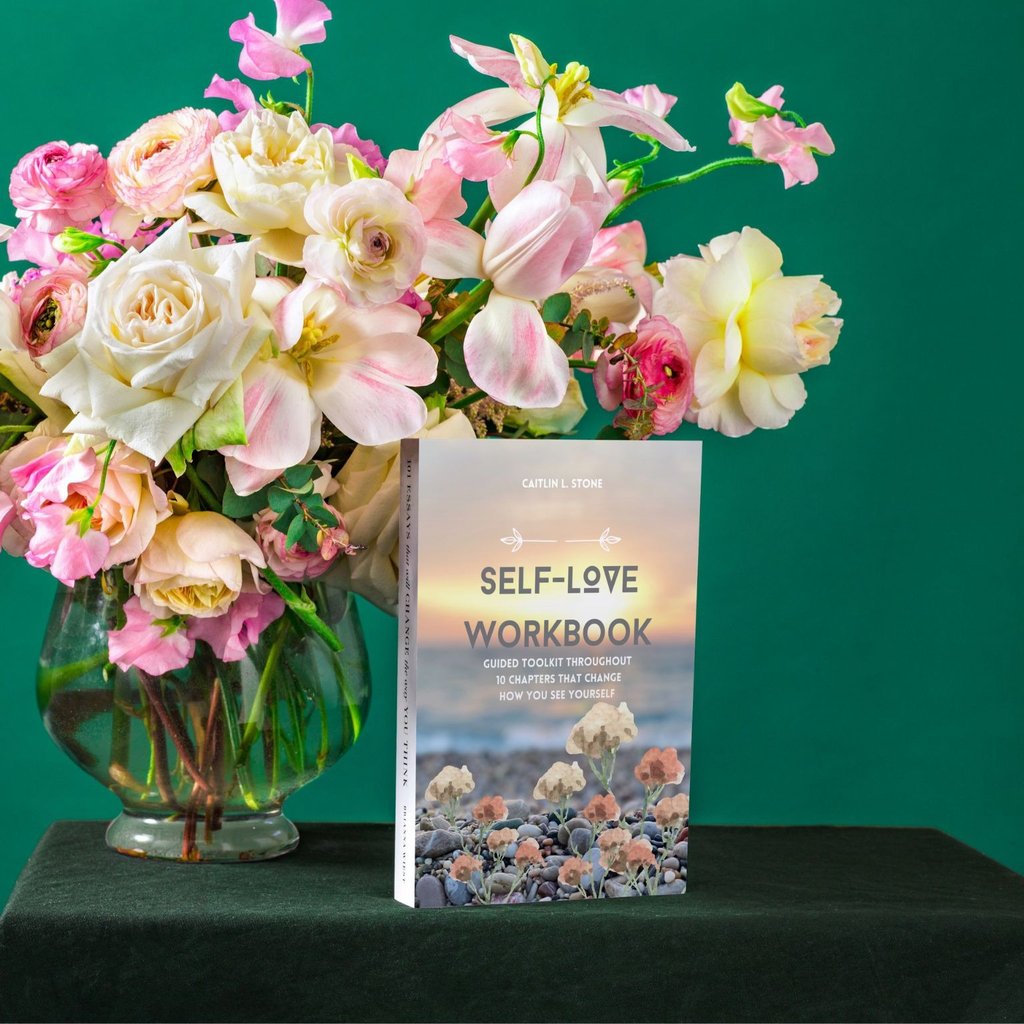
❤️ Self-Love Workbook
You understand where the inner critic comes from, but changing the pattern feels harder than recognizing it.
The Self-Love Workbook provides guided exercises to help you challenge self-critical beliefs, strengthen self-worth, and build a kinder relationship with yourself one reflection at a time.
Healing does not happen because the inner critic suddenly disappears. Healing happens because you gradually stop giving it the final say. Over time, a new voice begins to grow alongside it. A voice rooted in self-respect, self-trust, and compassion. And that voice deserves to be heard, too.
Can Self-Love Reduce the Inner Critic?
Yes. Self-love helps reduce the influence of the inner critic by strengthening self-compassion, self-worth, and emotional awareness. While critical thoughts may still appear, they often become less convincing and easier to challenge over time.
💛 Gentle Ways to Work With Your Inner Critic
How Do You Deal With an Inner Critic?
One of the most effective ways to deal with an inner critic is to notice self-critical thoughts without automatically believing them. Practices such as self-awareness, self-compassion, journaling, and challenging negative beliefs can help reduce the inner critic's influence over time.
Learning to work with your inner critic does not require perfection. In fact, many people find that trying to "fix" themselves only gives the inner critic another reason to be critical. Instead, healing often begins with small moments of awareness, curiosity, and self-compassion. The goal is not to become positive all the time. The goal is to develop a healthier response when self-critical thoughts appear.
1. Notice the voice without judgment
Start by becoming aware.
When the inner critic speaks, simply notice:
What is it saying?
When does it show up?
What emotion is underneath?
Awareness is often the first step toward change. It is difficult to challenge a pattern you cannot see.
2. Separate yourself from the voice
You are not your inner critic. You are the one noticing it.
You might try reframing:
Instead of “I’m not good enough.”
Try “My inner critic is saying I’m not good enough.”
This creates emotional distance. That distance matters because it reminds you that thoughts are experiences you have, not definitions of who you are. You can notice a thought without turning it into your identity.
3. Ask what it needs
Sometimes the inner critic is rooted in fear or unmet needs.
You may begin to ask:
“What are you trying to protect me from?”
“What do I actually need right now?”
Sometimes the inner critic is trying to protect a part of you that feels afraid, insecure, or vulnerable. Understanding the fear beneath the criticism can often be more helpful than arguing with the criticism itself.
4. Introduce a compassionate voice
You do not need to force positivity. Instead, gently introduce balance:
“It’s okay to make mistakes.”
“I’m learning.”
“I deserve kindness, too.”
Self-compassion is not about pretending everything is fine. It is about responding to yourself with the same fairness, patience, and understanding you would offer someone you care about.
This connects deeply to practices explored in Self-Compassion Exercises, where kindness becomes a skill you can build over time.
5. Look for Evidence, Not Assumptions
The inner critic often presents fears as facts.
When a self-critical thought appears, try asking:
What evidence supports this thought?
What evidence challenges it?
Am I reacting to facts or assumptions?
Is there another explanation for this situation?
This simple practice can help break the habit of automatically believing every critical thought.
💖 If you want to go beyond understanding your inner critic and start building a more supportive, consistent relationship with yourself:
👉 Learn how to practice self-love
“I used to try to fight my inner critic, to silence it completely. But the more I resisted it, the louder it became. What helped me was learning to listen without believing everything it said. To sit with it, almost like sitting with a scared part of myself. That’s when it started to soften.” - Caitlin
💖 Free Self-Love Guide
Knowing your inner critic isn't telling the whole truth is one thing. Learning how to respond differently is another.
The Free Self-Love Guide shares simple practices to help you build self-compassion, strengthen self-worth, and create a more supportive inner dialogue.
🌙 Reflection Prompts to Understand Your Inner Critic
If you're beginning to recognize the influence of your inner critic, these reflection prompts can help you explore where that voice comes from and how it affects your relationship with yourself. There is no need to answer them perfectly. The goal is not to find the "right" answer. The goal is simply to become more aware of the beliefs, fears, and patterns that may be shaping your inner dialogue.
Take a quiet moment with these questions:
When do I hear my inner critic the most?
What does it usually say?
Does it remind me of someone or something from my past?
What emotions come up when I listen to it?
What would a kinder voice say instead?
What standards do I hold myself to that I would never expect from someone I love?
What am I afraid might happen if I stopped being so hard on myself?
Which self-critical belief has followed me for the longest time?
How has my inner critic affected my confidence, relationships, or decisions?
What would change in my life if I trusted myself a little more?
There is no need to rush your answers. Some insights appear immediately. Others may reveal themselves gradually as you continue paying attention to your thoughts and reactions. Often, the goal is not discovering something new. It is finally noticing something that has been there all along.
What Questions Help You Understand Your Inner Critic?
Helpful questions include:
When do I hear my inner critic the most?
What does it usually say?
Where did these beliefs come from?
What am I afraid would happen if I stopped criticizing myself?
What would a compassionate voice say instead?
Reflecting on these questions can help uncover the fears, beliefs, and experiences shaping your inner dialogue.
✨ A journaling tool for deeper reflection
Understanding your inner critic is often the beginning. Lasting change comes from regularly noticing your patterns, questioning old beliefs, and creating space for a different response.
Journaling can be a powerful way to support that process because it helps bring unconscious thoughts into awareness.
Explore the guide here: 365 Psychological Journal Prompts
📓 365 Psychological Journal Prompts
Sometimes the hardest part isn't answering the questions. It's knowing which questions to ask.
The 365 Psychological Journal Prompts guide provides a full year of reflective questions designed to help you build self-awareness, understand emotional patterns, and deepen your relationship with yourself.


🧘 Emotional Safety Reminder
Exploring your inner critic can sometimes bring up unexpected emotions. You may feel sadness as you recognize how long you've carried certain beliefs. You may feel frustrated about the way you've spoken to yourself. You may even feel grief for the years spent believing you were not good enough.
These reactions are completely normal. Awareness often comes before change, and sometimes seeing a pattern clearly for the first time can feel emotional.
If this happens, gently remind yourself:
You are safe in this moment
You are allowed to go at your own pace
You do not have to solve everything at once
You deserve the same compassion you so freely offer others
Self-love is not about becoming a different person. It is about learning to meet yourself with more understanding, patience, and compassion, especially in the moments when the inner critic feels loudest. You do not have to heal everything today. Sometimes the most meaningful progress comes from simply noticing a pattern and responding to yourself a little more gently than you did before.
🪻 Start Building a Kinder Relationship With Yourself
If you've spent years listening to your inner critic, speaking to yourself differently can feel unfamiliar at first.
The Free Self-Love Guide offers gentle practices and simple exercises designed to help you build self-compassion, strengthen self-worth, and begin creating a more supportive inner dialogue.
Is It Normal to Feel Emotional When Exploring the Inner Critic?
Yes. Exploring the inner critic can bring up emotions such as sadness, frustration, shame, or grief. These reactions are often part of becoming aware of long-held beliefs and patterns. Moving slowly and responding with self-compassion can help make the process feel safer and more supportive.
🌸 Replacing Harshness With Compassion Over Time
The inner critic rarely disappears overnight. Most people do not wake up one day completely free from self-doubt or self-criticism. Instead, change tends to happen gradually through small moments of awareness, self-compassion, and practice. At first, the shifts may be difficult to notice. But over time, they begin to add up.
You may notice:
The voice becomes quieter
It shows up less frequently
You respond differently when it appears
Perhaps the most meaningful change is not that the inner critic disappears. It is that another voice begins to grow stronger alongside it.
One that is:
Supportive
Understanding
Patient
This is sometimes called your inner ally, the part of you that responds with encouragement instead of criticism, understanding instead of judgment, and self-respect instead of shame. Building that relationship is part of what we explore in How to Love Yourself Fully, where self-acceptance becomes something you practice rather than something you simply hope to feel one day.
✨ A Gentle Companion for Your Self-Love Journey
When you've spent years listening to your inner critic, learning a new way of relating to yourself takes time.
Our Self-Care Guide shares simple practices that can help you create moments of calm, self-connection, and emotional support as you build a kinder relationship with yourself.
Explore it here: Self-Care Guide
🌼 A Gentle Reminder
Your inner critic is not evidence that you are broken, flawed, or failing. More often, it is evidence that somewhere along the way, you learned to protect yourself through criticism, pressure, perfectionism, or self-doubt. Those patterns may have once felt necessary. But they do not have to define the rest of your story.
This transformation is often quieter than people expect.
It happens in ordinary moments:
When you stop attacking yourself for a mistake
When you allow yourself to rest without guilt
When you question a self-critical thought instead of automatically believing it
When you choose compassion over punishment
Every one of those moments helps create a healthier relationship with yourself. This is a quiet transformation. And every moment you choose to soften your inner voice, you are strengthening your relationship with yourself.
“There are still days when that voice shows up. But now, it doesn’t control me the way it used to. I’ve learned to meet it with kindness instead of fear. And in those moments, I feel something shift inside me. Like I’m finally on my own side. And I've realized that it's not my voice, let's be honest, it even feels like someone else's voice, someone else’s words. And that's also something to look into.” - Caitlin
Can Self-Love Reduce the Inner Critic?
Yes. Self-love can help reduce the influence of the inner critic by strengthening self-compassion, self-worth, and emotional awareness. While critical thoughts may still appear, they often become less convincing and easier to challenge over time.
If you would like deeper support on your self-love journey, you can explore our collection of tools, guidance, and emotional healing resources on the Sisters Creation.
Healing your relationship with the inner critic is not about becoming perfect at self-love. It is about learning that you deserve kindness from the one person who is with you every day: yourself.
With love,
Caitlin & Gerly,
Soul Sisters Tarot
❓ Frequently Asked Questions About the Inner Critic
Why is my inner critic so harsh and negative all the time?
A harsh inner critic is usually driven by fear rather than truth. Many people develop self-critical patterns as a way to avoid rejection, failure, embarrassment, or disappointment. Over time, the brain learns to use criticism as a form of protection. While the inner critic may believe it is helping you succeed or stay safe, it often creates anxiety, self-doubt, and emotional exhaustion instead.
How do I silence my inner critic without ignoring my thoughts?
The goal is usually not to silence the inner critic completely, but to change your relationship with it. Instead of automatically believing self-critical thoughts, try noticing them with curiosity. Ask yourself whether the thought is based on facts, fear, or old beliefs. Over time, awareness and self-compassion can reduce the inner critic's influence without forcing you to suppress your emotions.
What is the difference between the inner critic and intuition in psychology?
The inner critic is typically fear-based, judgmental, and focused on what could go wrong. Intuition feels calmer and more supportive. While intuition may guide or warn you, it does not attack your worth as a person. The inner critic often says, "You're not good enough." Intuition is more likely to say, "Pay attention to this situation."
How does the inner critic affect self-esteem and confidence over time?
A strong inner critic can gradually weaken self-esteem by reinforcing negative beliefs about yourself. When self-critical thoughts are repeated often enough, they can begin to feel true, making it harder to trust yourself, recognize your strengths, or feel confident in your decisions. Over time, this pattern may contribute to self-doubt, perfectionism, and a reliance on external validation.
Can childhood trauma or past experiences create a strong inner critic?
Yes. Many inner critics develop from experiences involving criticism, rejection, unrealistic expectations, emotional invalidation, or environments where mistakes are felt to be unsafe. Over time, these external messages can become internalized, creating a critical inner voice that continues long after the original experiences have passed.
What are practical ways to reduce or quiet the inner critic daily?
Helpful practices include noticing self-critical thoughts without judgment, challenging negative assumptions, practicing self-compassion, journaling, and speaking to yourself as you would speak to someone you care about. Small daily shifts in awareness can gradually weaken self-critical patterns and strengthen a more supportive inner voice.
Why does my inner critic get worse during stress or anxiety?
During stress, the brain naturally shifts into protection mode. This can make the inner critic louder because it believes increased vigilance will help prevent mistakes or future problems. Unfortunately, this often creates even more self-doubt and emotional pressure. Grounding practices, rest, and self-compassion can help interrupt this cycle.
Is it possible to reprogram your inner critic into a more positive voice?
Yes, although it usually happens gradually rather than overnight. As you become more aware of self-critical beliefs and consistently practice self-compassion, new thought patterns begin to form. Over time, the inner critic often becomes less dominant, while a more balanced and supportive inner voice grows stronger.
Why does my inner critic sound like my own voice?
The inner critic often sounds like your own voice because many of its beliefs have been repeated internally for years. Thoughts that are familiar naturally feel more convincing. Over time, old fears, expectations, and learned beliefs can become so ingrained that they feel like part of your identity, even when they are not an accurate reflection of who you are.
Why do I believe my inner critic so easily?
People often believe their inner critic because familiar thoughts tend to feel true. If you have heard the same self-critical messages repeatedly over time, your brain may stop questioning them. Learning to recognize that thoughts are not facts is one of the most important steps in reducing the inner critic's influence.
Is the inner critic actually telling the truth?
Not necessarily. The inner critic often speaks from fear, self-protection, and learned beliefs rather than objective reality. While some self-critical thoughts may contain useful information, many are exaggerated, distorted, or based on assumptions rather than facts. A thought can feel convincing without being true.
Can self-love help quiet the inner critic?
Yes. Self-love helps create a healthier relationship with yourself by strengthening self-compassion, self-worth, and emotional awareness. As self-love grows, the inner critic often loses some of its power because its messages are no longer accepted automatically as truth.
Why can't I be as kind to myself as I am to others?
Many people find it easier to show compassion to others than to themselves because they have learned to associate self-criticism with responsibility, growth, or success. Over time, kindness toward others feels natural, while kindness toward themselves feels unfamiliar. Self-compassion is a skill that can be practiced and strengthened over time.
Why do compliments make me uncomfortable?
People with a strong inner critic often struggle to accept compliments because positive feedback conflicts with the beliefs they hold about themselves. Instead of accepting praise, they may dismiss it, downplay it, or focus on their flaws. Learning to receive compliments can be an important part of building self-worth and challenging self-critical patterns.
Soul Sisters Tarot
A Soft Place to Grow.
💌 SOUL SISTERS WEEKLY
A thoughtful Sunday letter with tarot reflections, moon wisdom, self-love, and gentle encouragement.
© 2026. All rights reserved.
Inspirational Coaching OÜ
sisters@soulsisterstarot.com