💌 JOIN SOUL SISTERS WEEKLY → GET FREE WELCOME GIFTS 🎁
Receive a thoughtful Sunday letter, free Self-Love & Shadow Work guides, and monthly Full Moon rituals ✨



Self-Compassion Exercises: Why Kindness Feels So Hard
Is it time to stop fighting yourself? Try these self-compassion exercises to soften harsh self-talk, handle mistakes differently, and build a kinder relationship with yourself.
SELF-LOVE, HEALING & INNER WORK
Soul Sisters Tarot
3/19/202620 min read


Self-Compassion Exercises: A Practical Guide to Self-Kindness
This guide is part of our Self-Love Journey, where we explore emotional healing, self-compassion, and gentle practices that help you build a deeper and more supportive relationship with yourself.
Self-compassion exercises are practical ways to respond to yourself with understanding rather than harsh judgment, especially when you make mistakes, feel overwhelmed, or believe you are not enough. They can help you soften self-criticism, process difficult emotions, build emotional resilience, and develop a more supportive relationship with yourself.
If you tend to replay mistakes, compare yourself to others, or become your own harshest critic, self-compassion offers a different response. Instead of immediately asking yourself what you should have done better, you begin learning how to meet difficult moments with honesty, kindness, and perspective.
This does not mean ignoring your mistakes, lowering your standards, or avoiding personal responsibility. Self-compassion means recognizing that you can hold yourself accountable without attacking yourself in the process.
If you are also exploring how to stop being so hard on yourself, these practices can complement that work by giving you something practical to do when self-criticism appears.
In this guide, you’ll find practical self-compassion exercises you can use when self-criticism takes over, including grounding practices, compassionate self-talk, inner-critic work, reflective writing, and techniques for developing a kinder internal voice.
Self-compassion also connects naturally with how to practice self-love, because both involve changing the way you respond to your own needs, emotions, mistakes, and imperfections.
This guide is part of our broader Self-Love, Healing & Inner Work journey, where we explore emotional healing, self-awareness, and practical inner work.
🍃 Soul Sisters Notes
“For a long time, I thought being hard on myself was the only way to grow. If I pushed myself enough and criticized myself enough, I would finally become better. But all it did was exhaust me. The moment I started speaking to myself with a little more kindness, everything began to shift. Not all at once, but enough to make me stay.” - Caitlin
✨ A soft place to begin reconnecting with yourself is our Self-Love Bingo, filled with simple, nurturing practices you can try at your own pace.
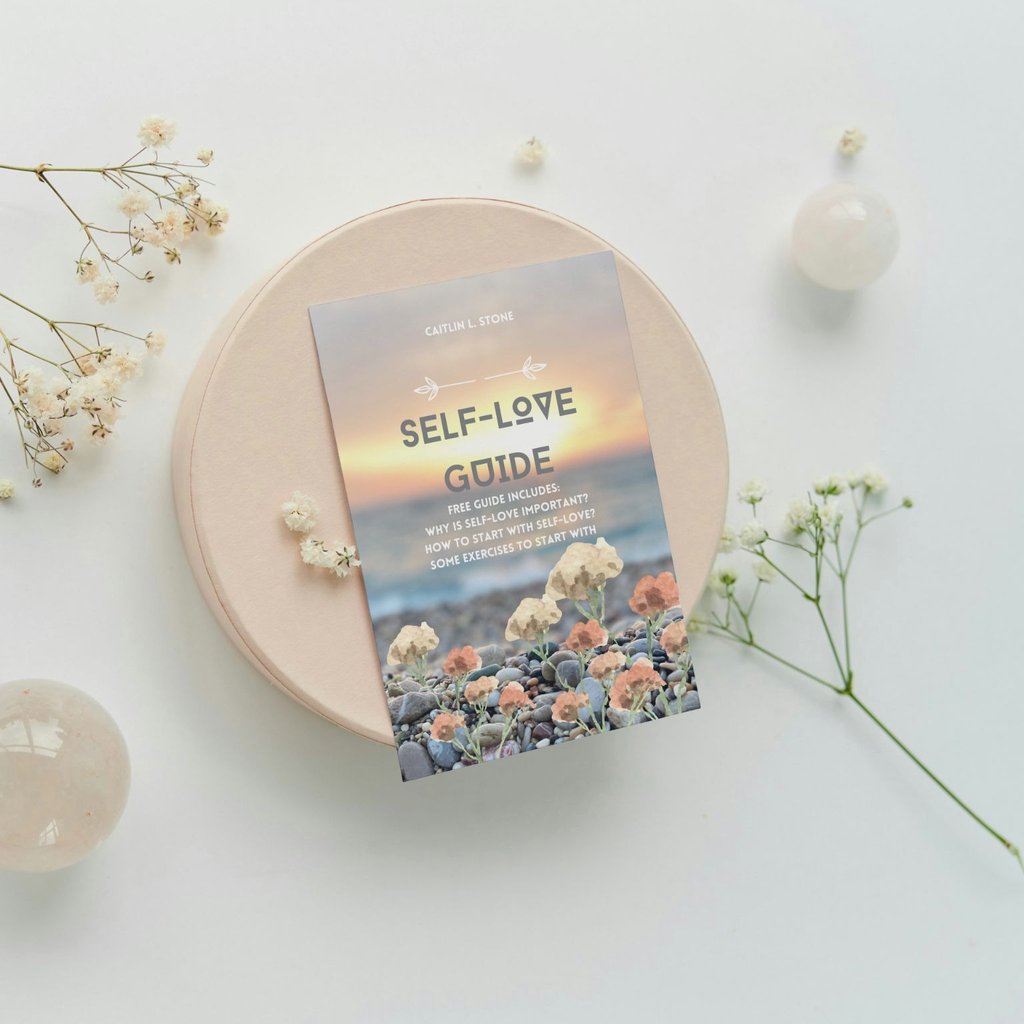
💖 Free Self-Love Guide
You know you need to be kinder to yourself, but where do you even start?
When self-criticism has become part of your everyday inner dialogue, knowing that you should practice more self-love is not always enough. Our Free Self-Love Guide gives you a gentle place to begin, with practical ideas and reflections designed to help you reconnect with yourself, understand your needs, and start building a more supportive relationship with yourself without turning self-love into another thing you have to “get right.”

🌿 What Are Self-Compassion Exercises?
Self-compassion exercises are practical practices that help you respond to mistakes, difficult emotions, perceived failures, and personal struggles with kindness, mindfulness, and perspective instead of harsh self-judgment. They are designed to change how you relate to yourself when life feels difficult, rather than simply trying to eliminate uncomfortable thoughts or emotions.
Research on self-compassion commonly describes three core elements: self-kindness, common humanity, and mindfulness. In practice, this means responding to yourself with understanding instead of judgment, recognizing that struggle and imperfection are part of being human, and noticing difficult emotions without becoming completely consumed by them.
This distinction matters because self-compassion is not the same as self-pity, making excuses, or telling yourself that everything is fine when it is not. You can recognize that you made a mistake, take responsibility for it, and still treat yourself with respect while you work out what to do next.
In fact, self-compassion is not about becoming less ambitious or avoiding change. Research on self-compassion has specifically challenged the idea that kindness toward yourself undermines motivation. Self-compassion can be practiced as a way of supporting yourself through difficulty while still taking action, protecting your boundaries, meeting your needs, and learning from mistakes.
🍃 The three foundations of self-compassion
A useful way to understand self-compassion exercises is through these three interconnected skills:
Self-kindness means replacing automatic self-judgment with a more supportive response. Instead of attacking yourself after a mistake, you acknowledge what happened and consider what would genuinely help you move forward.
Common humanity means remembering that struggle, failure, uncertainty, and imperfection are not evidence that something is uniquely wrong with you. They are part of being human. This can be particularly important when shame makes you feel isolated from everyone else.
Mindfulness means noticing your thoughts and emotions without suppressing them or becoming completely absorbed by them. You can recognize, “I feel like I failed,” without immediately turning that feeling into, “I am a failure.”
These three elements give the exercises below a stronger foundation. You are not simply trying to “think positively.” You are practicing a different way of responding when something hurts.
If you often hear a harsh internal voice telling you that you should have done better, you may also recognize the pattern explored in The Inner Critic: Why That Voice in Your Head Is So Harsh. Understanding that voice can make it easier to notice when self-judgment is taking over.
And if self-compassion feels surprisingly difficult, that does not mean you are incapable of it. Why Is Self-Love So Hard? explores why treating yourself with kindness can feel uncomfortable when criticism, perfectionism, or emotional self-protection have become familiar patterns.
💭 What can self-compassion exercises help with?
Regular self-compassion practice can give you practical ways to respond when you experience:
• harsh self-judgment after making a mistake
• shame or embarrassment
• overwhelming emotions
• perfectionistic pressure
• comparison with other people
• feelings of inadequacy or failure
• difficulty accepting your own imperfections
• a tendency to withdraw or attack yourself when things go wrong
Research has found that self-compassion is not simply a personality trait. It can also be developed through practice and structured interventions, with research reviews finding improvements in self-compassion and reductions in psychological distress across intervention studies.
That is why these exercises are worth approaching as skills rather than personality traits. You do not have to already be a naturally compassionate person to begin practicing self-compassion. You simply need a moment when you notice that you are struggling and choose to respond differently.
🌸 Self-Compassion Exercises to Gently Shift Your Inner Voice
Self-compassion exercises are most useful when they give you something concrete to do in the moment, especially when you are dealing with self-criticism, shame, mistakes, or emotional overwhelm. You do not need to complete every exercise at once. Choose one that matches what you are experiencing and practice it consistently.
The goal is not to convince yourself that everything is fine. It is to learn how to respond to yourself with understanding, honesty, and support instead of automatic judgment.
If you are also exploring how to practice self-love, self-compassion can become one of the most practical ways to bring that work into your everyday life.
🌷 1. Speak to yourself like someone you genuinely care about
One of the simplest self-compassion exercises is to change the way you respond to yourself after something goes wrong.
When you make a mistake, feel embarrassed, or fall short of your expectations, pause before automatically criticizing yourself. Ask: “What would I say to someone I deeply care about if they were in my position?”
Imagine a friend telling you exactly what happened. You probably would not tell them that they are useless, incapable, or a failure because they made one mistake. You would probably help them put the situation into perspective, acknowledge what went wrong, and remind them that one difficult moment does not define them.
Now try offering yourself that same perspective.
Instead of: “I messed everything up. I should have known better.”
Try: “That did not go the way I wanted. I can look at what happened, learn from it, and try again.”
The goal is not to make the mistake disappear. It is to separate accountability from self-attack. This exercise can be especially helpful if your first reaction to mistakes is harsh self-criticism.
🌿 2. Use the hand-on-heart grounding exercise
Self-compassion is not only something you think about. Sometimes you need to give your body a physical signal that you are safe enough to slow down.
Place one hand over your heart or another comfortable place on your body. Take a few slow breaths and notice what you are feeling without immediately trying to change it.
Then gently say:
“This is a difficult moment.”
“I am allowed to feel what I am feeling.”
“I can be here for myself while I move through this.”
This can be particularly useful when your thoughts are racing, and you are too overwhelmed to reason your way out of self-criticism.
You do not have to force yourself to feel calm. The purpose is simply to interrupt the automatic reaction and create a moment of supportive attention. If you want to explore additional grounding practices, you can also read How to Ground Yourself Spiritually for more techniques you can use when you feel emotionally overwhelmed, scattered, or disconnected.
🍃 Soul Sisters Notes
"Sometimes self-compassion begins before the mind is ready to believe anything kind. You can start by changing the way you stay with yourself, even when the kinder words do not feel completely natural yet." - Caitlin & Gerly
🌙 3. Name the inner critic instead of becoming it
When your inner voice becomes harsh, it can be difficult to remember that a thought is not necessarily a fact.
Try creating a little distance by naming what is happening: “My inner critic is active right now.”
Rather than: “I am a failure.”
This distinction matters. The first statement describes an internal pattern. The second turns the pattern into an identity.
You can then ask: “What is my inner critic telling me right now?” and: “Do I actually agree with this, or am I automatically repeating an old pattern?”
This exercise does not require you to silence your inner critic. Instead, you are learning to observe the voice without automatically obeying it.
If this pattern feels particularly strong, our guide The Inner Critic: Why That Voice in Your Head Is So Harsh explores this internal voice in greater depth.
💗 4. Practice a self-compassion break when emotions become overwhelming
When you are caught in shame, disappointment, or self-judgment, trying to solve everything immediately can make the emotional reaction stronger. A short self-compassion break gives you a simple structure to follow.
First, acknowledge what is happening: “This is painful.”
Then remember that difficult experiences are part of being human: “I am not the only person who has felt this way.”
Finally, offer yourself a supportive response: “What would I need from myself right now?”
The answer does not have to be profound. You might need to take a break, stop replaying the situation, drink some water, finish the task tomorrow, or simply stop calling yourself names.
This exercise is useful because it moves self-compassion from an abstract idea into a specific response to emotional difficulty.
🌸 5. Write yourself a compassionate letter
Writing can help when your thoughts keep circling around the same mistake, disappointment, or fear. Choose something you have been struggling with and write a letter to yourself as though you were someone who understands your situation deeply.
Include three things:
What happened: Describe the situation without exaggerating it or turning it into a judgment about yourself.
What you feel: Give yourself permission to acknowledge the emotions that are actually present.
What you need: Write what you would genuinely want someone supportive to remind you of right now.
For example, instead of writing: “I should have handled everything better.”
you might write: “I was overwhelmed and made a decision I regret. I can take responsibility for that without making myself suffer for it indefinitely. I can learn from what happened and still treat myself with compassion.”
This exercise is particularly valuable when your inner dialogue is much harsher than the way you would speak to another person.
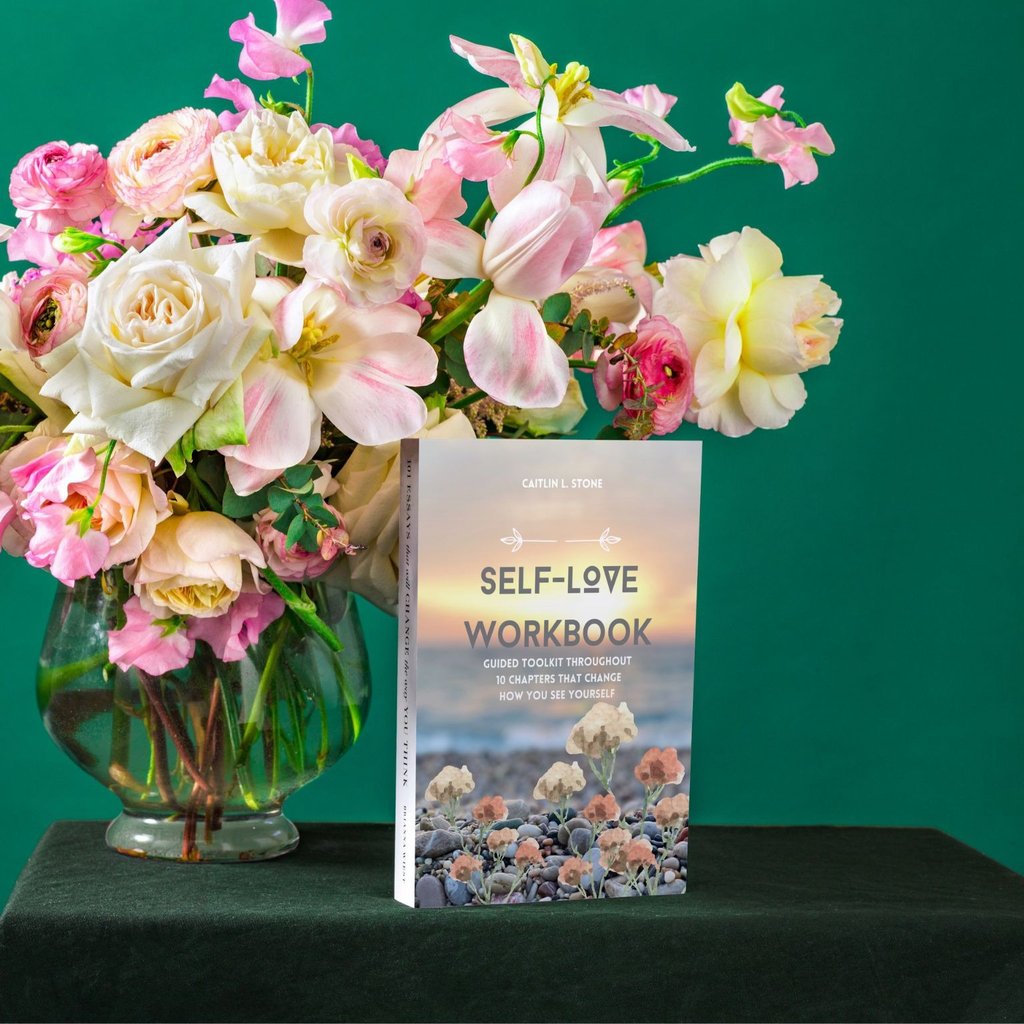
If you want a more structured way to explore these patterns, the Self-Love Workbook provides guided reflection exercises that can help you work with self-worth, self-acceptance, emotional regulation, boundaries, and your relationship with your inner self.
❤️ Self-Love Workbook
You understand the pattern, but you still find yourself falling back into it.
Self-compassion becomes much easier to develop when you have somewhere to actually work through what is happening inside you. Our Self-Love Workbook gives you 245 pages of guided exercises and reflection across self-acceptance, self-worth, emotional regulation, boundaries, self-care, forgiveness, and your relationship with your inner self. Instead of simply telling yourself to be kinder, you can use the workbook to explore the beliefs and patterns underneath your reactions and build a more supportive relationship with yourself over time.
🌿 6. Replace judgment with curiosity
Self-criticism often closes the conversation. You did something wrong; therefore, you are the problem. Curiosity opens it again.
Instead of asking: “What is wrong with me?” try asking: “What was happening for me in that moment?”
You can then explore questions such as:
“What was I feeling?”
“What was I afraid of?”
“What did I need?”
“Was I expecting something unrealistic from myself?”
“What can I learn from this without attacking myself?”
This does not remove responsibility. It gives you more information to work with.
And that distinction is important. Self-compassion is not avoiding accountability. It is creating enough emotional safety to look honestly at yourself without turning every mistake into evidence that you are fundamentally flawed.
🌱 7. End the day by recognizing what you did well
People who are highly self-critical often have an extremely efficient system for finding what went wrong, but almost no habit of noticing what went right. At the end of the day, write down three things you handled well. They do not need to be impressive.
Maybe you had a difficult conversation without losing your temper. Maybe you finished something you had been avoiding. Maybe you rested when you genuinely needed to rest. Maybe you were patient with someone. Maybe you simply got through a difficult day.
The purpose is not forced positivity. It is to train your attention to recognize the complete picture, rather than allowing your mind to collect evidence only against you. Over time, this can help create a more balanced internal narrative.
💖 How to make self-compassion exercises actually work
You do not need to practice every exercise every day. In fact, trying to completely overhaul your inner dialogue at once can become another reason to criticize yourself. Instead, choose one exercise that addresses your most common pattern.
If you immediately attack yourself after mistakes, start with the friend exercise.
If you become overwhelmed by emotion, try the hand-on-heart practice.
If you feel consumed by your inner critic, practice naming the voice.
If you keep replaying difficult experiences, try the compassionate letter.
If you constantly focus on what went wrong, begin the evening reflection.
The important part is repetition. Self-compassion becomes stronger through repeated responses, not through one perfect exercise.
And if you want to explore this work more deeply, Self-Love and Healing: A Gentle Path into Inner Work can help you connect these individual practices with the broader process of understanding and supporting yourself.
🌿 How to Develop Self-Compassion in Everyday Life
Developing self-compassion is less about having one profound breakthrough and more about changing how you respond to yourself in ordinary moments. The way you speak to yourself after a mistake, respond to difficult emotions, handle your own limits, and interpret setbacks all become opportunities to practice self-compassion.
The goal is not to become positive all the time. It is to develop a more balanced response when your first instinct is to judge, criticize, compare, or push yourself harder.
Notice your inner dialogue
One of the most useful ways to develop self-compassion is to start paying attention to the way you speak to yourself throughout the day.
You might notice that your inner dialogue becomes particularly harsh after mistakes, when you compare yourself with other people, when you feel unproductive, or when you dismiss your own needs because someone else seems to need you more.
Rather than trying to immediately replace every negative thought with something positive, first become curious about the pattern.
What did I just say to myself?
Would I speak to someone I love this way?
Is this thought helping me understand the situation, or simply making me feel worse?
This kind of awareness is important because you cannot change an automatic pattern that you never notice. If you recognize yourself repeatedly getting caught in negative thinking patterns, Breaking Negative Thinking Patterns can help you explore that process more deeply.
Replace judgment with curiosity
Self-compassion does not require you to approve of everything you do. It asks you to become more interested in understanding yourself before judging yourself.
Instead of: “Why am I like this?”
try asking:
“What am I feeling right now?”
“What triggered this reaction?”
“What did I need in that moment?”
“What can I learn from what happened?”
Curiosity creates room for honesty without immediately turning that honesty into self-attack.
This is particularly useful when you notice yourself becoming ashamed of an emotion. Feeling angry, disappointed, jealous, overwhelmed, or afraid does not automatically mean you have done something wrong. The emotion can be information without becoming a verdict about your character.
Set gentler boundaries with yourself
Self-compassion also means recognizing that your own limits matter. Sometimes self-criticism is reinforced by constantly expecting yourself to give more, work longer, tolerate more, or keep going when you are already exhausted. Rest can then start to feel like laziness, saying no can feel selfish, and taking a break can trigger guilt.
Learning to pause, rest, say no, or acknowledge that you have reached your limit is therefore part of compassionate self-treatment.
If boundaries are an area where you tend to struggle, How to Set Boundaries for Yourself can help you explore this more practically.
And if you want to connect these everyday practices with a broader approach to self-love, How to Practice Self-Love takes that work further.
When self-compassion feels uncomfortable
One of the most common obstacles is that self-compassion can initially feel fake, uncomfortable, or even undeserved.
If you have spent years motivating yourself through criticism, suddenly speaking to yourself gently may feel unnatural. You might think, “I don't believe this,” or worry that being kinder to yourself will make you lazy, complacent, or less ambitious.
That reaction does not mean the practice is failing. It may simply mean that your usual way of relating to yourself is much more familiar.
Self-compassion is also not the same as letting yourself off the hook. You can acknowledge a mistake, take responsibility, make amends, and still refuse to punish yourself emotionally for it. You can maintain high standards without making your worth dependent on meeting them.
For some people, the deeper obstacle is the belief that they do not deserve kindness at all. If that resonates with you, the work may need to move beyond individual exercises and into the beliefs you have developed about your own worth.
Give yourself somewhere to reflect
Self-compassion becomes easier to integrate when you regularly create space to notice what is happening inside you.
You might use a journal at the end of the day and ask:
When was I hardest on myself today?
What did my inner critic say?
What was happening immediately before that reaction?
What would I have needed to hear instead?
What would a more compassionate response look like without ignoring what happened?
You do not need perfect answers. The purpose is to become more familiar with your own patterns.
📓 365 Psychological Journal Prompts
You want to journal, but sometimes you have no idea what to write.
Knowing that reflection would help is one thing. Sitting in front of a blank page and trying to figure out what you are supposed to explore is another. 365 Psychological Journal Prompts for Self-Discovery and Self-Love gives you a full year of structured questions to help you explore your thoughts, emotions, patterns, relationships, self-worth, and personal growth. Instead of waiting for the “right” thing to write about, you have a meaningful question ready to help you look a little deeper.


Notice the changes that happen gradually
Self-compassion does not always create a dramatic emotional transformation. Often, the first signs are much quieter.
You may notice that you recover from a mistake more quickly. You may stop replaying a conversation for hours. You may catch yourself before automatically calling yourself a failure. You may become more comfortable resting without immediately feeling guilty.
You might also notice greater emotional resilience, more patience with yourself, and a growing ability to respond instead of react.
These subtle shifts can be meaningful signs of progress. If you want to understand what emotional healing can look like over time, Signs of Emotional Healing explores some of these changes in greater depth.
🍁 4 Seasons Self-Love Bucket List Bundle
You don't need another thing to “fix” about yourself. You might simply need more ways to enjoy being you.
Self-compassion is not only about what you do when something goes wrong. It can also mean deliberately creating moments that make your life feel more enjoyable, nourishing, and connected. Our 4 Seasons Self-Love Bucket List Bundle gives you simple self-love ideas for spring, summer, autumn, and winter, so caring for yourself becomes something you actually experience throughout the year, not just something you think about when you are struggling.


🌸 Self-compassion is something you practice, not something you perfect
You will still have difficult days. You will still criticize yourself sometimes. You may still fall back into old patterns when you are stressed, exhausted, or emotionally overwhelmed.
That does not erase the progress you have made. The practice is learning to notice what happened and return to yourself again. You do not need to become endlessly gentle or positive. You are learning to create a relationship with yourself in which mistakes can be examined, emotions can be felt, limits can be respected, and growth can happen without constant punishment.
That is what makes self-compassion sustainable.
🌼 Self-Compassion Is Learning Not to Abandon Yourself
Self-compassion is not about becoming a different person, eliminating every negative thought, or pretending that difficult experiences do not affect you. It is about changing what happens after those moments.
You will still make mistakes. You will still have days when your inner critic becomes loud. You will still sometimes compare yourself to others, question your decisions, or feel like you are not doing enough.
The difference is what you do next. Instead of automatically turning a mistake into a judgment about yourself, you can pause. Instead of treating an uncomfortable emotion as something that needs to be pushed away, you can listen to it. Instead of demanding that you immediately become better, you can ask what you actually need in order to move forward.
That is where self-compassion becomes more than an exercise. It becomes a different way of relating to yourself. And the change may be much quieter than you expect. You may simply notice that you recover from difficult moments a little faster. You catch your inner critic sooner. You stop replaying a mistake quite as long. You allow yourself to rest without feeling that you have failed. You begin to recognize that being imperfect does not make you less worthy of kindness.
These small changes matter because self-compassion is built through repetition. Every time you respond to yourself with understanding instead of automatic punishment, you are practicing a different relationship with yourself.
If you want to continue that work, you can explore our Sisters Creation for more self-love, emotional healing, and inner-work resources designed to support you along the way.
🍃 Soul Sisters Notes
“There are still days when my inner voice gets loud and critical. That part of me didn’t just disappear. But now I notice it sooner. I pause more often. I remind myself that I don’t have to believe every thought. And most importantly, I no longer leave myself alone in those moments. That, for me, is what self-compassion really became.” - Caitlin
Maybe that is the heart of self-compassion: You do not have to become someone who never struggles. You become someone who stays with yourself when you do.
With love,
Caitlin & Gerly,
Soul Sisters Tarot
❓ FAQ: Self-Compassion Exercises
What are self-compassion exercises?
Self-compassion exercises are practical techniques that help you respond to difficult emotions, mistakes, and self-critical thoughts with greater understanding and kindness. They can include compassionate self-talk, grounding, mindfulness, journaling, self-compassion breaks, and exercises that help you separate your behavior from your sense of self-worth. The purpose is not to excuse harmful behavior or avoid responsibility. Instead, self-compassion helps you respond to yourself without adding unnecessary shame or self-criticism to an already difficult situation.
How do you practice self-compassion when you feel like you are not good enough?
When you feel like you are not good enough, start by acknowledging the feeling rather than immediately arguing with it. You can say, “I am feeling inadequate right now, but that feeling does not define my worth.” Then ask what happened, what you are feeling, and what you actually need. This creates a little distance between the emotional reaction and the conclusion that something is fundamentally wrong with you.
Practices such as compassionate self-talk, journaling, and the hand-on-heart grounding exercise can be particularly useful here. If this feeling is a recurring pattern, you may also find it helpful to explore Why Do I Never Feel Good Enough?.
What is the difference between self-compassion and self-esteem?
Self-esteem generally relates to how positively you evaluate yourself, while self-compassion focuses on how you treat yourself when you are struggling, failing, or feeling inadequate. This distinction matters because self-esteem can sometimes fluctuate with success, appearance, achievement, or other external factors. Self-compassion does not require you to feel successful or confident before you deserve kindness. You can have a difficult day, make a mistake, or feel uncertain about yourself and still practice self-compassion.
Can self-compassion exercises help with self-criticism?
Yes. Self-compassion exercises can help reduce the automatic cycle of self-criticism by teaching you to notice critical thoughts and respond to them differently. Instead of immediately believing thoughts such as “I always get things wrong” or “I am not good enough,” you learn to identify them as thoughts and examine what is actually happening. This does not mean replacing every negative thought with an unrealistically positive one. A more useful goal is to develop an internal response that is accurate, supportive, and constructive.
What is the simplest self-compassion exercise for beginners?
One of the simplest self-compassion exercises is to pause during a difficult moment and ask, “What would I say to someone I love if they were experiencing this?” Then try offering yourself a similarly honest and supportive response. For example, instead of “I am such an idiot for making that mistake,” you might say, “I made a mistake, and I can learn from what happened without attacking myself.” This exercise is simple enough to use anywhere and can help you recognize how differently you often treat yourself compared with the people you care about.
How can self-compassion help with low self-esteem and self-doubt?
Self-compassion can support healthier self-worth by helping you stop treating mistakes, setbacks, and difficult emotions as evidence that you are inadequate. When your sense of worth depends heavily on achievement or approval, every setback can feel personal. Self-compassion introduces a different perspective: you can acknowledge what needs to improve without concluding that you are less worthy because you struggled. This makes self-compassion particularly relevant to people working through low self-esteem, self-doubt, or a persistent fear of not being enough.
Why does self-compassion feel uncomfortable or fake?
Self-compassion can feel uncomfortable when self-criticism has become your familiar way of motivating, protecting, or evaluating yourself. If you are accustomed to believing that harshness keeps you productive, kindness may initially feel undeserved or even unproductive. That discomfort does not necessarily mean the practice is wrong. It can simply mean that you are trying a response that is less familiar. You do not need to force yourself to believe a positive statement that feels completely untrue. Start with something more grounded, such as: “I am having a difficult time, and I do not need to make it harder by attacking myself.”
Does self-compassion make you lazy or less motivated?
No. Self-compassion does not require you to lower your standards or stop pursuing your goals. The difference is in what drives your behavior. There is a difference between working toward improvement because something matters to you and working because you believe you must constantly prove that you are good enough. Self-compassion allows you to maintain ambition while reducing the unnecessary shame and fear that can accompany mistakes. In that sense, it can support a more sustainable approach to personal growth.
What should I do when self-compassion brings up strong emotions?
If a self-compassion exercise brings up strong emotions, slow down rather than forcing yourself to continue. Take a few breaths, ground yourself in your surroundings, and give yourself permission to pause. You can also return to something simple and physical, such as placing your feet firmly on the floor, noticing the room around you, or using a grounding practice. Self-compassion is not about pushing through every uncomfortable feeling. Sometimes the compassionate response is knowing when to stop and give yourself space.
How often should you practice self-compassion exercises?
There is no single required schedule for self-compassion exercises, but regular practice is generally more useful than occasional intense sessions. A few minutes of intentional practice during everyday moments can be more sustainable than trying to completely change your inner dialogue all at once. You might practice compassionate self-talk after a mistake, use a grounding exercise when overwhelmed, or spend a few minutes journaling at the end of the day. The goal is consistency, not perfection.
Can journaling help develop self-compassion?
Yes. Journaling can help develop self-compassion by giving you space to identify self-critical patterns, process emotions, and practice responding to yourself more thoughtfully. A useful prompt is: “What happened, what am I feeling, and what would I need from myself right now?” This keeps the exercise grounded in the actual situation rather than forcing yourself to think positively.
For deeper daily reflection, the 365 Psychological Journal Prompts for Self-Discovery and Self-Love can provide structured prompts to continue this work.
What is the difference between self-compassion and self-pity?
Self-compassion acknowledges your pain while still allowing you to take responsibility and move forward; self-pity can become focused on helplessness and the belief that you cannot change your circumstances. Self-compassion sounds like: “This is difficult, and I am struggling, but I can support myself through it.” It does not require pretending that everything is okay. It allows you to recognize what hurts while remaining connected to your own capacity to respond.
Can self-compassion replace therapy or professional support?
Self-compassion exercises can be useful personal practices, but they are not a replacement for professional mental health support when someone is experiencing significant or persistent emotional distress. Journaling, grounding, mindfulness, and compassionate self-talk can complement other forms of support, but some experiences require more individualized care. Knowing when you need additional support is itself a form of self-compassion.
What is the first step if I want to become more self-compassionate?
The first step is noticing how you respond to yourself when something goes wrong. Before trying to change your thoughts, pay attention to your automatic reaction. Do you insult yourself? Do you immediately assume you have failed? Do you compare yourself with other people? Do you withdraw, overwork, or try to fix everything immediately? Once you can recognize the pattern, you have something specific to work with. From there, choose one self-compassion exercise and repeat it consistently rather than trying to change everything at once.
Soul Sisters Tarot
A Soft Place to Grow.
💌 SOUL SISTERS WEEKLY
A thoughtful Sunday letter with tarot reflections, moon wisdom, self-love, and gentle encouragement.
© 2026. All rights reserved.
Inspirational Coaching OÜ
sisters@soulsisterstarot.com